
Kirjahaku
Etsi kirjoja tekijän nimen, kirjan nimen tai ISBN:n perusteella.
1000 tulosta hakusanalla Moses Stuart
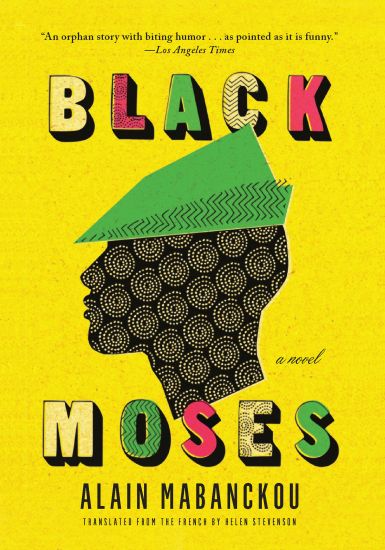
The "heart-breaking" (New York Times Book Review), rollicking, award-winning novel that has been described as "Oliver Twist in 1970s Africa" (Les Inrockuptibles) "One of the most compelling books you'll read in any language this year." --Rolling Stone Winner of the Hurston-Wright Legacy Award Longlisted for the Man Booker International Prize Shortlisted for the Albertine Prize Shortlisted for the Aspen Words Literary Prize Longlisted for the PEN Translation Prize Greeted with wildly enthusiastic reviews on publication, Alain Mabanckou's riotous novel begins in an orphanage in 1970s Congo-Brazzaville run by a malicious political stooge who makes the life of our hero, Tokumisa Nzambe po Mose yamoyindo abotami namboka ya Bakoko--his name means "Let us thank God, the black Moses is born on the lands of the ancestors," but most people just call him Moses--very difficult. Moses is also terrorized by his two fellow orphans--the twins Songi-Songi and Tala-Tala--but after Moses exacts revenge on them by lacing their food with hot pepper, the twins take Moses under their wing, escape the orphanage, and move to the bustling port town of Pointe-Noire, where they form a gang that survives on petty theft. What follows is a "pointed" (Los Angeles Times), "vivid and funny" (New York Times), larger-than-life tale that chronicles Moses's ultimately tragic journey through the Pointe-Noire underworld and the politically repressive reality of Congo-Brazzaville in the 1970s and '80s. "Ringing with beautiful poetry," (Wall Street Journal) Black Moses is a vital new extension of Mabanckou's cycle of Pointe-Noire novels that stand out as one of the grandest and funniest fictional projects of our time.
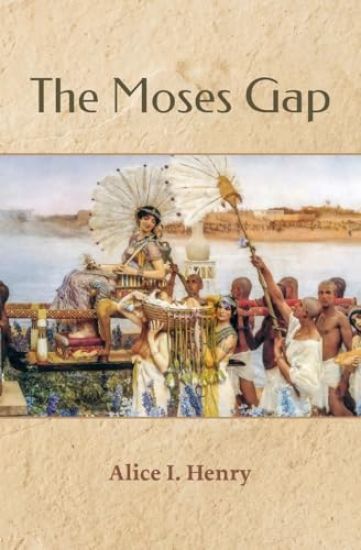
This is a book of exploration in which the reader is invited to join the author on a journey in search of the historical Moses. Combining available Egyptian ancient history, which has no mention of Moses at all, with the information found in the Book of Exodus in the Bible, the reader will be able to see Moses as the crown prince and heir to the Egyptian throne. Moses did live at a particular time in history, when the splendor of Egypt shone its brightest-under a particular Pharaoh, found and adopted by a particular daughter of Pharaoh, trained to be the next pharaoh. Born in Buenos Aires, Argentina, Alice Henry came to the United States at a young age. She has lived in New York and North Carolina and currently resides in Chestertown, Maryland with her husband and two wonderful rescue dogs. She has two adult children, four grandchildren, and a great granddaughter. Alice has taught Bible studies for thirty-eight years at churches in her communities. She enjoys working in needlepoint, watercolor, and oil painting, and has designed and produced architectural stained glass windows for churches and other buildings. Alice describes herself as a compulsive reader; as soon as she finishes one book, she picks up another.
Naked Genius: By George Moses Horton, The Colored Bard of North Carolina
George Moses Horton
Chapel Hill Historical Society, Inc.
2022
nidottu
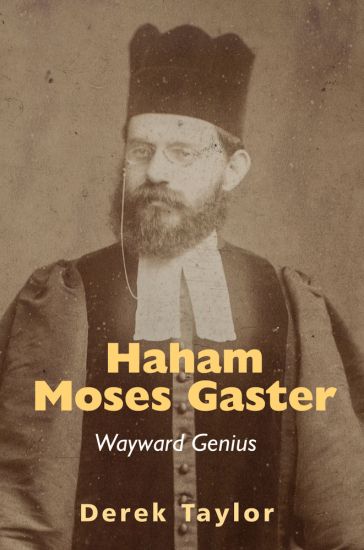
A Zionist before Theodor Herzl, the only Ashkenazi Haham the Sephardim ever appointed, the only senior British Jewish spiritual figure to be dismissed, a world expert on the Samaritans, a collector of 2,000 manuscripts, a scholar with a 45,000 book library at its peak, Moses Gaster was not a man to ignored in his lifetime. When he died he left an archive of 180,000 items, many of which are still being studied in universities in Britain and America. Professor Michael Berkowitz, the Professor of Modern Jewish History at University College London has said that 'The Haham Moses Gaster (1856-1939) is one of the most significant figures in modern Jewish history but has not yet attracted a full-blown biographical study in either English or Hebrew.' Cecil Roth, the foremost Anglo-Jewish historian of his time, said 'If Moses Gaster fell short of unquestioned primacy in any of his multitudinous activities, it was for the very reason that his enormous ability was diverted through so many channels and brought him such high distinction in all.' Moses Gaster was, however, an unusual British spiritual leader. His heart remained in his native Romania, where he made a major contribution to the literary history of what was then a new country. He was fascinated by the ancient world. Folk-lore, spells, Biblical archaeology, the relations between empires long forgotten. Moses Gaster held many offices in bodies like the Folk-Lore Society, which saw in a Jewish rabbi a man equally informed about their outlook and interests.

Des Moses von Chorene Geschichte Gross-Armeniens
Antigonos Verlag
2025
sidottu


Der Moses des Michelangelo
e-artnow
2023
pokkari
The Moses of Her People
Black Legacy Press
2026
pokkari

Cari Moses
Leavitt Peak Press
2026
pokkari

In 1883, Moses Wilhelm Shapira arrived unannounced in London claiming to have discovered the world's oldest Bible scroll in a desert cave east of the Dead Sea. With his phenomenal find, Shapira swiftly became world famous--but, just as quickly, his scroll was discredited as a clever forgery. With the discovery of the eerily similar Dead Sea Scrolls in 1947, however, investigators reopened the case, wondering whether Shapira had, in fact, discovered the first Dead Sea Scroll, seven decades before the rest. Here, in a globetrotting narrative with all the suspense of a classic detective story, award- winning journalist Chanan Tigay sets out to find the scrolls and determine Shapira's guilt or innocence for himself.
Seven dramatic stories which reveal Faulkner's compassionate understanding of the Deep South. His characters are humble people who live out their lives within the same small circle of the earth, who die unrecorded. Their epitaphs make a fitting introduction to one of the great American writers of the century.
Jeffrey Stackert addresses two of the oldest and most persistent problems in biblical studies: the relationship between prophecy and law in the Hebrew Bible and the utility of the Documentary Hypothesis for understanding Israelite religion. These topics have in many ways dominated pentateuchal studies and the investigation of Israelite religion since the nineteenth century, culminating in Julius Wellhausens influential Prolegomena to the History of Ancient Israel. Setting his inquiry against this backdrop while drawing on and extending recent developments in pentateuchal theory, Stackert tackles the subject through an investigation of the different presentations of Mosaic prophecy in the four Torah sources. His book shows that these texts contain a rich and longstanding debate over prophecy, its relation to law, and its place in Israelite religion. With this argument, A Prophet Like Moses demonstrates a new role for the Documentary Hypothesis in discussions of Israelite religion. It also provides an opportunity for critical reflection on the history of the field of biblical studies. Stackert concludes with an argument for the importance of situating biblical studies and the study of ancient Israelite religion within the larger field of religious studies rather than treating them solely or even primarily as theological disciplines.
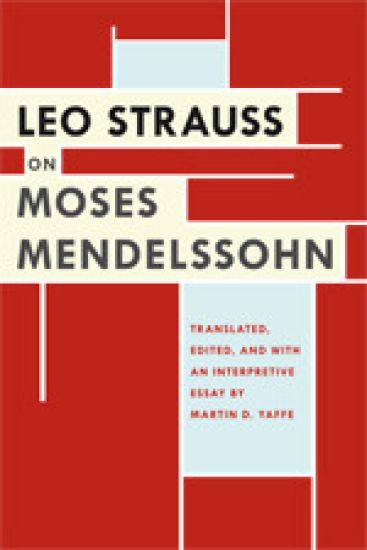
Moses Mendelssohn (1729-86) was the leading Jewish thinker of the German Enlightenment and the founder of modern Jewish philosophy. His writings, especially his attempt during the Pantheism Controversy to defend the philosophical legacies of Spinoza and Leibniz against F. H. Jacobi's philosophy of faith, captured the attention of a young Leo Strauss and played a critical role in the development of his thought on one of the fundamental themes of his life's work: the conflicting demands of reason and revelation. "Leo Strauss on Moses Mendelssohn" is a superbly annotated translation of ten introductions written by Strauss to a multivolume critical edition of Mendelssohn's work. Commissioned in Weimar Germany in the 1920s, the project was suppressed and nearly destroyed during Nazi rule and was not revived until the 1960s. In addition to Strauss' introductions, Martin D. Yaffe has translated various editorial annotations Strauss makes on key passages in Mendelssohn's texts. Yaffe has also contributed an extensive interpretive essay that both analyzes the introductions on their own terms and discusses what Strauss writes elsewhere about the broader themes broached in his Mendelssohnian studies. "Strauss' critique of Mendelssohn" represents one of the largest bodies of work by the young Strauss on a single thinker to be made available in English. It illuminates not only a formerly obscure phase in the emergence of his thought but also a critical moment in the history of the German Enlightenment.
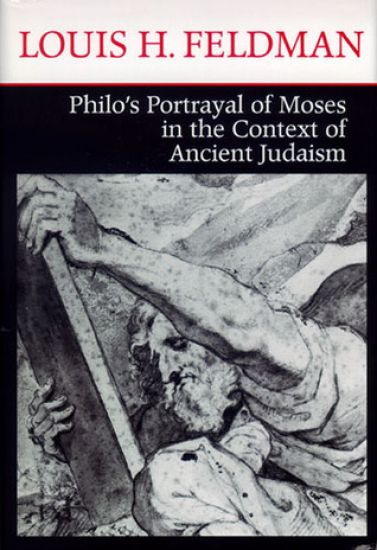
Philo's Portrayal of Moses in the Context of Ancient Judaism
Louis H. Feldman
University of Notre Dame Press
2007
sidottu
Philo's Portrayal of Moses in the Context of Ancient Judaism presents the most comprehensive study of Philo's De Vita Mosis that exists in any language. Feldman, well known for his work on Josephus and ancient Judaism, here paves new ground using rabbinic material with philological precision to illuminate important parallels and differences between Philo's writing on Moses and rabbinic literature. One way in which Hellenistic culture marginalized Judaism was by exposing the apparent defects in Moses' life and character. Philo's De Vita Mosis is a counterattack to these charges and is a vital piece of his attempt to reconcile Judaism and Hellenism. Feldman rigorously examines the text and shows how Philo presents a narrative of Moses's life similar to that of a mythical divine and heroic figure, glorifying his birth, education, and virtues. Feldman demonstrates that Philo is careful to explain in a scientific way those portions of the Bible, particularly miracles, that appear incredible to his skeptical Hellenistic readers. Through Feldman's careful analysis, Moses emerges as unique among ancient lawgivers. Philo's Portrayal of Moses in the Context of Ancient Judaism mirrors the organization of Philo's biography of Moses, which is in two books, the first, in the style of Plutarch, proceeding chronologically, and the second, in the style of Suetonius, arranged topically. Following an introductory chapter, Feldman's study discusses the life of Moses chronologically in the second chapter and examines his virtues topically in the third. Feldman compares the particular features of Philo's portrait of Moses with the way in which Moses is viewed both by Jewish sources in antiquity (including Pseudo-Philo; Josephus; Graeco-Jewish historians, poets, and philosophers; and in the Apocrypha, Pseudepigrapha, Samaritan tradition, Dead Sea Scrolls, and rabbinic tradition) and by non-Jewish sources, notably the Greek and Roman writers who mention him.
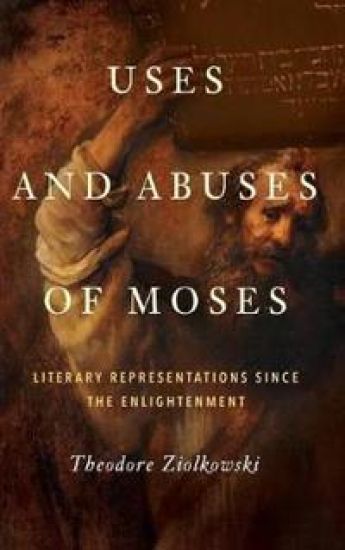
In Uses and Abuses of Moses, Theodore Ziolkowski surveys the major literary treatments of the biblical figure of Moses since the Enlightenment. Beginning with the influential treatments by Schiller and Goethe, for whom Moses was, respectively, a member of a mystery cult and a violent murderer, Ziolkowski examines an impressive array of dramas, poems, operas, novels, and films to show the many ways in which the charismatic figure of Moses has been exploited—the "uses and abuses" of the title—to serve a variety of ideological and cultural purposes. Ziolkowski's wide-ranging and in-depth study compares and analyzes the attempts by nearly one hundred writers to fill in the gaps in the biblical account of Moses' life and to explain his motivation as a leader, lawgiver, and prophet. As Ziolkowski richly demonstrates, Moses' image has been affected by historical factors such as the Egyptomania of the 1820s, the revolutionary movements of the mid-nineteenth century, the early move toward black liberation in the United States, and critical biblical scholarship of the late nineteenth century before, in the twentieth century, being appropriated by Marxists, Socialists, Nazis, and Freudians. The majority of the works studied are by Austro-German and Anglo-American writers, but Ziolkowski also includes significant examples of works from Hungary, Sweden, Norway, the Ukraine, Denmark, the Netherlands, Italy, and France. The figure of Moses becomes an animate seismograph, in Ziolkowski's words, through whose literary reception we can trace many of the shifts in the cultural landscape of the past two centuries.
Philo's Portrayal of Moses in the Context of Ancient Judaism
Louis H. Feldman
University of Notre Dame Press
2016
nidottu
Philo's Portrayal of Moses in the Context of Ancient Judaism presents the most comprehensive study of Philo's De Vita Mosis that exists in any language. Feldman, well known for his work on Josephus and ancient Judaism, here paves new ground using rabbinic material with philological precision to illuminate important parallels and differences between Philo's writing on Moses and rabbinic literature. One way in which Hellenistic culture marginalized Judaism was by exposing the apparent defects in Moses' life and character. Philo's De Vita Mosis is a counterattack to these charges and is a vital piece of his attempt to reconcile Judaism and Hellenism. Feldman rigorously examines the text and shows how Philo presents a narrative of Moses's life similar to that of a mythical divine and heroic figure, glorifying his birth, education, and virtues. Feldman demonstrates that Philo is careful to explain in a scientific way those portions of the Bible, particularly miracles, that appear incredible to his skeptical Hellenistic readers. Through Feldman's careful analysis, Moses emerges as unique among ancient lawgivers. Philo's Portrayal of Moses in the Context of Ancient Judaism mirrors the organization of Philo's biography of Moses, which is in two books, the first, in the style of Plutarch, proceeding chronologically, and the second, in the style of Suetonius, arranged topically. Following an introductory chapter, Feldman's study discusses the life of Moses chronologically in the second chapter and examines his virtues topically in the third. Feldman compares the particular features of Philo's portrait of Moses with the way in which Moses is viewed both by Jewish sources in antiquity (including Pseudo-Philo; Josephus; Graeco-Jewish historians, poets, and philosophers; and in the Apocrypha, Pseudepigrapha, Samaritan tradition, Dead Sea Scrolls, and rabbinic tradition) and by non-Jewish sources, notably the Greek and Roman writers who mention him.
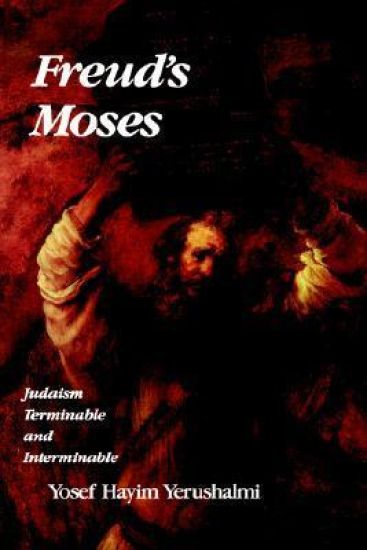
Moses and Monotheism, Freud’s last major book and the only one specifically devoted to a Jewish theme, has proved to be one of the most controversial and enigmatic works in the Freudian canon. Among other things, Freud claims in the book that Moses was an Egyptian, that he derived the notion of monotheism from Egyptian concepts, and that after he introduced monotheism to the Jews he was killed by them. Since these historical and ethnographic assumptions have been generally rejected by biblical scholars, anthropologists, and historians of religion, the book has increasingly been approached psychoanalytically, as a psychological document of Freud’s inner life—of his allegedly unresolved Oedipal complex and ambivalence over his Jewish identity. In Freud’s Moses a distinguished historian of the Jews brings a new perspective to this puzzling work. Yosef Hayim Yerushalmi argues that while attempts to psychoanalyze Freud’s text may be potentially fruitful, they must be preceded by a genuine effort to understand what Freud consciously wanted to convey to his readers. Using both historical and philological analysis, Yerushalmi offers new insights into Freud’s intentions in writing Moses and Monotheism. He presents the work as Freud’s psychoanalytic history of the Jews, Judaism, and the Jewish psyche—his attempt, under the shadow of Nazism, to discover what has made the Jews what they are. In the process Yerushalmi’s eloquent and sensitive exploration of Freud’s last work provides a reappraisal of Freud’s feelings toward anti-Semitism and the gentile world, his ambivalence about psychoanalysis as a “Jewish” science, his relationship to his father, and above all a new appreciation of the depth and intensity of Freud’s identity as a “godless Jew.”
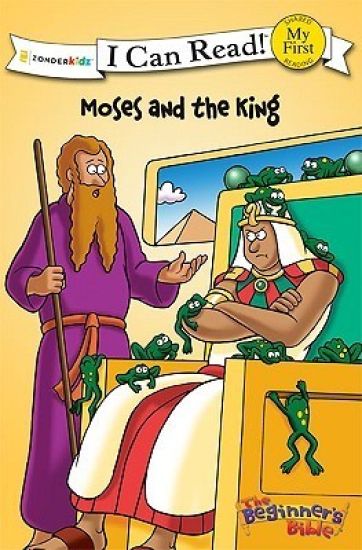
God wants Moses to save his people from slavery. But Moses is afraid. How can he convince the king to let the slaves go?This My First I Can Read! book, with basic language, word repetition, and great illustrations, is perfect for shared reading with a child. It aligns with guided reading level J and will be of interest to children Pre-K to 3rd grade.
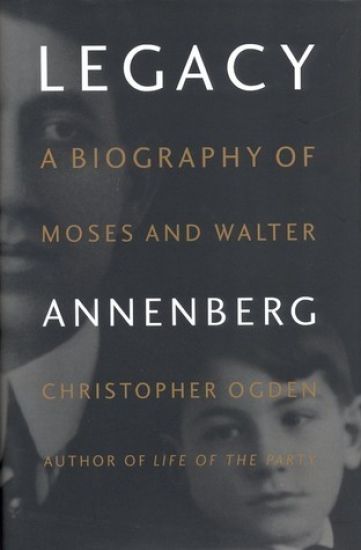
From the bestselling biographer of Pamela Digby Churchill Hayward Harriman comes a multi-generational saga of one of America's wealthiest and most controversial families--the Annenbergs.