In der hier vorliegenden Habilitationsschrift befasst sich die Autorin mit den Konzepten Sexualitat und Geschlecht im Werk des schiitischen Gelehrten Muhammad Husayn Fadlallah. Unter Berucksichtigung einer Vielzahl von Textquellen in Originalsprache uber die gesamte Schaffensphase des Gelehrten hinweg rekonstruierte die Autorin zum einen die Themenfelder, in denen Sexualitat und Geschlecht eine tragende Rolle spielen (bspw. Masturbation, Gewalt in der Ehe, Frauen im Richteramt). Zum anderen zeichnet sie so Veranderungen in den religiosen Empfehlungen und Ansichten des Gelehrten nach. Insgesamt fordert sie - vor allem fur westliche LeserInnen - uberraschende und teils uberraschend progressive Ansichten und Urteile des Grossayatollahs zu Tage - die sich wiederum mit konservativen konstrastieren. Dabei werden die Kategorien "progressiv" und "konservativ" als kulturspezifisch entlarvt.
Rose Paradise: The Life of Prophet Muhammad (saw) is a comprehensive and devotional narrative that presents the events, virtues, and spiritual atmosphere of the Prophet's (saw) blessed life through sixty-three carefully crafted chapters. The book follows a chronological arc-from the anticipation of his arrival, to his birth and upbringing, to the revelation, migration, establishment of the Muslim community, major trials, victories, and his final teachings. Each chapter functions as a standalone reflection while contributing to the larger tapestry of the Sīrah. The text captures the Prophet's exalted character, describing his mercy, generosity, justice, courage, humility, and gentleness in ways that speak to contemporary readers. Scenes such as the Year of Sorrow, the Consolation of Ṭā'if, the Hijrah, the Conquest of Mecca, and the Farewell Sermon are written with sensitivity and reverence, inviting thoughtful contemplation. The accessible tone makes the book suitable for a wide audience-youth, adults, reading groups, introductory Islamic studies courses, and community education programs. While rich in spiritual insights, it maintains clarity and readability, avoiding technical terminology and focusing on moral lessons: patience in adversity, gratitude, trust in God, compassion toward the weak, and unity among believers. Table of Content Part 1 - Victory Belongs to the Believers Part 2 - The Guide for Life Part 3 - Long-awaited Part 4 - Good News to the World Part 5 - The Unique Pearl Part 6 - The Apple of Humanity's Eye Part 7 - The Birth of the Rose Prophet Part 8 - Glowing Mother: Amina Part 9 - The Fortunate Foster-Mother Part 10 - The Blessed Guest Part 11 - A Wait Like Jacob's Part 12 - The Teacher of Good Morals Part 13 - Longing for a Father Part 14 - The Meeting with the Father Part 15 - Farewell to Medina Part 16 - The Journey of Amina to Paradise Part 17 - The Tender-Hearted Grandfather Part 18 - Like a Second Mother Part 19 - Rahmatul Lil Alameen Part 20 - Heart of the City Part 21 - The Awaited Guest Part 22 - Al-Amin (Most Trustable) Part 23 - The Teacher of Love Part 24 - The Most Beautiful Family Part 25 - Endless Mercy Part 26 - Blessed Duty: Being a Referee Part 27 - The Noor Mountain Part 28 - First Support Part 29 - Waraqah Part 30 - The Lion of Allah Part 31 - To Love Dearly Part 32 - The First Soldier of Freedom Part 33 - A Muslim is the Brother of Another Muslim Part 34 - The Fondness of Compassion Part 35 - The Revival that Began in Safa Part 36 - The Supreme Authority Part 37 - The Name of Rebirth: Umar Part 38 - First Immigration Part 39 - Boycott Part 40 - Farewell to Uncle Mushfiq Part 41 - Year of Sorrow Part 42 - The Consolation of Taif Part 43 - Invitation from the Heavens Part 44 - Permission for Immigration Part 45 - Protection Officers Part 46 - Allah is with Us Part 47 - A Full Moon at the Madina Horizon Part 48 - The Luckiest Orphan Part 49 - Unless You Love Each Other Part 50 - The Date Tree Part 51 - A Rose That Rose in the Heart of Prophet Part 52 - The Best Teacher Part 53 - The Civilized City: Yathrib Part 54 - Allah is the Best Planner Part 55 - The Revenge in Uhud Part 56 - Most Merciful Grandfather Part 57 - Wind on Duty Part 58 - The Longing for the Ka'bah Part 59 - Under a Locust Tree Part 60 - Reunion with Ka'bah Part 61 - The Conquest of Mecca Part 62 - Farewell Sermon Part 63 - We Bear Witness, O Prophet Muhammad (saw)
In Poet of Jordan, William Tamplin presents two decades’ worth of the political poetry of Muhammad Fanatil al-Hajaya, a Bedouin poet from Jordan and a public figure whose voice channels a popular strain of popular Arab political thought. Tamplin’s footnoted translations are supplemented with a biography, interviews, and pictures in order to contextualize the man behind the poetry. The aesthetics and politics of vernacular Arabic poetry have long gone undervalued. By offering a close study of the life and work of Hajaya, Tamplin demonstrates the impact that one poet’s voice can have on the people and leaders of the contemporary Middle East.
Named by Time magazine as one of the 100 most important innovators of the century, Tariq Ramadan is a leading Muslim scholar, with a large following especially among young European and American Muslims. Now, in his first book written for a wide audience, he offers a marvelous biography of the Prophet Muhammad, one that highlights the spiritual and ethical teachings of one of the most influential figures in human history. In the Footsteps of the Prophet is a fresh and perceptive look at Muhammad, capturing a life that was often eventful, gripping, and highly charged. Ramadan provides both an intimate portrait of a man who was shy, kind, but determined, as well as a dramatic chronicle of a leader who launched a great religion and inspired a vast empire. More important, Ramadan presents the main events of the Prophet's life in a way that highlights his spiritual and ethical teachings. The book underscores the significance of the Prophet's example for some of today's most controversial issues, such as the treatment of the poor, the role of women, Islamic criminal punishments, war, racism, and relations with other religions. Selecting those facts and stories from which we can draw a profound and vivid spiritual picture, the author asks how can the Prophet's life remain -- or become again -- an example, a model, and an inspiration? And how can Muslims move from formalism -- a fixation on ritual -- toward a committed spiritual and social presence? In this thoughtful and engaging biography, Ramadan offers Muslims a new understanding of Muhammad's life and he introduces non-Muslims not just to the story of the Prophet, but to the spiritual and ethical riches of Islam.
Named by Time magazine as one of the 100 most important innovators of the century, Tariq Ramadan is a leading Muslim scholar, with a large following especially among young European and American Muslims. Now, in his first book written for a wide audience, he offers a marvelous biography of the Prophet Muhammad, one that highlights the spiritual and ethical teachings of one of the most influential figures in human history. In the Footsteps of the Prophet is a fresh and perceptive look at Muhammad, capturing a life that was often eventful, gripping, and highly charged. Ramadan provides both an intimate portrait of a man who was shy, kind, but determined, as well as a dramatic chronicle of a leader who launched a great religion and inspired a vast empire. More important, Ramadan presents the main events of the Prophet's life in a way that highlights his spiritual and ethical teachings. The book underscores the significance of the Prophet's example for some of today's most controversial issues, such as the treatment of the poor, the role of women, Islamic criminal punishments, war, racism, and relations with other religions. Selecting those facts and stories from which we can draw a profound and vivid spiritual picture, the author asks how can the Prophet's life remain -- or become again -- an example, a model, and an inspiration? And how can Muslims move from formalism -- a fixation on ritual -- toward a committed spiritual and social presence? In this thoughtful and engaging biography, Ramadan offers Muslims a new understanding of Muhammad's life and he introduces non-Muslims not just to the story of the Prophet, but to the spiritual and ethical riches of Islam.
Color has been a subject of heated debate for as long as anyone can remember. Is it an innate part of material objects or a trick of perception and light? Is it merely superficial and decorative, or does it reveal deeper meaning? Is it the manifestation of divine presence on Earth or evidence of Satan's cunning? This debate captured the medieval imagination and influenced every aspect of life in the Middle Ages -- an era that was truly obsessed with color.Unlike the drab images popularized in films and television programs, parades of vibrant color were on display at every level of medieval European society. Not only did clothing sport gaudy and often clashing colors, but food, statues, animals, and even hair and beards flaunted the most brazen coloration. Yet not everyone revered color; many believed it to be an ephemeral, worldly deception and a symptom of immorality. As the Middle Ages drew to a close, perceptions of color gradually became emblematic of broader cultural issues. Black and blue -- which were primarily associated with asceticism, sorrow, and humility -- became the colors of choice for royalty and the urban aristocracy, while bright, flashy colors came to be associated with the devil -- who, it was believed, had painted the world in tempting hues to lure humanity into sin and away from the path to eternal salvation. As a result, every God-fearing person began to avoid colorful displays, choosing instead more somber shades, a preference still seen today in the blacks and dark blues of evening wear and business attire. Colors Demonic and Divine ranges over painting, fashion, poetry, heraldry, religion, and history to tell the story of medieval attitudes toward color and the profound and pervasive influence they still have on modern society.
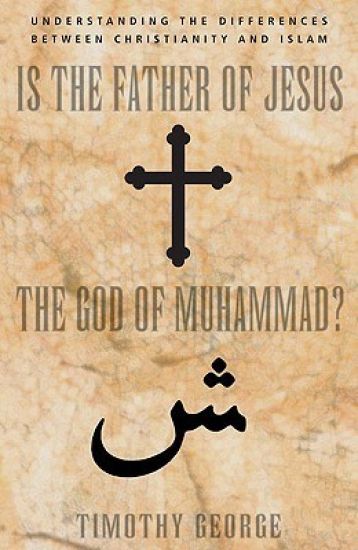
The days when western Christians could ignore the influence of Islam are over. Today as never before, the world’s second largest religion is shaping our culture, and words such as jihad, imam, Quran, and fatwa have entered our vocabulary. While all Muslims are no more alike than all Christians are alike, there are certain fundamental beliefs that all Muslims hold in common—some of which Christians would agree with, including belief in one true God. But is it the same God? How does the God of Muhammad differ from the God of Christianity? Written in a clear, passionate style that is conciliatory, balanced, and uncompromisingly biblical, this book describes and contrasts the distinctives of Christianity and Islam. Its author, a noted historian and theologian who has studied Islam for many years, writes with an eye on helping Christians better understand how to interact with Muslims. Beginning with an overview of Islam—what it is and how it arose—here are fascinating and relevant insights on · the Five Pillars of Islam · the role of religious violence from the Crusades onward · the doctrine of the Trinity and the character of God · Christian and Muslim views of Jesus Christ and salvation · what Christians can learn from Muslims · how Christians can share Christ with their Muslim neighbors . . . and more
This book, which began as the 1995-96 Edward Cadbury Lectures at the University of Birmingham, argues that our awareness of other cultural and religious traditions has brought with it a new historical consciousness of the relativity of all cultures and that this must inevitably affect our view of scripture. If biblical studies are taken really seriously, traditional ways of using the Bible in theology become unviable. We are inevitably directed towards pluralism. After all, we can now see just how great a diversity there is in the Bible itself, to such a degree as to make exclusivism not only problematical but also morally dubious. So there should be no pressure to agree with this or that biblical strand, but even the freedom to decide against all biblical options if need be. A modern attitude to the New Testament might perhaps resemble the attitude taken by early Christians like Paul to the Old Testament - with the significant difference that the radical reapplication of scripture should take place consciously, and not in a hidden or unreflective manner. This radical argument is worked out through considerations of such varied sources as Paul's Letter to the Romans and Luke-Acts; Marcion; Muhammad; the pioneering biblical scholar Isaac La Peyrere; Joseph Smith; and Mahatma Gandhi. Radical questions are asked, but the aim is a thoroughly positive one. Could it not be the ultimate goal of the dialogue that Christians should become better Christians, Muslims better Muslims, Hindus better Hindus, humanists better humanists, and so on. And should not each try to help the other to reach this goal?
This study of the Qur'an arises from an interest in a pressing contemporary issue, the relationship between Muslims and non-Muslims ('the Ummah and the Other'). This text explores how the Qur'an comments on this relationship as it changed in the course of Muhammad's ministry. Particular attention is paid to the portrayal in the Meccan 'punishment-narratives' of a fascinating and complex triangular relationship between God, the powerless and persecuted believing community with Muhammad at its centre, and the unbelieving Meccans who rejected Muhammad's preaching. The text raising questions about the possible contemporary relevance of this analysis, focusing firstly on discussions about the appropriate models for Islamic society today, and secondly on dialogue between Christians and Muslims. This book presents a detailed and illuminating analysis of many important Qur'anic themes and passages, and offers a coherent and original account of significant developments within the thought of the Qur'an as a whole.
"The Who HQ Graphic Novels series does an excellent job of quickly engaging readers by capturing the drama and immediacy of pivotal historic events." — BooklistDiscover the story behind Muhammad Ali and the boxing match that captivated the world, the Thrilla In Manila, in this powerful graphic novel -- written by Murder Ballads' Gabe Soria and illustrated by award-winning artists Chris Brunner and Rico Renzi.Presenting Who HQ Graphic Novels: an exciting addition to the #1 New York Times best-selling Who Was? series!Explore the journey Muhmmad Ali took to win his final match against fellow heavyweight boxing champion Joe Frazier, known as the Thrilla in Manila. A story of athleticism, heart, and determination, this graphic novel invites readers to immerse themselves into the explosive power of the boxing champion and civil rights activist-- brought to life by gripping narrative and vivid full-color illustrations that jump off the page.A 2023 YALSA Quick Pick for Reluctant Young Adult Readers!
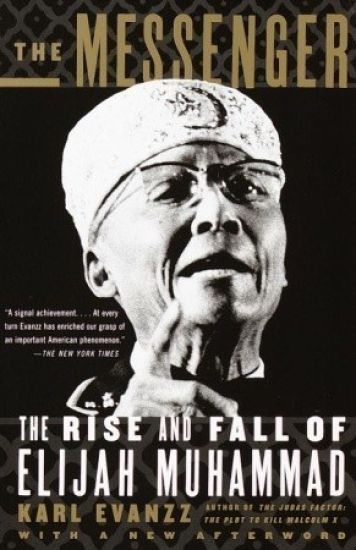
Drawn from recently declassified FBI files, and interviews with family members and former apostles, The Messenger renders a daring portrait of one of African-American history's most controversial leaders. In this explosive biography, investigative journalist Karl Evanzz recounts the multidimensional life of a semiliterate refugee from the Jim Crow South who became the influential founder of the Nation of Islam. Considered the "Prophet" by his followers and a threat to national security by J. Edgar Hoover, Elijah Muhammad moved four million African Americans to convert to his heterodox version of Islam, and inspired the lives of Malcolm X, Muhammad Ali, Jesse Jackson, and Louis Farrakhan. But his increasingly insatiable hunger for power ultimately led Elijah Muhammad down a path of corruption, ultimately betraying his teachings and his devoted believers by womanizing, fathering thirteen illegitimate children, and abetting in the murders of those who criticized him, not least of whom, his chief disciple, Malcolm X.
"READ "The Reality Behind Muhammad's First Revelation: The first verse and command of the Quran is 'READ' But how did this command reach Muhammad (saw) and what did he feel at that moment?How did the angel Gabriel (as) come to him, ask him to 'READ' and 'squeeze' him; what was this experience like for Muhammad (saw)?In this book I hope to present you with a totally unique perspective. As the title suggests, I'm going to explore 'what Muhammad (saw) read' - not literally, but actually...
This study of the Qur'an arises from an interest in a pressing contemporary issue, the relationship between Muslims and non-Muslims ('the Ummah and the Other'). This text explores how the Qur'an comments on this relationship as it changed in the course of Muhammad's ministry. Particular attention is paid to the portrayal in the Meccan 'punishment-narratives' of a fascinating and complex triangular relationship between God, the powerless and persecuted believing community with Muhammad at its centre, and the unbelieving Meccans who rejected Muhammad's preaching. The text raising questions about the possible contemporary relevance of this analysis, focusing firstly on discussions about the appropriate models for Islamic society today, and secondly on dialogue between Christians and Muslims. This book presents a detailed and illuminating analysis of many important Qur'anic themes and passages, and offers a coherent and original account of significant developments within the thought of the Qur'an as a whole.
By analyzing the Prophet's conduct in war and his measures for ensuring peace the misperception that Islam is inextricably linked with violence can be allayed. The major battles in the early history of Islam are studied in the wider context of Islamic teachings on war and peace, as are the Qur'anic verses which allow Muslims to wage war, if necessary.
Near Eastern Cities from Alexander to the Successors of Muhammad compares the evolution of several cities in the Near East from the time of Alexander the Great until the beginning of the Islamic 'Abbasid Dynasty. This volume examines both archaeological remains and literary sources to explain the diversity of imperial, cultural, and religious influences on urban life. It offers several case studies chosen from different regions of the Roman Near East, demonstrating that Greco-Roman and Islamic culture spread unevenly through these various cities, and that it is impossible to make broad generalizations. It argues instead that there were different patterns of urbanism that demonstrate a continued vitality of civic life up to the 'Abbasid revolution.Near Eastern Cities from Alexander to the Successors of Muhammad will be of particular interest to students of this period in the Ancient Near East, as well as those studying ancient cities and everyday life.
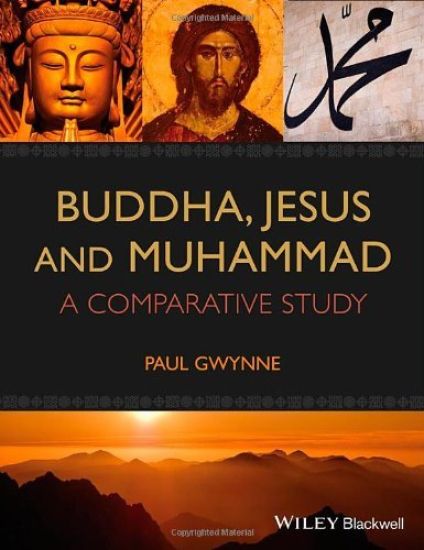
This cool, clear-sighted comparative study has no theological axe to grind. It offers a trusty thematic guide to the figureheads of three of the largest religions in the world. The comparative approach is descriptive and even-handed, highlighting both similarities and differences across a range of major areas.The thematic chapters cover: early life, followers, the core message, political attitudes, relations with women, and death.The engaging writing and descriptive approach make this an ideal text for students, instructors and general readers.