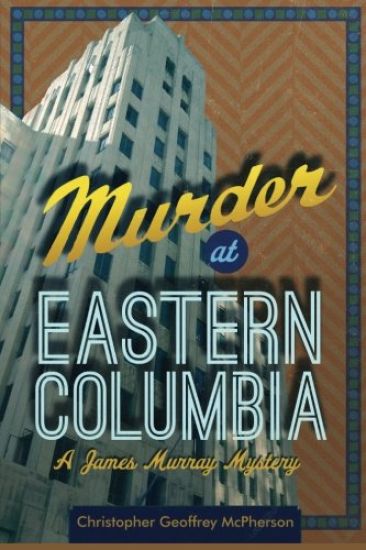
James Murray is a young man with a dream -- he wants to be a writer just like his idol, Dashiell Hammett -- but there's a Depression on, and he's the only one in his family with a job. Even though it's a good job -- clerking in the Junior Boy's department at the swankest new department store in downtown Los Angeles: Eastern Columbia, Broadway at Ninth -- it's not writing. At the end of one typical day at work, there's a scream. James rushes toward the sound and finds his best friend -- co-worker Elizabeth "Bess" Flowers -- apparently shot and lying dead in the Better Furniture department. He finds a note in her purse telling her to be in front of the Orpheum Theater at 5:30 "or else." He looks at his watch: it's nearly that time now. Was she shot by a person she refused to meet? Or by someone who wanted to make sure she didn't make the meeting? James decides to keep the date in front of the theater where, with the help of his good friend, screen-star Charles "Buddy" Rogers, he begins a whirlwind ride through the crepuscular depths of downtown Los Angeles, trying to solve Elizabeth's murder. "Murder at Eastern Columbia" is not like any book you've ever read: Not a single novel, it's two parallel novels, featuring two heroes, working two murders in two different versions of 1930s Los Angeles. Join James and his alter ego as they each try to solve the murder of the girl with sorrel-colored hair. His hard-boiled alter ego -- neither a private detective nor a police officer: just someone "who wants to help" -- needs to find out who's trying to pin the murder on him, but finds himself in a jam: "Yeh. Strawberry preserves. All the way up to my neck." Two men in two stories work their way through downtown Los Angeles following clews, interviewing people who might know something, going from location to location, with one goal in mind: find out who might have wanted the girl dead. Along the way they meet a rich cast of characters including the notorious gangster, a gorgeous raven-haired dame, the beautiful young boy whose love is his undoing, a young doctor whose specialty is cancer research, the cleaning lady with a secret addiction, the struggling piano player who just wants to keep his nose clean, the gum-popping pawn-shop clerk and the sultry Chinese apartment manager who tries to hide behind the mysteries of the Orient. "Murder at Eastern Columbia" is filled with twists, turns and a climactic scene along the dizzying heights of the observation deck atop the brand new Los Angeles City Hall. Come along for the ride in this James Murray mystery: the story of a young guy, a kid really, who dreams of something better.
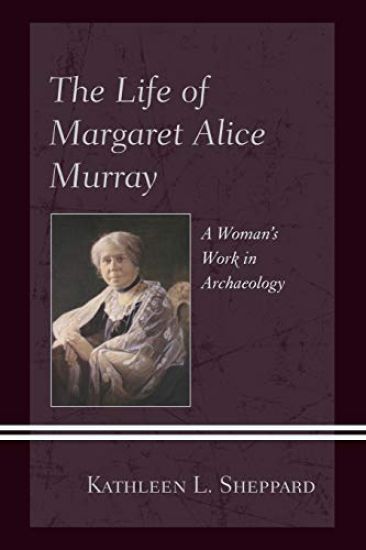
The Life of Margaret Alice Murray: A Woman’s Work in Archaeology is the first book-length biography of Margaret Alice Murray (1863–1963), one of the first women to practice archeology. Despite Murray’s numerous professional successes, her career has received little attention because she has been overshadowed by her mentor, Sir Flinders Petrie. This oversight has obscured the significance of her career including her fieldwork, the students she trained, her administration of the pioneering Egyptology Department at University College London (UCL), and her published works. Rather than focusing on Murray’s involvement in Petrie’s archaeological program, Kathleen L. Sheppard treats Murray as a practicing scientist with theories, ideas, and accomplishments of her own. This book analyzes the life and career of Margaret Alice Murray as a teacher, excavator, scholar, and popularizer of Egyptology, archaeology, anthropology, linguistics, and more. Sheppard also analyzes areas outside of Murray’s archaeology career, including her involvement in the suffrage movement, her work in folklore and witchcraft studies, and her life after her official retirement from UCL.
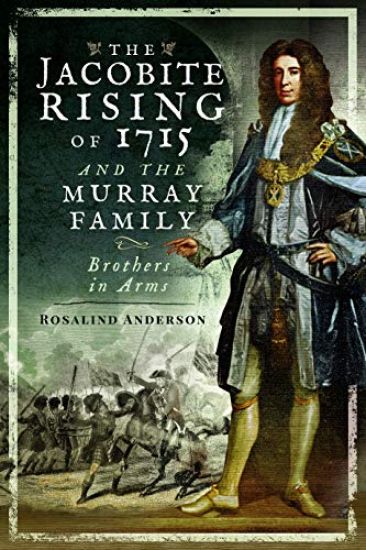
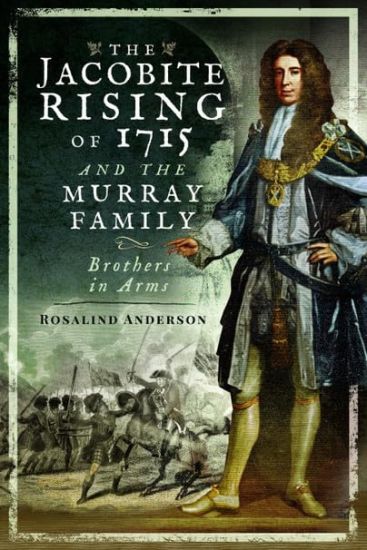
Based in Perthshire, the Murray family played an important role in all Jacobite rebellions, whether as rebels or supporters of the government. During the Great Rising of 1715, the head of the family the Duke of Atholl remained loyal to the Hanoverian government but three of his sons were Jacobites. Two of these brothers then went on to play major roles in the 1719 Rising and in the more famous '45. What led to their decision to commit to the Jacobite cause? A look at the earlier years of the Murrays at the end of the seventeenth and early eighteenth centuries sheds light on the family dynamics and helps explain how and why the brothers made the decisions they did. Traditionally the Murrays were thought to have perhaps made a conscious and pragmatic decision to have a foot in both camps, but the evidence presented here shows the brothers possessed a strong rebellious streak. Despite the heavily enforced regime of duty from their father and the Presbyterian piety of their mother, they refused to conform to their parents' wishes and in varying degrees chose of their own volition, a different path to that expected of them. Set against the backdrop of social unrest and anxiety over against English influence in Scotland, these choices had a significant impact on the history of the family and because of who that family was, a significant impact on the country.
Based in Perthshire, the Murray family played an important role in all Jacobite rebellions, whether as rebels or supporters of the government. During the Great Rising of 1715, the head of the family the Duke of Atholl remained loyal to the Hanoverian government but three of his sons were Jacobites. Two of these brothers then went on to play major roles in the 1719 Rising and in the more famous '45. What led to their decision to commit to the Jacobite cause? A look at the earlier years of the Murrays at the end of the seventeenth and early eighteenth centuries sheds light on the family dynamics and helps explain how and why the brothers made the decisions they did. Traditionally the Murrays were thought to have perhaps made a conscious and pragmatic decision to have a foot in both camps, but the evidence presented here shows the brothers possessed a strong rebellious streak. Despite the heavily enforced regime of duty from their father and the Presbyterian piety of their mother, they refused to conform to their parents’ wishes and in varying degrees chose of their own volition, a different path to that expected of them. Set against the backdrop of social unrest and anxiety over against English influence in Scotland, these choices had a significant impact on the history of the family and because of who that family was, a significant impact on the country.
The Wrong Place at the Wrong Time.A young girl's body is found near the village of Ballyamber in Co. Kerry. Who is she and what was she doing in such a remote area? Alan Murray has only started investigations when Stanley Wallace, a businessman who has lately moved to Ballyamber, is also found murdered. Were both victims just in the wrong place at the wrong time or is there a more sinister explanation? With very few clues to go on Murray is faced with an almost impossible task as he comes under increasing pressure to solve the two crimes. When the net starts to close in on the killer or killers, two more residents of Ballyamber find themselves in danger of their lives.
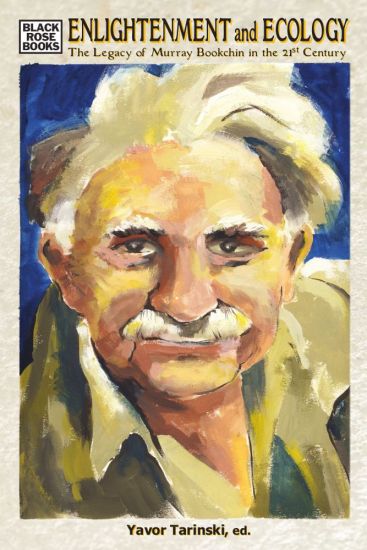
Throughout his life, prophetic American philosopher Murray Bookchin created social ecology as a comprehensive social program for the challenges of our present era. Through tireless teaching, speaking, organizing, and writing, Bookchin presented a humanist vision of ecology based on community, direct democracy, and the better promises of the Enlightenment, showing how we could transform our society into one that is free and egalitarian. Enlightenment and Ecology is an international collection of commemorative essays by scholars and activists who have each incorporated the ideas of social ecology into their own work. This book also examines how the Kurdish freedom movement is using the Bookchin's utopian ideas. In a time of urgent need for radical change, these essays provide both precious historical lessons and a transformative road map.
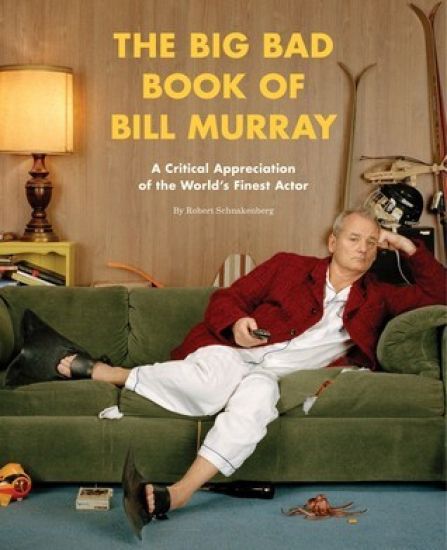
The New York Times Best Seller. Part biography, part critical appreciation, part love letter—and all fun—this enormous full-color volume, packed with color film stills and behind-the-scenes photography, chronicles every Murray performance in loving detail, recounting all the milestones, legendary “Murray stories,” and controversies in the life of this enigmatic performer. He’s played a deranged groundskeeper, a bellowing lounge singer, a paranormal exterminator, and a grouchy weatherman. He is William James “Bill” Murray, America’s greatest national treasure. From his childhood lugging golf bags at a country club to his first taste of success on Saturday Night Live, from his starring roles in Hollywood blockbusters to his reinvention as a hipster icon for the twenty-first century, The Big Bad Book of Bill Murray chronicles every aspect of his extraordinary life and career. He’s the sort of actor who can do Hamlet and Charlie’s Angels in the same year. He shuns managers and agents, and he once agreed to voice the lead in Garfield because he mistakenly believed it was a Coen Brothers film. He’s famous for crashing house parties all over New York City—and if he keeps photobombing random strangers, he might just break the Internet.
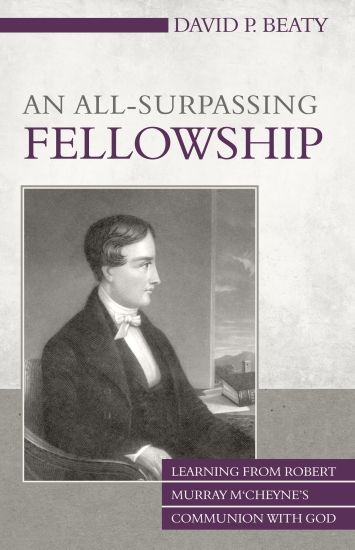
In An All-Surpassing Fellowship, David P. Beaty introduces us to the spiritual life of Robert Murray M'Cheyne. After giving an overview of the life of this remarkable Scottish pastor, Beaty analyzes M'Cheyne's study of the Bible, prayer life, pursuit of holiness, eternal perspective, and dependence on the Holy Spirit to see the rich contribution they made to his communion with God. Yet Beaty conducts these investigations with a view toward application learning from M'Cheyne that which will help us walk more closely with Christ. See why M'Cheyne's communion with God has encouraged many believers over the years, and be encourage yourself to seek that same sweet fellowship with the Lord.
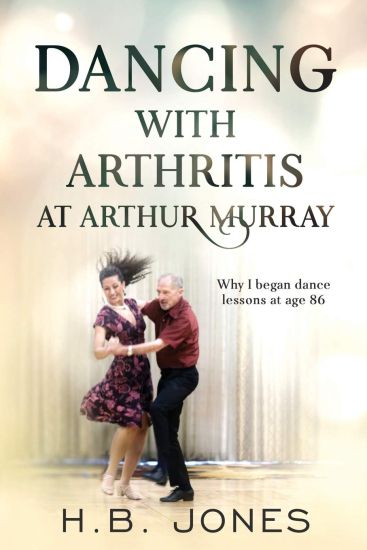
The author, getting on in years, has to sell his home in the mountains where he had been so happy peak bagging and back-country skiing. But now it was time to move closer to family and major medical facilities.He ended up in a senior living facility which was nice, even though he wasn't used to being with so many sedentary people using walkers and power chairs. They were nice folks, but the life style there was a lot slower than he was used to. He needed activity, challenges, something to replace his former pastimes, which he could no longer safely do.Would ballroom dancing be a possibility? Could he really learn all those dance patters this late in life? With considerable trepidation he took the plunge and found that yes, dance lessons provided a challenge, but also satisfaction, purpose and friends. It was like a new life.This book recounts his dance adventures as well as those of many of his fellow students. If you are at all curious about ballroom dancing, this will give you an inside view, with information, tips, insights and laughs, as the self-deprecating dance neophyte describes his often-inept efforts to transfer dance patterns from his brain to his feet.Much of the writing herein has a light, humorous tone, and when you read the stories of the guest writers, you may sense the depth of their passion and gratitude for unexpected rewards that dancing has given them.
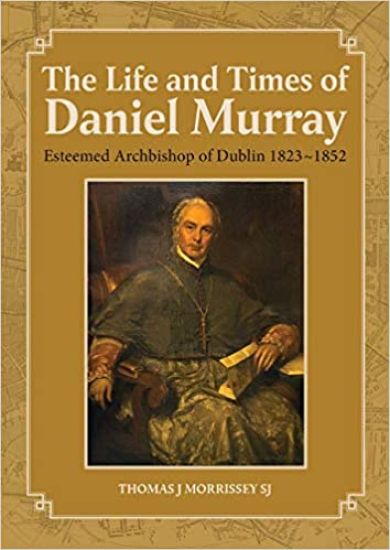
Daniel Murray was undoubtedly the outstanding Irish Catholic archbishop of the nineteenth century. He was a man of elegance and charm, ready to listen to others and to find good in them. To the redoubtable Bishop Doyle of Kildare and Leighlin, the archbishop was `an angel of a man’.His concern for the education of the poor led to the founding of the Irish Sisters of Charity and the invitation to Dublin of the Sisters of Mercy and the Irish Christian Brothers. His interest in the education of the middle class was manifested in the foundation of the Sisters of Loreto and in his support for the schools of the Jesuits and the Vincentians. A man of great pastoral energy, he built numerous churches and readily encouraged lay involvement in the work of the diocese. He was actively involved in assisting the Holy See in the appointment of priests and bishops around the world and his efforts to provide aid to the needy during the Great Famine, and the veneration and respect he inspired in his clergy, further contributed to the high esteem in which he was held. And yet, he is a virtually forgotten figure in Irish history.This neglect is related to the stance he took on some issues of the day – his support for certain government initiatives, his opposition to his clergy’s involvement in politics, and his caution about openly supporting Repeal.