
Kirjahaku
Etsi kirjoja tekijän nimen, kirjan nimen tai ISBN:n perusteella.
1000 tulosta hakusanalla Napolean Hill
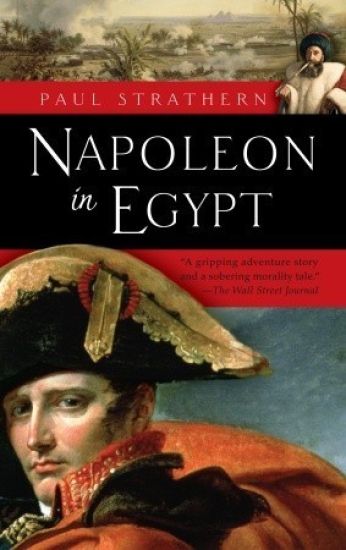
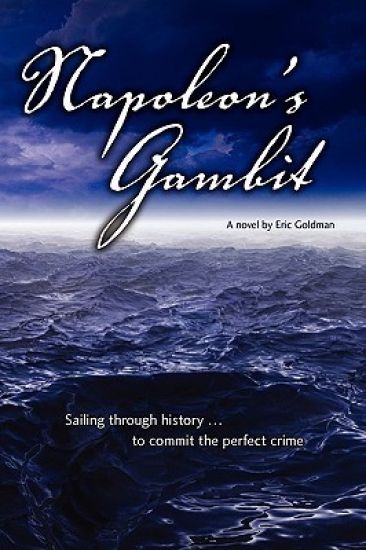
In 1798, Napoleon Bonaparte, only twenty-eight, set sail for Egypt with 335 ships, 40,000 soldiers, and a collection of scholars, artists, and scientists to establish an eastern empire. He saw himself as a liberator, freeing the Egyptians from oppression. But Napoleon wasn't the first--nor the last--who tragically misunderstood Muslim culture. Marching across seemingly endless deserts in the shadow of the pyramids, pushed to the limits of human endurance, his men would be plagued by mirages, suicides, and the constant threat of ambush. A crusade begun in honor would degenerate into chaos. And yet his grand failure also yielded a treasure trove of knowledge that paved the way for modern Egyptology--and it tempered the complex leader who believed himself destined to conquer the world.
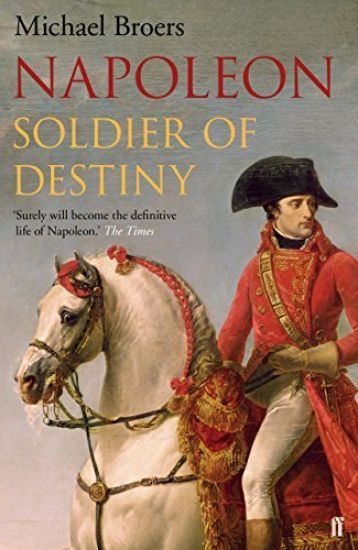
Napoleon Bonaparte: a man of intense emotion, iron self-discipline, acute intelligence and immeasurable energy. Michael Broers brings this remarkable man to life, from his dangerous Corsican roots to the epic battles of Austerlitz, Jena and Friedland. Here is the incredible story of how one man's sheer determination, ruthlessness and careful calculation drove France to conquer Europe. This is the first volume of a revelatory new biography of the great ruler told with energy, style and brand new research. Here is the first life in which Napoleon speaks in his own uncensored voice - but not always as he wanted the world to hear him.
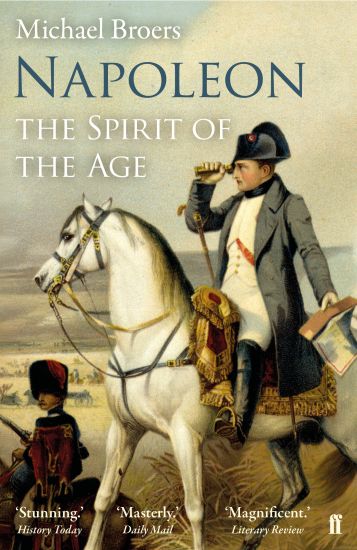
'Masterly.' Daily Mail 'Stunning.' History Today'Magnificent.' Literary ReviewNapoleon's life reached its most extraordinary stage between 1805 and 1810. At war with Britain, Russia, and Austria, he unleashed his magnificent Grande Armée. The first resounding victory at Austerlitz was followed by a whirlwind of campaigns, and by 1810 he had divorced Josephine in order to marry the daughter of the Austrian Emperor. The Spirit of the Age illustrates in vivid detail the five years in which Napoleon appeared to be invincible.
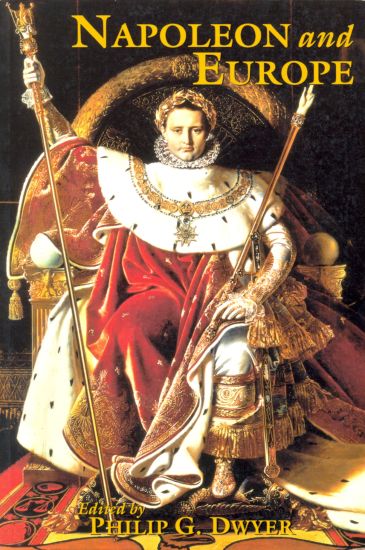
Two hundred years ago, Napoleon was at the apogee of his power in Europe. This broad ranging reassessment explores the key themes presented by his extraordinary career: from his rise to power and the foundation of the imperial state, to the final defeat of his grand vision following the doomed invasion of Russia. It was a period of almost uninterrupted war in Europe, the consquences of victory or failure repeatedly transforming the political map. But Napoleon’s impact reached much deeper than this, achieving the ultimate destruction of the ancien regime and feudalism in Europe, and leaving a political and juridical legacy that persists today.
This invaluable account provides an excellent introduction to the nature and mechanics of Napoleon's power, and how he used it. It explores Napoleon's rise to fame as a soldier of the French Revolution and his aims and achievements as first consul and emperor during the years 1799-1815.
In this assessment James McMillan moves away from ideologically-based representations of the man to focus on his use of power. He recognises the Emporer as a highly skilled operator who in the face of innumerable obstacles, attempted to conduct an original policy.
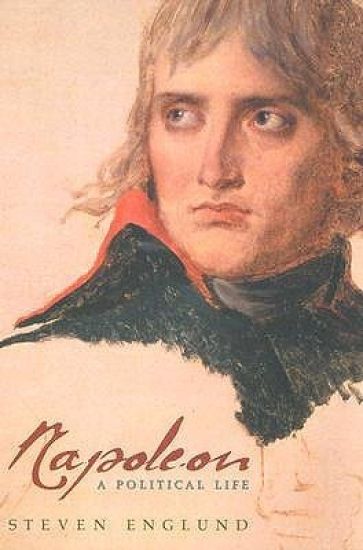
Winner of the J. Russell Major Prize, American Historical AssociationBest Book on the First Empire by a Foreigner, Napoleon Foundation“Englund has written a most distinguished book recounting Bonaparte’s life with clarity and ease…This magnificent book tells us much that we did not know and gives us a great deal to think about.”—Douglas Johnson, Los Angeles Times Book Review“Englund, in his lively biography…seeks less to rehabilitate Napoleon’s reputation and legacy than to provide readers with a fuller view of the man and his actions.”—Paula Friedman, New York Times“Napoleon: A Political Life is a veritable tour de force: the general reader will enjoy it immensely, and learn a great deal from it. But the book also has much to offer historians of modern France.”—Sudhir Hazareesingh, Times Literary Supplement“Englund’s incisive forays into political theory don’t diminish the force of his narrative, which impressively conveys the epochal changes confronting both France and Europe…A strikingly argued biography.”—Matthew Price, Washington PostThis sophisticated and masterful biography brings new and remarkable analysis to the study of modern history’s most famous general and statesman. As Englund charts Napoleon’s dramatic rise and fall—from his Corsican boyhood, his French education, his astonishing military victories and no less astonishing acts of reform as First Consul (1799–1804) to his controversial record as Emperor and, finally, to his exile and death—he explores the unprecedented power Napoleon maintains over the popular imagination.
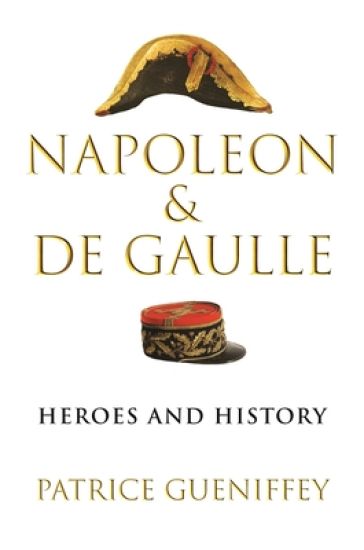
An Australian Book Review Best Book of the YearOne of France’s most famous historians compares two exemplars of political and military leadership to make the unfashionable case that individuals, for better and worse, matter in history.Historians have taught us that the past is not just a tale of heroes and wars. The anonymous millions matter and are active agents of change. But in democratizing history, we have lost track of the outsized role that individual will and charisma can play in shaping the world, especially in moments of extreme tumult. Patrice Gueniffey provides a compelling reminder in this powerful dual biography of two transformative leaders, Napoleon Bonaparte and Charles de Gaulle.Both became national figures at times of crisis and war. They were hailed as saviors and were eager to embrace the label. They were also animated by quests for personal and national greatness, by the desire to raise France above itself and lead it on a mission to enlighten the world. Both united an embattled nation, returned it to dignity, and left a permanent political legacy—in Napoleon’s case, a form of administration and a body of civil law; in de Gaulle’s case, new political institutions. Gueniffey compares Napoleon’s and de Gaulle’s journeys to power; their methods; their ideas and writings, notably about war; and their postmortem reputations. He also contrasts their weaknesses: Napoleon’s limitless ambitions and appetite for war and de Gaulle’s capacity for cruelty, manifested most clearly in Algeria.They were men of genuine talent and achievement, with flaws almost as pronounced as their strengths. As many nations, not least France, struggle to find their soul in a rapidly changing world, Gueniffey shows us what a difference an extraordinary leader can make.
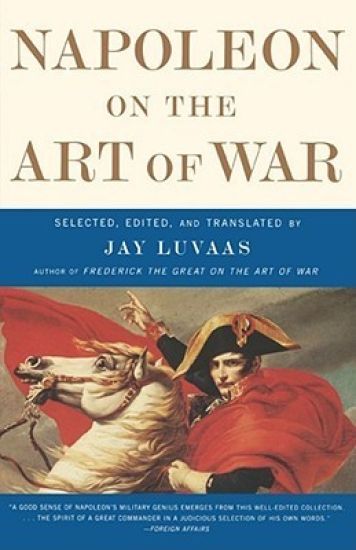
Unlike Sun-Tzu or Karl von Clausewitz, Napoleon never wrote a unified essay on his military philosophy. Yet as one of the world's greatest strategists and tacticians, his wisdom and genius can be found in his many and varied writings. Jay Luvaas has spent more than three decades pouring through the 32 volumes of Napoleon's correspondence, carefully translating and editing all of his writings on the art of war, and arranging them in seamless essays. The resulting book captures the brilliant commander's views on everything from the preparation of his forces to the organisation, planning and execution of his battles, all buttressing Napoleon's view that 'in war there is but one favourable moment; the great art is to seize it.' From the specifics of Napoleon's use of cavalry and unique reliance upon artillery to an all-encompassing vision of life from a man of supreme confidence and success, NAPOLEON ON THE ART OF WAR is the only straightforward explanation of Napoleon's campaigns and philosophy by the man himself.
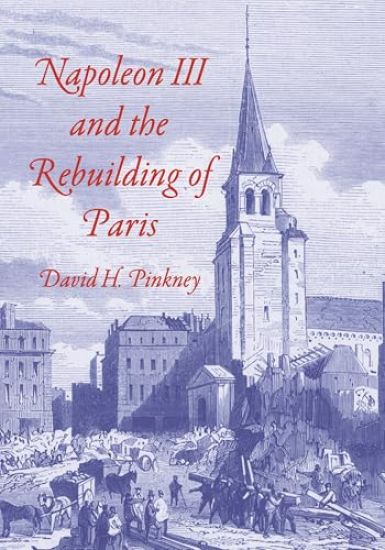
A classic history of the creation of modern Paris by Napoleon III and HaussmannBetween 1850 and 1870, Napoleon III and his Prefect of the Seine, Baron Haussmann, created the modern city of Paris out of the congested and ill-equipped capital of the eighteenth century. They gave Paris many of its present major streets, its great municipal parks, the Central Markets, the Opera House and other well-known buildings, and a water supply system and sewer network that still serve the city. In Napoleon III and the Rebuilding of Paris, David Pinkney tells the story of how Paris was transformed and examines the many challenges that the venture faced, including an increasing population, engineering problems, political complications, and personality clashes. Pinkney sets the undertaking in the context of French political and economic history, shows its relation to the public health movement of the mid-nineteenth century, and explains its significance in the history of city planning.
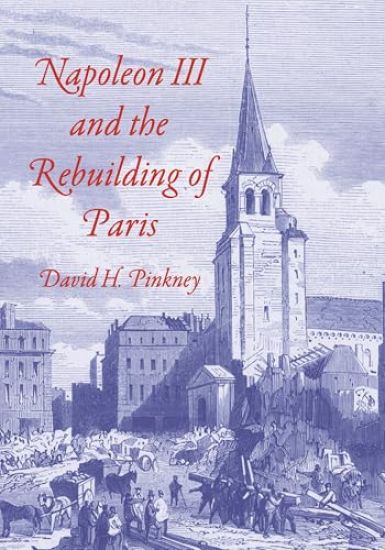
A classic history of the creation of modern Paris by Napoleon III and HaussmannBetween 1850 and 1870, Napoleon III and his Prefect of the Seine, Baron Haussmann, created the modern city of Paris out of the congested and ill-equipped capital of the eighteenth century. They gave Paris many of its present major streets, its great municipal parks, the Central Markets, the Opera House and other well-known buildings, and a water supply system and sewer network that still serve the city. In Napoleon III and the Rebuilding of Paris, David Pinkney tells the story of how Paris was transformed and examines the many challenges that the venture faced, including an increasing population, engineering problems, political complications, and personality clashes. Pinkney sets the undertaking in the context of French political and economic history, shows its relation to the public health movement of the mid-nineteenth century, and explains its significance in the history of city planning.