To modern sensibilities, nineteenth-century zoos often seem to be unnatural places where animals led miserable lives in cramped, wrought-iron cages. Today zoo animals, in at least the better zoos, wander in open spaces that resemble natural habitats and are enclosed, not by bars, but by moats, cliffs, and other landscape features. In Savages and Beasts, Nigel Rothfels traces the origins of the modern zoo to the efforts of the German animal entrepreneur Carl Hagenbeck. By the late nineteenth century, Hagenbeck had emerged as the world's undisputed leader in the capture and transport of exotic animals. His business included procuring and exhibiting indigenous peoples in highly profitable spectacles throughout Europe and training exotic animals-humanely, Hagenbeck advertised-for circuses around the world. When in 1907 the Hagenbeck Animal Park opened in a village near Hamburg, Germany, Hagenbeck brought together all his business interests in a revolutionary zoological park. He moved wild animals out of their cages and into "natural landscapes" alongside "primitive" peoples from Africa, Asia, the Americas, and the islands of the Pacific. Hagenbeck had invented a new way of imagining captivity: the animals and people on exhibit appeared to be living in the wilds of their native lands. By looking at Hagenbeck's multiple enterprises, Savages and Beasts demonstrates how seemingly enlightened ideas about the role of zoos and the nature of animal captivity developed within the essentially tawdry business of placing exotic creatures on public display. Rothfels provides both fascinating reading and much-needed historical perspective on the nature of our relationship with the animal kingdom.
Opens up a way forward for Christian ethics in the public sphere Too often, says Nigel Biggar, contemporary Christian ethics poses a false choice -- either -conservative- theological integrity or -liberal- secular consensus. Behaving in Public explains both why and how Christians should resist these polar options. Informed by a frankly Christian theological vision of moral life and so turning toward the world with openness and curiosity, Biggar's succinct argument charts a third way forward.
The use of computers in qualitative research has redefined the way social researchers handle qualitative data. Two leading researchers in the field have written this lucid and accessible text on the principal approaches in qualitative research and show how the leading computer programs are used in computer-assisted qualitative data analysis (CAQDAS). The authors examine the advantages and disadvantages of computer use, the impact of research resources and the research environment on the research process, and the status of qualitative research. They provide a framework for developing the craft and practice of CAQDAS and conclude by examining the latest techniques and their implications for the evolution of qualitative research.
This compelling book provides one of the most comprehensive and detailed evaluations of a very popular cognitive skills course -- Reuven Feuerstein's Instrumental Enrichment Programme. Feuerstein claims that his program, a model for diagnosing and remedying cognitive deficiencies in poor attainers, can equip pupils with the basic prerequisites of thinking, thereby enabling them to become more effective learners. Combining innovative and traditional experimental techniques, this text analyzes both teacher and pupil outcomes on a wide range of issues including abilities, accomplishments, and behavioral characteristics. The implications of the study are set against theoretical and practical issues involved in other popular intellectual skills training programs. "Real world" concerns that have been largely ignored by research literature are addressed, as are their effects on the teaching of thinking skills.
The book is designed as an introduction to the scientific study of speech. No prior knowledge of phonetics is assumed. As far as mathematical knowlege is concerned, all that is assumed is a knowledge of simple arithmetic and as far as possible concepts are dealt with on an intuitive rather than mathematical level. The anatomical material is all fully explained and illustrated. The book is arranged in four parts. Part 1, Basic Principles, provides an introduction to established phonetic theory and to the principles of phonetic analysis and description, including phonetic transcription. Part 2, Acoustic Phonetics, considers the physical nature of speech sounds as they pass through the air between speaker and hearer. It includes sections on temporal measurement, fundamental frequency, spectra and spectrograms. Part 3, Auditory Phonetics, covers the anatomy of the ear and the perception of loudness, pitch and quality. The final part, Part 4, covers the articulatory production of speech, and shows how experimental techniques and tools can enhance our understanding of the complexities of speech production.Though the audience for this book is mainly students and professors in the Speech Sciences, it will also be valuable to any students studying hearing science and acoustics. The book is well supported with figures, tables, and practice boxes with experiments.
The book is designed as an introduction to the scientific study of speech. No prior knowledge of phonetics is assumed. As far as mathematical knowlege is concerned, all that is assumed is a knowledge of simple arithmetic and as far as possible concepts are dealt with on an intuitive rather than mathematical level. The anatomical material is all fully explained and illustrated. The book is arranged in four parts. Part 1, Basic Principles, provides an introduction to established phonetic theory and to the principles of phonetic analysis and description, including phonetic transcription. Part 2, Acoustic Phonetics, considers the physical nature of speech sounds as they pass through the air between speaker and hearer. It includes sections on temporal measurement, fundamental frequency, spectra and spectrograms. Part 3, Auditory Phonetics, covers the anatomy of the ear and the perception of loudness, pitch and quality. The final part, Part 4, covers the articulatory production of speech, and shows how experimental techniques and tools can enhance our understanding of the complexities of speech production.Though the audience for this book is mainly students and professors in the Speech Sciences, it will also be valuable to any students studying hearing science and acoustics. The book is well supported with figures, tables, and practice boxes with experiments.
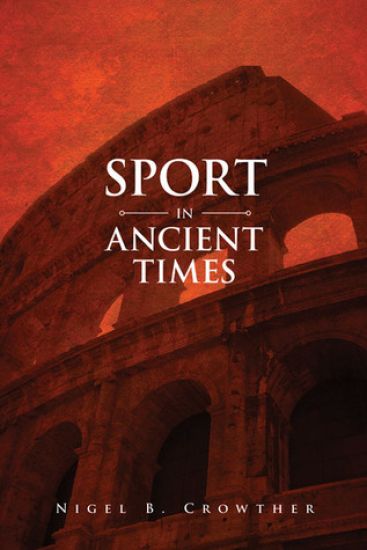
A lively survey encompassing the Orient, the Americas, and the classical worldFrom the Olympic Games of Greece to the gladiatorial contests of Rome, sport in the ancient world was fiercely competitive and included a wider range of physical contests than we moderns might suspect. The early Chinese played forms of polo and golf, while half a world away, Hohokam and Maya Indians enjoyed team ball games.Nigel Crowther, a leading authority on classical Greek sport, here casts his net over the entire ancient world to reveal the variety, and often the intensity, of sport in earlier times, from 3000 b.c.e. to the Middle Ages. Taking in twenty premodern societies on five continents - with particular emphasis on ancient Greece and Rome and the Byzantine Empire - he traces connections to modern sporting attitudes, practices, and institutions as he describes how athletics figured in cultural arenas that extended beyond physical prowess to ritual, social status, military associations, and politics.Crowther takes us back to the birth of sumo wrestling in Japan and describes the sports of the Sumerians and Hittites. He documents bull leaping and boxing as recorded on pottery in Crete, as well as running and archery as practiced by the pharaohs in Egypt. He shows the significance of the early Olympic Games, describes the Romans' use of gladiatorial contests for political ends, and analyzes the influence of Byzantine chariot racing on society. He also notes the changing role of women in ancient sports - from their prominence in Egyptian contests, to the mythological Atalanta, to female Roman gladiators.As informative as it is entertaining, Sport in Ancient Times opens new vistas for general readers, students, and sport historians. It offers a broad look at ancient sport and will enrich readers' appreciation of games they enjoy today.
The Industrial Workers of the World, or Wobblies, a radical labor union, played an important role in Oklahoma between the founding of the union in 1905 and its demise in 1930. In Oil, Wheat, & Wobblies, Nigel Anthony Sellars describes IWW efforts to organize migratory harvest hands and oil-field workers in the state and relationships between the union and other radical and labor groups such as the Socialist Party and the American Federation of Labor.Focusing on the emergence of migratory labor and the nature of the work itself in industrializing the region, Sellars provides a social history of labor in the Oklahoma wheat belt and the mid-continent oil fields. Using court cases and legislation, he examines the role of state and federal government in suppressing the union during World War I. Oil, Wheat, & Wobblies concludes with a description of the IWW revival and subsequent decline after the war, suggesting that the decline is attributable more to the union's failure to adapt to postwar technological change, its rigid attachment to outmoded tactics, and its internal policy disputes, than to political repression.
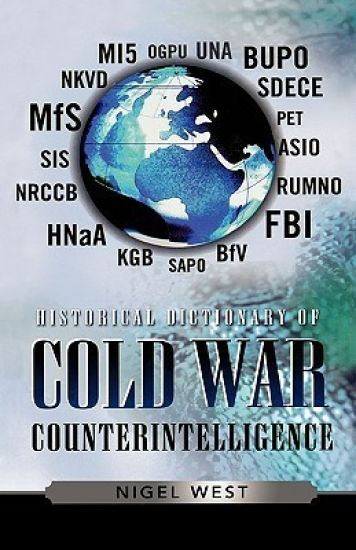
The defection of Igor Gouzenko in September 1945, more so than any other single event, alerted the West to the nature and scale of the Soviet espionage offensive being waged by the Kremlin. Apart from the dozen or so defendants convicted of spying, Gouzenko wrecked an organization that had taken years to develop, exposed the penetration of the Manhattan atomic weapons project, and demonstrated the very close relationship between the Canadian Communist Party and Moscow. Many credit this event as sparking the bitter but secretive struggle fought between the intelligence agencies of the East and West for nearly half a century. The Historical Dictionary of Cold War Counterintelligence tells the story of both sides' fierce efforts to penetrate and subvert the opponent while desperately trying to avoid a similar fate. Through a chronology, an introduction, appendixes, a bibliography, and hundreds of cross-referenced dictionary entries on the organizations, operations, events, and personalities that influenced counterintelligence during the Cold War, the world of double agents, spies, and moles is explained in the most comprehensive reference currently available.
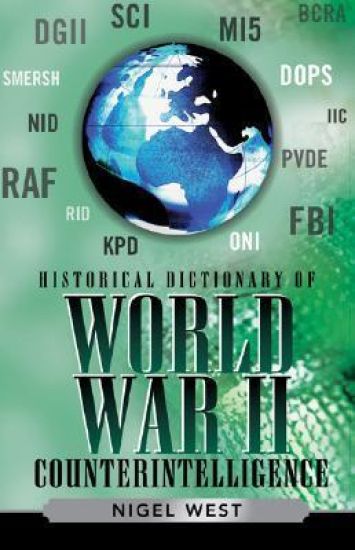
In the years immediately following World War II, information was disclosed about what has been termed the shadow war of the existence of hitherto secret agencies. In Germany it was the Abwehr and the Sicherheitsdienst; in Britain it was MI5, the Secret Intelligence Service (MI6) and Special Operations Executive (SOE); in the United States it was the Office of Strategic Services (OSS) and the Special Intelligence Service (SIS) of the Federal Bureau of Investigation (FBI); in Japan it was the Kempet'ai; and in Italy the Servicio di Informazione Militare (SIM). Sixty years after World War II secrets are still being revealed about the covert activities that took place. Many countries had secret agencies maintaining covert operations, but even ostensibly neutral countries also conducted secret operations. Changes in American, British, and even Soviet official attitudes to declassification in the 1980s allowed thousands of secret documents to be made available for public examination, and the result was extensive revisionism of the conventional histories of the conflict, which previously had excluded references to secret intelligence sources. The Historical Dictionary of World War II Intelligence tells the emerging history of the intelligence world during World War II. This is done through a chronology, an introduction, a bibliography, and hundreds of cross-referenced dictionary entries on the secret agencies, operations, and events. The world of double agents, spies, and moles during WWII is explained in the most comprehensive reference currently available.
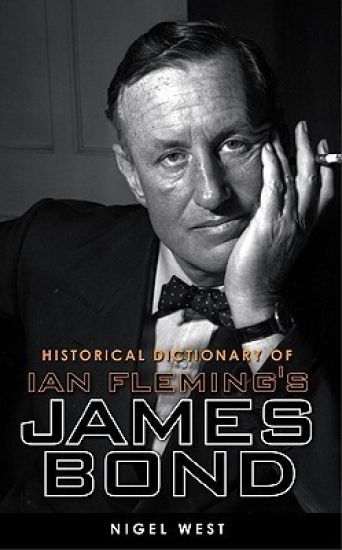
Twelve novels and nine short stories define one of the most extraordinary fictional characters of all time, creating the basis for the most successful movie series in cinematographic history, watched by more than half the world's population. The single person probably more responsible than any other for glamorizing the murky world of espionage is Ian Fleming, the creator of James Bond, who himself lived a remarkable double life of spy and writer. Everyone has an opinion on why 007 became so successful, but one possible explanation is the ingenious formula of fact, fiction, and sheer fantasy. Certainly the author drew on friends and places he knew well to provide the backdrop for his drama, but what proportion of his output is authentic, and what comes directly from the author's imagination? These questions and more are examined in the Historical Dictionary of Ian Fleming’s World of Intelligence: Fact and Fiction. This is done through a chronology, an introduction, a bibliography, and hundreds of cross-referenced dictionary entries on actual cases of espionage, real-life spies, MI5, SIS, CIA, KGB, and others. It also contains entries on Ian Fleming's novels and short stories, family and friends, his employers and colleagues, and other notable characters.
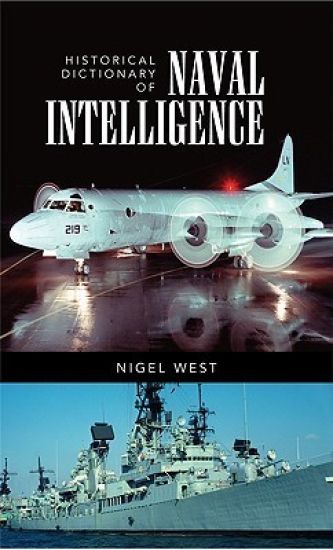
Naval intelligence is one of the most vital, and sometimes decisive, forms of intelligence. Over the centuries, and with particular velocity over recent decades, the techniques of detecting and destroying military (and commercial) shipping have improved, leapfrogging the equally frantic race to keep ahead of them and safeguard the huge investments involved. Today the new challenges range from an increasingly aggressive strategy adopted by Pyongyang's submarine fleet and the exclusion of illegal immigrants heading for Australia and southern Europe to the capture of cocaine-laded submarines in the Caribbean and the interdiction of Somali pirates off the Gulf of Aden. Any accurate assessment of the comparative threat these activities pose is just as dependent on good intelligence today as it was to Admiral Lord Nelson in the days of sail. The Historical Dictionary of Naval Intelligence relates the long and fascinating history of naval intelligence through a chronology, an introduction, a bibliography, and hundreds of cross-referenced dictionary entries on the organizations, operations, and events that made Naval intelligence what it is today.
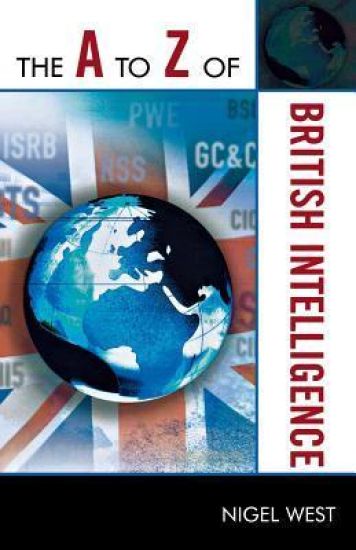
The A to Z of British Intelligence offers insight into the history and operations of British Intelligence through its more than 1,800 entries, covering a vast and varied cast of characters: the spies and their handlers, the moles and defectors, the political leaders, the top brass, the techniques and jargon, and the many different offices and organizations. Covered also are the agencies; leading individuals and prominent personalities; operations, including double agent and deception campaigns; and events, using the most up-to-date declassified material, but written in a style for the professional and general reader alike. This text features 16 black-and-white photographs, an extensive chronology, and a comprehensive bibliography.
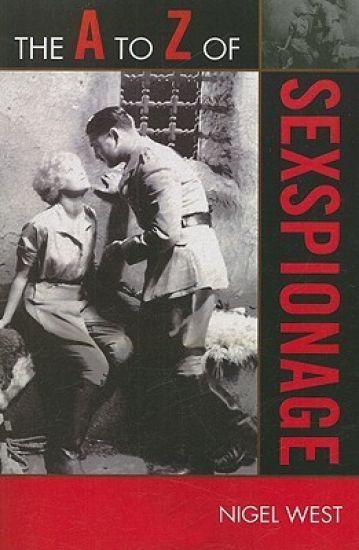
In a surprising number of espionage cases sex has played a significant role—often only in the background—possibly as a reason why a particular individual has lived beyond his means and is in desperate need of cash. FBI agent Earl Pitts sold secrets to the Soviets to ease his financial burdens, which came from his habitually heavy use of male and female prostitutes. Yuri Nosenko collaborated with the CIA after having misappropriated KGB funds to entertain expensive women while on official duties in Geneva, and Aleksandr Ogorodnik of the Soviet foreign ministry was persuaded to become a spy by his pregnant Spanish lover, an agent recruited by the CIA. In the realm of human behavior, sex can be the catalyst for risky or reckless conduct. The A to Z of Sexspionage explores this behavior through a chronology, an introduction, a bibliography, and hundreds of cross-referenced dictionary entries on the secret agencies, operations, and events. From Delilah's seduction of Samson in 1161 BC to State Department official Donald Keyser's conviction of passing secrets to Isabelle Cheng, a Taiwanese intelligence officer, in 2007, Nigel West recounts the history of sexspionage.
Signals Intelligence (SIGINT) encompasses the various disciplines of wireless interception, cryptanalysis, communications intelligence, electronic intelligence, direction-finding, and traffic analysis. It has become the basis upon which all combat operations are undertaken. It is now widely recognized as an absolutely vital dimension to modern warfare and it has proved to be a vital component in the counter-intelligence war fought between the West and Soviet bloc intelligence agencies. The Historical Dictionary of Signals Intelligence covers the history of SIGINT through a chronology, an introductory essay, an appendix, and an extensive bibliography. The dictionary section has over 300 cross-referenced entries on key personnel, SIGINT technology, intelligence operations, and agencies, as well as the tradecraft and jargon. This book is an excellent access point for students, researchers, and anyone wanting to know more about Signals Intelligence.
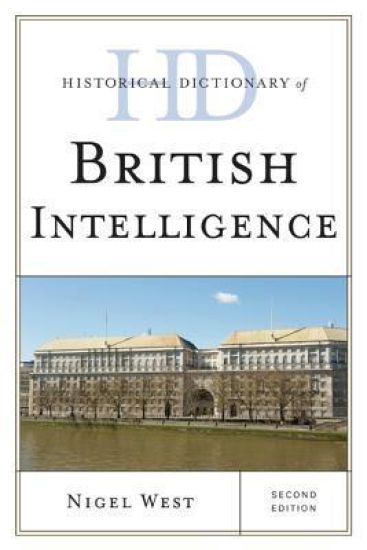
British Intelligence is the oldest, most experienced organization of its kind in the world, the unseen hand behind so many world events, and glamorized by James Bond. Despite the change in role, from a global power controlling an Empire that covered much of the world, to a mere partner in the North Atlantic Treaty Organization (NATO) and the European Union, the country’s famed security and intelligence apparatus continues largely intact, and recognized as “punching above its weight.” Feared by the Soviets, admired and trusted by the Central Intelligence Agency (CIA), British Intelligence has provided the hidden dimension to the conduct of domestic and foreign policy, with the added mystique of Whitehall secrecy, a shroud that for years protected the identities of the shadowy figures who recruited the sources, broke the codes, and caught the spies. This second edition of Historical Dictionary of the British Intelligence covers the history through a chronology, an introductory essay, appendixes, and an extensive bibliography. The dictionary section has over 1,000 cross-referenced entries on specific operations, spies and their handlers, the moles and defectors, top leaders, and main organizations. This book is an excellent access point for students, researchers, and anyone wanting to know more about the British Intelligence.
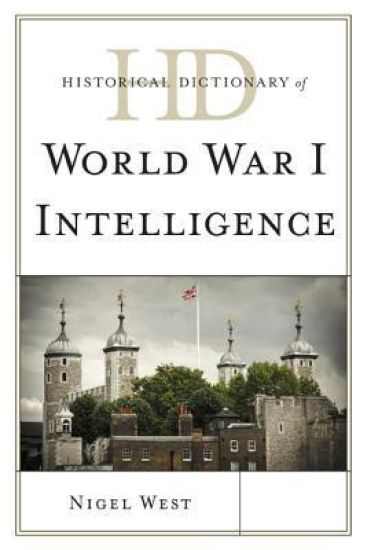
Known as “the Great War,” the world’s first truly global conflict is remarkable in what might now be termed modern espionage. World War I was witness to plenty of ”firsts.” Apart from the contribution made by aerial reconnaissance and the interception of wireless telegraphy, telephone and cable traffic, there was the scientific aspect, with new machines of war, such as the submarine, sea-mine, torpedo, airship, barbed wire, armored tank and mechanized cavalry in a military environment that included mustard gas, static trench warfare, the indiscriminate bombardment of civilian population centers and air-raids. Large-scale sabotage and propaganda, the manipulation of news and of radio broadcasts, and censorship, were all features of a new method of engaging in combat, and some ingenious techniques were developed to exploit the movement of motor and rail transport, and the transmission of wireless signals. The hitherto unknown disciplines of train-watching, bridge-watching, airborne reconnaissance and radio interception would become established as routine collection methods, and their impact on the conflict would prove to be profound. The Historical Dictionary of World War I Intelligence relates this history through a chronology, an introductory essay, an appendix, and an extensive bibliography. The dictionary section has over 400 hundred cross-referenced entries on intelligence organizations, the spies, and the major cases and events of World War I. This book is an excellent access point for students, researchers, and anyone wanting to know more about the world of intelligence in World War I.
This collection of the folklore of peasants living in the Amazon basin, who regard their environment with awe and respect, focuses on the significance of myths and legends as a message of conservation.
While the French Revolution has been much discussed and studied, its impact on religious life in France is rather neglected. Yet, during this brief period, religion underwent great changes that affected everyone: clergy and laypeople, men and women, Catholics, Protestants, and Jews. The 'Reigns of Terror' of the Revolution drove the Church underground, permanently altering the relationship between Church and State.In this book, Nigel Aston offers a readable guide to these tumultuous events. While the structures and beliefs of the Catholic Church are central, it does not neglect minority groups like Protestants and Jews. Among other features, the book discusses the Constitutional Church, the end of state support for Catholicism, the 'Dechristianization' campaign and the Concordat of 1801-2.Key themes discussed include the capacity of all the Churches for survival and adaptation, the role of religion in determining political allegiances during the Revolution, and the turbulence of Church-State relations.In this masterly study, based on the latest evidence, Aston sheds new light on a dynamic period in European history and its impact on the next 200 years of religious life in France.ABOUT THE AUTHOR:Nigel Aston is senior lecturer in modern history at the University of Luton.PRAISE FOR THE BOOK:""As a synthesis both of recent work and of older studies in religious history, it is a tour de force. . . . The great contribution of this book is to the history of the French Revolution, and here the picture of events that emerges from Aston's account is in certain respects an unfamiliar one. . . . Those of us who teach courses on Enlightenment and French Revolution, as well as general readers wanting a detailed, well-written synthesis of the religious history of this complex period, are very much in Nigel Aston's debt.""--H-France Reviews""A comprehensive survey of the religious history of France from the eve of the Revolution through the early years of the nineteenth century. It is work of great erudition, drawing on an immense array of secondary materials and printed sources. . . . The book is undoubtedly the best general study of religion in the French Revolution to appear in English since John McManner's short synthesis of 1968.""--Catholic Historical Review""This will be the book on the subject. It is based on a great deal of the author's own primary research on the topic, and draws on an enormous body of secondary sources. It is very-well written, and is an excercise in a humane kind of social history...a splendid book.""--Prof. Colin Jones, University of Warwick""Nigel Aston brings ideal credentials to the writing of this useful and important book. . . . [His] fine and valuable book is . . . the first comprehensive history of religion and the French Revolution to appear in English. . . . A fine and highly important and useful book. Strongly recommended for inclusion in all libraries, academic or public, that have any interest in either the history of the French Revolution or post-Enlightenment religion.""--History: Reviews of New Books ""Aston's study promises to be extremely useful for scholars of Jews in the modern period. The author strikes a nice balance between synthesis and detail in achieving an extremely readable summary of the large literature on Christianity and the Revolution. Scholars of the Haskalah interested in parallel movements within French Christianity will thus find this text an extremely convenient starting point. Moreover, Aston deserves special praise for making an effort to normalize the history of Protestants and Jews by including them alongside the Catholic Church.""--Alyssa Goldstein Sepinwall, Jewish Quarterly Review