Signals Intelligence (SIGINT) encompasses the various disciplines of wireless interception, cryptanalysis, communications intelligence, electronic intelligence, direction-finding, and traffic analysis. It has become the basis upon which all combat operations are undertaken. It is now widely recognized as an absolutely vital dimension to modern warfare and it has proved to be a vital component in the counter-intelligence war fought between the West and Soviet bloc intelligence agencies. The Historical Dictionary of Signals Intelligence covers the history of SIGINT through a chronology, an introductory essay, an appendix, and an extensive bibliography. The dictionary section has over 300 cross-referenced entries on key personnel, SIGINT technology, intelligence operations, and agencies, as well as the tradecraft and jargon. This book is an excellent access point for students, researchers, and anyone wanting to know more about Signals Intelligence.
British Intelligence is the oldest, most experienced organization of its kind in the world, the unseen hand behind so many world events, and glamorized by James Bond. Despite the change in role, from a global power controlling an Empire that covered much of the world, to a mere partner in the North Atlantic Treaty Organization (NATO) and the European Union, the country’s famed security and intelligence apparatus continues largely intact, and recognized as “punching above its weight.” Feared by the Soviets, admired and trusted by the Central Intelligence Agency (CIA), British Intelligence has provided the hidden dimension to the conduct of domestic and foreign policy, with the added mystique of Whitehall secrecy, a shroud that for years protected the identities of the shadowy figures who recruited the sources, broke the codes, and caught the spies. This second edition of Historical Dictionary of the British Intelligence covers the history through a chronology, an introductory essay, appendixes, and an extensive bibliography. The dictionary section has over 1,000 cross-referenced entries on specific operations, spies and their handlers, the moles and defectors, top leaders, and main organizations. This book is an excellent access point for students, researchers, and anyone wanting to know more about the British Intelligence.
Known as “the Great War,” the world’s first truly global conflict is remarkable in what might now be termed modern espionage. World War I was witness to plenty of ”firsts.” Apart from the contribution made by aerial reconnaissance and the interception of wireless telegraphy, telephone and cable traffic, there was the scientific aspect, with new machines of war, such as the submarine, sea-mine, torpedo, airship, barbed wire, armored tank and mechanized cavalry in a military environment that included mustard gas, static trench warfare, the indiscriminate bombardment of civilian population centers and air-raids. Large-scale sabotage and propaganda, the manipulation of news and of radio broadcasts, and censorship, were all features of a new method of engaging in combat, and some ingenious techniques were developed to exploit the movement of motor and rail transport, and the transmission of wireless signals. The hitherto unknown disciplines of train-watching, bridge-watching, airborne reconnaissance and radio interception would become established as routine collection methods, and their impact on the conflict would prove to be profound. The Historical Dictionary of World War I Intelligence relates this history through a chronology, an introductory essay, an appendix, and an extensive bibliography. The dictionary section has over 400 hundred cross-referenced entries on intelligence organizations, the spies, and the major cases and events of World War I. This book is an excellent access point for students, researchers, and anyone wanting to know more about the world of intelligence in World War I.
This collection of the folklore of peasants living in the Amazon basin, who regard their environment with awe and respect, focuses on the significance of myths and legends as a message of conservation.
While the French Revolution has been much discussed and studied, its impact on religious life in France is rather neglected. Yet, during this brief period, religion underwent great changes that affected everyone: clergy and laypeople, men and women, Catholics, Protestants, and Jews. The 'Reigns of Terror' of the Revolution drove the Church underground, permanently altering the relationship between Church and State.In this book, Nigel Aston offers a readable guide to these tumultuous events. While the structures and beliefs of the Catholic Church are central, it does not neglect minority groups like Protestants and Jews. Among other features, the book discusses the Constitutional Church, the end of state support for Catholicism, the 'Dechristianization' campaign and the Concordat of 1801-2.Key themes discussed include the capacity of all the Churches for survival and adaptation, the role of religion in determining political allegiances during the Revolution, and the turbulence of Church-State relations.In this masterly study, based on the latest evidence, Aston sheds new light on a dynamic period in European history and its impact on the next 200 years of religious life in France.ABOUT THE AUTHOR:Nigel Aston is senior lecturer in modern history at the University of Luton.PRAISE FOR THE BOOK:""As a synthesis both of recent work and of older studies in religious history, it is a tour de force. . . . The great contribution of this book is to the history of the French Revolution, and here the picture of events that emerges from Aston's account is in certain respects an unfamiliar one. . . . Those of us who teach courses on Enlightenment and French Revolution, as well as general readers wanting a detailed, well-written synthesis of the religious history of this complex period, are very much in Nigel Aston's debt.""--H-France Reviews""A comprehensive survey of the religious history of France from the eve of the Revolution through the early years of the nineteenth century. It is work of great erudition, drawing on an immense array of secondary materials and printed sources. . . . The book is undoubtedly the best general study of religion in the French Revolution to appear in English since John McManner's short synthesis of 1968.""--Catholic Historical Review""This will be the book on the subject. It is based on a great deal of the author's own primary research on the topic, and draws on an enormous body of secondary sources. It is very-well written, and is an excercise in a humane kind of social history...a splendid book.""--Prof. Colin Jones, University of Warwick""Nigel Aston brings ideal credentials to the writing of this useful and important book. . . . [His] fine and valuable book is . . . the first comprehensive history of religion and the French Revolution to appear in English. . . . A fine and highly important and useful book. Strongly recommended for inclusion in all libraries, academic or public, that have any interest in either the history of the French Revolution or post-Enlightenment religion.""--History: Reviews of New Books ""Aston's study promises to be extremely useful for scholars of Jews in the modern period. The author strikes a nice balance between synthesis and detail in achieving an extremely readable summary of the large literature on Christianity and the Revolution. Scholars of the Haskalah interested in parallel movements within French Christianity will thus find this text an extremely convenient starting point. Moreover, Aston deserves special praise for making an effort to normalize the history of Protestants and Jews by including them alongside the Catholic Church.""--Alyssa Goldstein Sepinwall, Jewish Quarterly Review
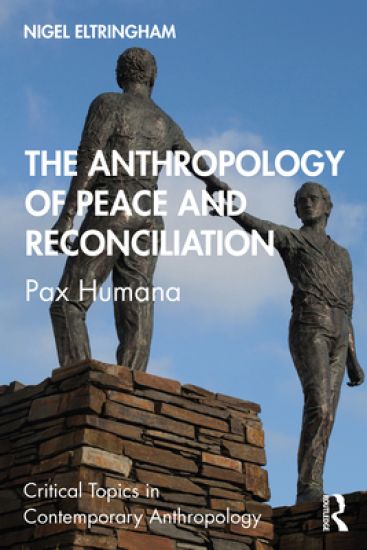
This book offers a uniquely comparative, case-study perspective on the anthropology of peace and reconciliation. In the contemporary world, the end of violent conflict often gives way to one, or a combination, of five interventions designed to strengthen “peace” and facilitate “reconciliation”. These interventions are: the reinvigoration of “traditional” conflict management mechanisms; the collection and preservation of testimony; truth commissions; international criminal trials; and memorialisation. Social anthropologists have challenged the received wisdom on which these interventions are based, arguing that they fail to adequately take into account and sensitively manage the needs and expectations of those who have lived through conflict. Exploring the five interventions through detailed ethnographic accounts from around the world, this book demonstrates that although social anthropologists adopt a critical stance, they do not dismiss “received wisdom” out of hand; rather, they advocate that interventions should be subject to continuous evaluation according to the evolving, often contradictory, needs and wishes of those who strive to survive among the ruins of their former lives.This is essential reading for scholars of peace studies, conflict resolution studies and those taking an anthropological approach to conflict, violence, human rights and law.
This book offers a uniquely comparative, case-study perspective on the anthropology of peace and reconciliation. In the contemporary world, the end of violent conflict often gives way to one, or a combination, of five interventions designed to strengthen “peace” and facilitate “reconciliation”. These interventions are: the reinvigoration of “traditional” conflict management mechanisms; the collection and preservation of testimony; truth commissions; international criminal trials; and memorialisation. Social anthropologists have challenged the received wisdom on which these interventions are based, arguing that they fail to adequately take into account and sensitively manage the needs and expectations of those who have lived through conflict. Exploring the five interventions through detailed ethnographic accounts from around the world, this book demonstrates that although social anthropologists adopt a critical stance, they do not dismiss “received wisdom” out of hand; rather, they advocate that interventions should be subject to continuous evaluation according to the evolving, often contradictory, needs and wishes of those who strive to survive among the ruins of their former lives.This is essential reading for scholars of peace studies, conflict resolution studies and those taking an anthropological approach to conflict, violence, human rights and law.
The increased movement of people globally has changed the face of national and international schooling. Higher levels of mobility have resulted from both the willing movement of students and their families with a desire to create a better life, and the forced movement of refugee families travelling away from war, famine and other extreme circumstances. This book explores the idea that the complex connections created by the forces of globalisation have led to a diminishing difference between what were once described as international schools and national schools.By examining a selection of responses from students attending international schools in Brazil, the United Kingdom, France, Germany, the Philippines and Switzerland, the book discusses key issues surrounding identity and cosmopolitan senses of belonging. Chapters draw from current literature and recent qualitative research to highlight the concerns that students face within the international school community, including social, psychological, and academic difficulties. The interviews provide a rich and unique body of knowledge, demonstrating how perceptions of identity and belonging are changing, especially with affiliation to a national or a global identity. The notion that international students have become global citizens through their affiliation to a global rather than a national identity exhibits a changing and potentially irreversible trend.Global Identity in Multicultural and International Educational Contexts will be of key interest to researchers, academics and policy makers involved with international schooling and globalised education.
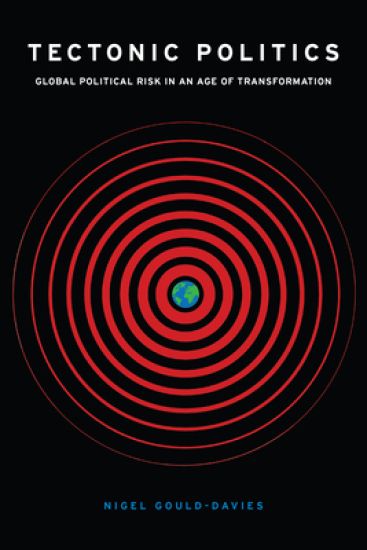
Political risk now affects more markets and countries than ever before and that risk will continue to rise. But traditional methods of managing political risk are no longer legitimate or effective.In Tectonic Politics, Nigel Gould-Davies explores the complex, shifting landscape of political risk and how to navigate it. He analyses trends in each form of political risk: the power to destroy, seize, regulate, and tax. He shows how each of these forms reflects a deeper transformation of the global political economy that is reordering the relationship between power, wealth, and values. In a world where everything is political, the craft of engagement is as important as the science of production and the art of the deal. The successful company must integrate that craft—the engager's way of seeing and doing—into strategy and culture.Drawing on a career in academia, business, and diplomacy, Gould-Davies provides corporate leaders, scholars, and engaged citizens with a groundbreaking study of the fastest-rising political risk today. “As tectonic plates shape the earth,” he writes, “so tectonic politics forges its governance.”
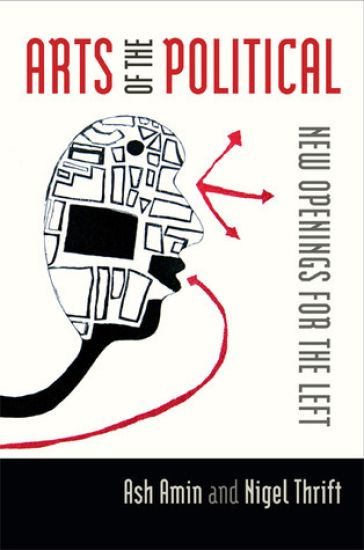
In the West, "the Left," understood as a loose conglomeration of interests centered around the goal of a fairer and more equal society, still struggles to make its voice heard and its influence felt, even amid an overwhelming global recession. In Arts of the Political: New Openings for the Left, Ash Amin and Nigel Thrift argue that only by broadening the domain of what is considered political and what can be made into politics will the Left be able to respond forcefully to injustice and inequality. In particular, the Left requires a more imaginative and experimental approach to the politics of creating a better society. The authors propose three political arts that they consider crucial to transforming the Left: boosting invention, leveraging organization, and mobilizing affect. They maintain that successful Left political movements tend to surpass traditional notions of politics and open up political agency to these kinds of considerations. In other words, rather than providing another blueprint for the future, Amin and Thrift concentrate their attention on a more modest examination of the conduct of politics itself and the ways that it can be made more effective.
In the West, "the Left," understood as a loose conglomeration of interests centered around the goal of a fairer and more equal society, still struggles to make its voice heard and its influence felt, even amid an overwhelming global recession. In Arts of the Political: New Openings for the Left, Ash Amin and Nigel Thrift argue that only by broadening the domain of what is considered political and what can be made into politics will the Left be able to respond forcefully to injustice and inequality. In particular, the Left requires a more imaginative and experimental approach to the politics of creating a better society. The authors propose three political arts that they consider crucial to transforming the Left: boosting invention, leveraging organization, and mobilizing affect. They maintain that successful Left political movements tend to surpass traditional notions of politics and open up political agency to these kinds of considerations. In other words, rather than providing another blueprint for the future, Amin and Thrift concentrate their attention on a more modest examination of the conduct of politics itself and the ways that it can be made more effective.
After the Public Heath Acts of 1872 and 1875, British local authorities bore statutory obligations to carry out sanitary improvements. Richardson explores public health strategy and central-local government relations during the mid-nineteenth-century, using the experience of Uppingham, England, as a micro-historical case study. Uppingham is a small (and unusually well-documented) market town which contains a boarding school. Despite legal changes enforcing sanitary reform, the town was hit three times by typhoid in 1875–1876. Richardson examines the conduct of those involved in town and school, the economic dependence of the former on the latter, and the opposition to higher rates to pay for sanitary improvement by a local ratepayer "shopocracy." He compares the sanitary state of the community with others nearby, and Uppingham School with comparable schools of that era. Improvement was often determined by business considerations rather than medical judgments, and local personalities and events frequently drove national policy in practice. This study illuminates wider themes in Victorian public medicine, including the difficulty of diagnosing typhoid before breakthroughs in bacteriological research, the problems local officialdom faced in implementing reform, and the length of time it took London ideas and practice to filter into rural areas.
Demonstrating the relationship of the basic theory of solid-phase extraction (SPE) to chromatography, this comprehensive reference illustrates how SPE techniques significantly contribute to the preparation of samples for a wide variety of analytical techniques. It provides step-by-step details on the applications of SPE to environmental matrices, broad-spectrum drug screening, veterinary drug abuse, pharmaceutical drug development, biological samples, and high-throughput screening. Written by world-renowned experts in the field, the book contains helpful reference charts, tables of solvent properties, selectivities, molecular acid/base properties, and more.
Theology is based on God's true and unchanging Word, but does the Bible supply an unwavering foundation for spiritual certainties? Perhaps surprisingly, Brush contends that it does not, because, like science, it is a human discipline and subject to our limitations of knowledge, interpretation, and objectivity. In part one, Brush unpacks this contention, showing how Christians both past and present have arrived at conclusions that actually run counter to biblical teaching, and how these interpretive viewpoints have changed over time. In part two, he makes the case that flawed theological positions have resulted in views that needlessly conflict with science, and that these clashes can be resolved with more accurate formulations. Brush evenly evaluates questions including the age of the earth, the origin of life, and the end of time. Christians who wish to better understand the relationship between their faith and science will be encouraged by the great harmony that Brush sees between scientific findings and biblical teaching. As he guides readers into an awareness of the inherent limitations of our knowledge, believers can cultivate greater humility regarding these contested issues.
This is a sophisticated monograph focussing on attainment at the end of secondary/high school education (and the interface with tertiary education). It combines re-analysis of secondary literature (including official statistics, institutional histories, interview data) and analysis of qualitative and quantitative primary research using descriptive and inferential statistics, value-added analysis and grounded theory. The results show the significance and weakness of both the mid-twentieth century classic analyses of social class and the late-twentieth century feminist approaches. It shows how a joint consideration of social issues, in particular of gender and social stratification, produce a powerful model for explaining attainment with important implications for policy on boys' underachievement and participation in higher education.
In this wide-ranging and compelling set of essays, Nigel Tubbs illustrates how a philosophical notion of education lies at the heart of Hegelian philosophy and employs it to critique some of the stereotypes and misreadings from which Hegel often suffers. With chapters on philosophical education in relation to life and death, self and other, subject and substance, and to Derrida and Levinas in particular, Tubbs brings Hegelian education - read as recollection - to bear on modern social and political relations. He argues, in sum, that Hegelian philosophy comprehended in terms of education yields a theory of self and other that can inform and reform relations between rich and poor, West and East. Finally, the book addresses the most controversial aspect of any defence of Hegel, namely the comprehension of the absolute and its imperialist implications for Western history. The author argues passionately that through a notion of philosophical education Hegel teaches us not to avoid the dilemmas that are endemic to modern Western power and mastery when trying to comprehend some of our most pressing human concerns.
This unique manual is a comprehensive, easy-to-read overview of hazards analysis as it applies to the process and allied industries. The book begins by building a background in the technical definition of risk, past industrial incidents and their impacts, ensuing legislation, and the language and terms of the risk field. It addresses the different types of structured analytical techniques for conducting Process Hazards Analyses (PHA), provides a "What If" checklist, and shows how to organize and set up PHA sessions. Other topics include layout and siting considerations, Failure Modes and Effect Analysis (FMEA), human factors, loss of containment, and PHA team leadership issues.