Kirjojen hintavertailu. Mukana 11 577 797 kirjaa ja 12 kauppaa.

Kirjahaku

Etsi kirjoja tekijän nimen, kirjan nimen tai ISBN:n perusteella.

1000 tulosta hakusanalla Norbert Wolf

Quest for Excitement

Quest for Excitement

Norbert Elias

University College Dublin Press
2008
sidottu
Elias effectively founded the modern sociology of sport in collaboration with Eric Dunning in the 1960s and 1970s. They argue that in highly constrained, 'civilised' societies, sports - as well as a spectrum of other cultural and leisure activities - are to be understood not in terms of 'relaxation' but rather of the need for pleasurable excitement and its pleasurable resolution.The topics range historically from the violence of the ancient Greek Olympic Games to foxhunting, early forms of football, and the question of why Britain proved to be the cradle of so many modern sports. And, today, what are the effects of achievement striving in elite sports? Why has spectator violence become such a problem? Why do so many sports retain the character of a 'male preserve'? Originally written in English, this volume has been thoroughly revised by Eric Dunning and includes one hitherto unpublished essay by Elias and a new essay by Dunning, bringing up to date his interpretation of football hooliganism.
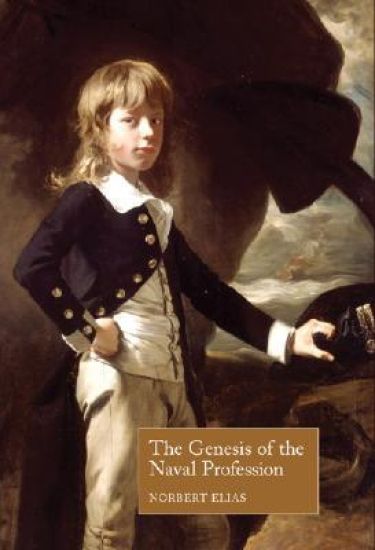
The Genesis of the Naval Profession

The Genesis of the Naval Profession

Norbert Elias

University College Dublin Press
2007
nidottu
The emergence of the professional naval officer was related both to the necessities of naval warfare and to the structure of society on land. Originally warships were manned by two separate sets of commanders - gentleman soldiers skilled in fighting, and 'tarpaulins' of humbler social origin skilled in navigation and the manual skills of sailing. Elias traces the onboard conflicts between them, from Drake's famous insistence that the gentlemen 'haul and draw' with the sailors, to the gradual merging of the two hierarchies by the end of the eighteenth century. The innovation of the midshipmen - boys of gentle birth who both learned the manual skills of the sailor and received the education of a gentleman - gave crucial advantage to the British Royal Navy over the French and Spanish, in which the greater rigidity of social barriers ashore prevented a similar solution afloat. Planned but never completed by Elias, this book has been reconstructed from his mainly unpublished typescripts.
The Established and the Outsiders

The Established and the Outsiders

Norbert Elias

University College Dublin Press
2008
sidottu
In "The Established and the Outsiders", Elias and Scotson explain differences in power and rank between two very similar groups - both working class - in a local community studied in the early 1960s. They show how one group monopolised sources of power and used them to exclude and stigmatise members of the other, pinpointing the role of gossip in the process. In a later theoretical introduction, Elias advanced a general theory of power relations, applying the established-outsiders model to changing power balances between classes, ethnic groups, colonised and colonisers, men and women, parents and children, gays and straights. A further theoretical development in the last year of his life is an essay inspired by Harper Lee's "To Kill a Mocking Bird", published here in English for the first time.
Essays I: On the Sociology of Knowledge and the Sciences

Essays I: On the Sociology of Knowledge and the Sciences

Norbert Elias

University College Dublin Press
2009
sidottu
Between the end of the Second World War and his death in 1990, Elias published almost 60 articles on a wide range of topics. About a third of them have not previously appeared in English, and many of the rest were widely scattered and difficult to obtain. They are being published in three thematic volumes, all edited by Richard Kilminster and Stephen Mennell. In this volume, Elias develops his sociological theory of knowledge and the sciences - in the plural - to counter what he sees as the inadequacies of traditional philosophical theories. Included are savage attacks on the philosophy of Karl Popper and its damaging influence, a brilliant essay on scientific establishments, and essays on Thomas More and the social uses of utopias.
Essays II: On Civilising Processes, State Formation and National Identity
Eleven of the 18 essays by Norbert Elias collected in this volume have not been published previously in English, and several of the remainder were not easily obtained. The themes of this volume represent major extensions of and reflections upon the ideas first advanced in "The Civilizing Process". The topics include violence and civilisation; the civilising of parents; privacy; conflict and change within communities; public opinion and national character in Britain; the charismatic leadership of Adolf Hitler; and the fear of death.
Essays III: On Sociology and the Humanities

Essays III: On Sociology and the Humanities

Norbert Elias

University College Dublin Press
2009
nidottu
Almost half of the 28 essays in this volume have not been published in English before, and many of the others were little known. Some directly express Elias' dissatisfaction with the ahistorical, present-centred trend of modern sociology. Others scintillatingly show how wide ranging were Elias' own sociological interests. Topics include, among many others: the work of Theodor W. Adorno; sociology and psychiatry; psychosomatic illness; human emotions; communities in long-term perspective; the changing balance of power between the sexes; African art; football; and even pigeon racing.
On the Process of Civilisation

On the Process of Civilisation

Norbert Elias

University College Dublin Press
2012
sidottu
This is Volume 3 in the "Collected Works of Norbert Elias", translated by Edmund Jephcott. Recognised as one of the most important works of sociology in the last century, "On the Process of Civilisation" has been influential and widely discussed across the whole range of the humanities and social sciences. This sumptuous new edition, completely revised with many corrections and clarifications, includes colour plates of all the 13 drawings from "Das Mittelaterliche Hausbuch" to which Elias refers in his famous discussion of 'Scenes from the life of a knight'. Beginning with his celebrated study of the changing standards of behaviour of the secular upper classes in Western Europe since the Middle Ages, Elias demonstrates how 'psychological' changes in habitus and emotion management were linked to wider transformations in power relations, especially the monopolisation of violence and taxation by more increasingly effective state apparatuses.
What is Sociology?

What is Sociology?

Norbert Elias

University College Dublin Press
2012
sidottu
Translated by Grace Morrissey, Stephen Mennell and Edmund Jephcott, volume 5 of the "Collected Works of Norbert Elias" contains Elias' broadest statement of the fundamentals of sociology, in important respects very different from the discipline as it is institutionalised today. In his vision, sociology is concerned with the whole course of the development of human society. Especially important are the 'game models', which demonstrate the connections between power ratios, unintended consequences, unplanned long-term processes and the way people perceive and conceptualise the social processes in which they are caught up in interdependence with each other. This edition contains two extra chapters previously unpublished in English, one of them a substantial discussion of the legacy of Marx.
The Loneliness of the Dying and Humana Conditio

The Loneliness of the Dying and Humana Conditio

Norbert Elias

University College Dublin Press
2010
sidottu
This volume contains two of Elias' shorter books. "The Loneliness of the Dying" is one of his most admired works - drawing on a range of literary and historical sources, it is sensitive and even moving in its discussion of the changing social context of death and dying over the centuries. Today, when death is less familiar to most people in everyday life, the dying frequently experience the loneliness of social isolation. "Humana Conditio", written in 1985 to mark the fortieth anniversary of the end of the Second World War, has never before been published in English. 'Human beings', writes Elias, 'have made the reciprocal murdering of people a permanent institution. Wars are part of a fixed tradition of humanity. They are anchored in its social institutions and in the social habitus of people, even the most peace-loving'. Elias' meditation on the human lot ranges over the whole of human history, to international relations and the future of humanity.
Studies on the Germans

Studies on the Germans

Norbert Elias

University College Dublin Press
2013
sidottu
Studies on the Germans, Volume 11 of the Collected Works, was first published in German in 1989, exactly 50 years after Elias' most famous work, On the Process of Civilisation. The essays in the book were written independently of each other over three decades. In this new edition, Elias' original English text of the extremely important essay 'The breakdown of civilisation' is published for the first time. Other essays include those on duelling and its wider social significance, as well as on nationalism, civilisation and violence, and post-war terrorism in the Federal Republic of Germany. All the essays have been newly annotated by the editors, especially to make clear many historical references that Elias, unrealistically, assumed his readers would understand without further explanation.
Mozart and Other Essays on Courtly Art

Mozart and Other Essays on Courtly Art

Norbert Elias

University College Dublin Press
2010
sidottu
Like his father Leopold, Wolfgang Amadeus Mozart was dependent on a court aristocracy in whose eyes he was little more than a domestic servant. Unlike his father, however, his personal makeup was already that of the freelance artist who sought to follow the flow of his own artistic conscience and imagination rather than the courtly conventions and standards of the day. In "Mozart: the Sociology of a Genius", Elias paints a portrait of this extraordinarily gifted artist born into a society that did not yet possess either the concept of 'genius' or (at least in music) that of freelance artist. The apparent contradictions of his character - the refined elegance of his compositions and the coarseness of his lavatorial humour - reflect his uncomfortable and eventually tragic straddling of two social worlds. The volume also includes two major essays on cognate topics, previously unpublished in English: on the courtly painter Watteau's "Embarkation for Cythera", and on 'The fate of German Baroque poetry: between the traditions of court and middle class'.
The Symbol Theory

The Symbol Theory

Norbert Elias

University College Dublin Press
2011
sidottu
"The Symbol Theory, volume 13 in "The Collected Works of Norbert Elias", situates the human capacity for forming symbols in the long-term biological evolution of Homo sapiens, showing how it is linked through communication and orientation to group survival. Elias proceeds to recast the question of the ontological status of knowledge, moving beyond the old philosophical dualisms of idealism/materialism and subject/object. He readjusts the boundary between the 'social' and the 'natural' by interweaving evolutionary biology and the social sciences. "The Symbol Theory" provides nothing less than a new image of the human condition as an accidental outcome of the blind flux of an indifferent cosmos. Elias' Introduction now includes previously unpublished passages written in the days before he died.
Interviews and Autobiographical Reflections

Interviews and Autobiographical Reflections

Norbert Elias

University College Dublin Press
2013
sidottu
Vol. 17 of the Collected Works can serve as an excellent introduction to Elias's thinking overall. In the last decade of his life, Elias gave many interviews in which he discussed aspects of his work, rebutting many common misunderstandings of his thinking and further developing ideas sketched out in his writings. Besides a selection of these 'academic' interviews (many of them not previously published in English, or not published at all), the book contains his essay in intellectual autobiography and a long interview in which he talks about his own life.
Supplements and Index to the Collected Works

Supplements and Index to the Collected Works

Norbert Elias

University College Dublin Press
2014
sidottu
Vol. 18 of the Collected Works, besides including the consolidated index to the Collected Works as a whole, contains two substantial supplements: a long and important critique on Freud written in the last weeks of Elias' life, not previously published in English; and an essay, not previously published in any language, on the anthropologist-philosopher Lucien Levy-Bruhl and the problem of 'the logical unity of humankind'. Both essays fill important gaps in Elias' work, and deal with common criticisms of his thought.
Berlin

Berlin

Norbert Schurer

Signal Books Ltd
2014
nidottu
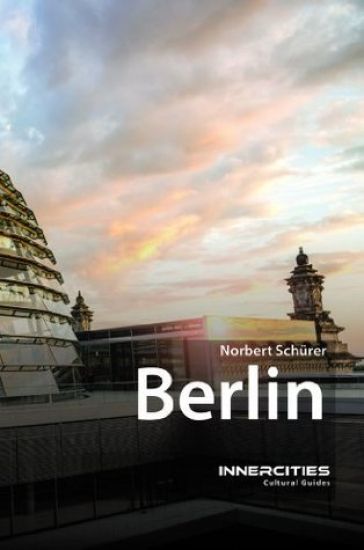
Berlin is much more than the former capital of Nazi Germany--it is often described today as innovative, fast-paced, avant-garde, rough, exciting, and even sexy. At the political and geographical centre of the Second World War and the Cold War, the city had already been at the cultural heart of Europe for hundreds of years--and continues to set architectural, musical, literary and fashion trends in the twenty-first century. Berlin has been shaped by politicians such as Frederick the Great, dictators like Adolf Hitler and architects such as Karl Friedrich Schinkel and Hans Scharoun, and it boasts icons including the Brandenburg Gate and the Reichstag. Yet no one individual put a decisive stamp on the city, which had to reinvent itself again and again because of its turbulent history. The staid baroque capital of Prussia was succeeded by the up-and-coming capital of newly united Germany; village homes replaced by tenement housing in the nineteenth century; the hierarchical orderliness of the early twentieth century followed by the unconventional statements of modernism. After the destruction of the Second World War, the Berlin Wall cut the city in half and created the brooding image of the Cold War frontier, and since the dramatic collapse of the Wall the latest version of a unified Berlin has arisen as new Germany's capital. Even today, the various communities that now make up the city have their own distinctive identities. Norbert Schurer's cultural guide explores the juxtaposition of Berlin's past and present in history, architecture, literature, art, entertainment and religion and offers an insider account that provides contexts to make sense of Berlin's dazzling variety.
Luftwaffe Fighter Ace

Luftwaffe Fighter Ace

Norbert Hannig

Grub Street Publishing
2022
nidottu
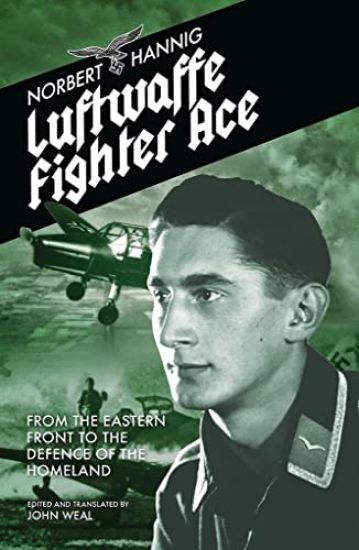
By his own, modest, admission Norbert Hannig was a Frontflieger, or operational pilot, who really did nothing special during World War Two. He was just, he says, one of the many rank and file pilots fighting for his country and not for the Führer. But his wartime career makes for fascinating and highly informative reading on an aspect of the 1939–45 war not often covered in the English language; primarily that of the campaign against the Soviet Union. Norbert started flying during high school on gliders and joined the German air force as volunteer and officer cadet, one of the midwar-generation of Luftwaffe fighter pilots. He began operations with JG54 on the eastern (Leningrad) front in March 1943; initially he flew Messerschmitt Bf 109s before transitioning to the Focke-Wulf FW 190. After a year’s fighting, he was ordered back to Germany as a flight instructor to oppose the bomber streams of the AAF and RAF. Returning to Russia at the end of 1944, he became a Staffel CO and claimed many aircraft shot down. In April 1945 he converted to the first jet fighter, the Me 262, in south Germany, and flew his last missions with this aircraft. Also serving with JV44 (whose CO was Adolf Galland), Norbert Hannig finished the war with 42 victories from more than 200 missions. Many and varied were his experiences in action against the rejuvenated Soviet air force in the east, and the powerful western Allies over the homeland during the final chaotic months of hostilities, which culminated in his captivity. John Weal’s skilful translation ensures that the fluid descriptive style of the author is preserved. Thankfully, also, Norbert was a keen photographer who shot a profusion of images, many of which appear in this important book.
Days of Battle

Days of Battle

Norbert Számvéber

Helion Company
2018
nidottu
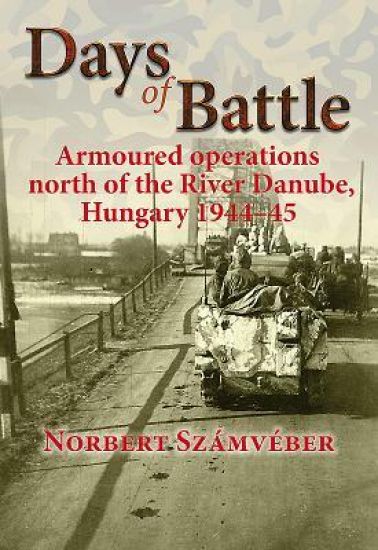
Days of Battle describes a hitherto neglected part of the military history of Hungary during World War II. Dr Norbert Számvéber presents detailed accounts of four important clashes of German-Hungarian and Soviet armour north of the river Danube, in the southern territory of the historical Upper Hungary (part of Hungary between 1938 and 1945, at the present time now part of Slovakia). The first is an account of the battle between the Ipoly and Garam rivers during the second half of December 1944, in which the élite Hungarian Division “Szent László” saw action for the first time. The second study is about the fierce tank battle of Komárom, fought 6-22 January 1945. This was an integral part of the Battle for Budapest, parallel in time with Operation “Konrad”. The third part of the book describes the combat during the German Operation “Südwind” in February 1945, whilst the fourth the Soviet attack launched in the direction of Bratislava in March 1945. The author, chief of Hungary’s military archives, has based his research firmly on files and documentation from German, Hungarian and Soviet sources. The book’s authoritative text is supported by specially-commissioned colour battle maps. This is a very important new study that throws much-needed light on armoured warfare on the Eastern Front during the final months of the war.
Waffen-Ss Armour in Normandy

Waffen-Ss Armour in Normandy

Norbert Számvéber

Helion Company
2018
nidottu
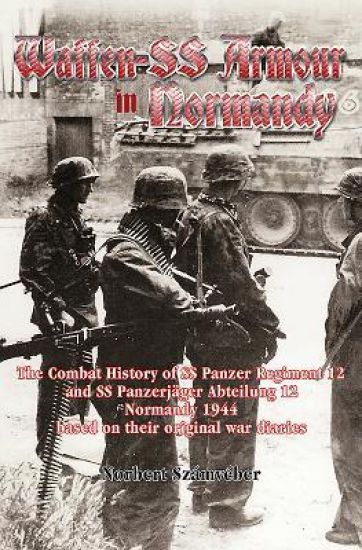
Waffen-SS Armour in Normandy presents the combat history of SS-Panzer Regiment 12 and SS-Panzerjäger Abteilung 12 in the Battle for France from June to the end of August 1944 based on transcriptions of their original unit war diaries from the Military History Archives in Prague. Both armoured units belonged to the 12.SS-Panzer Division Hitlerjugend. SS-Panzer Regiment 12 was fully-equipped with Panzer IV and Panther tanks. The main AFV of SS-Panzerjäger Abteilung 12 was the Jagdpanzer IV L/48 tank destroyer. The structure of the volume is partly source publication (documents of SS-Panzer Regiment 12) and partly study (the deployment of SS-Panzerjäger Abteilung 12). The text was written and footnoted by the author based upon original wartime files in Prague that have remained almost unknown. The book starts with the story of the units' establishment and training in 1943/1944, including, for example, the shipments of equipment, orders of battle and tactical numbers of the tanks. After this introduction, a highly detailed daily chronology of the combat actions is provided, from 12.SS-Panzer Division travelling to the Caen sector to Operation Totalize and the withdrawal to the Seine River. Documents from SS-Panzer Regiment 12 presented in the book include the following: combat reports, list of knocked-out enemy tanks, German personnel and tank losses, combat orders, summary of acquired combat experiences and others. This is an impressive look at tactical-level events and command decisions, highlighting the armoured combat tactics that were able to stop Montgomery's Army Group from breaking through the German lines near Caen for two months. The study includes a number of detailed maps and excellent photos. In addition, the book has benefited from the contribution of rare information, photographs and documents from the archive of noted Waffen-SS historian Mark C. Yerger.
Geofusion

Geofusion

Norbert Csizmadia

LID Publishing
2019
sidottu
We are living in a unique "geo" age, where geography is appreciated again. The 21st century encompasses political and economic games where the multi-polar world, a new world order, and a new value system combine to develop new actors and new Industries. Business leaders are focusing more and more on global social issues, putting pressure on international political decisions such as the Space Race, global warming and migration. The 21st century is the era of knowledge & creativity (technology + knowledge + geography = "techknowledgeography" or Geofusion) where education and innovation are the most important investment. Knowledge is the currency of the future. When drawn with knowledge, the map of 21st century can be utilized to discover and conform to this new world! This book helps to explain how `Geofusion' provides the opportunities, which can give lasting value to the world.
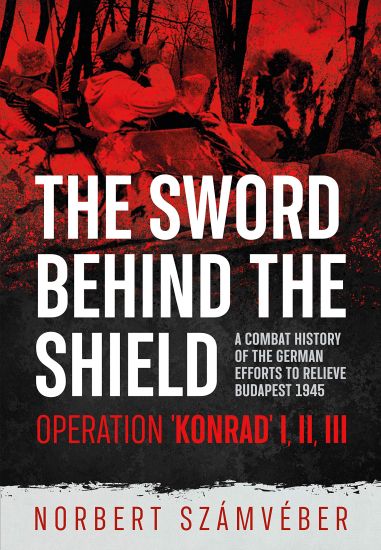
The Sword Behind the Shield

The Sword Behind the Shield

Norbert Számvéber

Helion Company
2021
nidottu
The history of the Hungarian theatre of war from late August 1944 to the end of March 1945 is a special chapter of the history of the Eastern Front during World War II. The Soviet 2nd and 3rd Ukrainian Fronts had encircled Budapest by Christmas 1944, after very heavy combat. However, this was just the first phase of a period of intense combat, as Adolf Hitler and the German High Command planned the relief of the Hungarian capital. The reinforced IV. SS-Panzerkorps was designated for this task and its units were transferred rapidly from Polish territory to Hungary. Two operational plans were swiftly devised by the Germans, before they chose that codenamed "Konrad". This was an armoured strike from the Komárom region through the mountains south of the river Danube to the Buda side of the Hungarian capital. The first day of Operation "Konrad" was 1 January 1945, and marked the beginning of a series of fierce clashes that lasted for nearly six weeks, a very special period in the history of the Battle for Budapest. Both sides employed significant numbers of armoured forces in these battles, including heavy tanks. The German-Hungarian forces tried to break through to Budapest three times in three different locations, but each time they struck relocated Soviet tank, mechanized, rifle, cavalry, artillery and anti-tank units from 3rd Ukrainian Front's reserve. In January 1945, furious tank battles developed in the eastern part of Transdanubia in Hungary, especially in the areas of Bajna, Zsámbék, Zámoly, Pettend, Vereb, Dunapentele and Székesfehérvár. After the third and strongest German attempt (code-named "Konrad 3"), which also failed, the Soviet troops launched a counter-offensive in late January 1945 to encircle and eliminate the advancing enemy forces. But the German armoured Kampfgruppen managed to blunt the Soviet attack, which eventually wound down and fragmented, mirroring the German offensives before it. This work is based mainly on German, Soviet and Hungarian archival records (e.g. war diaries, daily and after-action reports, etc.). In addition, a number of rare unit histories, contemporary private diaries and reliable personal memoirs, from generals to enlisted men, have also been used by the author. The combat actions are extremely detailed, and provide a day-by-day account. The author analyzes the command and control systems at operational and tactical levels and the losses of both sides. For a better understanding of the events the book includes many detailed specially-commissioned colour battle maps.