Though Orton’s roots lay in traditions as diverse as those represented by such writers as Wycherley, Congreve, Wilde, Shaw, Carroll, Firbank, Feydeau, Beckett and Pinter, he developed a form of ‘anarchic farce’ which was very much his own – hence the word ‘Ortonesque’. His work was deliberately subversive, not merely of the authority figures which he included in nearly all his plays, but of language and the congenialities of plot and character. Originally published in 1982, this study examines Orton’s principal plays, but its main concern is to identify his aesthetic, to elaborate the nature and achievements of anarchic farce and to locate him in relation to the developments in contemporary literature and art which have formed essential components of a post-modern sensibility.
Learning the Alphabet Sequence is a student workbook which utilizes Orton Gillingham exercises to help students learn the 26 letters in the English alphabet.Learning the Alphabet Sequence uses the Orton Gillingham model, a system designed for struggling readers and dyslexic students.
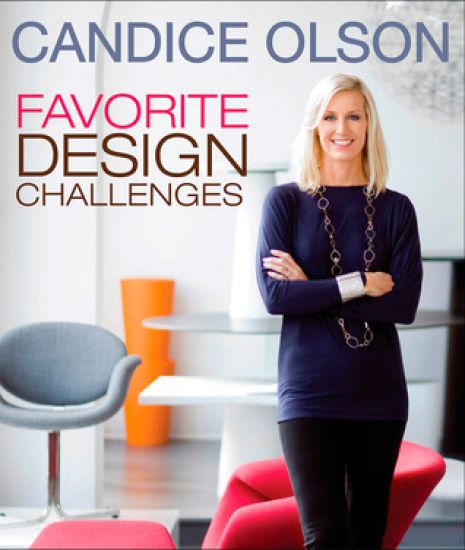
Popular TV star Candice Olson shares her favorite design challenges Candice Olson Favorite Design Challenges focuses on the tricky situations that Candice expertly handles for her clients--the same challenges that many homeowners face. From working around architectural limitations like sloped ceilings or a lack of wall space, merging styles to ensure that a room's decor pleases all of a home's occupants, to accommodating the changes that come about when a family grows or shrinks, this book highlights those ingenious solutions that make Candice's designs both beautiful and functional. Featuring 25-30 of Candice's stunning room makeovers--described in her approachable and authoritative voice-- Candice Olson Favorite Design Challenges provides gorgeous sketches and design boards that show you how each design took shape, while more than 200 full-color before-and-after photos offer a wealth of visual inspiration. Includes Candice's tips and insight into what makes each space work Candice shares how she overcame the predominant challenge in each case Provides invaluable guidance on planning your own room redos Redecorating--or even just dreaming about decorating--can transform one's outlook on life, and Candice Olson Favorite Design Challenges is just what you need to dream, plan, and execute up a redo in your own home.
The 18th century was a wealth of knowledge, exploration and rapidly growing technology and expanding record-keeping made possible by advances in the printing press. In its determination to preserve the century of revolution, Gale initiated a revolution of its own: digitization of epic proportions to preserve these invaluable works in the largest archive of its kind. Now for the first time these high-quality digital copies of original 18th century manuscripts are available in print, making them highly accessible to libraries, undergraduate students, and independent scholars.The Age of Enlightenment profoundly enriched religious and philosophical understanding and continues to influence present-day thinking. Works collected here include masterpieces by David Hume, Immanuel Kant, and Jean-Jacques Rousseau, as well as religious sermons and moral debates on the issues of the day, such as the slave trade. The Age of Reason saw conflict between Protestantism and Catholicism transformed into one between faith and logic -- a debate that continues in the twenty-first century.++++The below data was compiled from various identification fields in the bibliographic record of this title. This data is provided as an additional tool in helping to insure edition identification: ++++Huntington LibraryN024716With a final advertisement leaf.Shrewsbury: printed by J. Eddowes; and sold by J. Buckland, and T. Longman, London, 1776. 22, 2]p.; 12
Eight tales of adventure set in humanity's far future, where humankind has spread throughout their local portion of the galaxy--the Orion Spur--with the help of their technology. Primarily, AIs: artificial intelligences, who make faster-than-light travel not only easy, but inexpensive and commonplace. Despite all their great achievements, human nature is still unpredictable and dangerous. It all comes down to a final showdown in the deepest reaches of unexplored space, to see who will ultimately rule.
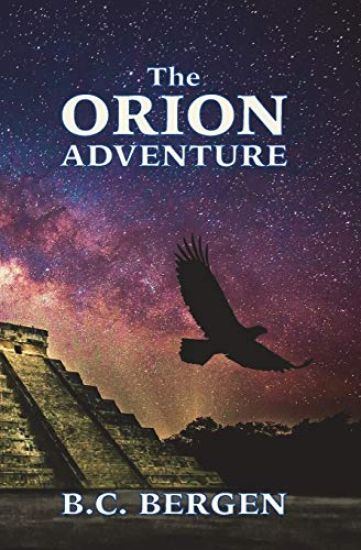
What would you do if your father was lethally poisoned in front of your eyes...and you were the only one who could get the antidote to save him...and that antidote was only found in a parallel universe?Patch Orion is about to find out.The Earth's ecosystems are in danger of collapsing and Patch is assisting on an Antarctic climate research expedition led by his father. When his father is mortally wounded, Patch learns he must travel to a parallel universe called Pangea - the birthplace of all life - to find the antidote. Along the way, he discovers his mother is not truly human, his body can change shape, and his father's attackers have a larger plan: accelerate the Earth's environmental destruction to cull the human population. Trying to stay ahead of a mysterious group of killers, in a world he knows nothing about, Patch pushes frantically forward to save his father, his family, and possibly life on Earth forever...
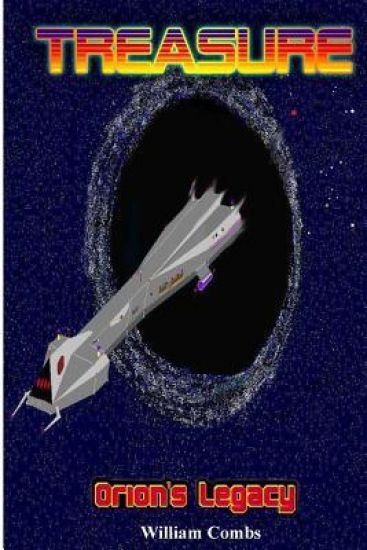
Star Trek, 2001 A Space Odyssey, ET and Star Wars are all fictional examples of space exploration and encounters that entertain and stimulate our imagination. The legacy of this genre is further enhanced by the author William Combs. In his story, Treasure: Orion's Legacy, William takes us on a compelling space adventure with the main character Bob Collins. Written in an easy to read style, William's book is full of astrophysics what ifs, techno wonders, and aliens. Imagine if you can, being placed in "Balanced Suspension", a form of long term hibernation where the body neither ages nor dies; using advanced medical science to reduce age by genetic manipulation; and using host DNA to create exact body parts with no rejection. This makes possible the ability to increase life spans, not by years or decades, but by centuries. The use of artificial intelligence, (AI), will manage space travel and perform all manner of functions to meet human needs. BOTS as automated tools can carry out repetitive and mundane tasks. In Williams story, travel in our current dimension is only possible at about 85% light speed. However, with 26 known dimensions, several of these are not subject to the limits of light speed. Thus it becomes possible to travel 40.9 light years, or 245.4 trillion miles in 24 earth hours. Applying advanced manipulation of gravity wells will make "normal" movement sensations possible during extremely fast space travel. With hundreds of known nearby stars similar to our sun, there are several containing habitable planets for dispersing earth's crowded population. All of this scientific wonder is wrapped around a love story with devotion to spouse and family. William Combs imagines a better life for all mankind, not just the privileged few, in our world and worlds to come. The benevolent use of advanced scientific knowledge will reduce ignorance, violence, poverty and suffering for all mankind. Phil Eagon. Friend.


![[storefront] Olson Kundig Architects](/covers/9781494752910.jpg)