Kirjojen hintavertailu. Mukana 11 357 517 kirjaa ja 12 kauppaa.

Kirjahaku

Etsi kirjoja tekijän nimen, kirjan nimen tai ISBN:n perusteella.

1000 tulosta hakusanalla Pat Backley

Approaching Multivariate Analysis, 2nd Edition

Approaching Multivariate Analysis, 2nd Edition

Pat Dugard; John Todman; Harry Staines

Routledge
2009
sidottu
This fully updated new edition not only provides an introduction to a range of advanced statistical techniques that are used in psychology, but has been expanded to include new chapters describing methods and examples of particular interest to medical researchers. It takes a very practical approach, aimed at enabling readers to begin using the methods to tackle their own problems.This book provides a non-mathematical introduction to multivariate methods, with an emphasis on helping the reader gain an intuitive understanding of what each method is for, what it does and how it does it. The first chapter briefly reviews the main concepts of univariate and bivariate methods and provides an overview of the multivariate methods that will be discussed, bringing out the relationships among them, and summarising how to recognise what types of problem each of them may be appropriate for tackling. In the remaining chapters, introductions to the methods and important conceptual points are followed by the presentation of typical applications from psychology and medicine, using examples with fabricated data.Instructions on how to do the analyses and how to make sense of the results are fully illustrated with dialogue boxes and output tables from SPSS, as well as details of how to interpret and report the output, and extracts of SPSS syntax and code from relevant SAS procedures.This book gets students started, and prepares them to approach more comprehensive treatments with confidence. This makes it an ideal text for psychology students, medical students and students or academics in any discipline that uses multivariate methods.
Breaking Barriers to Learning in Primary Schools
Breaking Barriers to Learning in Primary Schools takes an expert and informative look at the integrated children’s services agenda in practice in today’s primary schools. Examining the ways in which an increasing number of different professionals help to improve children’s life chances, the author examines the roles of those employed directly by the schools themselves, for instance Learning Mentors, HLTAs and Teaching Assistants, and those employed by health/social and other agencies, such as school nurses, Educational social workers, study support workers, school attendance workers and Educational Psychologists.Through an exploration of how each individual helps break down barriers to children’s learning, this book: examines the growth and development of the children’s workforceprovides a broad and integrated view of the wider school networkexplores the roles of individuals within the school workforcemakes links to Every Child Matters and Extended Schools initiativesprovides evidences of breaking down barriers, through interviews and studies with those working at the heart of integrated schoolspresents an analysis of recent statistics relating to children’s livesgives practical advice for good practice throughout.An essential text for all those working in education and in training to become part of this wider school network, this book takes into account the findings of the recent Primary Reviews, government data and original research to fully explain how to build, maintain and successfully work with today’s primary children. It is an excellent text for Foundation Degree students as well as those studying Education Studies and those training to be teachers.
Breaking Barriers to Learning in Primary Schools
Breaking Barriers to Learning in Primary Schools takes an expert and informative look at the integrated children’s services agenda in practice in today’s primary schools. Examining the ways in which an increasing number of different professionals help to improve children’s life chances, the author examines the roles of those employed directly by the schools themselves, for instance Learning Mentors, HLTAs and Teaching Assistants, and those employed by health/social and other agencies, such as school nurses, Educational social workers, study support workers, school attendance workers and Educational Psychologists.Through an exploration of how each individual helps break down barriers to children’s learning, this book: examines the growth and development of the children’s workforceprovides a broad and integrated view of the wider school networkexplores the roles of individuals within the school workforcemakes links to Every Child Matters and Extended Schools initiativesprovides evidences of breaking down barriers, through interviews and studies with those working at the heart of integrated schoolspresents an analysis of recent statistics relating to children’s livesgives practical advice for good practice throughout.An essential text for all those working in education and in training to become part of this wider school network, this book takes into account the findings of the recent Primary Reviews, government data and original research to fully explain how to build, maintain and successfully work with today’s primary children. It is an excellent text for Foundation Degree students as well as those studying Education Studies and those training to be teachers.
Researching Sex and Lies in the Classroom

Researching Sex and Lies in the Classroom

Pat Sikes; Heather Piper

Routledge
2009
sidottu
The Anglophone world is gripped by a moral panic centred on child abuse in general and fear of the paedophile in particular. Evidence suggests an alarming rise in the number of false allegations of sexual abuse being made against teachers, and demonstrates that the fallout from being falsely accused is far-reaching and sometimes tragic. Many people in this position cannot sustain family relationships, have breakdowns, and are often unable to return to the classroom when their ordeal is over.Researching Sex and Lies in the Classroom draws on in-depth qualitative research exploring the experiences, perceptions and consequences for those who have been falsely accused of sexual misconduct with pupils, and for the family members, friends and colleagues affected by or involved in the accusation process. The book also highlights the dilemmas and difficulties the authors themselves have faced researching this field, such as: ethical and methodological concerns over whether or not the teachers had indeed been falsely accused, or were guilty and taking advantage of this project to construct an alternative, innocent identity the difficulty of obtaining institutional ethical clearance to undertake and publish research which challenges master narratives concerning children and their protection the reluctance of funders to support research in controversial and sensitive areas. Researching Sex and Lies in the Classroom reveals findings which are both informative and shocking. It interrogates the appropriateness of current investigative and judicial procedures and practices, and it raises general questions about the surveillance and control of research and academic voice. It will be of great benefit to academics and researchers interested in this field, as well as postgraduate students, teachers and other professionals working with the fear of allegations of abuse.
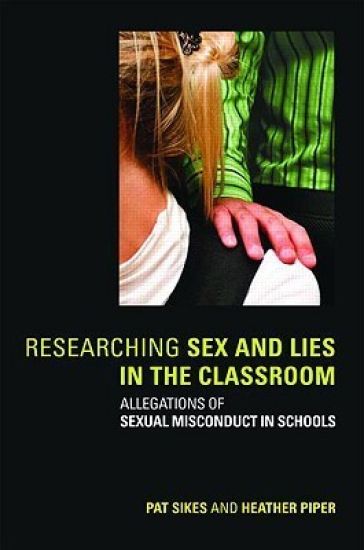
Researching Sex and Lies in the Classroom

Researching Sex and Lies in the Classroom

Pat Sikes; Heather Piper

Routledge
2009
nidottu
The Anglophone world is gripped by a moral panic centred on child abuse in general and fear of the paedophile in particular. Evidence suggests an alarming rise in the number of false allegations of sexual abuse being made against teachers, and demonstrates that the fallout from being falsely accused is far-reaching and sometimes tragic. Many people in this position cannot sustain family relationships, have breakdowns, and are often unable to return to the classroom when their ordeal is over.Researching Sex and Lies in the Classroom draws on in-depth qualitative research exploring the experiences, perceptions and consequences for those who have been falsely accused of sexual misconduct with pupils, and for the family members, friends and colleagues affected by or involved in the accusation process. The book also highlights the dilemmas and difficulties the authors themselves have faced researching this field, such as: ethical and methodological concerns over whether or not the teachers had indeed been falsely accused, or were guilty and taking advantage of this project to construct an alternative, innocent identity the difficulty of obtaining institutional ethical clearance to undertake and publish research which challenges master narratives concerning children and their protection the reluctance of funders to support research in controversial and sensitive areas. Researching Sex and Lies in the Classroom reveals findings which are both informative and shocking. It interrogates the appropriateness of current investigative and judicial procedures and practices, and it raises general questions about the surveillance and control of research and academic voice. It will be of great benefit to academics and researchers interested in this field, as well as postgraduate students, teachers and other professionals working with the fear of allegations of abuse.
Practitioner Research at Doctoral Level

Practitioner Research at Doctoral Level

Pat Drake; Linda Heath

Routledge
2010
sidottu
In trying to juggle the various priorities of doctoral study, many individuals struggle. From gathering data, preparing papers and organising projects, to the less obvious difficulties of time management and personal development, doctoral researchers are heavily tasked. In addition to this, those undertaking practitioner research face the complication of negotiating a less traditional research setting.As a guide to this ongoing, often neglected aspect of doctoral research, the authors of this innovative book explore in detail the challenges faced by doctoral researchers conducting practitioner research today. They show that the special nature of this research and the conditions in which the professional researcher works raise questions about producing new knowledge at work through research. This affects everything: relationships with practice; ethics; the ways that they are taught and supervised; the genre of the thesis; all place practitioners in situations which may not methodologically align with conventional approaches.In this book the authors take the opportunity to explore these themes in an holistic and integrated way in order to develop a sense of methodological coherence for the practitioner researcher at doctoral level. In doing so, the authors argue for what is possible, suggesting that universities should critically examine practitioner doctorates to accommodate new forms of knowledge formation.As an invaluable guide through doctoral research, this book will be essential reading for both doctoral researchers and supervisors alike, as well as practitioner researchers working in professional settings more generally and those engaging in policy debates about doctoral research.
Practitioner Research at Doctoral Level

Practitioner Research at Doctoral Level

Pat Drake; Linda Heath

Routledge
2010
nidottu
In trying to juggle the various priorities of doctoral study, many individuals struggle. From gathering data, preparing papers and organising projects, to the less obvious difficulties of time management and personal development, doctoral researchers are heavily tasked. In addition to this, those undertaking practitioner research face the complication of negotiating a less traditional research setting.As a guide to this ongoing, often neglected aspect of doctoral research, the authors of this innovative book explore in detail the challenges faced by doctoral researchers conducting practitioner research today. They show that the special nature of this research and the conditions in which the professional researcher works raise questions about producing new knowledge at work through research. This affects everything: relationships with practice; ethics; the ways that they are taught and supervised; the genre of the thesis; all place practitioners in situations which may not methodologically align with conventional approaches.In this book the authors take the opportunity to explore these themes in an holistic and integrated way in order to develop a sense of methodological coherence for the practitioner researcher at doctoral level. In doing so, the authors argue for what is possible, suggesting that universities should critically examine practitioner doctorates to accommodate new forms of knowledge formation.As an invaluable guide through doctoral research, this book will be essential reading for both doctoral researchers and supervisors alike, as well as practitioner researchers working in professional settings more generally and those engaging in policy debates about doctoral research.
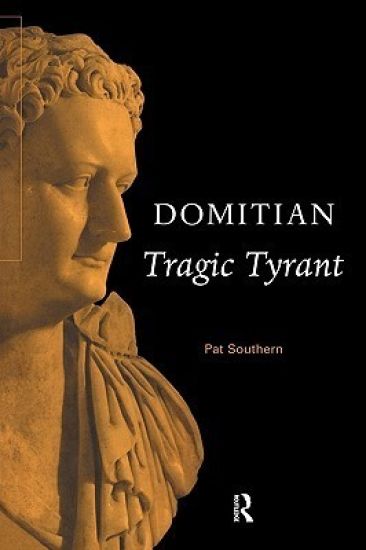
Domitian

Domitian

Pat Southern

Routledge
2009
nidottu
This is the first ever study to assess Emperor Domitian from a psychological point of view and covers his entire career from the early years and the civil war AD through the imperial rule to the dark years and the psychology of suspicion. Pat Southern strips away hyperbole and sensationalism from the literary record, revealing an individual who caused undoubted suffering which must be accounted for.
Educational Leadership and Pierre Bourdieu
Pierre Bourdieu was one of the most important thinkers of the twentieth century. He argued for, and practiced, rigorous and reflexive scholarship, interrogating the inequities and injustices of modern societies. Through a lifetime’s explication of the ways in which schooling both produces and reproduces the status quo, Bourdieu offered a powerful critique and method of analysis of the history of schooling, and of contemporary educational polices and trends. Though frequently used in educational research, Bourdieu’s work has had much less take up in Educational Leadership, Management and Administration. Educational Leadership and Pierre Bourdieu argues that ELMA scholars have much to gain by engaging more thoroughly with his work. The book explains each of the key terms in Bourdieu’s thinking tool kit, showing how the tripartite concepts of field, habitus and capitals offer a way through which to understand the interaction of structure and agency, and the limits on the freedom of an individual – in this case an educational leader – to act. Educational Leadership and Pierre Bourdieu offers an analysis of dominant trends in ELMA research, examining the kinds of questions asked, projects undertaken and methods used. It provides alternative questions and methods based on a Bourdieusian approach, further readings and a range of exemplars of the application of these tools. The book will be of interest to those whose primary focus is the utility of Bourdieu’s social theory.
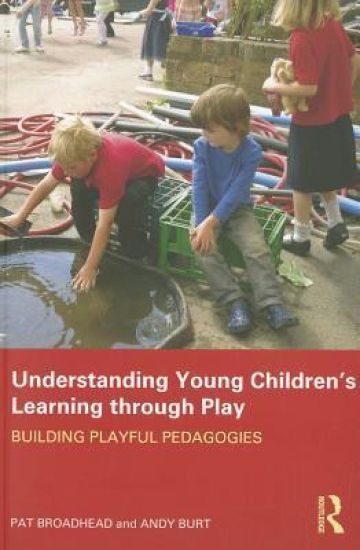
Understanding Young Children's Learning through Play
This timely and accessible text introduces, theorises and practically applies two important concepts which now underpin early years practice: those of ‘playful learning' and 'playful pedagogies'. Pat Broadhead and Andy Burt draw upon filmed material, conversations with children, reflection, observation, and parental and staff interviews, in their longitudinal study of outdoor and indoor play environments in an early years unit. This research-based text offers extensive insights into related theories, as well drawing on the authors’ skills and knowledge as researcher and as class teacher in order to provide opportunities for personal reflection and possibilities for practical application in early years classes and settings. Discussing both indoor and outdoor environments, the text explores ideas surrounding ‘open-ended play’, and ‘the whatever you want it to be place’. It illustrates how the themes of children’s play reflect their interests, experiences, knowledge gained at home and in school, and their cultural heritages. By showing how children become familiar and skilful within open-ended play environments, the authors illustrate how the children’s co-operative skills develop over time as they become connected in communities of learners. Alongside the examples of children’s playful learning, the book also considers the implications for resourcing and organising playful settings through playful pedagogies that connect with the Early Years Foundation Stage curriculum (DfES 2007) and with the Tickell Review, ongoing as the book went to press.Understanding Young Children's Learning through Play uses children’s perspectives on their play to illustrate how rich their personal understandings are. It also includes parental reflections on what may initially appear a risky and unusual outdoor environment, and it draws attention to the importance of conflict resolution in play in order to extend children’s resilience and assertiveness.This insightful text will be of interest to students of early years education, early years practitioners, academics and researchers.
Understanding Young Children's Learning through Play
This timely and accessible text introduces, theorises and practically applies two important concepts which now underpin early years practice: those of ‘playful learning' and 'playful pedagogies'. Pat Broadhead and Andy Burt draw upon filmed material, conversations with children, reflection, observation, and parental and staff interviews, in their longitudinal study of outdoor and indoor play environments in an early years unit. This research-based text offers extensive insights into related theories, as well drawing on the authors’ skills and knowledge as researcher and as class teacher in order to provide opportunities for personal reflection and possibilities for practical application in early years classes and settings. Discussing both indoor and outdoor environments, the text explores ideas surrounding ‘open-ended play’, and ‘the whatever you want it to be place’. It illustrates how the themes of children’s play reflect their interests, experiences, knowledge gained at home and in school, and their cultural heritages. By showing how children become familiar and skilful within open-ended play environments, the authors illustrate how the children’s co-operative skills develop over time as they become connected in communities of learners. Alongside the examples of children’s playful learning, the book also considers the implications for resourcing and organising playful settings through playful pedagogies that connect with the Early Years Foundation Stage curriculum (DfES 2007) and with the Tickell Review, ongoing as the book went to press.Understanding Young Children's Learning through Play uses children’s perspectives on their play to illustrate how rich their personal understandings are. It also includes parental reflections on what may initially appear a risky and unusual outdoor environment, and it draws attention to the importance of conflict resolution in play in order to extend children’s resilience and assertiveness.This insightful text will be of interest to students of early years education, early years practitioners, academics and researchers.
Approaching Multivariate Analysis, 2nd Edition

Approaching Multivariate Analysis, 2nd Edition

Pat Dugard; John Todman; Harry Staines

Routledge
2014
nidottu
This fully updated new edition not only provides an introduction to a range of advanced statistical techniques that are used in psychology, but has been expanded to include new chapters describing methods and examples of particular interest to medical researchers. It takes a very practical approach, aimed at enabling readers to begin using the methods to tackle their own problems.This book provides a non-mathematical introduction to multivariate methods, with an emphasis on helping the reader gain an intuitive understanding of what each method is for, what it does and how it does it. The first chapter briefly reviews the main concepts of univariate and bivariate methods and provides an overview of the multivariate methods that will be discussed, bringing out the relationships among them, and summarising how to recognise what types of problem each of them may be appropriate for tackling. In the remaining chapters, introductions to the methods and important conceptual points are followed by the presentation of typical applications from psychology and medicine, using examples with fabricated data.Instructions on how to do the analyses and how to make sense of the results are fully illustrated with dialogue boxes and output tables from SPSS, as well as details of how to interpret and report the output, and extracts of SPSS syntax and code from relevant SAS procedures.This book gets students started, and prepares them to approach more comprehensive treatments with confidence. This makes it an ideal text for psychology students, medical students and students or academics in any discipline that uses multivariate methods.
Schools for the Boys?

Schools for the Boys?

Pat Mahony

Routledge
2011
sidottu
Do girls do better in single-sex or co-educational schools?Up to now, discussion has centred on girls’ academic achievements in single or mixed-sex groups, but Pat Mahony’s research clearly demonstrates that this is not the only issue, and that co-education is damaging for girls socially as well as academically. She challenges the argument that co-education is desirable because it is more normal. Her research reveals that it is normal for girls to be ‘put down’ in class, to be verbally abused and sexually harassed by boys, and yes, this will be their ‘normal’ experience as women. But does this justify the way girls are treated in schools? Pat Mahony goes on to explore some of the reasons behind this state of affairs and suggests that the answer lies in sexual politics, not biology.The book concludes with practical suggestions for bringing about change in schools, including case-studies from existing projects.
Using Trauma-Focused Therapy Stories
Using Trauma-Focused Therapy Stories is a groundbreaking treatment resource for trauma-informed therapists who work with abused and neglected children ages nine years and older as well as their caregivers. The therapy stories are perfect accompaniments to evidence-based treatment approaches and provide the foundation for psychoeducation and intervention with the older elementary-aged child or early pre-teen. Therapists will also benefit from the inclusion of thorough guides for children and caregivers, which illustrate trauma and developmental concepts in easy-to-understand terms. The psychoeducational material in the guides, written at a third- to fourth-grade reading level, may be used within any trauma-informed therapy model in the therapy office or sent-home for follow-up. Each therapy story illustrates trauma concepts, guides trauma narrative and cognitive restructuring work, and illuminates caregiver blind spots; the caregiver stories target issues that often become barriers to family trauma recovery. No therapist who works with young trauma survivors will want to be without this book, and school-based professionals, social workers, psychologists and others committed to working with traumatized children will find the book chock-full of game-changing ideas for their practice.
Using Trauma-Focused Therapy Stories
Using Trauma-Focused Therapy Stories is a groundbreaking treatment resource for trauma-informed therapists who work with abused and neglected children ages nine years and older as well as their caregivers. The therapy stories are perfect accompaniments to evidence-based treatment approaches and provide the foundation for psychoeducation and intervention with the older elementary-aged child or early pre-teen. Therapists will also benefit from the inclusion of thorough guides for children and caregivers, which illustrate trauma and developmental concepts in easy-to-understand terms. The psychoeducational material in the guides, written at a third- to fourth-grade reading level, may be used within any trauma-informed therapy model in the therapy office or sent-home for follow-up. Each therapy story illustrates trauma concepts, guides trauma narrative and cognitive restructuring work, and illuminates caregiver blind spots; the caregiver stories target issues that often become barriers to family trauma recovery. No therapist who works with young trauma survivors will want to be without this book, and school-based professionals, social workers, psychologists and others committed to working with traumatized children will find the book chock-full of game-changing ideas for their practice.
Environmental Ethics and Film

Environmental Ethics and Film

Pat Brereton

Routledge
2015
sidottu
Environmental ethics presents and defends a systematic and comprehensive account of the moral relation between human beings and their natural environment and assumes that human behaviour toward the natural world can and is governed by moral norms. In contemporary society, film has provided a powerful instrument for the moulding of such ethical attitudes.Through a close examination of the medium, Environmental Ethics and Film explores how historical ethical values can be re-imagined and re-constituted for more contemporary audiences. Building on an extensive back-catalogue of eco-film analysis, the author focuses on a diverse selection of contemporary films which target audiences’ ethical sensibilities in very different ways. Each chapter focuses on at least three close readings of films and documentaries, examining a wide range of environmental issues as they are illustrated across contemporary Hollywood films. This book is an invaluable resource for students and scholars of environmental communication, film studies, media and cultural studies, environmental philosophy and ethics.
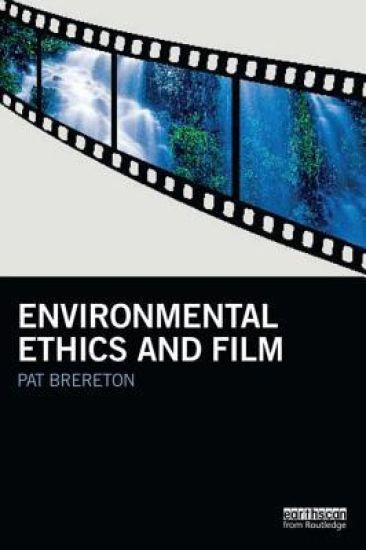
Environmental Ethics and Film

Environmental Ethics and Film

Pat Brereton

Routledge
2015
nidottu
Environmental ethics presents and defends a systematic and comprehensive account of the moral relation between human beings and their natural environment and assumes that human behaviour toward the natural world can and is governed by moral norms. In contemporary society, film has provided a powerful instrument for the moulding of such ethical attitudes.Through a close examination of the medium, Environmental Ethics and Film explores how historical ethical values can be re-imagined and re-constituted for more contemporary audiences. Building on an extensive back-catalogue of eco-film analysis, the author focuses on a diverse selection of contemporary films which target audiences’ ethical sensibilities in very different ways. Each chapter focuses on at least three close readings of films and documentaries, examining a wide range of environmental issues as they are illustrated across contemporary Hollywood films. This book is an invaluable resource for students and scholars of environmental communication, film studies, media and cultural studies, environmental philosophy and ethics.
Schools for the Boys?

Schools for the Boys?

Pat Mahony

Routledge
2014
nidottu
Do girls do better in single-sex or co-educational schools?Up to now, discussion has centred on girls’ academic achievements in single or mixed-sex groups, but Pat Mahony’s research clearly demonstrates that this is not the only issue, and that co-education is damaging for girls socially as well as academically. She challenges the argument that co-education is desirable because it is more normal. Her research reveals that it is normal for girls to be ‘put down’ in class, to be verbally abused and sexually harassed by boys, and yes, this will be their ‘normal’ experience as women. But does this justify the way girls are treated in schools? Pat Mahony goes on to explore some of the reasons behind this state of affairs and suggests that the answer lies in sexual politics, not biology.The book concludes with practical suggestions for bringing about change in schools, including case-studies from existing projects.
Writing for Peer Reviewed Journals

Writing for Peer Reviewed Journals

Pat Thomson; Barbara Kamler

Routledge
2012
sidottu
It’s not easy getting published, but everyone has to do it. Writing for Peer Reviewed Journals presents an insider’s perspective on the secret business of academic publishing, making explicit many of the dilemmas and struggles faced by all writers, but rarely discussed. Its unique approach is theorised and practical. It offers a set of moves for writing a journal article that is structured and doable but also attends to the identity issues that manifest on the page and in the politics of academic life.The book comprehensively assists anyone concerned about getting published; whether they are early in their career or moving from a practice base into higher education, or more experienced but still feeling in need of further information. Avoiding a ‘tips and tricks’ approach, which tends to oversimplify what is at stake in getting published, the authors emphasise the production, nurture and sustainability of scholarship through writing – a focus on both the scholar and the text or what they call text work/identity work. The chapters are ordered to develop a systematic approach to the process, including such topics as: The writer The reader What’s the contribution? Beginning work Refining the argument Engaging with reviewers and editors Writing for Peer Reviewed Journals uses a wide range of multi-disciplinary examples from the writing workshops the authors have run in universities around the world: including the UK, Canada, Australia, New Zealand, Ireland, South Africa, Norway, Sweden, Denmark and the United States. This international approach coupled with theoretically grounded strategies to guide the authoring process ensure that people at all stages of their career are addressed. This lively book uses a combination of personal stories, student texts, published journal abstracts and excerpts from interviews with journal editors and publishers. Written in an accessible style, one which does not use the patronising ‘you’ of advice books, it offers a collegial approach to a task which is difficult for most scholars, regardless of their years of experience.
Writing for Peer Reviewed Journals

Writing for Peer Reviewed Journals

Pat Thomson; Barbara Kamler

Routledge
2012
nidottu
It’s not easy getting published, but everyone has to do it. Writing for Peer Reviewed Journals presents an insider’s perspective on the secret business of academic publishing, making explicit many of the dilemmas and struggles faced by all writers, but rarely discussed. Its unique approach is theorised and practical. It offers a set of moves for writing a journal article that is structured and doable but also attends to the identity issues that manifest on the page and in the politics of academic life.The book comprehensively assists anyone concerned about getting published; whether they are early in their career or moving from a practice base into higher education, or more experienced but still feeling in need of further information. Avoiding a ‘tips and tricks’ approach, which tends to oversimplify what is at stake in getting published, the authors emphasise the production, nurture and sustainability of scholarship through writing – a focus on both the scholar and the text or what they call text work/identity work. The chapters are ordered to develop a systematic approach to the process, including such topics as: The writer The reader What’s the contribution? Beginning work Refining the argument Engaging with reviewers and editors Writing for Peer Reviewed Journals uses a wide range of multi-disciplinary examples from the writing workshops the authors have run in universities around the world: including the UK, Canada, Australia, New Zealand, Ireland, South Africa, Norway, Sweden, Denmark and the United States. This international approach coupled with theoretically grounded strategies to guide the authoring process ensure that people at all stages of their career are addressed. This lively book uses a combination of personal stories, student texts, published journal abstracts and excerpts from interviews with journal editors and publishers. Written in an accessible style, one which does not use the patronising ‘you’ of advice books, it offers a collegial approach to a task which is difficult for most scholars, regardless of their years of experience.