Kirjojen hintavertailu. Mukana 11 522 065 kirjaa ja 12 kauppaa.

Kirjahaku

Etsi kirjoja tekijän nimen, kirjan nimen tai ISBN:n perusteella.

1000 tulosta hakusanalla Pat Clancy

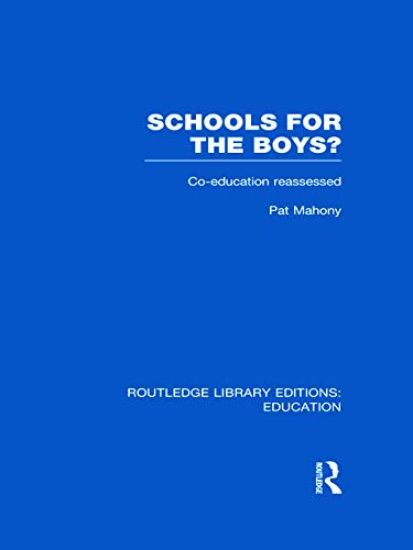
Schools for the Boys?

Schools for the Boys?

Pat Mahony

Routledge
2011
sidottu
Do girls do better in single-sex or co-educational schools?Up to now, discussion has centred on girls’ academic achievements in single or mixed-sex groups, but Pat Mahony’s research clearly demonstrates that this is not the only issue, and that co-education is damaging for girls socially as well as academically. She challenges the argument that co-education is desirable because it is more normal. Her research reveals that it is normal for girls to be ‘put down’ in class, to be verbally abused and sexually harassed by boys, and yes, this will be their ‘normal’ experience as women. But does this justify the way girls are treated in schools? Pat Mahony goes on to explore some of the reasons behind this state of affairs and suggests that the answer lies in sexual politics, not biology.The book concludes with practical suggestions for bringing about change in schools, including case-studies from existing projects.
Using Trauma-Focused Therapy Stories
Using Trauma-Focused Therapy Stories is a groundbreaking treatment resource for trauma-informed therapists who work with abused and neglected children ages nine years and older as well as their caregivers. The therapy stories are perfect accompaniments to evidence-based treatment approaches and provide the foundation for psychoeducation and intervention with the older elementary-aged child or early pre-teen. Therapists will also benefit from the inclusion of thorough guides for children and caregivers, which illustrate trauma and developmental concepts in easy-to-understand terms. The psychoeducational material in the guides, written at a third- to fourth-grade reading level, may be used within any trauma-informed therapy model in the therapy office or sent-home for follow-up. Each therapy story illustrates trauma concepts, guides trauma narrative and cognitive restructuring work, and illuminates caregiver blind spots; the caregiver stories target issues that often become barriers to family trauma recovery. No therapist who works with young trauma survivors will want to be without this book, and school-based professionals, social workers, psychologists and others committed to working with traumatized children will find the book chock-full of game-changing ideas for their practice.
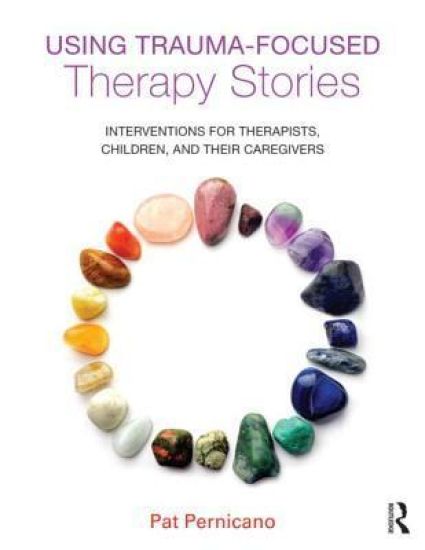
Using Trauma-Focused Therapy Stories
Using Trauma-Focused Therapy Stories is a groundbreaking treatment resource for trauma-informed therapists who work with abused and neglected children ages nine years and older as well as their caregivers. The therapy stories are perfect accompaniments to evidence-based treatment approaches and provide the foundation for psychoeducation and intervention with the older elementary-aged child or early pre-teen. Therapists will also benefit from the inclusion of thorough guides for children and caregivers, which illustrate trauma and developmental concepts in easy-to-understand terms. The psychoeducational material in the guides, written at a third- to fourth-grade reading level, may be used within any trauma-informed therapy model in the therapy office or sent-home for follow-up. Each therapy story illustrates trauma concepts, guides trauma narrative and cognitive restructuring work, and illuminates caregiver blind spots; the caregiver stories target issues that often become barriers to family trauma recovery. No therapist who works with young trauma survivors will want to be without this book, and school-based professionals, social workers, psychologists and others committed to working with traumatized children will find the book chock-full of game-changing ideas for their practice.
Environmental Ethics and Film

Environmental Ethics and Film

Pat Brereton

Routledge
2015
sidottu
Environmental ethics presents and defends a systematic and comprehensive account of the moral relation between human beings and their natural environment and assumes that human behaviour toward the natural world can and is governed by moral norms. In contemporary society, film has provided a powerful instrument for the moulding of such ethical attitudes.Through a close examination of the medium, Environmental Ethics and Film explores how historical ethical values can be re-imagined and re-constituted for more contemporary audiences. Building on an extensive back-catalogue of eco-film analysis, the author focuses on a diverse selection of contemporary films which target audiences’ ethical sensibilities in very different ways. Each chapter focuses on at least three close readings of films and documentaries, examining a wide range of environmental issues as they are illustrated across contemporary Hollywood films. This book is an invaluable resource for students and scholars of environmental communication, film studies, media and cultural studies, environmental philosophy and ethics.
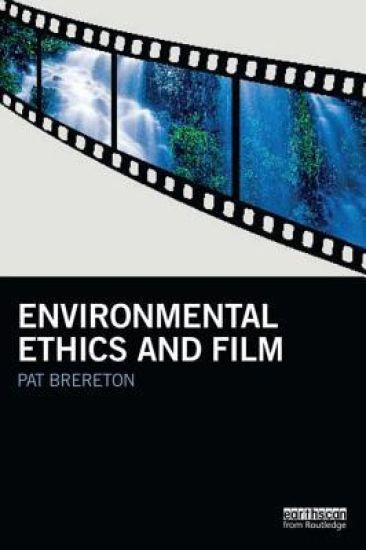
Environmental Ethics and Film

Environmental Ethics and Film

Pat Brereton

Routledge
2015
nidottu
Environmental ethics presents and defends a systematic and comprehensive account of the moral relation between human beings and their natural environment and assumes that human behaviour toward the natural world can and is governed by moral norms. In contemporary society, film has provided a powerful instrument for the moulding of such ethical attitudes.Through a close examination of the medium, Environmental Ethics and Film explores how historical ethical values can be re-imagined and re-constituted for more contemporary audiences. Building on an extensive back-catalogue of eco-film analysis, the author focuses on a diverse selection of contemporary films which target audiences’ ethical sensibilities in very different ways. Each chapter focuses on at least three close readings of films and documentaries, examining a wide range of environmental issues as they are illustrated across contemporary Hollywood films. This book is an invaluable resource for students and scholars of environmental communication, film studies, media and cultural studies, environmental philosophy and ethics.
Schools for the Boys?

Schools for the Boys?

Pat Mahony

Routledge
2014
nidottu
Do girls do better in single-sex or co-educational schools?Up to now, discussion has centred on girls’ academic achievements in single or mixed-sex groups, but Pat Mahony’s research clearly demonstrates that this is not the only issue, and that co-education is damaging for girls socially as well as academically. She challenges the argument that co-education is desirable because it is more normal. Her research reveals that it is normal for girls to be ‘put down’ in class, to be verbally abused and sexually harassed by boys, and yes, this will be their ‘normal’ experience as women. But does this justify the way girls are treated in schools? Pat Mahony goes on to explore some of the reasons behind this state of affairs and suggests that the answer lies in sexual politics, not biology.The book concludes with practical suggestions for bringing about change in schools, including case-studies from existing projects.
Writing for Peer Reviewed Journals

Writing for Peer Reviewed Journals

Pat Thomson; Barbara Kamler

Routledge
2012
sidottu
It’s not easy getting published, but everyone has to do it. Writing for Peer Reviewed Journals presents an insider’s perspective on the secret business of academic publishing, making explicit many of the dilemmas and struggles faced by all writers, but rarely discussed. Its unique approach is theorised and practical. It offers a set of moves for writing a journal article that is structured and doable but also attends to the identity issues that manifest on the page and in the politics of academic life.The book comprehensively assists anyone concerned about getting published; whether they are early in their career or moving from a practice base into higher education, or more experienced but still feeling in need of further information. Avoiding a ‘tips and tricks’ approach, which tends to oversimplify what is at stake in getting published, the authors emphasise the production, nurture and sustainability of scholarship through writing – a focus on both the scholar and the text or what they call text work/identity work. The chapters are ordered to develop a systematic approach to the process, including such topics as: The writer The reader What’s the contribution? Beginning work Refining the argument Engaging with reviewers and editors Writing for Peer Reviewed Journals uses a wide range of multi-disciplinary examples from the writing workshops the authors have run in universities around the world: including the UK, Canada, Australia, New Zealand, Ireland, South Africa, Norway, Sweden, Denmark and the United States. This international approach coupled with theoretically grounded strategies to guide the authoring process ensure that people at all stages of their career are addressed. This lively book uses a combination of personal stories, student texts, published journal abstracts and excerpts from interviews with journal editors and publishers. Written in an accessible style, one which does not use the patronising ‘you’ of advice books, it offers a collegial approach to a task which is difficult for most scholars, regardless of their years of experience.
Writing for Peer Reviewed Journals

Writing for Peer Reviewed Journals

Pat Thomson; Barbara Kamler

Routledge
2012
nidottu
It’s not easy getting published, but everyone has to do it. Writing for Peer Reviewed Journals presents an insider’s perspective on the secret business of academic publishing, making explicit many of the dilemmas and struggles faced by all writers, but rarely discussed. Its unique approach is theorised and practical. It offers a set of moves for writing a journal article that is structured and doable but also attends to the identity issues that manifest on the page and in the politics of academic life.The book comprehensively assists anyone concerned about getting published; whether they are early in their career or moving from a practice base into higher education, or more experienced but still feeling in need of further information. Avoiding a ‘tips and tricks’ approach, which tends to oversimplify what is at stake in getting published, the authors emphasise the production, nurture and sustainability of scholarship through writing – a focus on both the scholar and the text or what they call text work/identity work. The chapters are ordered to develop a systematic approach to the process, including such topics as: The writer The reader What’s the contribution? Beginning work Refining the argument Engaging with reviewers and editors Writing for Peer Reviewed Journals uses a wide range of multi-disciplinary examples from the writing workshops the authors have run in universities around the world: including the UK, Canada, Australia, New Zealand, Ireland, South Africa, Norway, Sweden, Denmark and the United States. This international approach coupled with theoretically grounded strategies to guide the authoring process ensure that people at all stages of their career are addressed. This lively book uses a combination of personal stories, student texts, published journal abstracts and excerpts from interviews with journal editors and publishers. Written in an accessible style, one which does not use the patronising ‘you’ of advice books, it offers a collegial approach to a task which is difficult for most scholars, regardless of their years of experience.
Detox Your Writing

Detox Your Writing

Pat Thomson; Barbara Kamler

Routledge
2016
sidottu
There are a number of books which aim to help doctoral researchers write the PhD. This book offers something different - the scholarly detox. This is not a faddish alternative, it’s not extreme. It’s a moderate approach intended to gently interrupt old ways of doing things and establish new habits and orientations to writing the PhD.The book addresses the problems that most doctoral researchers experience at some time during their candidature – being unclear about their contribution, feeling lost in the literature, feeling like an imposter, not knowing how to write with authority, wanting to edit rather than revise. Each chapter addresses a problem, suggests an alternative framing, and then offers strategies designed to address the real issue. Detox Your Writing is intended to be a companionable work book – something doctoral researchers can use throughout their doctorate to ask questions about taken-for-granted ways of writing and reading, and to develop new and effective approaches. The authors’ distinctive approach to doctoral writing mobilises the rich traditions of linguistic scholarship, as well as the literatures on scholarly identity formation. Building on years of expertise they place their emphasis both on tools and techniques as well as the discursive practices of becoming a scholar. The authors provide a wide repertoire of strategies that doctoral researchers can select from, rather than a linear lock step progression through a set of exercises. The book is a toolkit but a far from prescriptive one. It shows that there are many routes to developing a personal academic voice and identity and a well-crafted text. With points for reflection alongside examples from a broad range of disciplines, the book offers thinking tools, writing tools, linguistic tools, and reading tools which are relevant to all stages of doctoral research.This practical text can be used in all university doctoral training and composition and writing courses. However, it is not a dry how-to-do–it manual that ignores debates or focuses solely on the mechanical at the expense of the lived experience of doctoral research. It provides a practical, theorised, real-world, guide to postgraduate writing.
Detox Your Writing

Detox Your Writing

Pat Thomson; Barbara Kamler

Routledge
2016
nidottu
There are a number of books which aim to help doctoral researchers write the PhD. This book offers something different - the scholarly detox. This is not a faddish alternative, it’s not extreme. It’s a moderate approach intended to gently interrupt old ways of doing things and establish new habits and orientations to writing the PhD.The book addresses the problems that most doctoral researchers experience at some time during their candidature – being unclear about their contribution, feeling lost in the literature, feeling like an imposter, not knowing how to write with authority, wanting to edit rather than revise. Each chapter addresses a problem, suggests an alternative framing, and then offers strategies designed to address the real issue. Detox Your Writing is intended to be a companionable work book – something doctoral researchers can use throughout their doctorate to ask questions about taken-for-granted ways of writing and reading, and to develop new and effective approaches. The authors’ distinctive approach to doctoral writing mobilises the rich traditions of linguistic scholarship, as well as the literatures on scholarly identity formation. Building on years of expertise they place their emphasis both on tools and techniques as well as the discursive practices of becoming a scholar. The authors provide a wide repertoire of strategies that doctoral researchers can select from, rather than a linear lock step progression through a set of exercises. The book is a toolkit but a far from prescriptive one. It shows that there are many routes to developing a personal academic voice and identity and a well-crafted text. With points for reflection alongside examples from a broad range of disciplines, the book offers thinking tools, writing tools, linguistic tools, and reading tools which are relevant to all stages of doctoral research.This practical text can be used in all university doctoral training and composition and writing courses. However, it is not a dry how-to-do–it manual that ignores debates or focuses solely on the mechanical at the expense of the lived experience of doctoral research. It provides a practical, theorised, real-world, guide to postgraduate writing.
The Learning and Teaching of Geometry in Secondary Schools

The Learning and Teaching of Geometry in Secondary Schools

Pat Herbst; Taro Fujita; Stefan Halverscheid; Michael Weiss

Routledge
2017
sidottu
IMPACT (Interweaving Mathematics Pedagogy and Content for Teaching) is an exciting new series of texts for teacher education which aims to advance the learning and teaching of mathematics by integrating mathematics content with the broader research and theoretical base of mathematics education.The Learning and Teaching of Geometry in Secondary Schools reviews past and present research on the teaching and learning of geometry in secondary schools and proposes an approach for design research on secondary geometry instruction.Areas covered include:teaching and learning secondary geometry through history;the representations of geometric figures;students’ cognition in geometry; teacher knowledge, practice and, beliefs;teaching strategies, instructional improvement, and classroom interventions;research designs and problems for secondary geometry.Drawing on a team of international authors, this new text will be essential reading for experienced teachers of mathematics, graduate students, curriculum developers, researchers, and all those interested in exploring students’ study of geometry in secondary schools.
The Learning and Teaching of Geometry in Secondary Schools

The Learning and Teaching of Geometry in Secondary Schools

Pat Herbst; Taro Fujita; Stefan Halverscheid; Michael Weiss

Routledge
2017
nidottu
IMPACT (Interweaving Mathematics Pedagogy and Content for Teaching) is an exciting new series of texts for teacher education which aims to advance the learning and teaching of mathematics by integrating mathematics content with the broader research and theoretical base of mathematics education.The Learning and Teaching of Geometry in Secondary Schools reviews past and present research on the teaching and learning of geometry in secondary schools and proposes an approach for design research on secondary geometry instruction.Areas covered include:teaching and learning secondary geometry through history;the representations of geometric figures;students’ cognition in geometry; teacher knowledge, practice and, beliefs;teaching strategies, instructional improvement, and classroom interventions;research designs and problems for secondary geometry.Drawing on a team of international authors, this new text will be essential reading for experienced teachers of mathematics, graduate students, curriculum developers, researchers, and all those interested in exploring students’ study of geometry in secondary schools.
Single-case and Small-n Experimental Designs

Single-case and Small-n Experimental Designs

Pat Dugard; Portia File; Jonathan Todman

Routledge
2011
sidottu
This practical guide explains the use of randomization tests and provides example designs and macros for implementation in IBM SPSS and Excel. It reviews the theory and practice of single-case and small-n designs so readers can draw valid causal inferences from small-scale clinical studies. The macros and example data are provided on the book’s website so that users can run analyses of the text data as well as data from their own studies.The new edition features:More explanation as to why randomization tests are useful and how to apply them.More varied and expanded examples that demonstrate the use of these tests in education, clinical work and psychology.A website with the macros and datasets for all of the text examples in IBM SPSS and Excel.Exercises at the end of most chapters that help readers test their understanding of the material.A new glossary that defines the key words that appear in italics when they are first introduced.A new appendix that reviews the basic skills needed to do randomization tests.New appendices that provide annotated SPSS and Excel macros to help readers write their own or tinker with the ones provided in the book.The book opens with an overview of single case and small n designs -- why they are needed and how they differ from descriptive case studies. Chapter 2 focuses on the basic concepts of randoization tests. Next how to choose and implement a randomization design is reviewed including material on how to perform the randomizations, how to select the number of observations, and how to record the data. Chapter 5 focuses on how to analyze the data including how to use the macros and understand the results. Chapter 6 shows how randomization tests fit into the body of statistical inference. Chapter 7 discusses size and power. The book concludes with a demonstration of how to edit or modify the macros or use parts of them to write your own.Ideal as a text for courses on single-case, small n design, and/or randomization tests taught at the graduate level in psychology (especially clinical, counseling, educational, and school), education, human development, nursing, and other social and health sciences, this inexpensive book also serves as a supplement in statistics or research methods courses. Practitioners and researchers with an applied clinical focus also appreciate this book’s accessible approach. An introduction to basic statistics, SPSS, and Excel is assumed.
Single-case and Small-n Experimental Designs

Single-case and Small-n Experimental Designs

Pat Dugard; Portia File; Jonathan Todman

Routledge
2011
nidottu
This practical guide explains the use of randomization tests and provides example designs and macros for implementation in IBM SPSS and Excel. It reviews the theory and practice of single-case and small-n designs so readers can draw valid causal inferences from small-scale clinical studies. The macros and example data are provided on the book’s website so that users can run analyses of the text data as well as data from their own studies.The new edition features:More explanation as to why randomization tests are useful and how to apply them.More varied and expanded examples that demonstrate the use of these tests in education, clinical work and psychology.A website with the macros and datasets for all of the text examples in IBM SPSS and Excel.Exercises at the end of most chapters that help readers test their understanding of the material.A new glossary that defines the key words that appear in italics when they are first introduced.A new appendix that reviews the basic skills needed to do randomization tests.New appendices that provide annotated SPSS and Excel macros to help readers write their own or tinker with the ones provided in the book.The book opens with an overview of single case and small n designs -- why they are needed and how they differ from descriptive case studies. Chapter 2 focuses on the basic concepts of randoization tests. Next how to choose and implement a randomization design is reviewed including material on how to perform the randomizations, how to select the number of observations, and how to record the data. Chapter 5 focuses on how to analyze the data including how to use the macros and understand the results. Chapter 6 shows how randomization tests fit into the body of statistical inference. Chapter 7 discusses size and power. The book concludes with a demonstration of how to edit or modify the macros or use parts of them to write your own.Ideal as a text for courses on single-case, small n design, and/or randomization tests taught at the graduate level in psychology (especially clinical, counseling, educational, and school), education, human development, nursing, and other social and health sciences, this inexpensive book also serves as a supplement in statistics or research methods courses. Practitioners and researchers with an applied clinical focus also appreciate this book’s accessible approach. An introduction to basic statistics, SPSS, and Excel is assumed.
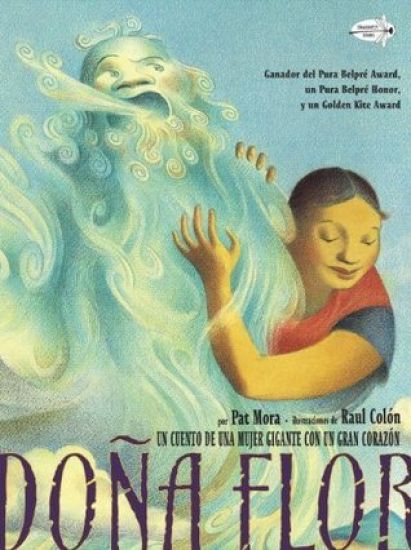
Doña Flor

Doña Flor

Pat Mora

Dragonfly Books
2005
nidottu
Do a Flor, una se ora gigante, vive en un pueblo peque ito. Los vecinos la adoran y ella adora a sus vecinos. Deja que los ni os utilicen las flores de su jard n como trompetas y las tortillas como balsas. A Do a Flor le encanta leer y con frecuencia puedes verla rodeada de ni os que escuchan atentos las historias de sus libros. Un d a un tremendo aullido de animal proveniente de las afueras del pueblo asusta a todos, incluida a Do a Flor. Quiere proteger a sus queridos vecinos y con ayuda de sus amigos los animales, se dirige hacia la meseta m s alta, en busca de la terrible fiera. Pero cu l no ser su sorpresa cuando descubre que tras semejante estruendo se esconde una peque a criatura. Pat Mora y Raul Col n colaboran nuevamente para traernos una tierna historia sobre una mujer gigante con un coraz n muy grande. El ltimo trabajo de Pat Mora y Raul Col n, Tom s y la se ora de la biblioteca, fue galardonado con el premio Tom s Rivera.
Souls of Steel

Souls of Steel

Pat Williams

FaithWords
2008
sidottu
Pat Williams has shown us what traits are vital for effective leadership and how to develop those skills in our children. In Souls of Steel, he focuses on one specific trait: Character. He explains why character matters and why so many young people today think issues like character, integrity, morality, and truth are relics of a bygone era. He shows us that to be individuals who contribute positively to our world they must have Souls of Steel.
Beholden

Beholden

Pat Warren

Grand Central Publishing
1996
pokkari
Terry was fleeing the murder she had seen, up to a mountain hideaway. Before she realised it she was hiding behind a new identity made by Luke Tanner. But her life was still in danger. Soon they were both on the run, and falling irrevocably in love.
Come Morning

Come Morning

Pat Warren

Warner Books
1998
nidottu
After an accident takes the life of her young son, lovely photographer Brianna Morgan retreats to Nantucket to grieve. In the next house, handsome fireman Jeremy Slade is drowning his sorrows in liquor after blaming himself for the death of a young mother. When a brutal hurricane ravages the island and helps them come to terms with their pasts, Brianna and Jeremy must decide whether they can create a beautiful new future together.
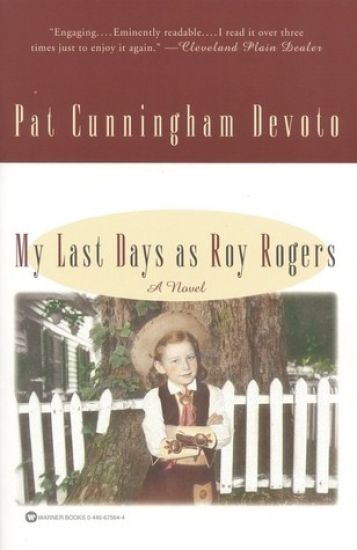
My Last Days As Roy Rogers

My Last Days As Roy Rogers

Pat Cunningham Devoto

LITTLE, BROWN COMPANY
2000
pokkari
Growing up in Alabama in the 1950s, two inseparable ten-year-old girls, one black and one white, discover the theft of money meant for polio victims and expose a racial injustice in the process. A first novel. Reissue.