Kirjojen hintavertailu. Mukana 11 628 103 kirjaa ja 12 kauppaa.

Kirjahaku

Etsi kirjoja tekijän nimen, kirjan nimen tai ISBN:n perusteella.

1000 tulosta hakusanalla Paul Durand-Ruel

Paul, the Community, and Progressive Sanctification

Paul, the Community, and Progressive Sanctification

James M. Howard

Peter Lang Publishing Inc
2006
sidottu
What role does the Christian community play in the process of growing in Christian maturity? This book argues that in Pauline theology the redeemed community is a necessary means for the progressive sanctification of the individual believer, an idea that is largely misunderstood in parts of the Western church. It evaluates foundational theological considerations traditionally omitted from sanctification studies and places them within the context of Pauline theology. Included are the missiological nature of holiness, the initiatory character of God, the creation of the new humanity as reflecting the image of God, and the impact upon the church resulting from the radical redefinition by Christ of the cultural symbols surrounding the Jewish temple system. This book offers a corrective to the individualized approach to Christian growth: For Paul, the focus of God's transformative activity culminates with the community rather than the individual, the goal of which is to reveal God's glory to the broader creation.
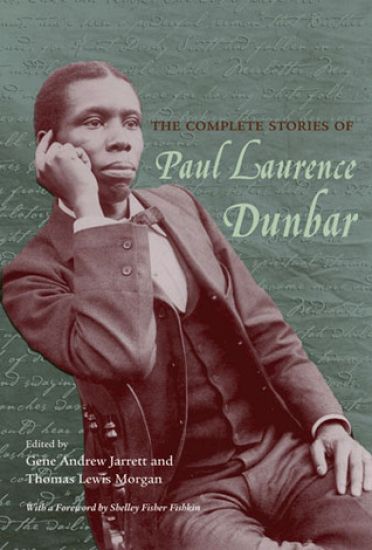
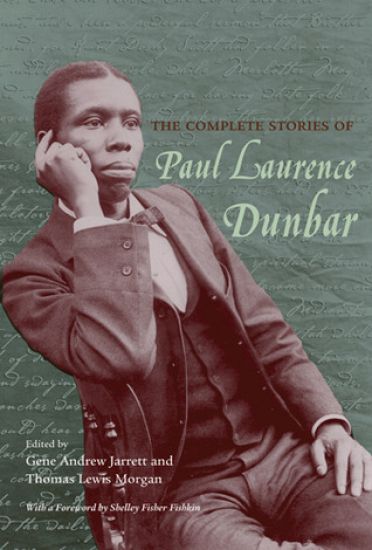
The Complete Stories of Paul Laurence Dunbar

The Complete Stories of Paul Laurence Dunbar

Paul Laurence Dunbar

Ohio University Press
2005
sidottu
The son of former slaves, Paul Laurence Dunbar was one of the most prominent figures in American literature at the turn of the twentieth century. Thirty-three years old at the time of his death in 1906, he had published four novels, four collections of short stories, and fourteen books of poetry, as well as numerous songs, plays, and essays in newspapers and magazines around the world. In the century following his death, Dunbar slipped into relative obscurity, remembered mainly for his dialect poetry or as a footnote to other more canonical figures of the period. The Complete Stories of Paul Laurence Dunbar showcases his gifts as a writer of short fiction and provides key insights into the tensions and themes of Dunbar's literary achievement. The 104 stories written by Dunbar between 1890 and 1905 reveal Dunbar's attempts to maintain his artistic integrity while struggling with America's racist stereotypes. Making them available for the first time in one convenient, comprehensive, and definitive volume, The Complete Stories of Paul Laurence Dunbar illustrates the complexity of his literary life and legacy.
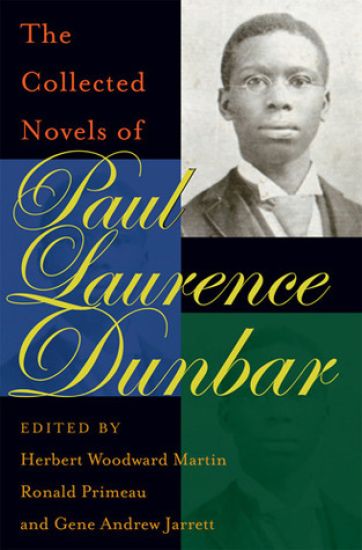
The Collected Novels of Paul Laurence Dunbar

The Collected Novels of Paul Laurence Dunbar

Paul Laurence Dunbar

Ohio University Press
2009
sidottu
At long last, critics, scholars, and lovers of fiction can experience the full range and imaginative powers of the collected novels of Paul Laurence Dunbar (1872–1906). In these four novels, readers can explore the characters, landscape, atmosphere, and visionary sensibilities of this preeminent African American writer. In the prime of his literary career, between 1898 and 1902, Dunbar published The Uncalled, The Love of Landry, The Fanatics, and The Sport of the Gods. Despite widespread critical interest, the novels have been largely subordinated to his short stories and poetry. The Collected Novels of Paul Laurence Dunbar redresses this imbalance by showing that the novels are also reflections of his exceptional literary talent. While correcting and standardizing the texts, the editors describe the major forms and themes of the novels, putting them in the proper contexts of Dunbar's creativity, his professional career, and his place in American literary history. Each novel explores, in varying degrees, the issues of race, class, politics, region, morality, and spirituality and challenges the assumption that black novelists should cast only blacks as main characters and as messengers of racial-political unity. The Collected Novels of Paul Laurence Dunbar presents all four novels under one cover for the first time, allowing readers to assess why he was such a seminal influence on the twentieth century African American writers who followed him into the American canon. The Collected Novels of Paul Laurence Dunbar will interest students, teachers, scholars, and general readers for generations to come.
The Complete Stories of Paul Laurence Dunbar

The Complete Stories of Paul Laurence Dunbar

Paul Laurence Dunbar

Ohio University Press
2009
pokkari
The son of former slaves, Paul Laurence Dunbar was one of the most prominent figures in American literature at the turn of the twentieth century. Thirty-three years old at the time of his death in 1906, he had published four novels, four collections of short stories, and fourteen books of poetry, as well as numerous songs, plays, and essays in newspapers and magazines around the world. In the century following his death, Dunbar slipped into relative obscurity, remembered mainly for his dialect poetry or as a footnote to other more canonical figures of the period. The Complete Stories of Paul Laurence Dunbar showcases his gifts as a writer of short fiction and provides key insights into the tensions and themes of Dunbar's literary achievement. The 104 stories written by Dunbar between 1890 and 1905 reveal Dunbar's attempts to maintain his artistic integrity while struggling with America's racist stereotypes. Making them available for the first time in one convenient, comprehensive, and definitive volume, The Complete Stories of Paul Laurence Dunbar illustrates the complexity of his literary life and legacy.
The Collected Novels of Paul Laurence Dunbar

The Collected Novels of Paul Laurence Dunbar

Paul Laurence Dunbar

Ohio University Press
2009
pokkari
At long last, critics, scholars, and lovers of fiction can experience the full range and imaginative powers of the collected novels of Paul Laurence Dunbar (1872–1906). In these four novels, readers can explore the characters, landscape, atmosphere, and visionary sensibilities of this preeminent African American writer. In the prime of his literary career, between 1898 and 1902, Dunbar published The Uncalled, The Love of Landry, The Fanatics, and The Sport of the Gods. Despite widespread critical interest, the novels have been largely subordinated to his short stories and poetry. The Collected Novels of Paul Laurence Dunbar redresses this imbalance by showing that the novels are also reflections of his exceptional literary talent. While correcting and standardizing the texts, the editors describe the major forms and themes of the novels, putting them in the proper contexts of Dunbar's creativity, his professional career, and his place in American literary history. Each novel explores, in varying degrees, the issues of race, class, politics, region, morality, and spirituality and challenges the assumption that black novelists should cast only blacks as main characters and as messengers of racial-political unity. The Collected Novels of Paul Laurence Dunbar presents all four novels under one cover for the first time, allowing readers to assess why he was such a seminal influence on the twentieth century African American writers who followed him into the American canon. The Collected Novels of Paul Laurence Dunbar will interest students, teachers, scholars, and general readers for generations to come.
Paul and the Philosophers

Paul and the Philosophers

Fordham University Press
2013
sidottu
The apostle Paul has reemerged as a force on the contemporary philosophical scene. Some of the most powerful recent affirmations of nonrepresentational, materialist, and event-oriented philosophies repeat topics and tropes of the ancient apostle. Paul is appropriated both for and against Kantian cosmopolitanism, psychoanalytic models of subjectivity and power, Schmittian political theologies, Derridean messianism, political universalism, and an ongoing refashioning of identity politics within postsecular contexts. This book provides the most comprehensive constellation to date of current thinking about Paul and his cultural or philosophical "afterlives" in ancient, modern, and contemporary contexts.
Paul and the Philosophers

Paul and the Philosophers

Fordham University Press
2013
pokkari
The apostle Paul has reemerged as a force on the contemporary philosophical scene. Some of the most powerful recent affirmations of nonrepresentational, materialist, and event-oriented philosophies repeat topics and tropes of the ancient apostle. Paul is appropriated both for and against Kantian cosmopolitanism, psychoanalytic models of subjectivity and power, Schmittian political theologies, Derridean messianism, political universalism, and an ongoing refashioning of identity politics within postsecular contexts. This book provides the most comprehensive constellation to date of current thinking about Paul and his cultural or philosophical "afterlives" in ancient, modern, and contemporary contexts.
Paul Hanly Furfey

Paul Hanly Furfey

Nicholas K. Rademacher

Fordham University Press
2017
sidottu
Nicholas Rademacher's book is meticulously researched and clearly written, shedding new light on Monsignor Paul Hanly Furfey's life by drawing on Furfey's copious published material and substantial archival deposit. Paul Hanly Furfey (1896–1992) is one of U.S. Catholicism's greatest champions of peace and social justice. He and his colleagues at The Catholic University of America offered a revolutionary view of the university as a center for social transformation, not only in training students to be agents for social change but also in establishing structures which would empower and transform the communities that surrounded the university. In part a response to the Great Depression, their social settlement model drew on the latest social scientific research and technique while at the same time incorporating principles they learned from radical Catholics like Dorothy Day and Catherine de Hueck Doherty. Likewise, through his academic scholarship and popular writings, Furfey offered an alternative vision of the social order and identified concrete steps to achieve that vision. Indeed, Furfey remains a compelling exemplar for anyone who pursues truth, beauty, and justice, especially within the context of higher education and the academy. Leaving behind an important legacy for Catholic sociology, Furfey demonstrated how to balance liberal, radical, and revolutionary social thought and practice to elicit new approaches to social reform.
Paul Hanly Furfey

Paul Hanly Furfey

Nicholas K. Rademacher

Fordham University Press
2017
pokkari
Nicholas Rademacher's book is meticulously researched and clearly written, shedding new light on Monsignor Paul Hanly Furfey's life by drawing on Furfey's copious published material and substantial archival deposit. Paul Hanly Furfey (1896–1992) is one of U.S. Catholicism's greatest champions of peace and social justice. He and his colleagues at The Catholic University of America offered a revolutionary view of the university as a center for social transformation, not only in training students to be agents for social change but also in establishing structures which would empower and transform the communities that surrounded the university. In part a response to the Great Depression, their social settlement model drew on the latest social scientific research and technique while at the same time incorporating principles they learned from radical Catholics like Dorothy Day and Catherine de Hueck Doherty. Likewise, through his academic scholarship and popular writings, Furfey offered an alternative vision of the social order and identified concrete steps to achieve that vision. Indeed, Furfey remains a compelling exemplar for anyone who pursues truth, beauty, and justice, especially within the context of higher education and the academy. Leaving behind an important legacy for Catholic sociology, Furfey demonstrated how to balance liberal, radical, and revolutionary social thought and practice to elicit new approaches to social reform.
Paul in Chains

Paul in Chains

Richard J. Cassidy

Crossroad Publishing Co ,U.S.
2001
nidottu
Richard J. Cassidy sheds new light on this relation between the earliest Christians and Roman authorities. Cassidy successfully challenges the assumption that Paul had a single view of secular power by showing how St. Paul's chains and his imprisonment influenced him over time to change his views about Roman rule.
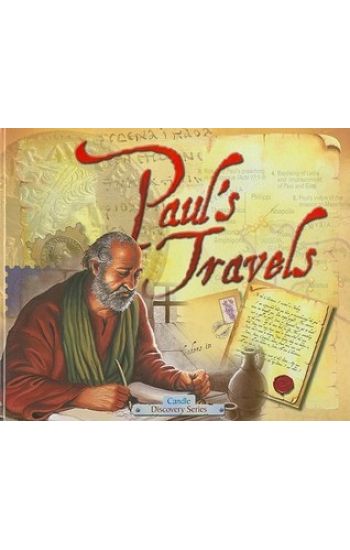
Paul's Travels

Paul's Travels

Tim Dowley

CANDLE BOOKS
2010
sidottu
Candle Discovery Series is an exciting interactive educational series designed for the 7+ age range, helping youngsters to learn the Bible. Through this fully illustrated guide, children discover the fascinating story of Paul--his life, journeys, and letters--with a letter stored in its own pocket for each chapter.
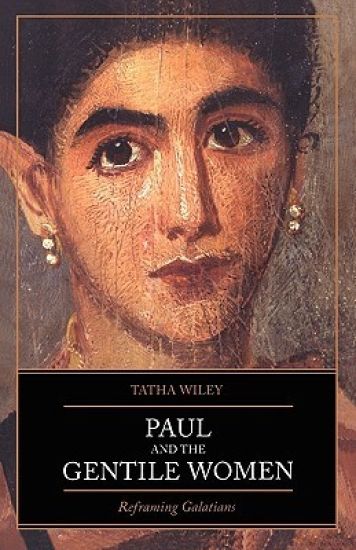
Paul and the Gentile Women

Paul and the Gentile Women

Tatha Wiley

Continuum International Publishing Group Ltd.
2005
nidottu
For hundreds of years, Paul's letter to the Galatians has been a flashpoint of controversy among Christians. Why did Paul write the letter, and what was at issue in the controversy over Torah observance, particularly male circumcision? Has the letter with its classic contrast of faith in Christ and works of the law served to divide Jews from Christians and Christians from one other? Radically reframing the debate, Tatha Wiley's fresh approach decisively shifts the Galatian question to focus on the social consequences of Paul's bitter disagreement with the circumcision preachers and specifically the implications of the dispute for Gentile women in the community. Wiley maintains that Paul's argument of equality in Christ was directed to and for the situation of women, whose newly won status was jeopardized by the preaching of Paul's opponents. By looking at the issue of circumcision from the angle of the Gentile women of Galatia, Wiley cuts to the core concerns of the dispute: gender privilege, religious authority, and the life-changing implications of Christian commitment.
Paul's Critique of Theocracy

Paul's Critique of Theocracy

David Odell-Scott

Sheffield Academic Press
2003
sidottu
Paul's Critique of Theocracy offers an interpretation of select texts in Corinthians and Galatians concerned with the establishment of legitimate authority in the Christian community. Odell-Scott argues that for Paul, no one may boast that they are selected by God, and no one has the authority to rule as God's representative. Paul also criticizes those who exhibit a superior "sacredness" over other community members. Contrary to most scholarly views, Odell-Scott argues that Paul is not taking sides in a debate about the proper authority structure. Rather, he criticizes any notion of such a structure, opposing it with his metaphor of the Church as the body of Christ and the "sacred family" of God. The exegesis is also sketched out in a postmodern framework criticizing hierarchy through differentiation.
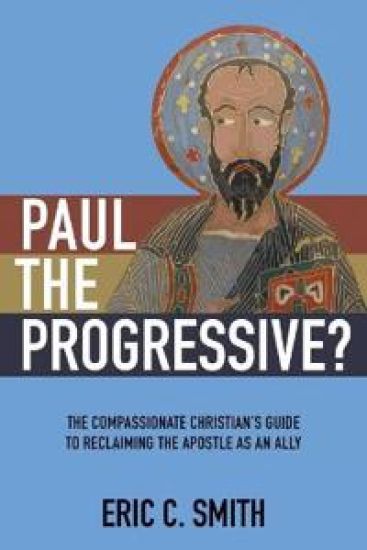
Paul the Progressive?

Paul the Progressive?

Eric C Smith

Chalice Press
2019
pokkari
A generation of biblical scholars have sparked a revolution in thinking about the apostle Paul. Now, bible scholar and progressive Christian pastor Eric C. Smith is helping Christians see how that revolution makes a difference for people engaged in the work of justice and inclusion. In Paul the Progressive, Smith revisits Paul in light of modern biblical scholarship, telling the story of a Paul who challenged the norms of his day, broke down barriers of gender and ethnicity, and re-imagined God's plan for the world in terms of radical inclusion and salvation available to everyone.
Paul & the Law

Paul & the Law

Inter-Varsity Press,US
2000
pokkari
No issue in contemporary Pauline studies is more contested than Paul's view of the law. Headline proponents of the "new perspective" on Paul, such as E.P. Sanders and J.D.G. Dunn, have maintained that the Reformational readings of Paul have led to distorted understandings of first-century Judaism, of Paul and particularly of Paul's diagnosis of the Jewish situation under the law. Others have responded by arguing that while our understanding of Paul needs to be tuned to the clearer sounds now emanating from Jewish texts of the apostle's day, the basic Reformational insight into Paul's analysis of the human plight remains true to the apostle. Paul was opposing works righteousness. Paul & The Law is a careful attempt to assault this crucial interpretive problem with a new strategy. Rather than taking a systematic, topical approach, Frank Thielman examines Paul's view of the law in context: the context of each letter's language and argument. While many studies have focused on Paul's explicit statements about the law, Thielman goes further in investigating those contexts where Paul's language is allusive and his view implied. The result is an illuminating and significant contribution to Pauline studies.Paul & the Law clarifies our understanding of Paul's perspective on the law in the light of his gospel of Jesus Christ, and it reaffirms the coherence and integrity of Pauline theology as it relates to this pivotal axis of his thought.
Paul`s Theology of Preaching – The Apostle`s Challenge to the Art of Persuasion in Ancient Corinth
"We preach Christ crucified: a stumbling block to Jews and foolishness to Gentiles, but to those whom God has called, both Jews and Greeks, Christ the power of God and the wisdom of God." When Paul preached about the crucified and risen Jesus Christ to the church at Corinth and elsewhere, did he follow the well-established rhetorical strategy of his day or did he pursue a different path? And what does that mean for the preaching of the church today? Through a detailed analysis of 1 Corinthians 1-4, Duane Litfin explores the rhetorical context of Paul's preaching and his own understanding of his task as a preacher. What is revealed in this investigation is a sharp distinction between Greco-Roman rhetorical strategies, which sought to persuade, and Paul's theology of preaching, which was based on the model of an obedient herald. This revised and expanded version of Litfin's previous St. Paul's Theology of Proclamation will provide insight to those engaged in Pauline and New Testament studies, rhetorical theory, and Greco-Roman studies. Moreover, by offering a better understanding of Paul's method as well as the content of his declaration concerning "the power and wisdom of God" revealed in Jesus, this book will help preachers as they undertake the ongoing task to "preach Christ crucified."
Paul and the Law

Paul and the Law

Brian S. Rosner

INTERVARSITY PRESS
2013
nidottu
Preaching's Preacher's Guide to the Best Bible Reference"For neither circumcision counts for anything nor uncircumcision, but keeping the commandments of God" (1 Cor 7:19).The apostle Paul's relationship to the Law of Moses is notoriously complex and much studied. Difficulties begin with questions of definition (of the extent of Paul's corpus and the meanings of "the law") and are exacerbated by numerous problems of interpretation of the key texts. Major positions are entrenched, yet none of them seems to know what to do with all the pieces of the puzzle.Inextricably linked to Paul's view of the law is his teaching concerning salvation history, Israel, the church, anthropology, ethics and eschatology. Understanding "Paul and the law" is critical to the study of the New Testament, because it touches on the perennial question of the relationship between the grace of God in the gift of salvation and the demand of God in the call for holy living. Misunderstanding can lead to distortions of one or both.This New Studies in Biblical Theology volume is something of a breakthrough, bringing neglected evidence to the discussion and asking different questions of the material, while also building on the work of others. Brian Rosner argues that Paul undertakes a polemical re-evaluation of the Law of Moses, which involves not only its repudiation as law-covenant and its replacement by other things, but also its wholehearted re-appropriation as prophecy (with reference to the gospel) and as wisdom (for Christian living).Addressing key issues in biblical theology, the works comprising New Studies in Biblical Theology are creative attempts to help Christians better understand their Bibles. The NSBT series is edited by D. A. Carson, aiming to simultaneously instruct and to edify, to interact with current scholarship and to point the way ahead.
Paul and Judaism Revisited

Paul and Judaism Revisited

Sprinkle Preston M.

Inter-Varsity Press,US
2013
nidottu
Preaching's Preacher's Guide to the Best Bible Reference for 2014 (Pauline Studies) Ever since E. P. Sanders publishedPaul and Palestinian Judaism in 1977, students of Paul have been probing, weighing and debating the similarities and dissimilarities between the understandings of salvation in Judaism and in Paul. Do they really share a common notion of divine and human agency? Or do they differ at a deep level? And if so, how? Broadly speaking, the answers have lined up on either side of the old perspective and new perspective divide. But can we move beyond this impasse? Preston Sprinkle reviews the state of the question and then tackles the problem. Buried in the Old Testament's Deuteronomic and prophetic perspectives on divine and human agency, he finds a key that starts to turn the rusted lock on Paul's critique of Judaism. Here is a proposal that offers a new line of investigation and thinking about a crucial issue in Pauline theology.
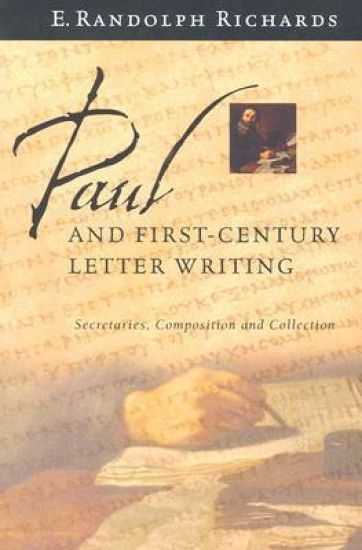
Paul and First-Century Letter Writing

Paul and First-Century Letter Writing

E. Randolph Richards

INTERVARSITY PRESS
2004
nidottu
Traditional Christian art depicts Paul the letter writer, pen in hand, attentive to the Spirit. We might think we know better and imagine him pacing in agitation as he rapidly dictates to a secretary his letter to the Galatians. But in reality neither of these pictures is accurate.In Paul's day, producing a letter was a time-consuming and costly business. And we have ample resources from the ancient world to piece together what it must have been like. A secretary was usually part of the picture. But so were notes, drafts, corrections and careful rewrites, not to speak of scratchy pens, sooty ink and coarse papyrus. Interestingly, there is evidence that Paul involved his missionary team in the writing of letters. And then came the delivery over land and sea, the reading and circulation, as well as the epistolary afterlife of copying, collecting and storing. E. Randolph Richards has extensively studied ancient letter writing and secretaries. Informed by the historical evidence and with a sharp eye for telltale clues in Paul's letters, he takes us into this world and places us on the scene with Paul the letter writer. What first appears to be just a study of secretaries and stationery turns out to be an intriguing glimpse of Paul the letter writer that overthrows our preconceptions and offers a new perspective on how this important portion of Christian Scripture came to be.
Paul the Missionary

Paul the Missionary

Eckhard J. Schnabel

INTERVARSITY PRESS
2008
nidottu
Biblical Foundations Book AwardEckhard Schnabel's two-volume Early Christian Mission is widely recognized as the most complete and authoritative contemporary study of the first-century Christian missionary movement. Now in Paul the Missionary Schnabel condenses volume two of the set, drawing on his research to provide a manageable study for students of Paul as well as students and practitioners of Christian mission today.Schnabel first focuses the spotlight on Paul's missionary work--the realities he faced, and the strategies and methods he employed. Applying his grasp of the wide range of ancient sources and of contemporary scholarship, he clarifies our understanding, expands our knowledge and corrects our misconceptions of Paul the missionary.In a final chapter Schnabel shines the recovered light of Paul's missionary methods and practices on Christian mission today. Much like Roland Allen's classic Missionary Methods: St. Paul's or Ours? of nearly a century ago, Schnabel offers both praise and criticism. For those who take the time to immerse themselves in the world of Paul's missionary endeavor, this final chapter will be both rewarding and searching.