Kirjahaku
Etsi kirjoja tekijän nimen, kirjan nimen tai ISBN:n perusteella.
1000 tulosta hakusanalla Peder Bundgaard
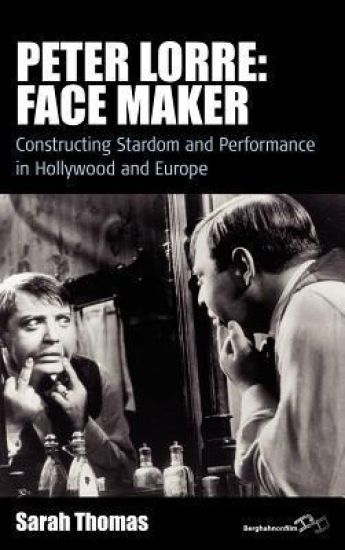
Peter Lorre described himself as merely a ‘face maker’. His own negative attitude also characterizes traditional perspectives which position Lorre as a tragic figure within film history: the promising European artist reduced to a Hollywood gimmick, unable to escape the murderous image of his role in Fritz Lang’s M. This book shows that the life of Peter Lorre cannot be reduced to a series of simplistic oppositions. It reveals that, despite the limitations of his macabre star image, Lorre’s screen performances were highly ambitious, and the terms of his employment were rarely restrictive. Lorre’s career was a complex negotiation between transnational identity, Hollywood filmmaking practices, the ownership of star images and the mechanics of screen performance.

Peter Levins Manipulus Vocabulorum
D.S. Brewer
1867
sidottu
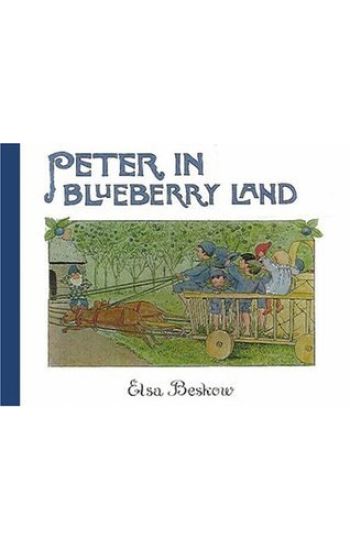
A mini gift edition of Elsa Beskow's classic story.Peter is looking for blueberries for his mother's birthday but he can't find a single one. Suddenly he feels a light tap on his shoe, and a strange and magical adventure begins.

From the preeminent classical architecture firm in the US, the latest apartments, townhouses, and country houses, with interiors by leading designers. Whether a brand–new country estate, a renovation of a triplex penthouse apartment, or a merging of two townhouses into one, each of the 20 projects in this sumptuously illustrated volume bears the hallmarks of Peter Pennoyer Architects’ work: skillful adaptation of the principles of classical architecture, sophisticated use of details and materials, and insistence on meticulous craftsmanship, resulting in a balance between comfort, beauty, and luxury. The firm’s architects worked with exceptional interior designers, including Katie Ridder, Miles Redd, Steven Gambrel, and Jacques Grange, to create these residences, and though all are grounded in the classical tradition, each is singularly tailored to its location and the individual taste of the client. With an authoritative text by architectural historian Anne Walker and hundreds of specially commissioned photographs, site plans, and floor plans, Peter Pennoyer Architects: City and Country showcases residential architecture at its finest.
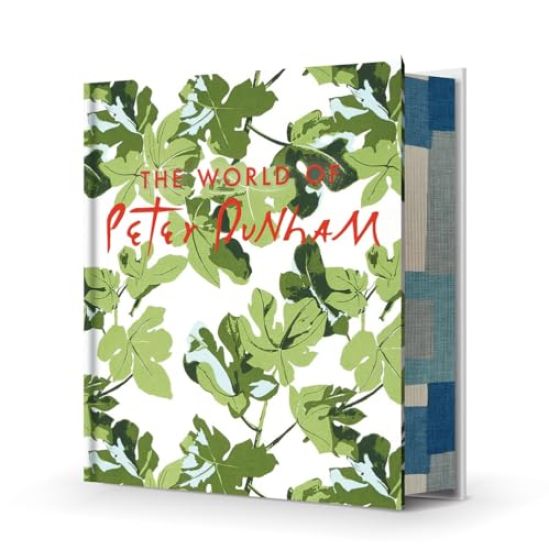
A-list interior designer Peter Dunham’s first book reveals his singular approach to colorful, pattern-filled interiors with world-class photography of never-before-seen projects Peter Dunham is a Los Angeles–based interior designer known for his bold use of color and pattern and a sophisticated yet laid-back style. The Wall Street Journal described his work as “Merchant Ivory Moderne.” The World of Peter Dunham, written by Dunham himself, features the best of his design projects, many never seen before—from chic New York penthouses to romantic Old California gems, as well as his own homes, including a magical Paris pied-à-terre. There’s a modernist Marmol Radziner house overlooking the Pacific in Montecito; beach houses in Orange County and mountain houses in Colorado and Montana; and a 1963 Horace Gifford modernist icon on Fire Island. You’ll meet the people and places that have shaped his point of view and discover the unique way he thinks about interior design. Dunham believes every successful house needs certain ingredients: Color, Rhythm, Charm, Togetherness, Refuge, Nature, and more. He tells you why each is essential and how to get it. Here’s a dynamic mix of cottages and apartments, grand old houses and sleek new ones, all presented in stunning photographs, all built on Dunham’s internationally acclaimed textiles and furnishings from Hollywood at Home, his legendary shop that’s a centerpiece of the Los Angeles design world.
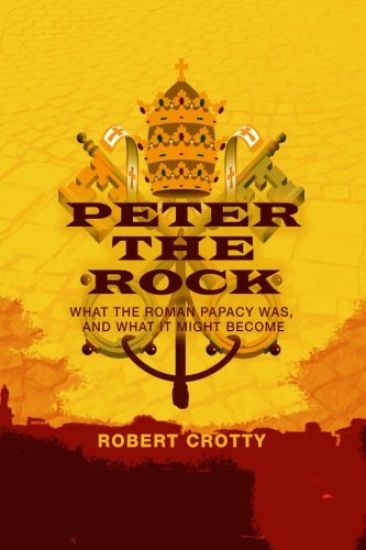
Peter the Rock: What the Roman Papacy Was, and What It Might Become
Robert Crotty
Spectrum Publications
2015
nidottu
Who would dare to challenge the tradition that Jesus appointed Peter to be the rock, the foundation of the Christian Church? Who would even explore the possibility that Peter did not found the Christian Church and become the first bishop? Who? Another Martin Luther? No, a contemporary critic called Robert Crotty A brilliant critical analysis of a religious phenomenon called 'The Papacy, ' ...Norman Habel Professorial Fellow, Flinders University As in so many other times, the Church institution itself has to ask: who is 'Peter' today? The answer probably should be quite radical. It is not my place even to make suggestions as to a new structure - that is the role of the Church members. But it seems obvious that something must be done; the answer is not the Papacy as understood today. 'Peter' needs renewal. With the election of Pope Francis I, who shrugs off the trappings of high living and pompous ceremony there is a heightened interest in the Papacy, the line of Popes. This book claims to demonstrate that many statements are not at all historically valid and the seemingly logical conclusion must therefore be questioned. Here are some reasons for this position defended in the book: -Jesus of Nazareth was a Jewish teacher, proclaiming the Reign of God to a Galilean audience and he had nothing to do with the foundation of a separate Church, different to Judaism.-There is no historical evidence, as against the Synoptic gospels, that Jesus of Nazareth appointed Peter to any office or any succession.-Peter was never a universal Church leader, never a Roman leader or Bishop, possibly not even a house-church leader.-There was no monarchic Bishop of Rome until well into the second century-It was many centuries before the Pope in Rome even claimed to be the Head of the universal Church-The affirmation of a line of Popes as successors to 'Peter' belongs to the Church Story not to history.
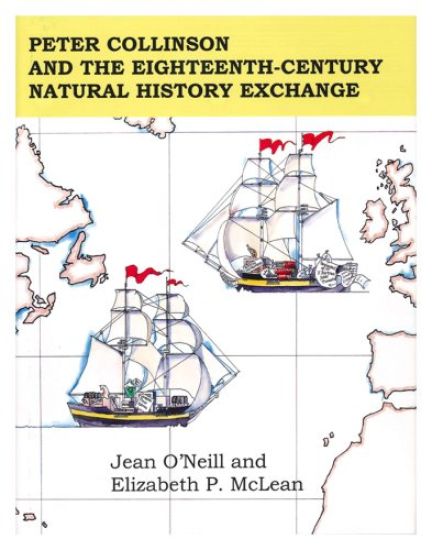
Peter Collinson and the Eighteenth-Century Natural History Exchange
Jean O’Neill; Elizabeth P. McLean
American Philosophical Society Press
2008
sidottu
Peter Riedemann's Hutterite Confession of Faith
Peter Riedemann
Plough Publishing House
2019
pokkari
The biblical foundations of a Christian communal movement that has stood the test of five centuries. While in prison from 1540 to 1542, Riedemann wrote to the Lutheran ruler, Philip of Hesse, explaining the Hutterite goal of a renewed community and dispelling popular misconceptions. The Hutterites quickly accepted Riedemann’s confession as their own. Riedemann creatively weaves together a fresh reading of the Bible with the classical creeds, producing a powerful synthesis of Scripture and tradition on which to base Christian community. His dynamic vision of radical and communal discipleship still challenges believers toward greater faithfulness to the Lord and to each other. Riedemann’s confession gives theological grounding for the Hutterite understanding of economic communalism and offers practical examples of it. This confession continues to guide Hutterite communities today. This volume includes an English translation of the 1565 German edition of Confession of Our Religion, Teaching, and Faith, by the Brothers Who Are Known as the Hutterites along with a new history of Riedemann. It is the ninth volume in the Classics of the Radical Reformation, a series of Anabaptist and Free Church documents translated and annotated under the direction of the Institute of Mennonite Studies.

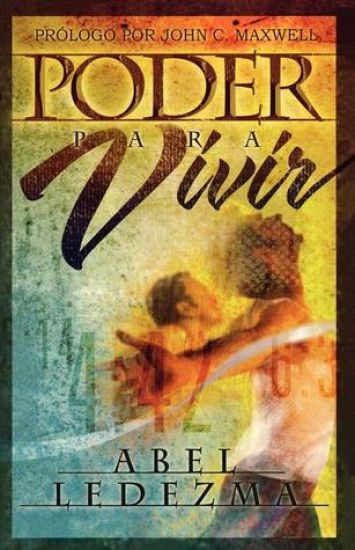
¿De dónde conseguimos las fuerzas para vivir?Cuando damos mucho de nosotros, perdemos algo que apreciamos o sentimos que nuestra vida ya llegó hasta donde podía, empezamos a sentirnos cansados, agotados y sin fuerzas. ¿Dónde conseguimos poder para vivir? ¿Por qué carecemos del poder que David tuvo cuando se enfrentó al gigante? ¿Dónde está el poder que Nehemías tuvo para volver a edificar las murallas de Jerusalén, el poder de los tres jóvenes hebreos para hacerle frente a la adversidad, el poder que Ester tuvo para hacerle frente a un rey implacable, o el poder que Pedro tuvo para volver a levantarse, predicar con valor, y dar la cara por Cristo después de haberle negado? ¿Dónde está el secreto de estos hombres y mujeres? Ellos recibieron el Poder para vivir. A través de estas páginas tú descubrirás la fuerza que se tiene cuando uno no solo cree en Dios sino que le cree a Dios.
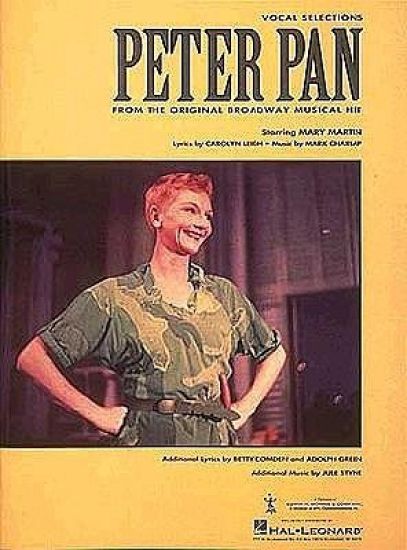
Peter Pan
Hal Leonard Publishing Corporation
1982
nidottu
(Vocal Selections). 8 vocal selections from the 1954 Broadway version of the beloved story starring Mary Martin. Includes: Captain Hook's Waltz * Distant Melody * I Won't Grow Up * I'm Flying * I've Gotta Crow * Never Never Land * Tender Shepherd (Count Your Sheep) * Wendy.
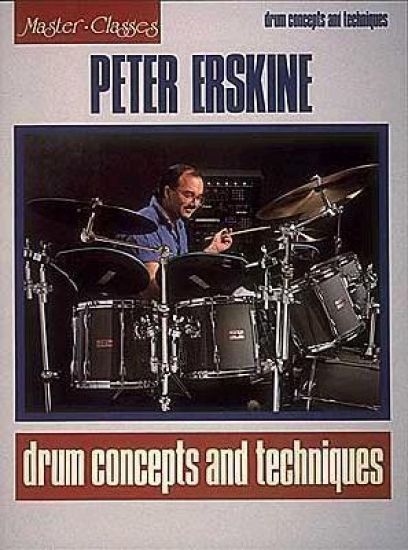
(Percussion). Peter Erskine is a world-renowned jazz/fusion drummer. This book on Erskine's concepts and techniques behind jazz drumming is for the beginning to intermediate drummer and covers topics like drum set up, beats, brushes, phrasing, reading, etc. Includes a full discography of Erskine's performances.
Renaissance and Reformationâpartners or enemies? The popular image of these two historical phenomena is one of opposition and contradiction: the Renaissance was a cultural revival influenced by classical philosophy; the Reformation was a radical religious movement which rejected traditional authority. But in the life and work of Peter Martyr Vermigli, a "Calvinist Thomist" and the leading sixteenth-century Italian Reformer, scholasticism and Protestantism converge. An international conference, sponsored by the Faculty of Religious Studies, McGill University, reflects the recent renewed interest in Italian reform. Entitled "The Cultural Impact of Italian Reformers," its aim was to gather Vermigli scholars along with Renaissance and Reformation scholars. Half the essays (by Paul Grendler, Cesare Vasoli, Rita Belladonna, Anthony Santosuosso, and Antonio D'Andrea) deal with the general question of Renaissance and Reformation interaction: How are humanism and scholasticism related? Marvin Anderson, Philip McNair, J. Patrick Donnelly, Robert Kingdon, and Joseph C. McLelland focus on the thought and activity of Vermigli himself. Students of theology, history, and philosophy, and specifically of the Renaissance and the Reformation, will welcome this book.
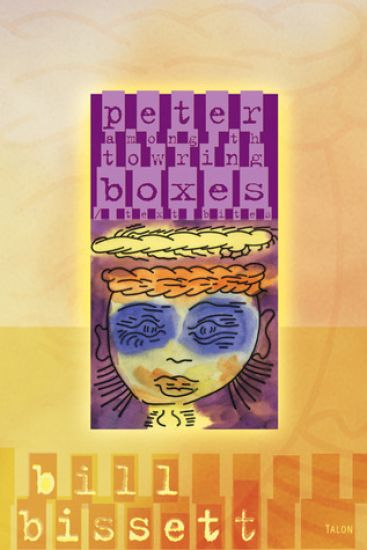
bissett's latest book marks some significant boundaries, draws some sharp, clear lines for this veteran of the evolving phonetic alphabet, and of sound, concrete and performance poetry. While the work remains overwhelmingly playful, subtly layered, and full of the astonishment and sheer delight at seeing and hearing things one has never quite thought of the way the poet/performer imagines them before, there is a new edginess to this work that will shake up both old fans and new readers of what can only be called the unique bill bissett experience in language. These new sharper edges come, quite generously, from the poet's own re-assesment of where the self ends, and the other begins, and a growing recognition that those boundaries often need to be imposed, and defended, if destructive relationships of co-dependency are to be avoided. bissett's usual biting, acute, often deliciously comic interrogation of the socio-political events towering around us like so many boxes we need constantly to think, feel and imagine our way out of, is counterposed in this collection by a recurring dream of a future wherein 20 billion people are locked in a global war on the poisoned surface of the planet while a small minority of peace-loving libertarians have garrisoned themselves into a scanner-protected, completely virtualized underground.While the Bill Gates compound reference of this recurring nightmare is inescapable, the text remains profoundly ambivalent about where one might be better off. There's just a touch of scariness here in bissett's latest exuberant rage through the urban wilderness of our time.