Kirjojen hintavertailu. Mukana 11 342 296 kirjaa ja 12 kauppaa.

Kirjahaku

Etsi kirjoja tekijän nimen, kirjan nimen tai ISBN:n perusteella.

1000 tulosta hakusanalla Peter P. Hinks

Bayesian Adaptive Methods for Clinical Trials

Bayesian Adaptive Methods for Clinical Trials

Scott M. Berry; Bradley P. Carlin; J. Jack Lee; Peter Muller

CRC Press Inc
2010
sidottu
Already popular in the analysis of medical device trials, adaptive Bayesian designs are increasingly being used in drug development for a wide variety of diseases and conditions, from Alzheimer’s disease and multiple sclerosis to obesity, diabetes, hepatitis C, and HIV. Written by leading pioneers of Bayesian clinical trial designs, Bayesian Adaptive Methods for Clinical Trials explores the growing role of Bayesian thinking in the rapidly changing world of clinical trial analysis.The book first summarizes the current state of clinical trial design and analysis and introduces the main ideas and potential benefits of a Bayesian alternative. It then gives an overview of basic Bayesian methodological and computational tools needed for Bayesian clinical trials. With a focus on Bayesian designs that achieve good power and Type I error, the next chapters present Bayesian tools useful in early (Phase I) and middle (Phase II) clinical trials as well as two recent Bayesian adaptive Phase II studies: the BATTLE and ISPY-2 trials. In the following chapter on late (Phase III) studies, the authors emphasize modern adaptive methods and seamless Phase II–III trials for maximizing information usage and minimizing trial duration. They also describe a case study of a recently approved medical device to treat atrial fibrillation. The concluding chapter covers key special topics, such as the proper use of historical data, equivalence studies, and subgroup analysis.For readers involved in clinical trials research, this book significantly updates and expands their statistical toolkits. The authors provide many detailed examples drawing on real data sets. The R and WinBUGS codes used throughout are available on supporting websites.Scott Berry talks about the book on the CRC Press YouTube Channel.
Reducing the Vulnerability of Uzbekistan's Agricultural Systems to Climate Change

Reducing the Vulnerability of Uzbekistan's Agricultural Systems to Climate Change

William R. Sutton; Jitendra P. Srivastava; James E. Neuman; Peter Droogers; Brent Boehlert

World Bank Publications
2013
nidottu
Agriculture is one of the most climate-sensitive of all economic sectors. In many countries, such as in Uzbekistan, the risks of climate change are an immediate and fundamental problem because the majority of the rural population depends either directly or indirectly on agriculture for their livelihoods. The risks of climate change to agriculture in Uzbekistan cannot be effectively dealt with—and the opportunities cannot be effectively exploited—without a clear plan for aligning agricultural policies with climate change, developing the capabilities of key agricultural institutions, and making needed investments in infrastructure, support services and on-farm improvements. Developing such a plan ideally involves a combination of high-quality quantitative analysis, consultation with key stakeholders, particularly farmers and local agricultural experts, and investments in both human and physical capital. The experience of Uzbekistan, highlighted in this work, shows that it is possible to develop a plan to meet these objectives—one that is comprehensive and empirically driven as well as consultative and quick to develop. The approach of this study is predicated on strong country ownership and participation, and is defined by its emphasis on “win-win” or “no regrets” solutions to the multiple challenges posed by climate change for farmers in Uzbekistan. The solutions are measures that increase resilience to future climate change, boost current productivity despite the greater climate variability already occurring, and limit greenhouse gas emissions. Reducing The Vulnerability of Uzbekistan's Agricultural Systems to Climate Change: Impact Assessment and Adaptation Options applies this approach to Uzbekistan with the goal of helping the country mainstream climate change adaptation into its agricultural policies, programmes, and investments. The study projects impacts of climate change on agriculture across Uzbekistan’s three agro-ecological areas through forecast variations in temperature and rainfall patterns so crucial to farming. It offers a map for navigating the risks and realising the opportunities, outlined through a series of consultations with local farmers. A detailed explanation of the approach is provided for those who would like to implement similar programmes in other countries of Europe, Central Asia, or anywhere else in the world. This is one of four country studies that were produced under the World Bank’s programme, “Reducing Vulnerability to Climate Change in European and Central Asian Agricultural Systems”. The other countries included in this series are Albania, FYR Macedonia, and Moldova. The results from the four studies are consolidated in the book Looking Beyond the Horizon: How Climate Change Impacts and Adaptation Responses Will Reshape Agriculture in Eastern Europe and Central Asia website.
Reducing the Vulnerability of Albania's Agricultural Systems to Climate Change

Reducing the Vulnerability of Albania's Agricultural Systems to Climate Change

William R. Sutton; Jitendra P. Srivastava; James E. Neuman; Kenneth Strzepek; Peter Droogers

World Bank Publications
2013
nidottu
Agriculture is one of the most climate-sensitive of all economic sectors. In many countries, such as in Albania, the risks of climate change are an immediate and fundamental problem because the majority of the rural population depends either directly or indirectly on agriculture for their livelihoods. The risks of climate change to agriculture in Albania cannot be effectively dealt with—and the opportunities cannot be effectively exploited—without a clear plan for aligning agricultural policies with climate change, developing the capabilities of key agricultural institutions, and making needed investments in infrastructure, support services and on-farm improvements. Developing such a plan ideally involves a combination of high-quality quantitative analysis, consultation with key stakeholders, particularly farmers and local agricultural experts, and investments in both human and physical capital. The experience of Albania, highlighted in this work, shows that it is possible to develop a plan to meet these objectives—one that is comprehensive and empirically driven as well as consultative and quick to develop. The approach of this study is predicated on strong country ownership and participation, and is defined by its emphasis on “win-win” or “no regrets” solutions to the multiple challenges posed by climate change for farmers in Albania. The solutions are measures that increase resilience to future climate change, boost current productivity despite the greater climate variability already occurring, and limit greenhouse gas emissions. Reducing The Vulnerability of Albania's Agricultural Systems to Climate Change: Impact Assessment and Adaptation Options applies this approach to Albania with the goal of helping the country mainstream climate change adaptation into its agricultural policies, programmes, and investments. The study projects impacts of climate change on agriculture across Albania’s three agro-ecological areas through forecast variations in temperature and rainfall patterns so crucial to farming. It offers a map for navigating the risks and realising the opportunities, outlined through a series of consultations with local farmers. A detailed explanation of the approach is provided for those who would like to implement similar programmes in other countries of Europe, Central Asia, or anywhere else in the world. This is one of four country studies that were produced under the World Bank’s programme, “Reducing Vulnerability to Climate Change in European and Central Asian Agricultural Systems”. The other countries included in this series are FYR Macedonia, Moldova, and Uzbekistan. The results from the four studies are consolidated in the book Looking Beyond the Horizon: How Climate Change Impacts and Adaptation Responses Will Reshape Agriculture in Eastern Europe and Central Asiawebsite.
The Addiction-Prone Personality

The Addiction-Prone Personality

Gordon E. Barnes; Robert P. Murray; David Patton; Peter M. Bentler; Robert E. Anderson

Springer-Verlag New York Inc.
2013
nidottu
The production of this book represents a culmination for me of some 25 years of interest in the field of personality and substance use and abuse. In choosing the field of substanceuse and abuse for the focus of our research, all of the investi- tors collaborating in this research have been sustained by the awareness that the work we are doing has an important purpose. Substance abuse continues to have enormous impacts on individuals and families,and prevention and treatment - proaches developed to date have not always been as successful as we would hope to see. New advances in our fundamental understanding of the causal mec- nisms involved in the development ofaddiction may be necessary to advance our success in developing new forms of prevention and treatment for alcohol and drug abuse. The work in this book builds on the work of numerous previous investi- tors who have been drawn to investigate this topic. As you will notice in the extensive reference list, there have been hundreds of articles published on this topic. Although each of these references has added a small piece to our und- standing of the relationship between personality and alcohol abuse, the majority of these studies have been done on clinical samples and often involved no control groups or poorly matched control groups. Several important previous longitu- nal investigations have been conducted,but these investigations have usually not included general population samples or comprehensivepersonality test batteries.
The Washington Manual of Surgical Pathology

The Washington Manual of Surgical Pathology

John D. Pfeifer; Louis P. Dehner; Peter A. Humphrey

Lippincott Williams and Wilkins
2019
pokkari
Selected as a Doody's Core Title for 2025! Focusing on the essential information you need to know for the clinical practice of surgical pathology, this award-winning volume in the Lippincott Manual series provides concise, high-yield content that reflects today’s fast-changing advances in the field. In one convenient, portable resource, you’ll find complete coverage of surgical pathology for every organ and anatomic site —all at your fingertips for quick review and reference. Washington Manual of Surgical Pathology, 3rd Edition, is an ideal reference for surgical pathologists at all levels of training and practice. Includes new WHO classifications and access to more than 2,700 high-quality images online. Offers brief, logical approaches to gross examination and dissection; microscopic diagnosis of medical as well as surgical diseases; and tumor classification. Features separate chapters devoted to ancillary surgical pathology techniques, including immunohistochemistry, immunofluorescence microscopy, electron microscopy, frozen section diagnosis, flow cytometry, DNA and RNA based molecular methods, and imaging technologies. Presents valuable content in a concise, practical format that includes easy-to-follow guidelines, tables, diagrams, and algorithms. Previous edition winner of the BMA Medical Book Award First Prize in Pathology. Enrich Your eBook Reading Experience Read directly on your preferred device(s), such as computer, tablet, or smartphone. Easily convert to audiobook , powering your content with natural language text-to-speech.
Albion's Fatal Tree

Albion's Fatal Tree

Cal Winslow; Douglas Hay; E P Thompson; John G Rule; Peter Linebaugh

Verso Books
2011
nidottu
In the popular imagination, informed as it is by Hogarth, Swift, Defoe and Fielding, the eighteenth-century underworld is a place of bawdy knockabout, rife with colourful eccentrics. But the artistic portrayals we have only hint at the dark reality. In this new edition of a classic collection of essays, renowned social historians from Britain and America examine the gangs of criminals who tore apart English society, while a criminal law of unexampled savagery struggled to maintain stability.Douglas Hay deals with the legal system that maintained the propertied classes, and in another essay shows it in brutal action against poachers; John G. Rule and Cal Winslow tell of smugglers and wreckers, showing how these activities formed a natural part of the life of traditional communities. Together with Peter Linebaugh's piece on the riots against the surgeons at Tyburn, and E. P. Thompson's illuminating work on anonymous threatening letters, these essays form a powerful contribution to the study of social tensions at a transformative and vibrant stage in English history.This new edition includes a new introduction by Winslow, Hay and Linebaugh, reflecting on the turning point in the social history of crime that the book represents.
Bates' Pocket Guide to Physical Examination and History Taking

Bates' Pocket Guide to Physical Examination and History Taking

Lynn S. Bickley; Peter G. Szilagyi; Richard M. Hoffman; Rainier P. Soriano

Wolters Kluwer Health
2020
pokkari
This updated ninth edition of the leading medical physical examination pocket guide available today provides concise, authoritative guidance on how to perform the patient interview, physical examination, and other core assessments. This trusted pocket-sized reference includes fully illustrated, step-by-step techniques, retaining the easy-to-follow two-column format that correlates examination techniques on the left and abnormalities (clearly indicated in red) with differential diagnoses on the right. Now featuring an enhanced design, new content, and new student-friendly learning aids, Bates’ Pocket Guide to Physical Examination and History Taking, Ninth Edition, is the ideal quick-reference resource for today’s medical, PA, pharmacy, and nursing students. NEW! Expanded Unit 1 provides an overview of the components of the patient encounter and helps you ensure the most effective information-gathering and decision-making approaches. NEW! Algorithms provide helpful starting approaches for patients with common presenting symptoms. UPDATED! Restructured Regional Exam chapters enhance your understanding of overview material, examination techniques, and health promotion and counseling considerations. UPDATED! Photographs, illustrations, and references reinforce key content based on the latest evidence-based information. UPDATED! Text boxes are numbered to provide quick access to important summaries of clinical conditions and tips for challenging examination techniques. Detailed, highly illustrated tables of abnormal conditions display examination and clinical information in an easy-to-find, quick-reference format.
Bates' Guide To Physical Examination and History Taking 13e with Videos Lippincott Connect International Edition Print Book and Digital Access Card Package
Selected as a Doody's Core Title for 2022! Bundled with Lippincott® Connect, Bates’ Guide to Physical Examination and History Taking, 13th Edition is more informative and approachable than ever. By using multimedia content and customizable assignments, this edition strengthens comprehension and prepares you for success in your course.Confidently Perform Accurate, Efficient, and Effective Physical Examinations. Master the techniques for successful physical examinations with the #1 choice for complete, authoritative guidance. This highly regarded text includes fully-illustrated, step-by-step techniques that outline the correct performance of the physical examination and an easy-to-follow two-column format that correlates examination techniques on the left and abnormalities (clearly indicated in red) with differential diagnoses on the right. NEW! Expanded Unit 1 provides an overview of the components of the patient encounter and helps you ensure the most effective information-gathering and decision-making approaches. NEW! Key terms are bolded in chapters and correspond to an online glossary with definitions. UPDATED! Expanded coverage of special populations familiarizes you with important approaches for persons who identify as LGBTQ, persons with physical disabilities, and diverse populations throughout the life cycle. UPDATED! Restructured Regional Exam chapters enhance your understanding of overview material, examination techniques, and health promotion and counseling considerations. UPDATED! Photographs, illustrations, and references reinforce key content based on the latest evidence-based information. UPDATED! Text boxes are numbered to provide quick access to important summaries of clinical conditions and tips for challenging examination techniques. Clinical pearls, printed in blue, highlight key points at a glance. Detailed, highly illustrated tables of abnormal conditions display examination and clinical information in an easy-to-find, quick-reference format at the end of each chapter. Lippincott® Connect enhances your student experience in an all-in-one learning solution combining an interactive eBook, multimedia content, and assessment. Instructors can customize the course, create assignments, and track your progress. Students maximize efficiency through valuable feedback and remediation. Key performance insights are reported in a user-friendly dashboard that allows you to tailor your learning experiences.
Medikamente in der Schmerztherapie

Medikamente in der Schmerztherapie

Juraj Artner; Hannes Hofbauer; Peter R. P. Steffen

Springer-Verlag Berlin and Heidelberg GmbH Co. KG
2020
nidottu
Das Werk beschreibt 100 in der Schmerztherapie eingesetzte Pharmaka nach ihrem Wirkprofil. Die Autoren, langjährig erfahrene Schmerztherapeuten, fokussieren dabei auf die für die Praxis relevanten Fakten und beleuchten auch Off-Label-Anwendungen der Medikamente. Darüber hinaus liefert das Werk Tipps für den richtigen Einsatz, Entscheidungshilfen für die richtige Medikamentenwahl sowie Informationen bei besonderen Fragestellungen. Das Werk wendet sich an alle Ärzte, die Patienten mit akuten oder chronischen Schmerzen optimal und differenziert behandeln möchten und Orientierung bei der Auswahl der richtigen Substanz benötigen.
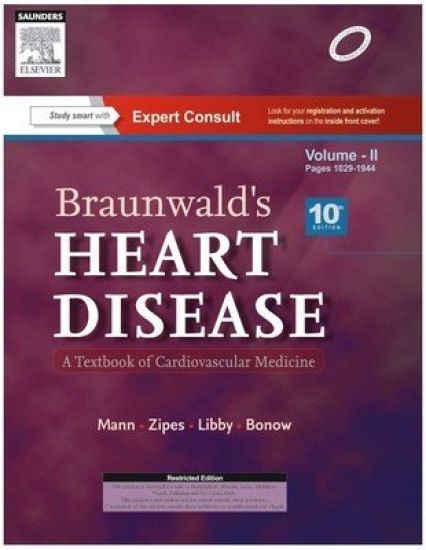
Braunwald's Heart Disease: A Textbook of Cardiovascular Medicine, 2 Volume Set, 10e

Braunwald's Heart Disease: A Textbook of Cardiovascular Medicine, 2 Volume Set, 10e

Douglas L. Mann; Douglas P. Zipes; Peter Libby; Robert O. Bonow

Elsevier India
2014
sidottu
2015 BMA Medical Book Awards 1st Prize Award Winner in Cardiology Category! Ideal for cardiologists who need to keep abreast of rapidly changing scientific foundations, clinical research results, and evidence-based medicine, Braunwald's Heart Disease is your indispensable source for definitive, state-of-the-art answers on every aspect of contemporary cardiology. It helps you apply the most recent knowledge in personalized medicine, imaging techniques, pharmacology, interventional cardiology, electrophysiology, and much more! In keeping with the rapid pace of advances in the field of cardiovascular medicine, the Expert Consult eBook is updated frequently with the results of late-breaking clinical trials, reviews of important new research publications, and updates on clinical practice authored by leaders in the field. These online supplements are selected and edited masterfully by Dr. Eugene Braunwald. Practice with confidence and overcome your toughest challenges with advice from the top minds in cardiology today, who synthesize the entire state of current knowledge and summarize all of the most recent ACC/AHA practice guidelines. Locate the answers you need fast thanks to a user-friendly, full-color design with more than 1,200 color illustrations.
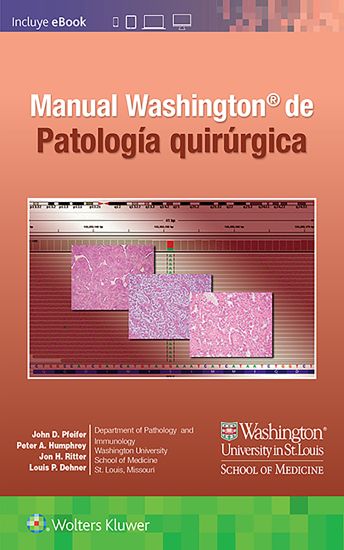
Manual Washington de patología quirúrgica

Manual Washington de patología quirúrgica

John D. Pfeifer; Louis P. Dehner; Peter A. Humphrey

Lippincott Williams Wilkins
2021
pokkari
Presentado en el conocido formato de los manuales Washington(R), este excelente libro constituye una gu a ptima para la pr ctica cl nica de la patolog a quir rgica. Manual Washington(R) de patolog a quir rgica tiene como objetivo responder a las necesidades inmediatas de pat logos y residentes de patolog a, en una realidad diaria en la que el tiempo es una parte vital del trabajo. Tambi n puede funcionar como gu a y ayuda a los estudiantes de medicina.​ Fue ganador del BMA Medical Book Awards 2013 como mejor libro en patolog aEn los primeros cap tulos, se cubren todos los aspectos de la patolog a quir rgica para cada rgano y sitio anat mico, incluyendo anatom a normal; examen macrosc pico y disecci n; diagn stico microsc pico de enfermedades quir rgicas y m dicas; clasificaci n de los tumores; y estadificaci n del tumor. Los ltimos cap tulos cubren los principios generales de la citopatolog a y diversas t cnicas de patolog a quir rgica adicionales, como la inmunohistoqu mica, la inmunofluorescencia, la microscop a electr nica, diagn stico por secci n congelada, citometr a de flujo, m todos moleculares basados en el ADN y el ARN, y tecnolog as de imagenolog a.
The Volcanoes of Mars

The Volcanoes of Mars

James R. Zimbelman; David A. Crown; Peter J. Mouginis-Mark; Tracy K. P. Gregg

Elsevier Science Publishing Co Inc
2020
nidottu
The Volcanoes of Mars offers a clear, cohesive summary of Mars volcanology. It begins with an introduction to the geology and geography of the red planet and an overview of its volcanic history, and continues to discuss each distinct volcanic province, identifying the common and unique aspects of each region. Incorporating basic volcanological information and constraints on the regional geologic history derived from geologic mapping, the book also examines current constraints on the composition of the volcanic rocks as investigated by both orbiting spacecraft and rovers. In addition, it compares the features of Martian volcanoes to those seen on other volcanic bodies. Concluding with prospects for new knowledge to be gained from future Mars missions, this book brings researchers in volcanology and the study of Mars up to date on the latest findings in the study of volcanoes on Mars, allowing the reader to compare and contrast Martian volcanoes to volcanoes studied on Earth and throughout the Solar System.
Small Angle X-Ray and Neutron Scattering from Solutions of Biological Macromolecules

Small Angle X-Ray and Neutron Scattering from Solutions of Biological Macromolecules

Dmitri I. Svergun; Michel H. J. Koch; Peter A. Timmins; Roland P. May

Oxford University Press
2020
nidottu
Small-angle scattering of X-rays (SAXS) and neutrons (SANS) is an established method for the structural characterization of biological objects in a broad size range from individual macromolecules (proteins, nucleic acids, lipids) to large macromolecular complexes. SAXS/SANS is complementary to the high resolution methods of X-ray crystallography and nuclear magnetic resonance, allowing for hybrid modeling and also accounting for available biophysical and biochemical data. Quantitative characterization of flexible macromolecular systems and mixtures has recently become possible. SAXS/SANS measurements can be easily performed in different conditions by adding ligands or binding partners, and by changing physical and/or chemical characteristics of the solvent to provide information on the structural responses. The technique provides kinetic information about processes like folding and assembly and also allows one to analyze macromolecular interactions. The major factors promoting the increasingly active use of SAXS/SANS are modern high brilliance X-ray and neutron sources, novel data analysis methods, and automation of the experiment, data processing and interpretation. In this book, following the presentation of the basics of scattering from isotropic macromolecular solutions, modern instrumentation, experimental practice and advanced analysis techniques are explained. Advantages of X-rays (rapid data collection, small sample volumes) and of neutrons (contrast variation by hydrogen/deuterium exchange) are specifically highlighted. Examples of applications of the technique to different macromolecular systems are considered with specific emphasis on the synergistic use of SAXS/SANS with other structural, biophysical and computational techniques.
Small Angle X-Ray and Neutron Scattering from Solutions of Biological Macromolecules

Small Angle X-Ray and Neutron Scattering from Solutions of Biological Macromolecules

Dmitri I. Svergun; Michel H. J. Koch; Peter A. Timmins; Roland P. May

Oxford University Press
2013
sidottu
Small-angle scattering of X-rays (SAXS) and neutrons (SANS) is an established method for the structural characterization of biological objects in a broad size range from individual macromolecules (proteins, nucleic acids, lipids) to large macromolecular complexes. SAXS/SANS is complementary to the high resolution methods of X-ray crystallography and nuclear magnetic resonance, allowing for hybrid modeling and also accounting for available biophysical and biochemical data. Quantitative characterization of flexible macromolecular systems and mixtures has recently become possible. SAXS/SANS measurements can be easily performed in different conditions by adding ligands or binding partners, and by changing physical and/or chemical characteristics of the solvent to provide information on the structural responses. The technique provides kinetic information about processes like folding and assembly and also allows one to analyze macromolecular interactions. The major factors promoting the increasingly active use of SAXS/SANS are modern high brilliance X-ray and neutron sources, novel data analysis methods, and automation of the experiment, data processing and interpretation. In this book, following the presentation of the basics of scattering from isotropic macromolecular solutions, modern instrumentation, experimental practice and advanced analysis techniques are explained. Advantages of X-rays (rapid data collection, small sample volumes) and of neutrons (contrast variation by hydrogen/deuterium exchange) are specifically highlighted. Examples of applications of the technique to different macromolecular systems are considered with specific emphasis on the synergistic use of SAXS/SANS with other structural, biophysical and computational techniques.
Braunwald's Heart Disease Elsevier eBook on VitalSource (Retail Access Card)

Braunwald's Heart Disease Elsevier eBook on VitalSource (Retail Access Card)

Robert O. Bonow; Douglas L. Mann; Douglas P. Zipes; Peter Libby

Elsevier - Health Sciences Division
2011
muu
Approx.2136 pages Approx.2136 pages Stay on top of the latest advances in molecular imaging, intravascular ultrasound, cardiovascular regeneration and tissue engineering, device therapy for advanced heart failure, atrial fibrillation management, structural heart disease, Chagasic heart disease, ethics in cardiovascular medicine, the design and conduct of clinical trials, and many other timely topics. Hone your clinical skills with new dynamic cardiac imaging videos, heart sound recordings, and podcasts at www.expertconsult.com.
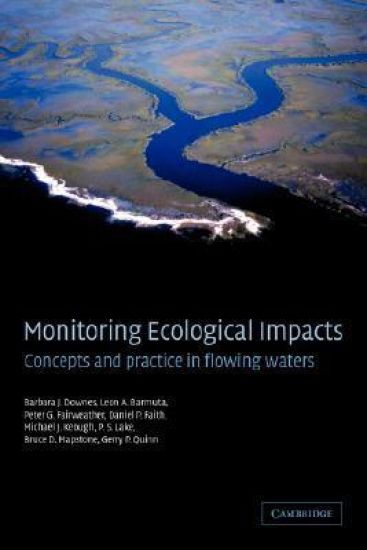
Monitoring Ecological Impacts

Monitoring Ecological Impacts

Barbara J. Downes; Leon A. Barmuta; Peter G. Fairweather; Daniel P. Faith; Michael J. Keough; P. S. Lake; Bruce D. Mapstone; Gerry P. Quinn

Cambridge University Press
2008
pokkari
Monitoring Ecological Impacts provides the tools needed by professional ecologists, scientists, engineers, planners and managers to design assessment programs that can reliably monitor, detect and allow management of human impacts on the natural environment. The procedures described are well grounded in inferential logic, and the statistical models needed to analyse complex data are given. Step-by-step guidelines and flow diagrams provide the reader with clear and useable protocols, which can be applied in any region of the world and to a wide range of human impacts. In addition, real examples are used to show how the theory can be put into practice. Although the context of this book is flowing water environments, especially rivers and streams, the advice for designing assessment programs can be applied to any ecosystem.
Monitoring Ecological Impacts

Monitoring Ecological Impacts

Barbara J. Downes; Leon A. Barmuta; Peter G. Fairweather; Daniel P. Faith; Michael J. Keough; P. S. Lake; Bruce D. Mapstone; Gerry P. Quinn

Cambridge University Press
2002
sidottu
Monitoring Ecological Impacts provides the tools needed by professional ecologists, scientists, engineers, planners and managers to design assessment programs that can reliably monitor, detect and allow management of human impacts on the natural environment. The procedures described are well-grounded in inferential logic, and the statistical models needed to analyse complex data are given. Step-by-step guidelines and flow diagrams provide the reader with clear and useable protocols, which can be applied in any region of the world and to a wide range of human impacts. In addition, real examples are used to show how the theory can be put into practice. Although the context of this book is flowing water environments, especially rivers and streams, the advice for designing assessment programs can be applied to any ecosystem.
Geocaching for Schools and Communities

Geocaching for Schools and Communities

J. Kevin Taylor; DuAnn Kremer; Katherine P. Pebworth; Peter H. Werner

Human Kinetics
2010
pokkari
Hide-and-seek is an age-old game that has never lost its allure. Geocaching—using a global positioning system and other navigational techniques to find hidden containers, or caches—brings this classic favorite to an exciting new level. Geocaching for Schools and Communities is the ideal resource for organizing geocaching for learners of any age group. Written by authors who have presented geocaching at five national AAHPERD conferences, this one-stop resource provides everything you need to know about leading and participating in geocaching activities: • How to use GPS units and set up caching activities • How to use both low-tech and high-tech approaches to caching so your fun isn't dependent on your level of technological expertise • How to create interdisciplinary connections using caching activities • Strategies for developing geocaching programs and clubs in a variety of settings, including schools and recreation and youth programs You learn the history of geocaching, the nuts and bolts of how it works, and strategies for using geocaching for health-related fitness. This book offers in-depth information about satellites and the triangulation necessary for locating latitude and longitude coordinates and how to use computers and the Internet in geocaching as well as low-tech discussions of using maps in finding caches. You also explore the numerous types of caches available, learn step by step how to find and log a cache, and discover the types of items commonly placed in a cache. Along the way, you receive tips on caching etiquette. In addition to the geocaching learning experience, the book includes a chapter devoted to achieving fitness through geocaching. All the learning experiences are built around interdisciplinary connections with academic subjects. The book contains four complete learning experiences for each discipline: language arts, science, math, and social studies. Choose from 31 learning experiences to use with your group, or use these ideas as a starting point to create your own learning experiences. The variety of experiences help keep the adventures fresh and lively, and the learners will clamor for more. Geocaching for Schools and Communities will get kids, adults, and families outdoors being active and having fun. The interdisciplinary learning experiences—involving physical education, language arts, math, science, and social studies—bring in an educational dimension that enhances the fun for learners of all ages. Through the expert guidance of the authors, you are grounded in the basics and can advance the games as far as you want, adapting them for age and experience levels. Each learning experience lets you know what ages the activity is appropriate for, the objectives of the experience, the equipment needed, a complete description of how to conduct the activity, and how to assess the experience. The authors also provide key points for leaders to look for as the students go through the experience, as well as ways to vary each activity by introducing new skills or changing the level of difficulty. So what are you waiting for? There's a cache somewhere out there for your group right now! Get Geocaching forSchools and Communities and track it down.