Kirjojen hintavertailu. Mukana 11 342 296 kirjaa ja 12 kauppaa.

Kirjahaku

Etsi kirjoja tekijän nimen, kirjan nimen tai ISBN:n perusteella.

1000 tulosta hakusanalla Philo

Philosophy in a Time of Crisis

Philosophy in a Time of Crisis

Seymour Feldman

Routledge
2010
nidottu
The expulsion from Spain did not only result in the destruction and dispersion of Spanish Jewry but led to a crisis in Jewish faith. Don Isaac Abravanel provided a systematic treatment of the main philosophical and theological beliefs of Judaism in an attempt to resolve the inner doubts of his co-religionists. In their Italian exile his son Judah too recognized that Jews were now living in a new cultural world, but he forged a different road for Jews to pursue in their entry into the culture of the Renaissance. This book presents a picture of one family facing the challenges of a new era in Jewish history.
Philosophy and Theatre

Philosophy and Theatre

Tom Stern

Routledge
2013
sidottu
The relationship between philosophy and theatre is a central theme in the writings of Plato and Aristotle and of dramatists from Aristophanes to Stoppard. Where Plato argued that playwrights and actors should be banished from the ideal city for their suspect imitations of reality, Aristotle argued that theatre, particularly tragedy, was vital for stimulating our emotions and helping us to understanding ourselves.Despite this rich history the study of philosophy and theatre has been largely overlooked in contemporary philosophy. This is the first book to introduce philosophy and theatre. It covers key topics and debates, presenting the contributions of major figures in the history of philosophy, including: what is theatre? How does theatre compare with other arts?theatre as imitation, including Plato on mimesis truth and illusion in the theatre, including Nietzsche on tragedytheatre as historytheatre and morality, including Rousseau’s criticisms of theatreaudience and emotion, including Aristotle on catharsistheatre and politics, including Brecht’s Epic Theatre.Including annotated further reading and summaries at the end of each chapter, Philosophy and Theatre is an ideal starting point for those studying philosophy, theatre studies and related subjects in the arts and humanities.
Philosophy and Theatre

Philosophy and Theatre

Tom Stern

Routledge
2013
nidottu
The relationship between philosophy and theatre is a central theme in the writings of Plato and Aristotle and of dramatists from Aristophanes to Stoppard. Where Plato argued that playwrights and actors should be banished from the ideal city for their suspect imitations of reality, Aristotle argued that theatre, particularly tragedy, was vital for stimulating our emotions and helping us to understanding ourselves.Despite this rich history the study of philosophy and theatre has been largely overlooked in contemporary philosophy. This is the first book to introduce philosophy and theatre. It covers key topics and debates, presenting the contributions of major figures in the history of philosophy, including: what is theatre? How does theatre compare with other arts?theatre as imitation, including Plato on mimesis truth and illusion in the theatre, including Nietzsche on tragedytheatre as historytheatre and morality, including Rousseau’s criticisms of theatreaudience and emotion, including Aristotle on catharsistheatre and politics, including Brecht’s Epic Theatre.Including annotated further reading and summaries at the end of each chapter, Philosophy and Theatre is an ideal starting point for those studying philosophy, theatre studies and related subjects in the arts and humanities.
Philosophy of Wilhelm Dilthey

Philosophy of Wilhelm Dilthey

H.A. Hodges

Routledge
2010
nidottu
First published in 1998.This is Volume VIII of twenty-two in the Sociology of Social Theory and Methodology series. Written in 1952, this book looks at the concepts behind the German philosopher Wilhelm Dilthey, whose ideas extend into several fields of learning, of which philosophy is only one. They include critical and historical studies of literature and music; studies in educational theory and in the history of educational practice, ancient and modern; researches into the history of religious and political as well as philosophical ideas, especially since the Renaissance and Reformation, which have shaped his thinking.
Philosophical Papers

Philosophical Papers

George Edward Moore

Routledge
2010
nidottu
This is Volume XVII of twenty-two in a series on 20th Century Philosophy. Originally published in 1959, it is a contribution to the History of Modern Philosophy under the heads: first of different Schools of Thought-Sensationalist, Realist, Idealist, Intuitivist; secondly of different Subjects-Psychology, Ethics, Aesthetics, Political Philosophy, Theology. This is a collection of papers by George Edward Moore, Emeritus Professor of Philosophy and Fellow of Trinity College in the University of Cambridge.
Philosophical Studies

Philosophical Studies

G.E. Moore

Routledge
2010
nidottu
First published in 2000. This is Volume V of six in the International Library of Philosophy looking at the area of Nineteenth and Twentieth Century Anglo-American Philosophy. Written in 1922, it focuses on Philosophical studies and a selection of papers and lectures.
Philosophy of the Unconscious

Philosophy of the Unconscious

Eduard Von Hartmann

Routledge
2010
nidottu
This is Volume VII of eight in a series on the Philosophy of Mind and Language. Originally published in 1931, this book presents Speculative Results according to the Inductive Method of Physical Science. Interest in Hartmann’s conception of the Unconscious until the beginning of the present century was primarily metaphysical; his treatise was merely the first, and most significant, of the thirty volumes which set forth his “system.”
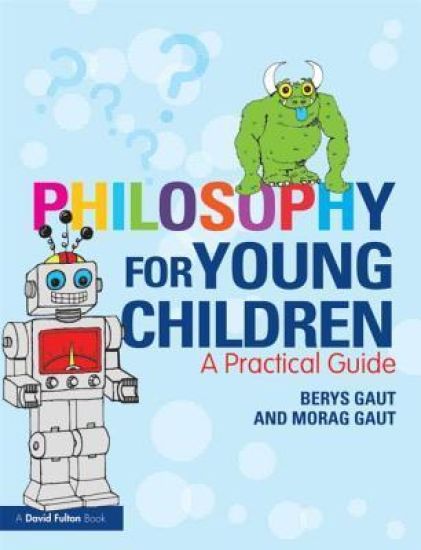
Philosophy for Young Children

Philosophy for Young Children

Berys Gaut; Morag Gaut

Routledge
2011
sidottu
With this book, any teacher can start teaching philosophy to children today!Co-written by a professor of philosophy and a practising primary school teacher, Philosophy for Young Children is a concise, practical guide for teachers. It contains detailed session plans for 36 philosophical enquiries - enough for a year’s work - that have all been successfully tried, tested and enjoyed with young children from the age of three upwards.The enquiries explore a range of stimulating philosophical questions about fairness, the environment, friendship, inclusion, sharing, right and wrong, manners, beauty, pictures, the emotions, dreaming and reality. All the stories, drawings and photographs that you’ll need to carry out the enquiries are provided and can be used with your children directly from the book. Each step-by step enquiry includes: The philosophical topic and the aim of the enquiry The stimuli you’ll need Questions to ask the children Possible answers to help move the discussion forward Ideas to help you summarise and extend the enquiry. If you are an Early Years or primary school teacher, this complete resource will enable you to introduce philosophy to your children quickly and with confidence.
Philosophy for Young Children

Philosophy for Young Children

Berys Gaut; Morag Gaut

Routledge
2011
nidottu
With this book, any teacher can start teaching philosophy to children today!Co-written by a professor of philosophy and a practising primary school teacher, Philosophy for Young Children is a concise, practical guide for teachers. It contains detailed session plans for 36 philosophical enquiries - enough for a year’s work - that have all been successfully tried, tested and enjoyed with young children from the age of three upwards.The enquiries explore a range of stimulating philosophical questions about fairness, the environment, friendship, inclusion, sharing, right and wrong, manners, beauty, pictures, the emotions, dreaming and reality. All the stories, drawings and photographs that you’ll need to carry out the enquiries are provided and can be used with your children directly from the book. Each step-by step enquiry includes: The philosophical topic and the aim of the enquiry The stimuli you’ll need Questions to ask the children Possible answers to help move the discussion forward Ideas to help you summarise and extend the enquiry. If you are an Early Years or primary school teacher, this complete resource will enable you to introduce philosophy to your children quickly and with confidence.
Philosophy in Schools
All of us ponder the big and enduring human questions—Who am I? Am I free? What should I do? What is good? Is there justice? Is life meaningful?—but this kind of philosophical interrogation is rarely carefully explored or even taken seriously in most primary and secondary school settings. However, introducing philosophy to young people well before they get to college can help to develop and deepen critical and creative thinking, foster social and behavioral skills, and increase philosophical awareness. Philosophy in Schools: An Introduction Philosophers and Teachers is an invaluable resource for students and practitioners who wish to learn about the philosophy for children movement, and how to work its principles into their own classroom activities. The volume provides a wealth of practical information, including how to train educators to incorporate philosophy into their daily lessons, best practices and activity ideas for every grade level, and assessment strategies. With contributions from some of the best practitioners of philosophy for children, Philosophy in Schools is a must-have resource for students of philosophy and education alike.
Philosophy of Language and Webs of Information
The nature of propositions and the cognitive value of names have been the focal point of philosophy of language for the last few decades. The advocates of the causal reference theory have favored the view that the semantic contents of proper names are their referents. However, Frege’s puzzle about the different cognitive value of coreferential names has made this identification seem impossible. Geirsson provides a detailed overview of the debate to date, and then develops a novel account that explains our reluctance, even when we know about the relevant identity, to substitute coreferential names in both simple sentences and belief contexts while nevertheless accepting the view that the semantic content of names is their referents. The account focuses on subjects organizing information in webs; a name can then access and elicit information from a given web. Geirsson proceeds to extend the account of information to non-referring names, but they have long provided a serious challenge to the causal reference theorist.
Philosophical Analysis and Education (International Library of the Philosophy of Education Volume 1)
When originally published in 1965 this book reflected some of the new thinking among philosophers regarding the role of the discipline in its investigation of central issues in educaton. The essays are grouped into four major sections: The Nature and Function of Educational Theory; The Context of Educational Discussion; Conceptions of Teaching; and The Essence of Education. The concepts dealt with are of the first importance to any practical or theoretical discussion in education and the editor provides a generous introduction to the essays to aid the reader in his analysis of the issues.
Philosophy of Education (International Library of the Philosophy of Education Volume 14)
This volume provides an introduction to the philosophy of education, which will enable students meeting the subject for the first time to find their way among the many specialized volumes. It deals in a non-technical way with the more important issues raised in a philosophical approach to education, and gives a clear idea of the scope of the subject. After discussing different theories of the aims of education, whether mechanistic or organic, the author addresses practical issues - for example, about the curriculum, the distinction between education and indoctrination, the role of authority and discipline, and the place of religious and moral teaching. Finally he deals with some important aspects of education and the influence of different political structures on the philosophy of education.
Philosophy of Education in the Era of Globalization
Terrorism, ethnocentrism, religious tension, competition over limited resources, war - these are just a few of the problems and challenges that have emerged in today's global economy. Globalization both implies and requires economic interdependence; and this should bring with it a heightened sense of the interconnectedness of the participating societies. But unfortunately, as recent events indicate, rather than our having formed a global community, today's society is more fragmented than ever. In light of this, education faces some formidable new challenges. How do we prepare future citizens for the world they will live in? How do we teach future generations to embrace the paradox of accepting the value of multiculturalism despite the conflicts it has produced? How do we instill religious tolerance in a time when fundamentalism has become inextricably tied with terrorism? How do we promote economic growth in the face of overpopulation and its depletion of resources? The authors of this collection of essays explore these and related challenges, and they suggest some novel ways of dealing with them.
Philosophies and Practices of Emancipatory Nursing
*** Awarded First Place in the 2015 AJN Book of the Year Award in two categories - "History and Public Policy" and "Professional Issues" ***This anthology presents the philosophical and practice perspectives of nurse scholars whose works center on promoting nursing research, practice, and education within frameworks of social justice and critical theories. Social justice nursing is defined by the editors as nursing practice that is emancipatory and rests on the principle of praxis which is practice aimed at attaining social justice goals and outcomes that improve health experiences and conditions of individuals, their communities, and society. There is a lack in the nursing discipline of resources that contain praxis approaches and there is a need for new concepts, models, and theories that could encompass scholarship and practice aimed at purposive reformation of nursing, other health professions, and health care systems. Chapters bridge critical theoretical frameworks and nursing science in ways that are understandable and useful for practicing nurses and other health professionals in clinical settings, in academia, and in research.In this book, nurses’ ideas and knowledge development efforts are not limited to problems and solutions emerging from the dominant discourse or traditions. The authors offer innovative ways to work towards establishing alternative forms of knowledge, capable of capturing both the roots and complexity of contemporary problems as distributed across a diversity of people and communities. It fills a significant gap in the literature and makes an exceptional contribution as a collection of new writings from some of the foremost nursing scholars whose works are informed by critical frameworks.
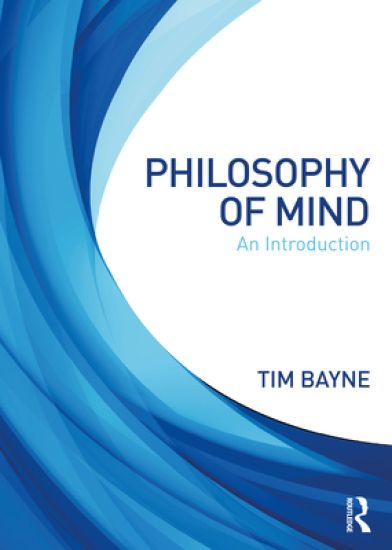
Philosophy of Mind

Philosophy of Mind

Tim Bayne

Routledge
2021
sidottu
Developments in the philosophy of mind over the last 20 years have dramatically changed the nature of the subject. In this major new introduction, Tim Bayne presents an outstanding overview of many of the key topics, problems, and debates, taking account not only of changes in philosophy of mind itself but also of important developments in the scientific study of the mind. The following topics are discussed in depth: What distinguishes a physicalist conception of the mind? Behaviourism, the identity theory, functionalism, and eliminativism as accounts of the mental The nature of perception, including the issue of perceptual transparency, the admissible contents of perception, and the question of unconscious perception The nature of thought, including the language of thought hypothesis, Searle’s Chinese room argument, and the Turing test The basis of intentional content Externalist accounts of content and the ‘extended mind’ thesis Consciousness-based objections to physicalism, and illusionist and panpsychist conceptions of consciousness Theories of consciousness, including methodological issues in the study of consciousness Mental causation, including both philosophical and scientific challenges The problem(s) of other minds, including knowledge of non-human minds Self-knowledge Personal identity and the nature of the selfThe book features a number of boxes that provide a more in-depth look at particular issues. Also included are chapter summaries, guides to further reading, and a helpful glossary of terms. Written by a leading figure in the field, Philosophy of Mind: An Introduction is an invaluable core text for any student coming to philosophy of mind for the first time.
Philosophy of Mind

Philosophy of Mind

Tim Bayne

Routledge
2021
nidottu
Developments in the philosophy of mind over the last 20 years have dramatically changed the nature of the subject. In this major new introduction, Tim Bayne presents an outstanding overview of many of the key topics, problems, and debates, taking account not only of changes in philosophy of mind itself but also of important developments in the scientific study of the mind. The following topics are discussed in depth: What distinguishes a physicalist conception of the mind? Behaviourism, the identity theory, functionalism, and eliminativism as accounts of the mental The nature of perception, including the issue of perceptual transparency, the admissible contents of perception, and the question of unconscious perception The nature of thought, including the language of thought hypothesis, Searle’s Chinese room argument, and the Turing test The basis of intentional content Externalist accounts of content and the ‘extended mind’ thesis Consciousness-based objections to physicalism, and illusionist and panpsychist conceptions of consciousness Theories of consciousness, including methodological issues in the study of consciousness Mental causation, including both philosophical and scientific challenges The problem(s) of other minds, including knowledge of non-human minds Self-knowledge Personal identity and the nature of the selfThe book features a number of boxes that provide a more in-depth look at particular issues. Also included are chapter summaries, guides to further reading, and a helpful glossary of terms. Written by a leading figure in the field, Philosophy of Mind: An Introduction is an invaluable core text for any student coming to philosophy of mind for the first time.
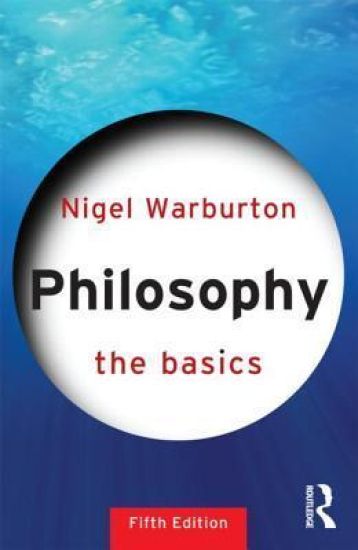
Philosophy: The Basics

Philosophy: The Basics

Nigel Warburton

Routledge
2012
nidottu
‘Philosophy: The Basics deservedly remains the most recommended introduction to philosophy on the market. Warburton is patient, accurate and, above all, clear. There is no better short introduction to philosophy.’ - Stephen Law, author of The Philosophy GymPhilosophy: The Basics gently eases the reader into the world of philosophy. Each chapter considers a key area of philosophy, explaining and exploring the basic ideas and themes including:Can you prove God exists?How do we know right from wrong?What are the limits of free speech?Do you know how science works?Is your mind different from your body?Can you define art?How should we treat non-human animals?For the fifth edition of this best-selling book, Nigel Warburton has added an entirely new chapter on animals, revised others and brought the further reading sections up to date. If you’ve ever asked ‘what is philosophy?’, or wondered whether the world is really the way you think it is, this is the book for you.
Philosophy: The Basics

Philosophy: The Basics

Nigel Warburton

Routledge
2012
sidottu
‘Philosophy: The Basics deservedly remains the most recommended introduction to philosophy on the market. Warburton is patient, accurate and, above all, clear. There is no better short introduction to philosophy.’ - Stephen Law, author of The Philosophy GymPhilosophy: The Basics gently eases the reader into the world of philosophy. Each chapter considers a key area of philosophy, explaining and exploring the basic ideas and themes including:Can you prove God exists?How do we know right from wrong?What are the limits of free speech?Do you know how science works?Is your mind different from your body?Can you define art?How should we treat non-human animals?For the fifth edition of this best-selling book, Nigel Warburton has added an entirely new chapter on animals, revised others and brought the further reading sections up to date. If you’ve ever asked ‘what is philosophy?’, or wondered whether the world is really the way you think it is, this is the book for you.
Philosophy, Society and the Cunning of History in Eastern Europe
Philosophy, Society and the Cunning of History in Eastern Europe charts the intellectual landscape of twentieth century East-Central Europe under the unifying theme of 'precariousness' as a mode of historical existence. Caught between empires, often marked by catastrophic historic events and grand political failures, the countries of East-Central Europe have for a long time developed a certain intellectual self-representation, a culture that not only helps them make some sense of such misfortunes, but also protects them somehow from a collapse into nihilism. An interdisciplinary study of this sophisticated culture of survival and endurance has been long overdue. Not only is it charming and worth studying in its own right, but with the re-integration of the 'new Europe' into the 'old' one and the emergence on the 'Western' European intellectual scene of many authors from the 'East,' such a culture will also shape the European mind of the 21st century. This volume decodes and explores this culture of 'precariousness' from the complementary angles of philosophy, political theory, intellectual history and literary studies. Expert contributors look at a wide range of topics, from philosophical martyrdom to collective suffering to geographical fatalism, and explore the works of key authors in the field including Cioran, Kolakowski, Kertész, Bauman and Žižek.This book was originally published as a special issue of Angelaki: The Journal of the Theoretical Humanities.