Kirjahaku
Etsi kirjoja tekijän nimen, kirjan nimen tai ISBN:n perusteella.
1000 tulosta hakusanalla Precious Reuben
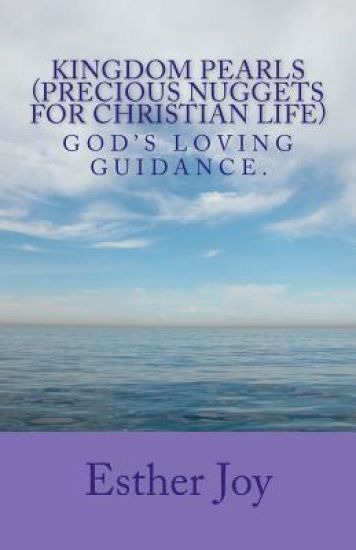
A christian teaching book. How to live a Godly christian life.

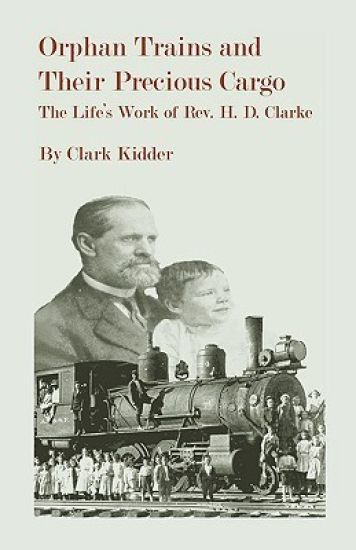
Orphan Trains and Their Precious Cargo: The Life's Work of Reverend Herman D. Clarke
Herman D. Clarke
Clark Kidder
2017
nidottu
By the mid-1800s, the street corners of New York City were home to several thousand homeless, abandoned and orphaned children. These poor unfortunates were destined to lie a life of crime or prostitution - creating a tremendous drain on city resources and society in general. Although some found refuge in orphanages and sanitariums, these facilities were ill-suited for the care of these children and lacked the resources to provide for more than a handful at a time. Those that remained on the street often turned to theft and burglary, or even prostitution as a means of survival, compounding the city's already rampant crime problem. Clearly a solution was needed for the good of both New York City and its orphan population. Relief came with the establishment of the Children's Aid Society in 1853 by one Charles Loring Brace. Brace was a theologian and a reformer whose answer to New York's orphan problem was a practice known simply as "placing out." The society would gather likely orphans and send them west by train in groups of anywhere from six to one hundred individuals, stopping at predetermined destinations where it was known foster homes were available. The American West was at this time in critical need of laborers in both agriculture and industry, and many families were eager to provide foster homes to a child who was willing to work. Children would be periodically checked on by an agent of the society and were required to write the society at least twice a year describing their experiences. As with any foster care system, placing out could be a hit-or-miss affair-many children would bounce from home to home and some were returned to New York as undesirables. There were many success stories however, with orphans finding supportive homes and loving foster families. Some were actually adopted into the families with which they were placed. All faced the challenge of a new life in unfamiliar surroundings, without the comfort of friends, relatives and siblings left behind. The orphan trains of the Children's Aid Society ran until 1929, and this text presents the story of one of its agents- the Rev. Mr. Herman Clarke. Rev. Clarke entered the employ of the Society in 1900, and was a tireless devotee to the children entrusted to his care. His ministry was in Dodge Center, Minnesota, and he was later placed in charge of Children's Homes in Cincinnati, Ohio, and Battle Creek, Michigan. Over the years he would travel thousands of miles on the rails with his orphan charges, and received as many as two thousand letters a year from them. In the twilight of life, the reverend began to compile scrapbooks for his grandchildren detailing both the family's genealogy and his years spent working with the society. Six out of these seven scrapbooks have been discovered by the author and they form the basis of this history. Numerous photographs of orphans and their foster families, as well as facsimiles of advertisements published by the society, and a special section of orphan train poetry enrich this text.
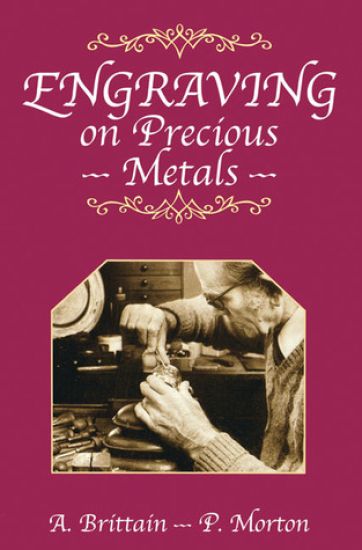
Engraving by hand is the oldest art of mankind and one that still flourishes today. With a simple message the precious metal engraver can give a unique personality to an otherwise commonplace cigarette box, goblet or compact. Despite the singular character of the craft very few practical books have been written on engraving precious and other materials employed by the jeweller; in fact none have been published in the United Kingdom for many years. Engraving on Precious Metals is for professionals and others who wish to learn hand engraving as a hobby or trade, and reveals many previously undisclosed practices of the commercial engraver which help to make his skill quite astonishing. All aspects of the craft are covered exhaustively, including the relatively modern innovation of the high-class machine engraver. This machine is particularly useful for repeat monograms and designs which are afterwards filled, because the template that guides the machine can be cut by hand. Illustrated throughout with over 250 drawings, the book gives practical hints for use in the workshop, while artistic matters are covered extensively in chapters on lettering design and layout, monograms, nameplates and ornamentation. A basic knowledge of ancillary crafts can be found in the sections on piercing, polishing, soldering and inlaying, and the use of unusual materials such as ivory, wood or plastic is also discussed. The final chapter contains a wide selection of different styles of lettering which are numbered for easy reference, and can be used by the retailer to indicate styles to customers and engravers.
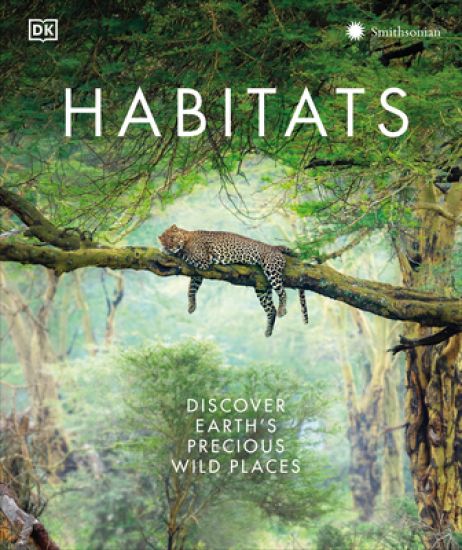
Celebrates and explains the astonishing range of habitats on Earth and the intricate balance of their animal and plant communities This book is a beautiful visual reference to the world's natural habitats and the plants and animals that live there. It explores global habitat types, including desert, Arctic tundra, and tropical forest - and distinctive regional habitats, such as the windswept puna grasslands of the Andes or the dripping, fern-clad rainforests of New Zealand. Packed with fascinating illustrations, the book analyzes how each habitat works and examines its unique combination of plants and animals, along with the features that suit them to live there. It then goes deeper, telling stories about how the inhabitants relate to one another and interact. Stories are told using images and graphics, showing what is going on in the natural ecosystem. The stories include survival strategies and life cycles, how pollinators fertilize plants, and how animals distribute the seeds, how similar species divide up food or living space to avoid competition, and how some species cooperate in intimate partnerships. Earth's pristine wildernesses are dwindling, so the book includes national parks, wildlife reserves, and other protected areas, and the conservation efforts needed to preserve our precious biological diversity.
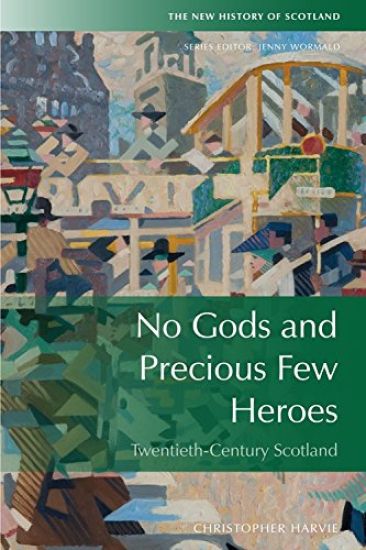
A colourful and stimulating history of modern ScotlandThis introductory history takes Scotland through two world wars and subsequent social exhaustion, through the re-energising adjustments loosely referred to as 'the sixties' to a final endgame of Union versus Independence. The novel structure of Harvie's history mirrors that of a grand engineering project, or a structure as complex as the Forth Railway Bridge: 'three periods of change rendered as towers, and two great cantilevered arches of life-in-common, over which day-to-day life proceeds'. Key Features:A final narrative of 'Union versus Independence'Thematically rebuilt chapters: Economy/Society/Politics/CultureThe '60s' reinterpretedFrom the APF (JW to ammend)'When No Gods and Precious Few Heroes first appeared in 1981 Paul Addison, in the English Historical Review, called Christopher Harvie's book 'a masterly synthesis of the most important political, economic social and cultural developments in Scotland's recent past, written too with great wit and style.' Updated in 1987, after two further editions in 1996 and 2000 comes this near- total refashioning. 'Starting and finishing in melodrama', its much-travelled author, after living with politics and media in Europe, assesses the new parliamentary state against thirty-five turbulent, vertiginous years. Narrative and episodes shift from squaddies in Iraq camps to working mothers reclaiming civic life from failing religion and big crime. Traceable all-too -often to an untended past, the demand for 'love patience and power to absolve those tormented' might at last through most unusual politics be getting to it
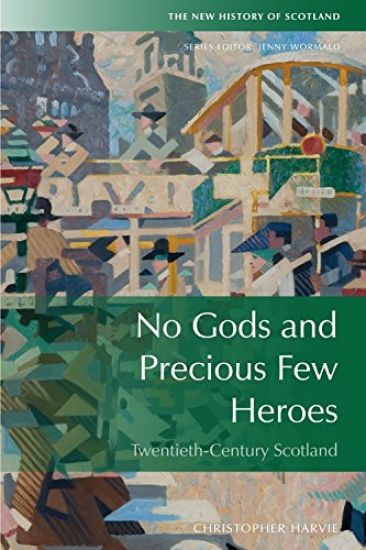
This is a colourful and stimulating history of modern Scotland. Christopher Harvie brings his inimitable vision to a history of modern Scotland epitomised by political and social change, in what he sees as 'recuperation' through change. This introductory history takes Scotland through two world wars and subsequent social exhaustion, through the re energising adjustments loosely referred to as 'the sixties' to a final endgame of Union versus Independence. The novel structure of Harvie's history mirrors that of a grand engineering project, or a structure as complex as the Forth Railway Bridge: 'three periods of change rendered as towers, and two great cantilevered arches of life in common, over which day to day life proceeds'. This is a final narrative of 'Union versus Independence'. It thematically rebuilts chapters: Economy/Society/Politics/Culture. The '60s' is reinterpreted.

Some 20 years ago, I was privileged to share in writing a book on the descriptive chemistry of the 4d, 5d, 4f and 5f metals that included these eight elements within its compass (S.A. Cotton and F.A. Hart, The Heavy Transition Elements, Macmillan, 1975). This volume shares the same aim of covering the descriptive chemistry of silver, gold and the six platinum metals in some detail at a level suitable for advanced undergraduate and postgraduate study. It does not attempt to be a comprehensive treatise on the chemistry of these metals. It attempts to fill a slot between the general text and the in-depth review or monograph. The organometallic chemistry is confined to a-bonded com pounds in normal oxidation states; compounds with IT-bonding ligands are generally excluded. Their inclusion would have increased the length of the book considerably and, moreover, their recent chemistry has been extensively and expertly reviewed in the new Comprehensive Organometallic Chemistry, II, eds G. Wilkinson, F.G.A. Stone and E.W. Abel, Pergamon, Oxford, 1995.
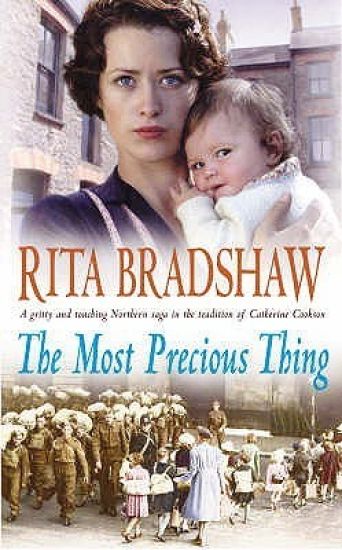
It's 1925 and when Renee McDarmount marries Walter Sutton, Carrie McDarmount is delighted, for the two families have always been close - the children are all similar in age and their fathers work together in the local pit. But an incident on the eve of the wedding leaves Carrie pregnant and desperately ashamed of the secret she now carries. When Harry Sutton, who has always loved Carrie, discovers her plight, he volunteers to marry her and bring up the baby as his own. But their secret will inevitably come out in the end and there is much heartache ahead before Carrie can finally be happy and content with the man she loves.
Extracting the Precious from Isaiah – A Bible Study for Women
Donna Partow; Lin Johnson
Bethany House Publishers, a division of Baker Publishing Group
2003
nidottu
Teaming with Lin Johnson, Donna Partow combines her varied life experiences with solid Bible teaching for unique books that will appeal to women's Bible study groups of all ages and interests as well as to individuals. Practical life applications are included in each inspiring lesson. Isaiah explores the faithfulness of God, including his choice to redeem a fallen world.
History of the Precious Metals from the Earliest Times to the Present
Alex Del Mar
KESSINGER PUBLISHING CO
2004
pokkari
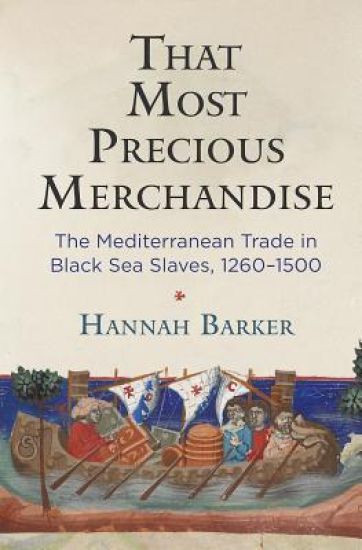
The history of the Black Sea as a source of Mediterranean slaves stretches from ancient Greek colonies to human trafficking networks in the present day. At its height during the fourteenth and early fifteenth centuries, the Black Sea slave trade was not the sole source of Mediterranean slaves; Genoese, Venetian, and Egyptian merchants bought captives taken in conflicts throughout the region, from North Africa, sub-Saharan Africa, the Balkans, and the Aegean Sea. Yet the trade in Black Sea slaves provided merchants with profit and prestige; states with military recruits, tax revenue, and diplomatic influence; and households with the service of women, men, and children. Even though Genoa, Venice, and the Mamluk sultanate of Egypt and Greater Syria were the three most important strands in the web of the Black Sea slave trade, they have rarely been studied together. Examining Latin and Arabic sources in tandem, Hannah Barker shows that Christian and Muslim inhabitants of the Mediterranean shared a set of assumptions and practices that amounted to a common culture of slavery. Indeed, the Genoese, Venetian, and Mamluk slave trades were thoroughly entangled, with wide-ranging effects. Genoese and Venetian disruption of the Mamluk trade led to reprisals against Italian merchants living in Mamluk cities, while their participation in the trade led to scathing criticism by supporters of the crusade movement who demanded commercial powers use their leverage to weaken the force of Islam. Reading notarial registers, tax records, law, merchants' accounts, travelers' tales and letters, sermons, slave-buying manuals, and literary works as well as treaties governing the slave trade and crusade propaganda, Barker gives a rich picture of the context in which merchants traded and enslaved people met their fate.
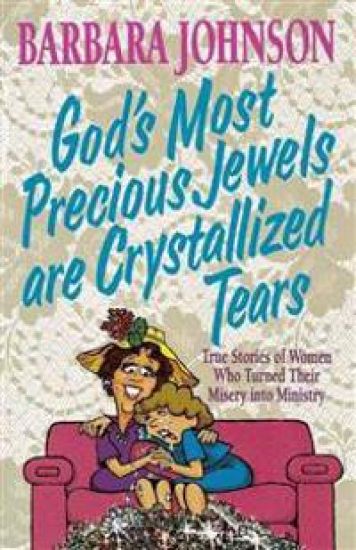
God's Most Precious Jewels are Crystallized Tears
Barbara Johnson
Thomas Nelson Publishers
2001
nidottu
The Queen of Encouragement has brought a dozen amazing friends to inspire and encourage you!Barbara Johnson's heart-touching, laughter-laced story has given hope to millions of readers worldwide. Now she brings together twelve courageous women who have triumphed over challenges and endured heart-rending losses. With Christlike serventhood, they have reached beyond their own anguish to extend a helping hand to others in need, turning their tears of heartache into jewels of blessing. In their awe-inspiring stories, you will meet women who have faced:a husband's brutal murderthe death of a young childpoverty and bigotryeating disordersan adult child's homosexualitythe death of two sons due to AIDSabusive marriagesheartbreaking divorcefamily members' estrangementclinical depressionphysical disabilitya husband's struggle with homosexualityToday these women, like Barbara, spread hope and joy wherever they go. To celebrate their ministry of encouragement, each of their stories concludes with Barbara's trademark collection of wit and laughter. Open this book and find a pathway out of sorrow and into the sunlight of a life warmed by love and filled with meaning. Read these stories and learn how to turn misery into ministry.