
Kirjahaku
Etsi kirjoja tekijän nimen, kirjan nimen tai ISBN:n perusteella.
1000 tulosta hakusanalla R.S. Hamilton
Biblical Representations of Moab: A Kenyan Postcolonial Reading employs critical theories on colonial, anticolonial, and postcolonial ethnicity and African cultural hermeneutics to examine the overlap of politics, ethnicity, nationality, economics, and religion in contemporary Kenya and to utilize those critical tools to illuminate the Hebrew Bible narratives concerning the Moabites. This book can be used by teachers and students of contemporary methods in Hebrew Bible studies, postcolonial studies, Africana studies, African biblical hermeneutics, political science, gender studies, history, philosophy, international studies, religion and peace studies, African affairs, and ethnic/racial conflict and resolution studies. It would also be of immense value to clergy and lay leaders engaged in interfaith or interethnic/racial dialogue.


The importance of mathematics in the study of problems arising from the real world, and the increasing success with which it has been used to model situations ranging from the purely deterministic to the stochastic, is well established. The purpose of the set of volumes to which the present one belongs is to make available authoritative, up to date, and self-contained accounts of some of the most important and useful of these analytical approaches and techniques. Each volume provides a detailed introduction to a specific subject area of current importance that is summarized below, and then goes beyond this by reviewing recent contributions, and so serving as a valuable reference source. The progress in applicable mathematics has been brought about by the extension and development of many important analytical approaches and techniques, in areas both old and new, frequently aided by the use of computers without which the solution of realistic problems would otherwise have been impossible.
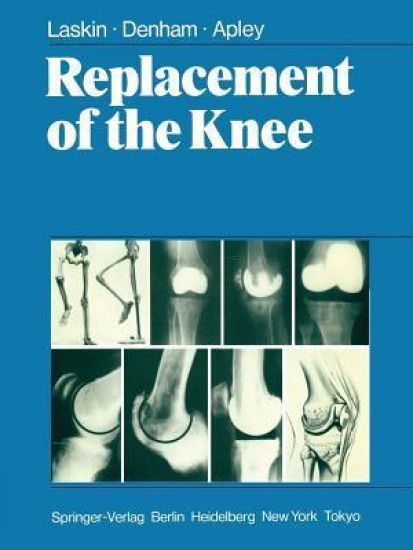
"Knee replacement is bound to fail-providing the patient lives long enough". There is some truth in this hoary cliche, so why write books on the subject? I think the answer is that knee replacement has at last become established and even respectable. The more absurd surgical extravaganzas have been recognised and discarded; today a patient can expect to rely on his new knee to serve him with comfort for a fair number of years. Of course even the early knee replacements often made the patient comfortable; the trouble was they just did not last. All too often the innovator's enthusiasm was overtaken by the patient's disillusionment. Indeed, the operation might well have been abandoned had it not been for the hope that one day the dazzling results at the hip might be matched at the knee. These pioneer prostheses were designed as though the knee were biomechanically as straightforward as the hip. Alas, numerous complexities soon became apparent; in response the models multiplied-and multiplied-until the ordinary orthopaedic practitioner became hopelessly bewildered. He found himself subjected to high pressure propaganda; from the surgeon offering a miracle cure, from the engineer seeking fame and from the manufacturer expecting fortune. Visiting his unit as a team, this trio was well-nigh irresistible.





The object ofthis text is to examine, and elaborate on the meaning of the established premise that 'taste is a chemical sense.' In particular, the major effort is directed toward the degree to which chemical principles apply to phenomena associated with the inductive (recognition) phase of taste. A second objective is to describe the structure and properties of compounds with varying taste that allow decisions to be made with respect to the probable nature of the recognition chemistry for the different tastes, and the probable nature of the receptor(s) for those tastes. A final objective is to include appropriate interdisciplinary observations that have application to solving problems related to the chemical nature of taste. Taste is the most easily accessible chemical structure-biological activity relationship, and taste chemistry studies, i.e. the chemistry of sweetness, saltiness, sourness, and bitterness, have application to general biology, physiology, and pharmacology. Because it involves sensory perception, taste is also of interest to psychologists, and has application to the food and agricultural industries. The largest portion of the text is directed toward sweetness as, due to economic and other factors, the majority of the scientific studies are concerned with sweetness. The text begins with a prologue to describe the problems associated with the study of taste chemistry. Then, there is an introductory chapter to serve as an overview of the general interdisciplinary knowledge of the subject. It is followed by a chapter on the fundamental chemical principles that apply to taste induction chemistry.

The theory of linear discrete time filtering started with a paper by Kol mogorov in 1941. He addressed the problem for stationary random se quences and introduced the idea of the innovations process, which is a useful tool for the more general problems considered here. The reader may object and note that Gauss discovered least squares much earlier; however, I want to distinguish between the problem of parameter estimation, the Gauss problem, and that of Kolmogorov estimation of a process. This sep aration is of more than academic interest as the least squares problem leads to the normal equations, which are numerically ill conditioned, while the process estimation problem in the linear case with appropriate assumptions leads to uniformly asymptotically stable equations for the estimator and the gain. The conditions relate to controlability and observability and will be detailed in this volume. In the present volume, we present a series of lectures on linear and nonlinear sequential filtering theory. The theory is due to Kalman for the linear colored observation noise problem; in the case of white observation noise it is the analog of the continuous-time Kalman-Bucy theory. The discrete time filtering theory requires only modest mathematical tools in counterpoint to the continuous time theory and is aimed at a senior-level undergraduate course. The present book, organized by lectures, is actually based on a course that meets once a week for three hours, with each meeting constituting a lecture.

1 Preliminary Notions.- 1.1 Axioms and Models.- 1.2 Sets and Equivalence Relations.- 1.3 Functions.- 2 Incidence and Metric Geometry.- 2.1 Definition and Models of Incidence Geometry.- 2.2 Metric Geometry.- 2.3 Special Coordinate Systems.- 3 Betweenness and Elementary Figures.- 3.1 An Alternative Description of the Euclidean Plane.- 3.2 Betweenness.- 3.3 Line Segments and Rays.- 3.4 Angles and Triangles.- 4 Plane Separation.- 4.1 The Plane Separation Axiom.- 4.2 PSA for the Euclidean and Hyperbolic Planes.- 4.3 Pasch Geometries.- 4.4 Interiors and the Crossbar Theorem.- 4.5 Convex Quadrilaterals.- 5 Angle Measure.- 5.1 The Measure of an Angle.- 5.2 The Moulton Plane.- 5.3 Perpendicularity and Angle Congruence.- 5.4 Euclidean and Hyperbolic Angle Measure (optional).- 6 Neutral Geometry.- 6.1 The Side-Angle-Side Axiom.- 6.2 Basic Triangle Congruence Theorems.- 6.3 The Exterior Angle Theorem and Its Consequences.- 6.4 Right Triangles.- 6.5 Circles and Their Tangent Lines.- 6.6 The Two Circle Theorem (optional).- 6.7 The Synthetic Approach (optional).- 7 The Theory of Parallels.- 7.1 The Existence of Parallel Lines.- 7.2 Saccheri Quadrilaterals.- 7.3 The Critical Function.- 8 Hyperbolic Geometry.- 8.1 Asymptotic Rays and Triangles.- 8.2 Angle Sum and the Defect of a Triangle.- 8.3 The Distance Between Parallel Lines.- 9 Euclidean Geometry.- 9.1 Equivalent Forms of EPP.- 9.2 Similarity Theory.- 9.3 Some Classical Theorems of Euclidean Geometry.- 10 Area.- 10.1 The Area Function.- 10.2 The Existence of Euclidean Area.- 10.3 The Existence of Hyperbolic Area.- 10.4 Bolyai's Theorem.- 11 The Theory of Isometries.- 11.1 Collineations and Isometries.- 11.2 The Klein and Poincar Disk Models (optional).- 11.3 Reflections and the Mirror Axiom.- 11.4 Pencils and Cycles.- 11.5 Double Reflections and Their Invariant Sets.- 11.6 The Classification of Isometries.- 11.7 The Isometry Group.- 11.8 The SAS Axiom in ?.- 11.9 The Isometry Groups of ? and ?.



Maddy is a social worker trying to balance her career and three children. Years ago, she fell in love with Ben, a public defender, drawn to his fiery passion, but now he's lashing out at her. She vacillates between tiptoeing around him and asserting herself for the sake of their kids - until the rainy day when they're together in the car and Ben's volatile temper gets the best of him, leaving Maddy in the hospital fighting for her life. RS Meyers takes us inside the hearts and minds of her characters, alternating among the perspectives of Maddy, Ben, and their fourteen-year-old daughter. Accidents of Marriage is a provocative and stunning novel that will resonate deeply with women from all walks of life, ultimately revealing the challenges of family, faith, and forgiveness.