Kirjojen hintavertailu. Mukana 11 244 527 kirjaa ja 12 kauppaa.

Kirjahaku

Etsi kirjoja tekijän nimen, kirjan nimen tai ISBN:n perusteella.

1000 tulosta hakusanalla Ray Perman

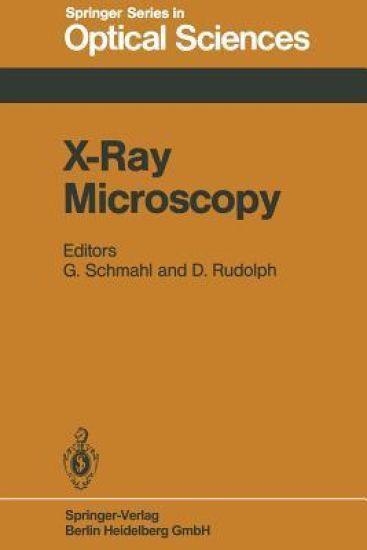
X-Ray Microscopy

X-Ray Microscopy

Springer-Verlag Berlin and Heidelberg GmbH Co. K
2013
nidottu
X-ray microscopy fills a gap between optical and electron microscopy. Using soft x-rays, a resolution higher than with visible light can be obtained. In comparison to electron microscopy, thick, wet, unstained specimens can be examined. This is especially advantageous for biological applications. The intense synchrotron radiation of electron storage rings and the de- velopment of optical elements for soft x-rays render x-ray microscopy feasi- ble for basic research. Wider applications will be possible in the future with the development of laboratory x-ray sources and microscopes. In 1979 a conference on x-ray microscopy was organized by the New York Academy of Sciences and in 1981 a symposium on high resolution soft x-ray optics was held at Brookhaven. The present volume contains the contributions to the sympos i um "X-Ray Microscopy", organ i zed by the Akademie der Wi ssen- schaften in Gottingen in September 1983. In their capacity as conference chairmen, the editors would like to thank the Akademie der Wissenschaften, especially Prof. H.G. Wagner, Secretary of the Academy, and Mr. J. Pfahlert for organizing the symposium. We are in- debted to the Stiftung Volkswagenwerk for financial support. The symposium was held at the Max-Planck-Institut fUr Stromungsforschung. We are grateful for their hospitality and assistance during the symposium. Thanks are due to all authors and to the Springer Verlag for their combined efforts. We thank Dipl.-Phys. P. Guttmann, Dr. B. Niemann and Mrs. A. Marienhagen for their assistance during the final preparation of the manuscripts.
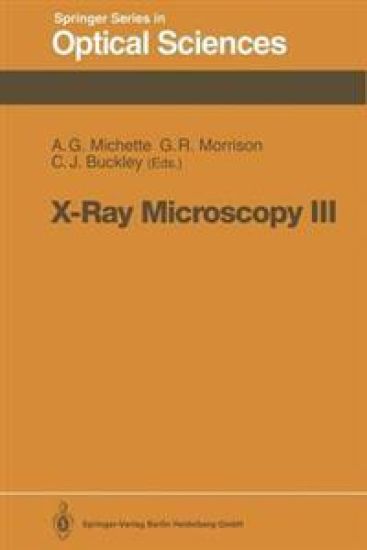
X-Ray Microscopy III

X-Ray Microscopy III

Springer-Verlag Berlin and Heidelberg GmbH Co. K
2013
nidottu
The growth of interest and research activity in X -ray microscopy is reflected in the increasing size and scope of a related series of international conferences, the latest of which (XRM90) was held at King's College London (3-7 September 1990) with over 130 delegates. Previous conferences in Gottingen and Brookhaven resulted in books in the Springer Series in Optical Sciences, and this volume, the proceedings of XRM90, maintains this tradition. Because of the large number of papers their lengths were strictly limited and, while most papers can be directly identified with conference presentations, in a few cases those on similar topics by the same authors have been combined into a longer paper to allow better use of the space. The book is divided into six parts, with Parts IT-VI covering the major areas of interest at the conference. In Part 1 are two overviews; Ron Burge presented the opening paper of the conference, while the closing, summary, contrlbution by Janos Kirz is included here as a comprehensive introduction to the remainder of the book. Part IT covers developments in X -ray sources and optics. The high average brightnesses of synchrotron radiation sources have made many applications pos­ sible, while the more convenient, laboratory-based, plasma sources offer much promise for the future. Several contributions report significant advances in X-ray optics, which must clearly continue fully to exploit the latest sources.
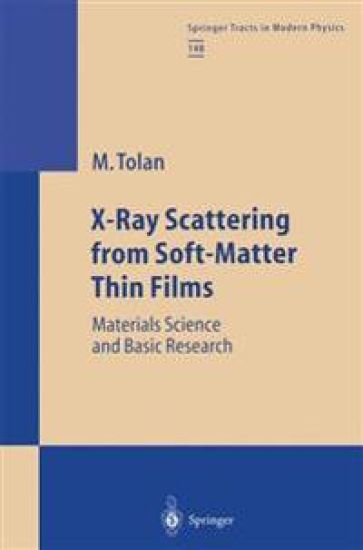
X-Ray Scattering from Soft-Matter Thin Films

X-Ray Scattering from Soft-Matter Thin Films

Metin Tolan

Springer-Verlag Berlin and Heidelberg GmbH Co. K
2013
nidottu
The properties of soft-matter thin films (e.g. liquid films, polymer coatings, Langmuir-Blodgett multilayers) nowadays play an important role in materials science. They are also very exciting with respect to fundamental questions: In thin films, liquids and polymers may be considered as trapped in a quasi-two-dimensional geometry. This confined geometry is expected to alter the properties and structures of these materials considerably. This volume is dedicated to the scattering of x-rays by soft-matter interfaces. X-ray scattering under grazing angles is the only tool to investigating these materials on atomic and mesoscopic length scales. A review of the field is presented with many examples.
X-Ray and Neutron Reflectivity: Principles and Applications

X-Ray and Neutron Reflectivity: Principles and Applications

Jean Daillant; Alain Gibaud

Springer-Verlag Berlin and Heidelberg GmbH Co. K
2014
nidottu
The reflection of and neutrons from surfaces has existed as an x-rays exp- imental for almost it is in the last technique fifty Nevertheless, only years. decade that these methods have become as of enormously popular probes This the surfaces and interfaces. to be due to of several appears convergence of intense different circumstances. These include the more n- availability be measured orders tron and sources that can over (so reflectivity x-ray many of and the much weaker surface diffuse can now also be magnitude scattering of thin films and studied in some the detail); growing importance multil- basic the realization of the ers in both and technology research; important which in the of surfaces and and role roughness plays properties interfaces; the of statistical models to characterize the of finally development topology its and its characterization from on roughness, dependence growth processes The of and to surface scattering experiments. ability x-rays neutro4s study four five orders of in scale of surfaces over to magnitude length regardless their and also their to ability probe environment, temperature, pressure, etc. , makes these the choice for buried interfaces often probes preferred obtaining information about the microstructure of often in statistical a global surfaces, the local This is manner to complementary imaging microscopy techniques, of such studies in the literature witnessed the veritable by explosion published the last few Thus these lectures will useful for over a resource years.
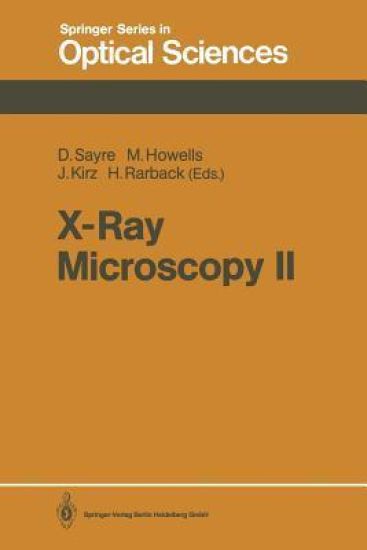
X-Ray Microscopy II

X-Ray Microscopy II

Springer-Verlag Berlin and Heidelberg GmbH Co. K
2013
nidottu
This volume is based on papers presented at the International Symposium on X-Ray Microscopy held at Brookhaven National Laboratory, Upton NY, August 31-September 4, 1987. Previous recent symposia on the sub­ ject were held in New York in 1979, Gottingen in 1983 and Taipei in 1986. Developments in x-ray microscopy continue at a rapid pace, with im­ portant advances in all major areas: x-ray sources, optics and components, and microscopes and imaging systems. Taken as a whole, the work pre­ sented here emphasizes three major directions: (a) improvements in the capability and image-quality of x-ray microscopy, expressed principally in systems attached to large, high-brightness x-ray sources; (b) greater access to x-ray microscopy, expressed chiefly in systems employing small, often pulsed, x-ray sources; and (c) increased rate of exploration of applications of x-ray microscopy. The number of papers presented at the symposium has roughly dou­ bled compared with that of its predecessors. While we are delighted at this growth as a manifestation of vitality and rapid growth of the field, we did have to ask the authors to limit the length of their papers and to submit them in camera-ready form. We thank the authors for their con­ tributions and for their efforts in adhering to the guidelines on manuscript preparation.
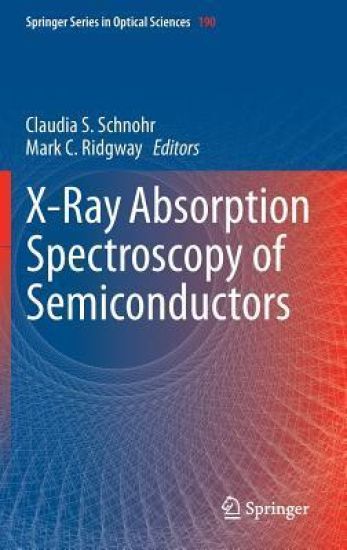
X-Ray Absorption Spectroscopy of Semiconductors

X-Ray Absorption Spectroscopy of Semiconductors

Springer-Verlag Berlin and Heidelberg GmbH Co. K
2014
sidottu
X-ray Absorption Spectroscopy (XAS) is a powerful technique with which to probe the properties of matter, equally applicable to the solid, liquid and gas phases. Semiconductors are arguably our most technologically-relevant group of materials given they form the basis of the electronic and photonic devices that now so widely permeate almost every aspect of our society. The most effective utilisation of these materials today and tomorrow necessitates a detailed knowledge of their structural and vibrational properties. Through a series of comprehensive reviews, this book demonstrates the versatility of XAS for semiconductor materials analysis and presents important research activities in this ever growing field. A short introduction of the technique, aimed primarily at XAS newcomers, is followed by twenty independent chapters dedicated to distinct groups of materials. Topics span dopants in crystalline semiconductors and disorder in amorphous semiconductors to alloys and nanometric material as well as in-situ measurements of the effects of temperature and pressure. Summarizing research in their respective fields, the authors highlight important experimental findings and demonstrate the capabilities and applications of the XAS technique. This book provides a comprehensive review and valuable reference guide for both XAS newcomers and experts involved in semiconductor materials research.
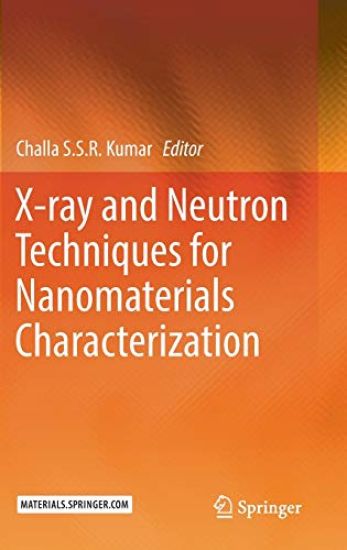
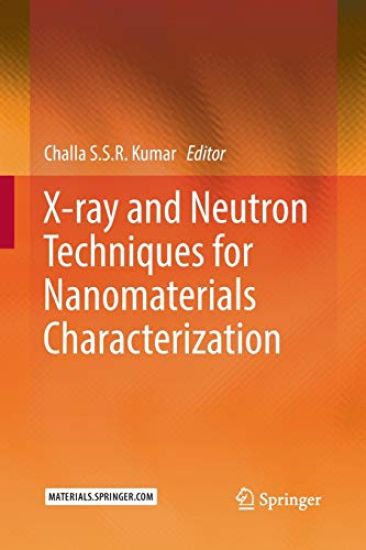
X-ray and Neutron Techniques for Nanomaterials Characterization

X-ray and Neutron Techniques for Nanomaterials Characterization

Springer-Verlag Berlin and Heidelberg GmbH Co. K
2016
sidottu
Fifth volume of a 40 volume series on nanoscience and nanotechnology, edited by the renowned scientist Challa S.S.R. Kumar. This handbook gives a comprehensive overview about X-ray and Neutron Techniques for Nanomaterials Characterization. Modern applications and state-of-the-art techniques are covered and make this volume an essential reading for research scientists in academia and industry.
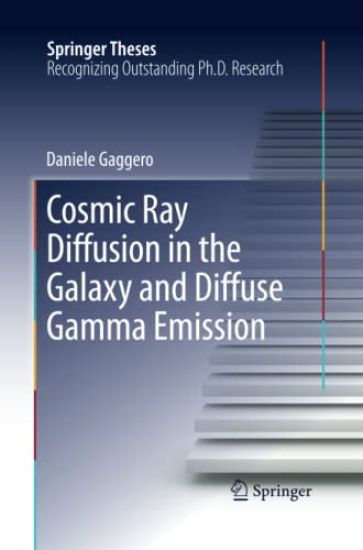
Cosmic Ray Diffusion in the Galaxy and Diffuse Gamma Emission

Cosmic Ray Diffusion in the Galaxy and Diffuse Gamma Emission

Daniele Gaggero

Springer-Verlag Berlin and Heidelberg GmbH Co. K
2016
nidottu
The original work presented in this thesis constitutes an important contribution to modern Cosmic Ray (CR) physics, and comes during one of the most exciting periods of this field. The first part introduces a new numerical code (DRAGON) to model the CR propagation in our Galaxy. The code is then used to perform a combined analysis of CR data, making it possible to determine their propagation properties with unprecedented accuracy. The second part is dedicated to a theoretical interpretation of the recent crucial experimental results on cosmic electron and positron spectra (PAMELA, Fermi-LAT experiments). Using the tools developed in the first part of the thesis, the author convincingly argues for the existence of a new spectral component, which could arise either from local astrophysical sources, such as pulsars, or from Dark Matter annihilation or decay. This thesis is a highly advanced work; the methods, analysis and results are clearly and carefully presented. This work is set to become an important reference document for any future work in this area.
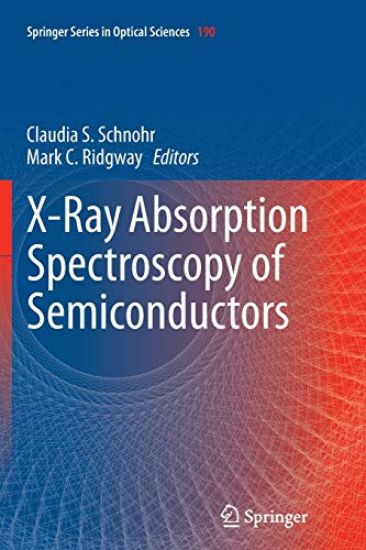
X-Ray Absorption Spectroscopy of Semiconductors

X-Ray Absorption Spectroscopy of Semiconductors

Springer-Verlag Berlin and Heidelberg GmbH Co. K
2016
nidottu
X-ray Absorption Spectroscopy (XAS) is a powerful technique with which to probe the properties of matter, equally applicable to the solid, liquid and gas phases. Semiconductors are arguably our most technologically-relevant group of materials given they form the basis of the electronic and photonic devices that now so widely permeate almost every aspect of our society. The most effective utilisation of these materials today and tomorrow necessitates a detailed knowledge of their structural and vibrational properties. Through a series of comprehensive reviews, this book demonstrates the versatility of XAS for semiconductor materials analysis and presents important research activities in this ever growing field. A short introduction of the technique, aimed primarily at XAS newcomers, is followed by twenty independent chapters dedicated to distinct groups of materials. Topics span dopants in crystalline semiconductors and disorder in amorphous semiconductors to alloys and nanometric material as well as in-situ measurements of the effects of temperature and pressure. Summarizing research in their respective fields, the authors highlight important experimental findings and demonstrate the capabilities and applications of the XAS technique. This book provides a comprehensive review and valuable reference guide for both XAS newcomers and experts involved in semiconductor materials research.
X-ray and Neutron Techniques for Nanomaterials Characterization

X-ray and Neutron Techniques for Nanomaterials Characterization

Springer-Verlag Berlin and Heidelberg GmbH Co. K
2018
nidottu
Fifth volume of a 40 volume series on nanoscience and nanotechnology, edited by the renowned scientist Challa S.S.R. Kumar. This handbook gives a comprehensive overview about X-ray and Neutron Techniques for Nanomaterials Characterization. Modern applications and state-of-the-art techniques are covered and make this volume an essential reading for research scientists in academia and industry.