Kirjojen hintavertailu. Mukana 11 342 296 kirjaa ja 12 kauppaa.

Kirjahaku

Etsi kirjoja tekijän nimen, kirjan nimen tai ISBN:n perusteella.

1000 tulosta hakusanalla Ray Thompson

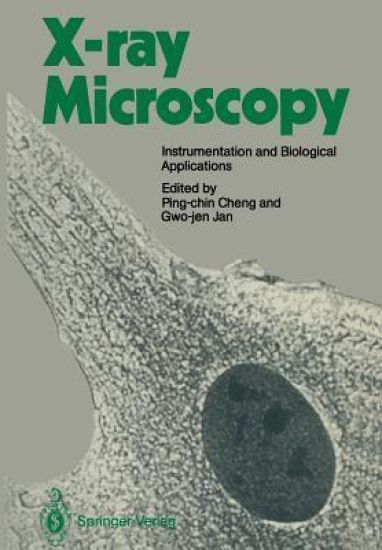
X-ray Microscopy

X-ray Microscopy

Springer-Verlag Berlin and Heidelberg GmbH Co. K
2011
nidottu
In 1979, a conference on x-ray microscopy was organized by the New York Academy of Sciences, and in 1983, the Second Interna­ tional Symposium on X-ray Imaging was organized by the Akademie der Wissenschaften in Gottingen, Federal Republic of Germany. This volume contains the contributions to the symposium "X-ray Microscopy '86", held in Taipei, Taiwan, the Republic of China in August 1986. This is the first volume which intends to provide up-to­ date information on x-ray imaging to biologists, therefore, emphasis was given to specimen preparation techniques and image interpreta­ tion. Specimen preparation represents a major part of every microscopy work, therefore, it should be strongly emphasized in this emerging field of x-ray microscopy. Theoretically, x-ray microscopy offers the potential for the study of unfixed, hydrated biological ma­ terials. Since very few biological system can be directly observed without specimen preparation, we would like to emphasize that new information on biological specimens can only be obtained if the speci­ men is properly prepared. In the past decade, many of the published x-ray images were obtained from poorly prepared biological speci­ mens, mainly air-dried materials. Therefore, one of the goals of this conference is to bring the importance of specimen preparation to the attention of x-ray microscopy community. X-ray microscopy can be subdivided into several major areas. They are the classic x-ray projection microscope, x-ray contact imag­ ing (microradiography) and the more recent x-ray scanning micro­ scope, x-ray photoelectron microscope and x-ray imaging microscope.

X-Ray and Neutron Diffraction in Nonideal Crystals

X-Ray and Neutron Diffraction in Nonideal Crystals

Mikhail A. Krivoglaz

Springer-Verlag Berlin and Heidelberg GmbH Co. K
2011
nidottu
Mikhail Alexandrovich Krivoglaz died unexpectedly when he was preparing the English edition of his two-volume monograph on diffraction and diffuse scatter­ ing of X-rays and neutrons in imperfect crystals. His death was a heavy blow to all who knew him, who had worked with him and to the world science community as a whole. The application of the diffraction techniques for the study of imperfections of crystal structures was the major field of Krivoglaz' work throughout his career in science. He started working in the field in the mid-fifties and since then made fundamental contributions to the theory of real crystals. His results have largely determined the current level of knowledge in this field for more than thirty years. Until the very last days of his life, Krivoglaz continued active studies in the physics of diffraction effects in real crystals. His interest in the theory aided in the explanation of the rapidly advancing experimental studies. The milestones marking important stages of his work were the first mono­ graph on the theory of X-ray and neutron scattering in real crystals which was published in Russian in 1967 (a revised English edition in 1969), and the two­ volume monograph published in Russian in 1983-84 (this edition is the revised translation of the latter).
X-Ray Diffraction by Disordered Lamellar Structures

X-Ray Diffraction by Disordered Lamellar Structures

Victor A. Drits; Andre Guinier; Cyril Tchoubar

Springer-Verlag Berlin and Heidelberg GmbH Co. K
2011
nidottu
New methods for the determination of the nature, proportion, and distribution of structural defects in microcrystallized lamellar systems are of utmost importance not only to experimentalists but also to theoreticians. Mathematical formalism - indispensable for such analyses - is well-illustrated by various examples, allowing this method to be easily adopted and even to be applied to other solids with lamellar or pseudo-lamellar structures.
X-Ray Spectra and Chemical Binding

X-Ray Spectra and Chemical Binding

Armin Meisel; Gunter Leonhardt; Rüdiger Szargan

Springer-Verlag Berlin and Heidelberg GmbH Co. K
2011
nidottu
In the 12 years that have passed since the publication of Riintgenspektren und chemische Bindung, the original German work on which· this text is based, several aspects of high-resolution X-ray spectroscopy have devel­ oped rapidly. After accepting the suggestion of Dr. R.D. Deslattes that a translation should be prepared, we thoroughly revised the book in order to include these recent developments in theory, equipment and applications. The latest reSearch results and publications that had appeared by 1987/1988 have been taken into account in the analysis. However, as the general treatment of the German edition is still valid today, the organization of the contents did -not have to be modified. The present status of the field is adequately described just by the addition of supplementary material in the English edition. We have merely rearranged what was previously Chapter 4 into tabular form and placed it as an appendix. This presentation produces greater clarity and increases the ease with which the information can be referred to. We thank Dr. E. Kallne for undertaking the translation. We are grate­ ful to Dr. R.D. Deslattes and Dr. H. Lotsch for their conscientious and critical checking of the translation. Chapters 3 and 6 were updated by our colleague Dr. H. Sommer, to whom special thanks are due. It is our hope that this transiation and revision will make our text available to a larger section of the scientific community.
X-Ray Microscopy

X-Ray Microscopy

Springer-Verlag Berlin and Heidelberg GmbH Co. K
2013
nidottu
X-ray microscopy fills a gap between optical and electron microscopy. Using soft x-rays, a resolution higher than with visible light can be obtained. In comparison to electron microscopy, thick, wet, unstained specimens can be examined. This is especially advantageous for biological applications. The intense synchrotron radiation of electron storage rings and the de- velopment of optical elements for soft x-rays render x-ray microscopy feasi- ble for basic research. Wider applications will be possible in the future with the development of laboratory x-ray sources and microscopes. In 1979 a conference on x-ray microscopy was organized by the New York Academy of Sciences and in 1981 a symposium on high resolution soft x-ray optics was held at Brookhaven. The present volume contains the contributions to the sympos i um "X-Ray Microscopy", organ i zed by the Akademie der Wi ssen- schaften in Gottingen in September 1983. In their capacity as conference chairmen, the editors would like to thank the Akademie der Wissenschaften, especially Prof. H.G. Wagner, Secretary of the Academy, and Mr. J. Pfahlert for organizing the symposium. We are in- debted to the Stiftung Volkswagenwerk for financial support. The symposium was held at the Max-Planck-Institut fUr Stromungsforschung. We are grateful for their hospitality and assistance during the symposium. Thanks are due to all authors and to the Springer Verlag for their combined efforts. We thank Dipl.-Phys. P. Guttmann, Dr. B. Niemann and Mrs. A. Marienhagen for their assistance during the final preparation of the manuscripts.