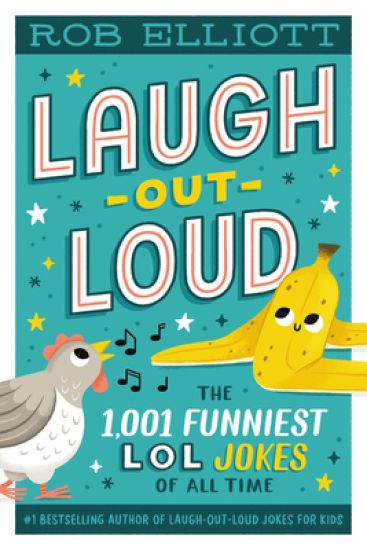
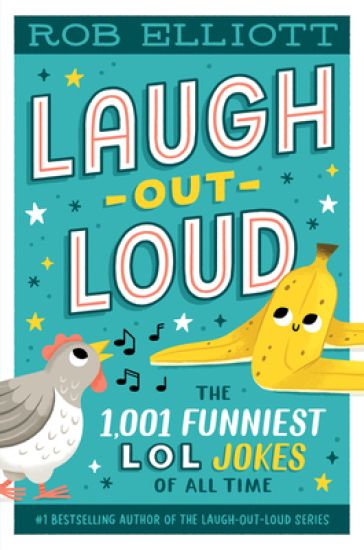
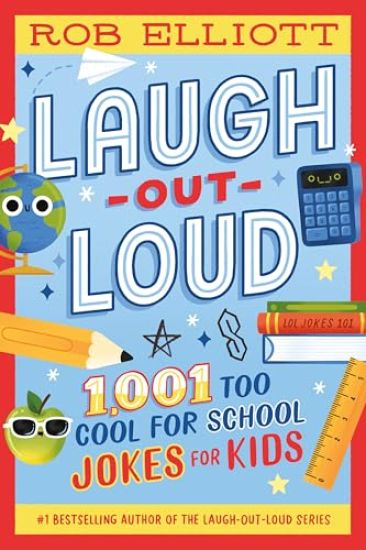
Laugh out loud with this uproarious collection of the 1,0001 FUNNIEST jokes from the author of the #1 bestselling Laugh-Out-Loud Jokes for Kids series. Perfect for car rides, rainy days, or anytime you just want to crack up! Q: What goes up and down but never moves? A: A flight of stairs. With 1,001 of the ALL-TIME BEST, FUNNIEST, and HILARIOUS jokes, puns, and zingers, you’re sure to have the perfect joke for any moment to keep the whole family laughing. Perfect for young comedians, class clowns, and jokesters of all ages! Rob Elliott’s bestselling Laugh-Out-Loud Jokes for Kids series has sold more than 5 million copies!
Laugh all year long with this hilarious, highly illustration collection of jokes from the author of the #1 bestselling Laugh-Out-Loud Jokes for Kids series. With gags for every day of the year, it’s the book perfect book to keep the whole family laughing no matter what the weather’s like outside!Q: Why are turtles always throwing parties?A: They like to shell-ebrate!With 365 knee-slapping puns, knock-knock jokes, and zingers, this highly illustrated, four-color gag-fest is the newest edition to Rob Elliott ’s #1 bestselling LAUGH- OUT-LOUD JOKES FOR KIDS series. It’s sure to keep the whole family laughing all year long. It’s the perfect gift for young comedians, emergent readers, and quipsters of all ages!Rob Elliott’s bestselling Laugh-Out-Loud Jokes for Kids series has sold more than 6 million copies!
Rob Elliott’s #1 bestselling Laugh-Out-Loud Jokes for Kids series will have you laughing in no time with this hilarious collection of hundreds of never-before-collected knock-knock jokes! Knock. Knock.Who’s there?Annie.Annie who?Annie friend of yours is a friend of mine!With The Big Book of Knock-Knock Jokes, you’ll have the perfect jokes to keep the whole family in stitches, and be on the road to becoming everyone’s favorite comedian.Rob Elliott’s bestselling Laugh-Out-Loud Jokes for Kids series has sold more than 5 million copies!
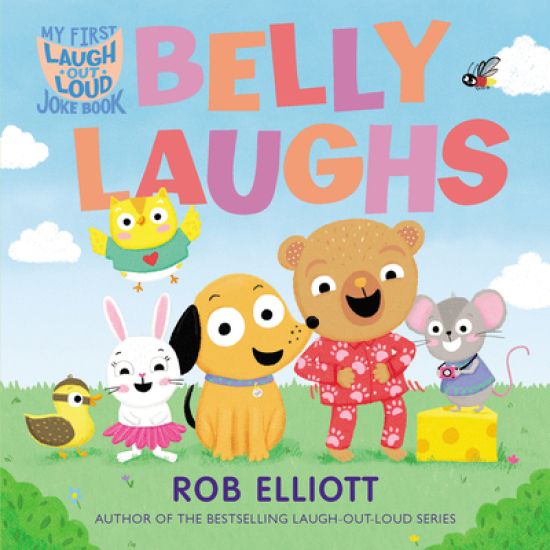
The #1 bestselling Laugh-Out-Loud Jokes for Kids series now brings the giggles for baby’s very first belly laughs with this beautifully illustrated, hilariously funny board book!Rob Elliott’s Laugh-Out-Loud Jokes for Kids series has sold more than 5 million copies! Now his fun-for-the-whole-family collection has been perfectly adapted for the youngest readers.The board book format creates perfect comedic format for little ones! With each joke is a hilarious drawing to match the punchline, making the book visually fun and perfect for non-readers.With nearly a dozen delightful puns from laugh-master Rob Elliott, you’ll giggle along with your little one at this collection of heartwarming jokes, with colorful, kid-friendly illustrations by Zoe Waring.The Laugh-Out-Loud books are a household name, and now everyone can join in the fun! The new board book line includes everything readers love about the LOL brand, along with fun, colorful drawings to make the jokes even more fun for little ones.
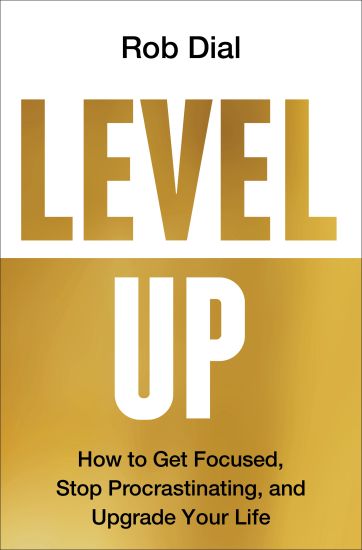
"Packed with valuable insights, unique lessons, and practical steps, this book will help you break through your procrastination and take immediate action toward your goals."--Jay Shetty, New York Times bestselling author of Think Like a Monk and 8 Rules of LoveLevel Up will revolutionize the way you approach your life and your goals. Rob Dial gives you a groundbreaking roadmap to break self-sabotaging patterns and unlock your full potential. When you understand the way the brain and body work together, you can begin to make positive changes. In this book, you will find: A proven system designed to revolutionize the way you approach your goals, success, and personal motivation.Powerful secrets of highly successful individuals who have mastered the art of focus, defeated procrastination, and achieved extraordinary results.Cutting-edge breakthroughs in brain research and psychology that unveil the science behind mental focus and motivation.Techniques and tools that empower you to understand and control your mind like never before. Rob cracks the code to peak performance, teaching you how to apply these tools and insights to your own life. Level Up is not just another self-help book. It is a step-by-step guide that helps you quickly get from where you are now to the life you truly want.Whether you're struggling with distractions, overwhelmed by a chaotic schedule, or simply seeking a path to personal excellence, Level Up is the game-changer you've been waiting for.
"Packed with valuable insights, unique lessons, and practical steps, this book will help you break through your procrastination and take immediate action toward your goals."--Jay Shetty, New York Times bestselling author of Think Like a Monk and 8 Rules of LoveLevel Up will revolutionize the way you approach your life and your goals. Rob Dial gives you a groundbreaking roadmap to break self-sabotaging patterns and unlock your full potential. When you understand the way the brain and body work together, you can begin to make positive changes. In this book, you will find: A proven system designed to revolutionize the way you approach your goals, success, and personal motivation.Powerful secrets of highly successful individuals who have mastered the art of focus, defeated procrastination, and achieved extraordinary results.Cutting-edge breakthroughs in brain research and psychology that unveil the science behind mental focus and motivation.Techniques and tools that empower you to understand and control your mind like never before. Rob cracks the code to peak performance, teaching you how to apply these tools and insights to your own life. Level Up is not just another self-help book. It is a step-by-step guide that helps you quickly get from where you are now to the life you truly want.Whether you're struggling with distractions, overwhelmed by a chaotic schedule, or simply seeking a path to personal excellence, Level Up is the game-changer you've been waiting for.
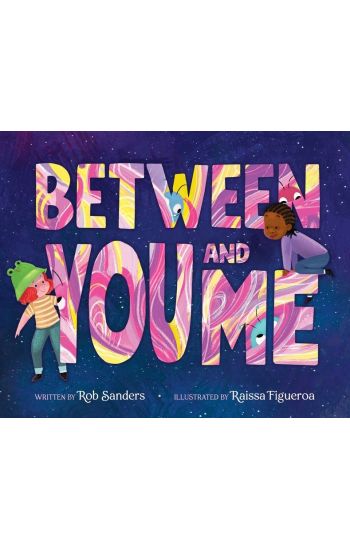
When a new kid moves to town, a beautiful friendship filled with wonder and imagination blooms in this lushly illustrated, inventive, and empathetic picture book.Between strangers and friends..."Hello."Lean into the in-between moments in this poetic picture book that celebrates all the small steps in a budding friendship between two new friends.Between friends and friends forever...Promises and pinky swears. Two young kids meet for the first time and a playful friendship begins. From their backyard to the rolling hills of their neighborhood to the unlimited dreamscape of their imaginations, the two discover what it's like to connect with a true friend in real life and make-believe.With vibrant illustrations, Between You and Me is an exploration of the big and small ways we can empathize with one another, and it's the perfect book to share, whether it be with someone you love or someone you are just getting to know. Scenes flow from realistic depictions of playing in cardboard boxes to portrayals of magical landscapes, capturing the childhood spirit of make-believe perfectly.
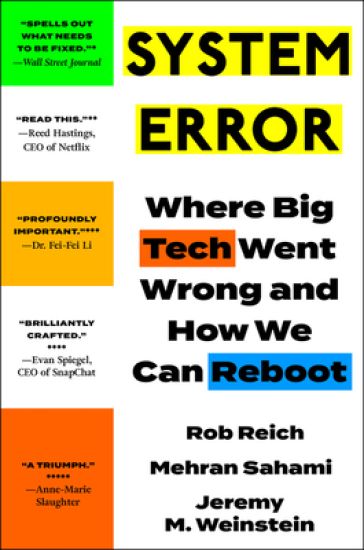
"Read this if you want to understand how to shape our technological future and reinvigorate democracy along the way."--Reed Hastings, cofounder and CEO of Netflix"A triumph: an analysis of the critical challenges facing our digital society that is as accessible as it is sophisticated." -- Anne-Marie Slaughter, CEO of New AmericaA forward-thinking manifesto from three Stanford professors--experts who have worked at ground zero of the tech revolution for decades--that reveals how big tech's obsession with optimization and efficiency has sacrificed fundamental human values and outlines steps we can take to change course, renew our democracy, and save ourselves.In no more than the blink of an eye, a na ve optimism about technology's liberating potential has given way to a dystopian obsession with biased algorithms, surveillance capitalism, and job-displacing robots. Yet too few of us see any alternative to accepting the onward march of technology. We have simply accepted a technological future designed for us by technologists, the venture capitalists who fund them, and the politicians who give them free rein.It doesn't need to be this way.System Error exposes the root of our current predicament: how big tech's relentless focus on optimization is driving a future that reinforces discrimination, erodes privacy, displaces workers, and pollutes the information we get. This optimization mindset substitutes what companies care about for the values that we as a democratic society might choose to prioritize. Well-intentioned optimizers fail to measure all that is meaningful and, when their creative disruptions achieve great scale, they impose their values upon the rest of us.Armed with an understanding of how technologists think and exercise their power, three Stanford professors--a philosopher working at the intersection of tech and ethics, a political scientist who served under Obama, and the director of the undergraduate Computer Science program at Stanford (also an early Google engineer)--reveal how we can hold that power to account.Troubled by the values that permeate the university's student body and its culture, they worked together to chart a new path forward, creating a popular course to transform how tomorrow's technologists approach their profession. Now, as the dominance of big tech becomes an explosive societal conundrum, they share their provocative insights and concrete solutions to help everyone understand what is happening, what is at stake, and what we can do to control technology instead of letting it control us.
Laugh out loud with this uproarious collection of the 1,0001 FUNNIEST jokes from the author of the #1 bestselling Laugh-Out-Loud Jokes for Kids series. Perfect for car rides, rainy days, or anytime you just want to crack up! Q: What goes up and down but never moves? A: A flight of stairs. With 1,001 of the ALL-TIME BEST, FUNNIEST, and HILARIOUS jokes, puns, and zingers, you’re sure to have the perfect joke for any moment to keep the whole family laughing. Perfect for young comedians, class clowns, and jokesters of all ages! Rob Elliott’s bestselling Laugh-Out-Loud Jokes for Kids series has sold more than 5 million copies!
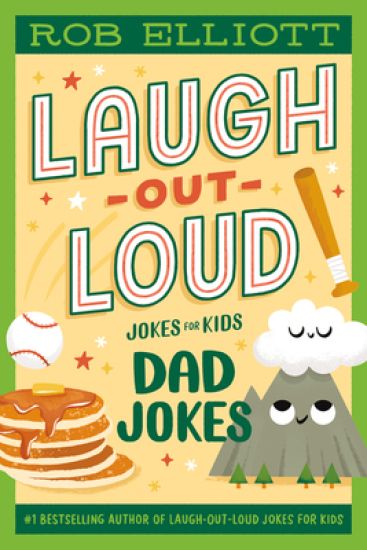
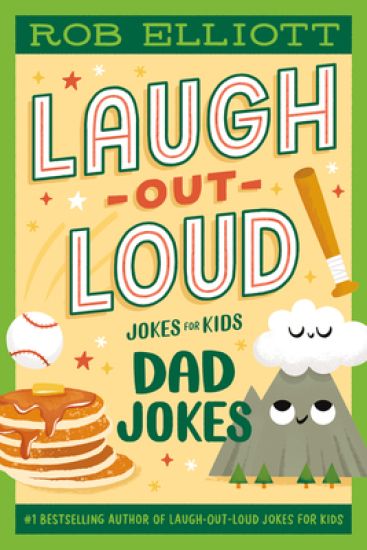
Rob Elliott's #1 bestselling Laugh-Out-Loud Jokes for Kids series will have you in stitches more than ever before This collection brings all your favorite dad jokes, puns, and more into one family-friendly paperback that will have readers of all ages laughing right along With 224 jam-packed pages, budding comedians will get the most hilariously groan-worthy jokes, wordplay, and zingers that are sure to keep the whole family giggling.
Rob Elliott’s #1 bestselling Laugh-Out-Loud Jokes for Kids series will have you in stitches more than ever before!This collection brings all your favorite dad jokes, puns, and more into one family-friendly paperback that will have readers of all ages laughing right along! With 224 jam-packed pages, budding comedians will get the most hilariously groan-worthy jokes, wordplay, and zingers that are sure to keep the whole family giggling.
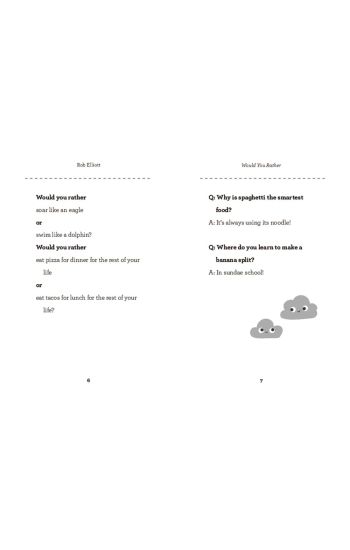
Rob Elliott's #1 bestselling Laugh-Out-Loud Jokes for Kids series will have you in stitches more than ever before with this hilarious all-new collection of Would You Rather jokes Would you rather...Ride on the back of a T-Rex?orFly on the back of a Pterodactyl?Choose your fun in this hilarious collection of Would You Rather jokes that are sure to keep the whole family laughing. Perfect for young comedians, class clowns, and jokesters of all ages Rob Elliott's bestselling Laugh-Out-Loud Jokes for Kids series has sold more than 6 million copies
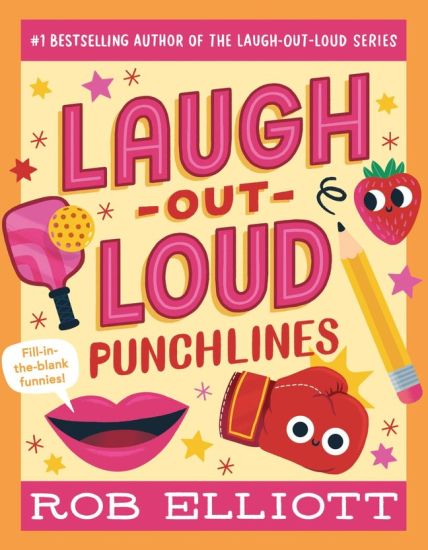
Q: Why was the nose feeling ____ at school?A: It kept getting picked on Crack yourself up with this Mad Libs-style collection of fill-in-the-blank jokes and quips Budding comedians will get to tap into their creativity to create hundreds of hilarious gags, puns, and zingers that are sure to make the whole family laugh out loud. This latest offering from bestselling jokester Rob Elliott gives you the ultimate laughter-inducing power of the punchline--perfect for kids and kids-at-heart of all ages
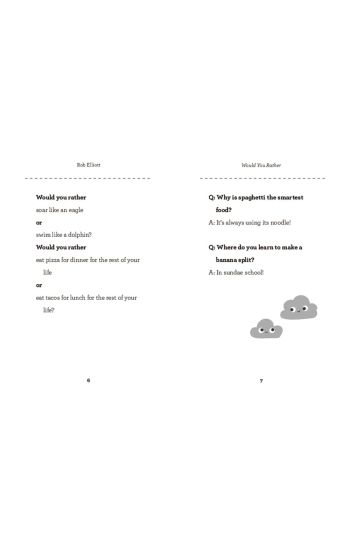
Rob Elliott’s #1 bestselling Laugh-Out-Loud Jokes for Kids series will have you in stitches more than ever before with this hilarious all-new collection of Would You Rather jokes!Would you rather…Ride on the back of a T-Rex?orFly on the back of a Pterodactyl?Choose your fun in this hilarious collection of Would You Rather jokes that are sure to keep the whole family laughing. Perfect for young comedians, class clowns, and jokesters of all ages!Rob Elliott’s bestselling Laugh-Out-Loud Jokes for Kids series has sold more than 6 million copies!
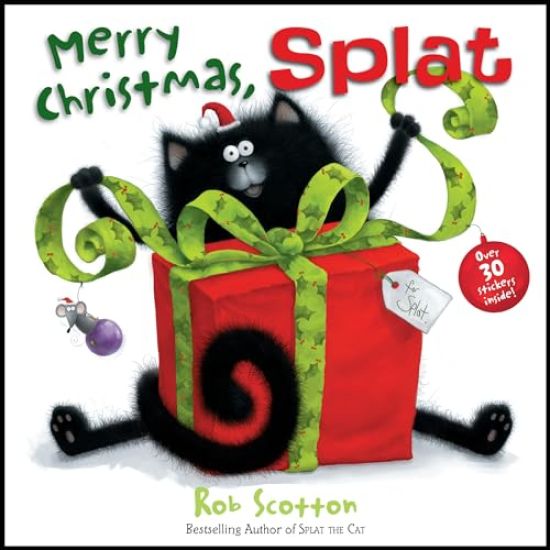
Get in the holiday spirit with an all-new Splat the Cat story from New York Times bestselling author Rob Scotton!It’s the night before Christmas, and Splat wonders if he’s been a good enough cat this year to deserve a really big present. Just to make sure, he offers some last-minute help to his mom and, in typical Splat fashion, he messes it up completely! That night Splat stays awake hoping to see Santa Claus. But when Splat misses him, he’s sure his Christmas is ruined—along with his hopes for a really big present…Everyone’s favorite furry cat is back in a Christmas story perfect for any child anxiously awaiting Santa’s arrival, in this low-priced, holiday paperback—complete with a full page of festive Splat stickers!
Bigger, better, and bursting with laughs--school is back in session with 1,001 Laugh-Out-Loud Back to School Jokes for Kids The #1 bestselling Laugh-Out-Loud Jokes for Kids series is heading to homeroom with its biggest collection yet--1,001 side-splitting school-themed jokes guaranteed to earn straight A's in hilarity Perfect for kids ages 5 to 10, this mega-joke book is packed with clean, clever humor for every part of the school day--from the classroom to the cafeteria, the playground to the bus ride home. Whether you're looking to wow your friends with witty one-liners, crack up your classmates during lunch, or share some giggles with the whole family, this all-new collection delivers nonstop fun. Q: Why did the student eat his homework? A: Because his teacher said it was a piece of cake Filled with knock-knock jokes, puns, and zingers, this laugh-loaded book is the ultimate boredom buster and a must-have for every young comedian, class clown, and aspiring jokester. With 208 pages of fun, this is one school supply no kid should be without Rob Elliott's wildly popularLaugh-Out-Loud books have sold millions and are a go-to favorite for kids, parents, and teachers alike. As Brightly puts it, his jokes include "knock-knock jokes, old classics, and even a few that you probably haven't heard yet--which is a kindness for parents everywhere."
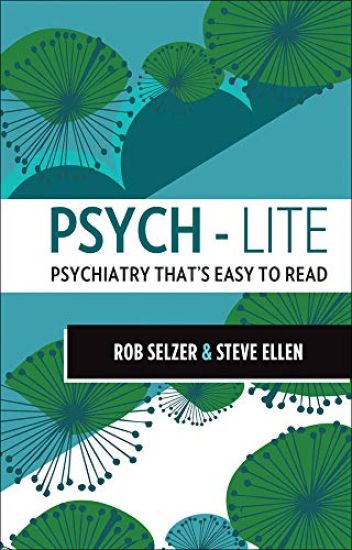
A new Australian text that provides a concise introduction to psychiatry, essential for medical students This text aims to provide the reader with a practical introduction to the complex field of psychiatry. Each concise chapter outlines fundamental information which will be invaluable for medical students beginning their psychiatry rotation. The mystery is taken out of challenging presentations such as mood disorders, personality disorders and psychotherapies. The writing style is designed to put the reader at ease and encourage confidence in a discipline that is frequently confronting. The authors are clinical academics who enjoy making the complex understandable. Key Features A convenient on-the-spot reference book Concise, informative chapters, each designed to be no longer than 1,000 words Written in an approachable style, designed to put the reader at ease Psych-Lite - sample chapter from McGraw-Hill Education ANZ- Medical
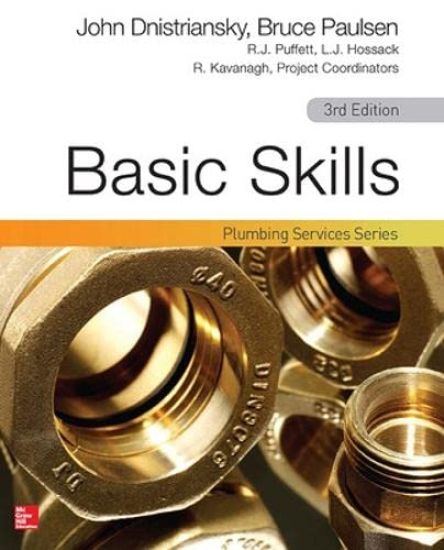
This third edition of Basic Skills has been updated to cover current technologies and practices including sustainability. It also covers all the essential competencies of the CPC08 Construction, Plumbing and Services Integrated Framework. Written in a clear, accessible style, and with an abundance of illustrations and photographs, this text provides a depth of underlying knowledge to help the student towards a thorough understanding of the subject. Basic Skills, 3E features new content on trade calculations, sustainability, workplace communications and OHS.
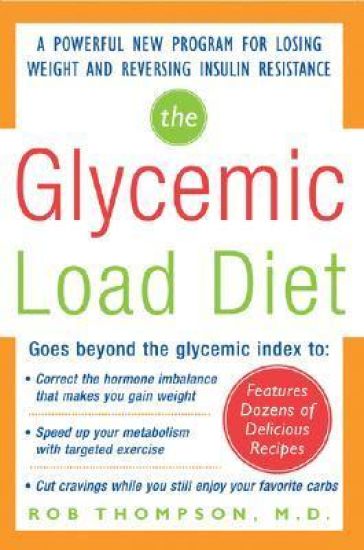
A cardiologist's revolutionary weight-loss plan that allows dieters to enjoy good carbs while still losing weightThe glycemic index has been the basis of many popular diets. But it doesn't take into account the serving sizes people actually eat and eliminates too many foods for dieters to stick with it. Now Dr. Robert Thompson's breakthrough program uses the glycemic load--the glycemic index adjusted for serving size--to take the GI a step forward. The glycemic load is a more accurate and effective tool in controlling weight and insulin resistance, allowing dieters to eat more foods while still burning fat, cutting cravings, and speeding up their metabolism. Safe, simple, and scientifically proven, it's the smartest weight-loss plan yet.