
Kirjahaku
Etsi kirjoja tekijän nimen, kirjan nimen tai ISBN:n perusteella.
1000 tulosta hakusanalla Roger Ascham

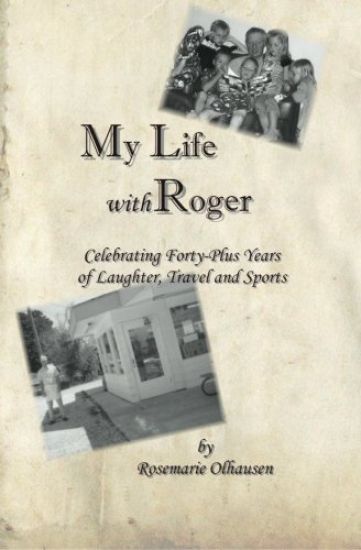
My Life with Roger: Celebrating Forty-Plus Years of Laughter, Travel and Sports
Rosemarie Olhausen
Rose Works Publishing
2015
nidottu
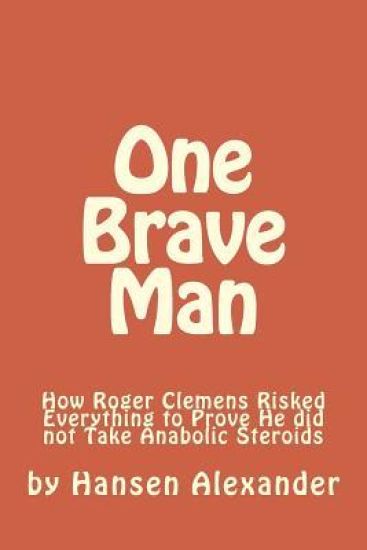
One Brave Man: How Roger Clemens Risked Everything to Prove He did not Take Anabolic Steroids
Hansen Alexander
Foster Fitzgerald
2017
nidottu
In 2015, nearly three years after Roger Clemens was exonerated by a federal jury of perjury, where the underlying issue was whether he had taken anabolic steroids, dramatic new evidence, in the form of testimony by the most famous sports doctor in the United States, was uncovered to further strengthen Clemens' contention that he had never taken steroids. That testimony would have been revealed at trial in the defamation suit Brian McNamee had filed against Clemens. But much to the disappointment of Clemens, however, and his attorney Chip Babcock, the case was settled after the aggressive urging to reach an agreement by U.S. Magistrate Judge Cheryl Pollack in Brooklyn, New York.Interviewed twice in late August, 2017, Dr. James R. Andrews, the legendary sports surgeon in Birmingham, Alabama, reiterated what he had told Babcock two years earlier, "There is no way Roger could have done steroids for enhancement."Babcock, who handled the settlement negotiations for Clemens, said in a 2016 interview, "I stood up in district court and said, "I want it to be clear that Mr. Clemens does not want to settle. He wants to go to trial." Babcock said almost wistfully, "If we had gone to trial we would even have called Jeff Novitzky to testify about McNamee's truthfulness." How ironic Jeff Novitzky, the super sleuth who was the government's face in the hunt for steroids in baseball, and who had looked high-and-low for evidence against Clemens, was prepared to testify for the Clemens defense.Although the father of molecular endocrinology, Dr. Bert W. O'Malley, was not going to testify, he had concluded seven years earlier that Roger Clemens did not take anabolic steroids by analyzing all his medical records, including blood tests, from 1995 through 2008. Based on his many years of pioneering research into the cell structures of anabolic steroids and the symptoms they produce, O'Malley said that types of symptoms associated with anabolic steroids use included elevated blood pressure, acne, increased LDL Cholesterol and decreased HDL Cholesterol.In the key paragraph of O'Malley's findings, he wrote, "I have not found any of the above listed positive indications of steroid abuse during this period for Mr. Clemens. The record is remarkably uniform and devoid of suspicious indicators."

Roger North is known today as a biographer and writer on music, architecture and estate management. Yet his writings, including thousands of pages still in manuscript, also contain critical reflections about intellectual and social changes taking place in England. This feature is little recognised, because North's reputation as an author was formed between 1740 and 1890, when seven of his manuscripts were published in editions that drastically altered his original texts, and when the reception of these works was influenced by 'Whig' criticism. Although some of North's writings were later edited according to more rigorous standards, many critics still utilise the discredited editions and continue to repeat 'Whig' stereotypes of North. Eschewing such stereotypes, Jamie C. Kassler provides the first interpretation of North's philosophy by retrieving what is consistent in his pattern of thought and by analysing some of his practices and purposes as a writer. By these methods, she shows that North, a common lawyer by profession, combined the moral scepticism of Montaigne with the legal philosophy of Coke, Selden and Hale. The result was a sceptical philosophy that accounts for North's critical reflections on the dogmatism of natural-law doctrine, both in its medieval intellectualist version and in its voluntarist reformulation that began with Grotius and was developed by Hobbes, Pufendorf and Locke. Kassler bases her interpretation on a wide range of North's writings, even those in which one might least expect to find a philosophy. In addition, one of his manuscripts, which is edited here for the first time, includes an exposition of his jurisprudence, as well as his attempt to bring England's past into the legal tradition. These features form part of North's broader argument that language, including the language of law, is the invention of humans and a representation of their changing history and habits, an argument that he later extended to musical 'language' in his more finished essay, 'The Musicall Grammarian' (1728).
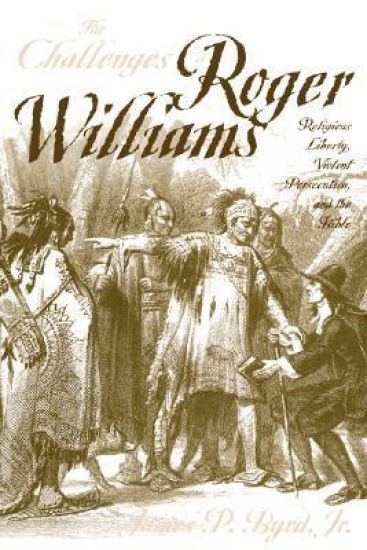
This book examines how biblical interpretation promoted both violent persecution and religious liberty in colonial America. Frequently, the Bible was a violent force in Puritan New England, where ministers and magistrates used biblical passages to justify the punishment of many religious radicals. Encouraged by the Bible, Puritans whipped and imprisoned Baptists, banished a variety of radicals from the Puritan colonies, and even sent Quakers to the gallows. Among those banished was Roger Williams, the advocate of religious liberty who also founded the colony of Rhode Island and established the first Baptist church in America. Williams opposed the Puritans' use of the Bible to persecute radicals who rejected the state's established religion. In retaliation against the use of scripture for violent purposes, Williams argued that religious liberty was a biblical concept that offered the only means of eliminating the religious wars and persecutions that plagued the seventeenth century. Empowered by his interpretation of scripture, Williams posed a serious challenge to a colonial society in which the Bible was the paramount guide in every aspect of life, both public and private.As Byrd reveals, Williams's biblical case for religious liberty was multifaceted. He drew from a wide range of scriptural texts and wrestled with a variety of interpreters. By focusing on Williams's biblical opposition to religious persecution, this book demonstrates the importance of the Bible to violence, religious liberty, and the relationship between church and state in early American history. Included is a reference guide to Williams's biblical interpretation which features the only biblical indices to hispublished works, accompanied by rankings of his biblical citations in various categories, including his most cited biblical passages throughout his career.
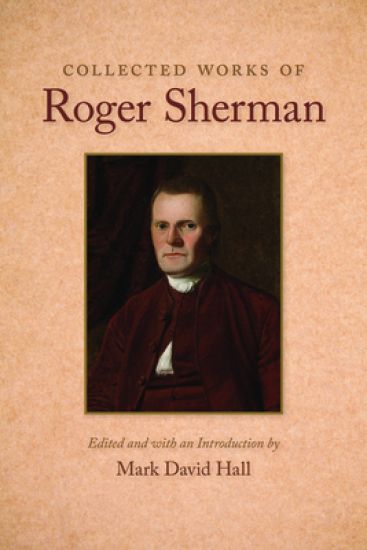
Roger Sherman (17211793) was the only founder to sign the Articles of Association, the Declaration of Independence, the Articles of Confederation, and the Constitution. He served 1,543 days in the Continental Congress and was a member of the five-man committee that drafted the Declaration of Independence. At the Federal Convention of 1787 he spoke more times than all but three delegates and was the driving force behind the Connecticut Compromise. As a Representative and Senator in the new republic, he played critical roles in debates over the Bill of Rights, the assumption of state debts, and the creation of a national bank. He was also one of the leading political leaders in Connecticut for the latter part of the eighteenth century. Nevertheless, no book dedicated to his writings has ever been published. Collected Works of Roger Sherman brings together essays, documents, records of his remarks in the Constitutional Convention and in the First Federal Congress, and important representative letters Sherman wrote to a variety of correspondents, including: 1768 letter to William Samuel Johnson, emphasising Parliaments limited authority over the colonies. 1772 letter to the theologian Joseph Bellamy, criticising Bellamy's position on a congregation's ability to fire its minister 1777 letter to Richard Henry Lee, addressing a number of economic issues. 1789 series of letters between Sherman and John Adams, exploring the nature of republican government and the proper scope of presidential power.

Roger Sherman (17211793) was the only founder to sign the Articles of Association, the Declaration of Independence, the Articles of Confederation, and the Constitution. He served 1,543 days in the Continental Congress and was a member of the five-man committee that drafted the Declaration of Independence. At the Federal Convention of 1787 he spoke more times than all but three delegates and was the driving force behind the Connecticut Compromise. As a Representative and Senator in the new republic, he played critical roles in debates over the Bill of Rights, the assumption of state debts, and the creation of a national bank. He was also one of the leading political leaders in Connecticut for the latter part of the eighteenth century. Nevertheless, no book dedicated to his writings has ever been published. Collected Works of Roger Sherman brings together essays, documents, records of his remarks in the Constitutional Convention and in the First Federal Congress, and important representative letters Sherman wrote to a variety of correspondents, including: 1768 letter to William Samuel Johnson, emphasising Parliaments limited authority over the colonies. 1772 letter to the theologian Joseph Bellamy, criticising Bellamy's position on a congregation's ability to fire its minister 1777 letter to Richard Henry Lee, addressing a number of economic issues. 1789 series of letters between Sherman and John Adams, exploring the nature of republican government and the proper scope of presidential power.

Registers of Roger Martival, Bishop of Salisbury, 1315-1330, I
Canterbury York Society
1959
pokkari
The Registers of Roger Martival, Bishop of Salisbury, 1315-1330, IIi
Canterbury York Society
1973
pokkari
Published by Boydell & Brewer Inc.
The Registers of Roger Martival, Bishop of Salisbury, 1315-1330. III Royal writs
Canterbury York Society
1965
pokkari
The Registers of Roger Martival, Bishop of Salisbury, 1315-1330, IV
Canterbury York Society
1975
sidottu
Published by Boydell & Brewer Inc.
Registers of Roger Martival, Archbishop of Salisbury, 1315-1330, IIi
Canterbury York Society
1970
pokkari
Published by Boydell & Brewer Inc.
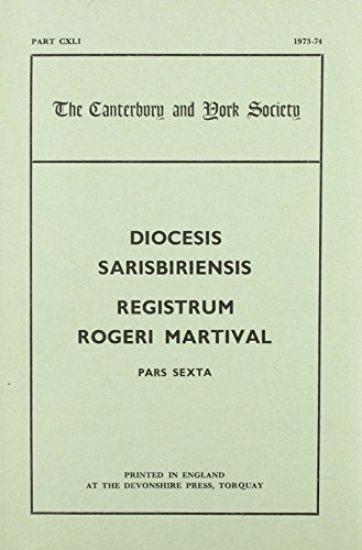
The Registers of Roger Martival, Bishop of Salisbury, 1315-1330, IV
Canterbury York Society
1975
pokkari
Published by Boydell & Brewer Inc.
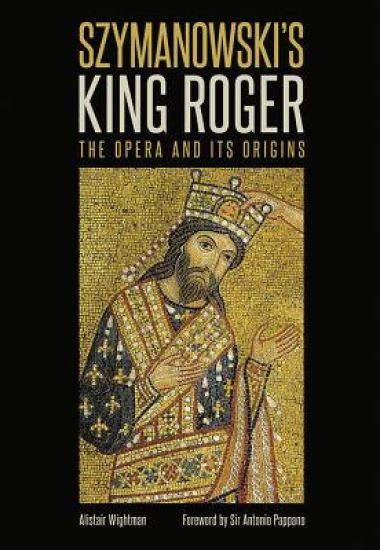
A guide to the origins and music of Szymanowski's exquisitely beautiful opera King Roger. Karol Szymanowski (1881-1937), the most important Polish composer after Chopin, wrote only two operas, the second of which, King Roger, completed in 1924, is a masterpiece. After decades of neglect this magnificent work hasbegun to receive more attention around the world, and this first extended study of King Roger investigates its origins, uncovers its ideology, examines its music and documents its history. The book opens with an outline of the role the theatre played in Szymanowski's career, from his early operetta, Lottery for Husbands, and the rousing ballet panotmime, Harnasie, based on legends from the Polish highlands. Intracing the evolution of King Roger from conception to completion, Alistair Wightman, one of the leading Szymanowki scholars, examines the contribution of the co-librettist, Jaroslaw Iwaszkiewicz, and serveys the various strands which make up its ideology, from Euripides The Bacchae and Plato Phaedrus and The Symposium to works by Pater, Nietzsche, Merezhkovsky and Micinski. He charts Szymanowski's fascination with the historical background of the opera, the world of the twelfth-century ruler of Norman Sicily, Roger II (1095-1154). Szymanowski's own novel, Efebos, written in 1918-19 and only partially preserved offers intriguing parallels with hisopera. ALISTAIR WIGHTMAN has written extensively about Polish music of the early twentieth century and his translation, Szymanowski on Music was published by Toccata Press in 1999.
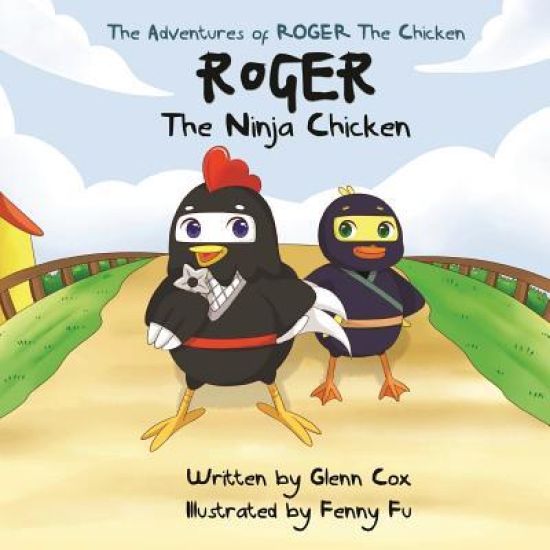
Roger the Chicken is a fun, clever, and cheeky Chicken. Roger who gets into all sorts of mischief on Farmer Jimmy's farm.
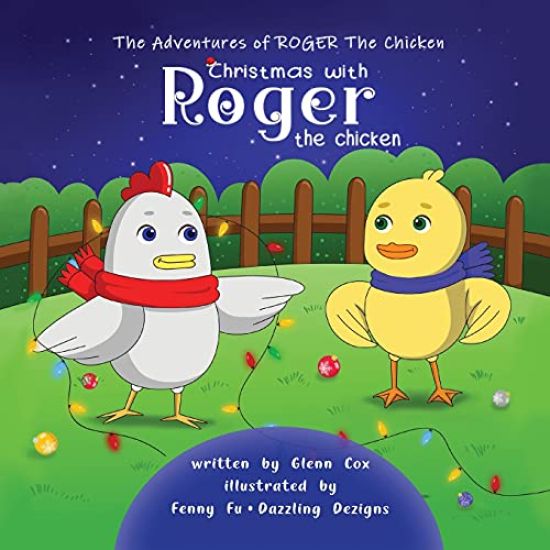
Roger the Chicken and Barry the Duck have some fun putting up Christmas decorations. While they are doing this they think about what Christmas is all about. About love, light and gifts. What will warm their heart?