Kirjojen hintavertailu. Mukana 12 016 292 kirjaa ja 12 kauppaa.

Kirjahaku

Etsi kirjoja tekijän nimen, kirjan nimen tai ISBN:n perusteella.

1000 tulosta hakusanalla Rohan Candappa

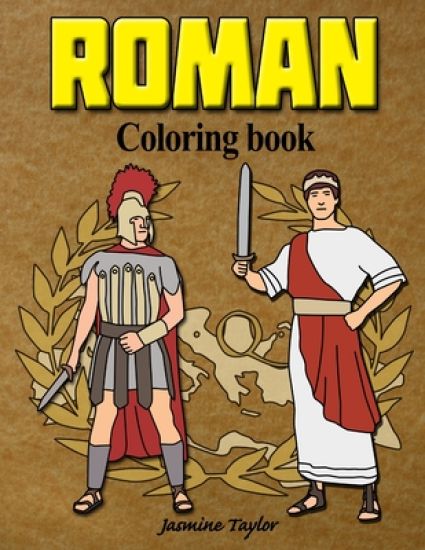
Roman Coloring Book

Roman Coloring Book

Jasmine Taylor

Lulu.com
2019
nidottu
This coloring book is ideal for kids of any age (and adults too) who love the Roman Empire. Enjoy coloring men, woman and artifacts from this ancient civilization of 27 BC and first ruled by emperor Augustus. These detailed ready-to-color illustrations have plenty of white space giving you room to sketch, draw, doodle and add your own unique artistic personality to each colored scene. Enjoy an infinite number of possibilities for hours of creative fun!Benefits- Make your work look great using colored pencils, pens, markers or crayons- Illustrations on separate pages to protect your colorful masterpiece- Artist name & date box on back of each illustration- Share and give your colored art work to friends, family and loved ones as gifts or precious keepsake- Enjoy therapeutic, stress relieving effect coloring can bring- Relax, unwind and spend time togetherMakes a great gift for anyone who loves ancient roman civilization. Just hit the buy button and start your coloring journey now!
Roman-Period and Byzantine Nazareth and its Hinterland
Roman-Period and Byzantine Nazareth and its Hinterland presents a new social and economic interpretation of Roman-period and Byzantine Nazareth and its hinterland as a whole, showing the transformation of a Roman-period Jewish village into a major Byzantine Christian pilgrimage centre.Although Nazareth is one of the most famous places in the world, this is the first book on Roman-period and Byzantine Nazareth by a professional archaeologist, the only book to consider the archaeology of Nazareth in the context of its adjacent landscape, and the first to use contemporary archaeological methods and theory to explore Nazareth’s archaeology. Taking as his starting point a systematic survey of the valley between Nazareth and the Roman town of Sepphoris, Dark offers an interpretation of communities elsewhere in the Roman world as networks of interlocking cells, with interactions along routeways being more important in cultural and economic terms than the relationship between urban centres and their surrounding countryside. His conclusions have implications for the wider archaeology of the Roman and Byzantine worlds, as well as for archaeological theory, and demonstrate the importance of Nazareth to world archaeology.This unique book will be invaluable to those interested in Nazareth and its surrounding landscape, as well as to archaeologists and scholars of the Roman and Byzantine worlds.
Roman Masculinity and Politics from Republic to Empire
This volume explores the role that republican political participation played in forging elite Roman masculinity. It situates familiarly "manly" traits like militarism, aggressive sexuality, and the pursuit of power within a political system based on power sharing and cooperation.In deliberations in the Senate, at social gatherings, and on military campaign, displays of consensus with other men greased the wheels of social discourse and built elite comradery. Through literary sources and inscriptions that offer censorious or affirmative appraisal of male behavior from the Middle and Late Republic (ca. 300–31 BCE) to the Principate or Early Empire (ca. 100 CE), this book shows how the vir bonus, or "good man," the Roman persona of male aristocratic excellence, modulated imperatives for personal distinction and military and sexual violence with political cooperation and moral exemplarity. While the advent of one-man rule in the Empire transformed political power relations, ideals forged in the Republic adapted to the new climate and provided a coherent model of masculinity for emperor and senator alike. Scholars often paint a picture of Republic and Principate as distinct landscapes, but enduring ideals of male self-fashioning constitute an important continuity.Roman Masculinity and Politics from Republic to Empire provides a fascinating insight into the intertwined nature of masculinity and political power for anyone interested in Roman political and social history, and those working on gender in the ancient world more broadly.
Roman Coins from India

Roman Coins from India

Paula J Turner

Routledge
2020
nidottu
This book is a detailed collation of the recorded finds of Roman coins on Indian soil, divided into Republican, Julio-Claudian and post-Julio-Claudian coins. It also includes chapters on the historical significance of the scarcity of Roman finds, the absence of base metal issues in the early empire, the predominance of early imperial denarii, and the difference in composition between the Julio-Claudian gold and silver hoards. There is considerable discussion on slashed gold coins and defaced silver coins and on imitation Roman coins found in India. Three exhaustive appendices include a catalogue of finds of Roman coins found in India, the present location of Roman coins found in India, and Roman coins in the Madras Central Government Museum. Copublished with the Royal Numismatic Society.
Roman Masculinity and Politics from Republic to Empire
This volume explores the role that republican political participation played in forging elite Roman masculinity. It situates familiarly "manly" traits like militarism, aggressive sexuality, and the pursuit of power within a political system based on power sharing and cooperation.In deliberations in the Senate, at social gatherings, and on military campaign, displays of consensus with other men greased the wheels of social discourse and built elite comradery. Through literary sources and inscriptions that offer censorious or affirmative appraisal of male behavior from the Middle and Late Republic (ca. 300–31 BCE) to the Principate or Early Empire (ca. 100 CE), this book shows how the vir bonus, or "good man," the Roman persona of male aristocratic excellence, modulated imperatives for personal distinction and military and sexual violence with political cooperation and moral exemplarity. While the advent of one-man rule in the Empire transformed political power relations, ideals forged in the Republic adapted to the new climate and provided a coherent model of masculinity for emperor and senator alike. Scholars often paint a picture of Republic and Principate as distinct landscapes, but enduring ideals of male self-fashioning constitute an important continuity.Roman Masculinity and Politics from Republic to Empire provides a fascinating insight into the intertwined nature of masculinity and political power for anyone interested in Roman political and social history, and those working on gender in the ancient world more broadly.
Roman Emperors in Context

Roman Emperors in Context

Brian Croke

Routledge
2021
sidottu
Roman Emperors in Context: Theodosius to Justinian brings together ten articles by renowned historian Brian Croke.Written separately and over a period of fifteen years, the revised and updated chapters in this volume provide a coherent and substantial story of the change and development in imperial government at the eastern capital of Constantinople between the reigns of Theodosius I (379-95) and Justinian (527-65). Bookended by chapters on the city itself, this book is based on a conviction that the legal and administrative decisions of emperors have an impact on the whole of the political realm. The fifth century, which forms the core of this book, is shown to be essentially Roman in that the significance of aristocracy and dynasty still formed the basic framework for political advancement and the conduct/conflict of political power around a Roman imperial court from one generation to the next. Also highlighted is how power at court was mediated through military generals, including major regional commanders in the Balkans and the East, bishops and bureaucrats. Finally, the book demonstrates how the prolonged absence of male heirs during this period allowed the sisters, daughters, mothers and wives of Roman emperors to become more important and more central to imperial government.This book is essential reading for scholars and students of Roman and Byzantine history, as well as those interested in political and legal history. (CS1100)
Roman Emperors in Context

Roman Emperors in Context

Brian Croke

TAYLOR FRANCIS LTD
2023
nidottu
Roman Emperors in Context: Theodosius to Justinian brings together ten articles by renowned historian Brian Croke.Written separately and over a period of fifteen years, the revised and updated chapters in this volume provide a coherent and substantial story of the change and development in imperial government at the eastern capital of Constantinople between the reigns of Theodosius I (379-95) and Justinian (527-65). Bookended by chapters on the city itself, this book is based on a conviction that the legal and administrative decisions of emperors have an impact on the whole of the political realm. The fifth century, which forms the core of this book, is shown to be essentially Roman in that the significance of aristocracy and dynasty still formed the basic framework for political advancement and the conduct/conflict of political power around a Roman imperial court from one generation to the next. Also highlighted is how power at court was mediated through military generals, including major regional commanders in the Balkans and the East, bishops and bureaucrats. Finally, the book demonstrates how the prolonged absence of male heirs during this period allowed the sisters, daughters, mothers and wives of Roman emperors to become more important and more central to imperial government.This book is essential reading for scholars and students of Roman and Byzantine history, as well as those interested in political and legal history. (CS1100)
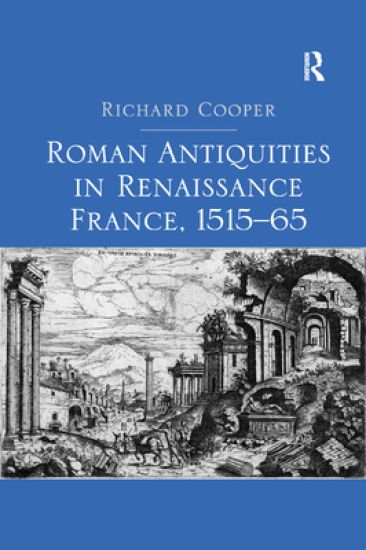
Roman Antiquities in Renaissance France, 1515–65
Making use of new and original material based on firsthand sources, this book interrogates the vogue for collecting, discussing, depicting, and putting to political and cultural use Roman antiquities in the French Renaissance. It surveys a range of activity from the labours of collectors and patrons to royal entries, considers attacks on the craze for the antique, and sets literary instances among a much wider spectrum of artistic endeavour. While Renaissance collecting and antiquarianism have certainly been the object of critical scrutiny, this study brings disparate fields into a single focus; and it examines not only areas of antiquarian expertise and interest (such as statues, coins, and books), but also important individual historical figures. The opening chapters deal with the role played in Rome by French ambassadors, who sent back antiques to collectors at court, who in the person of Jean Du Bellay, undertook excavations, and assembled a major personal collection, which was housed in a new villa in the ruined Baths of Diocletian. The volume includes a valuable appendix, which presents in transcription catalogues of the collections of Cardinal Jean du Bellay.
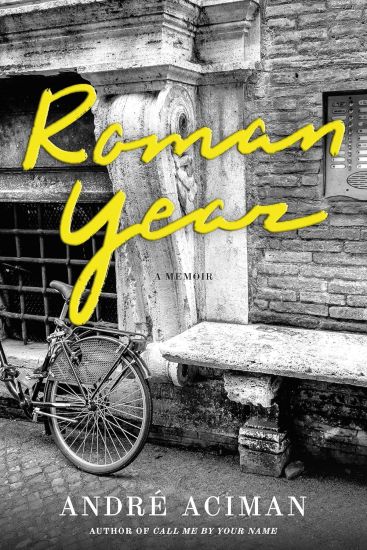
Roman Year: A Memoir

Roman Year: A Memoir

André Aciman

Farrar, Straus and Giroux
2024
sidottu
The author of Call Me by Your Name returns with a deeply romantic memoir of his time in Rome while on the cusp of adulthood. In Roman Year, Andr Aciman captures the period of his adolescence that began when he and his family first set foot in Rome, after being expelled from Egypt. Though Aciman's family had been well-off in Alexandria, all vestiges of their status vanished when they fled, and the author, his younger brother, and his deaf mother moved into a rented apartment in Rome's Via Clelia. Though dejected, Aciman's mother and brother found their way into life in Rome, while Aciman, still unmoored, burrowed into his bedroom to read one book after the other. The world of novels eventually allowed him to open up to the city and, through them, discover the beating heart of the Eternal City. Aciman's time in Rome did not last long before he and his family moved across the ocean, but by the time they did, he was leaving behind a city he loved. In this memoir, the author, a genius of "the poetry of the place" (John Domini, The Boston Globe), conjures the sights, smells, tastes, and people of Rome as only he can. Aciman captures, as if in amber, a living portrait of himself on the brink of adulthood and the city he worshipped at that pivotal moment. Roman Year is a treasure, unearthed by one of our greatest prose stylists.
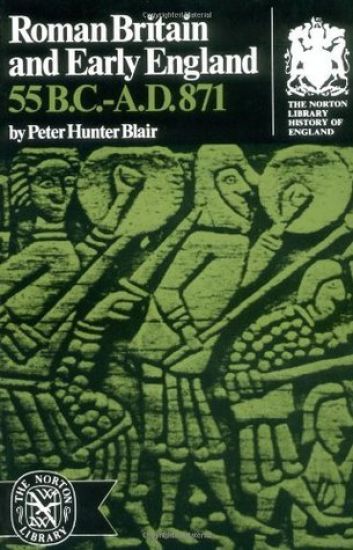
Roman Britain and Early England

Roman Britain and Early England

Peter Blair

WW Norton Co
1966
nidottu
By the time of Caesar's first expedition to Britain in 55 B.C., migratory movements had established close ties of kinship and common interest between the peoples who lived in Gaul and some of the inhabitants of Britain. Because the source material is so meager for much of early British history, Mr. Blair is careful to explain just how scholars have arrived at an accurate knowledge of the first 900 years. The real history of Britain begins with the Roman occupation, for the Romans were the first to leave substantial documentary and archaeological evidence. After the governorship of Agricola the written sources almost entirely disappear until the early Anglo-Saxon era of the fifth century; but archaeologists have been able to gather a great deal of information about the intervening centuries from excavations of old walled towns, roads, and fortresses dating from the Roman period. Mr. Blair skillfully describes the transition from Roman to Saxon England and shows why Rome's greatest legacy to her former colony—Christianity—flowered within Anglo-Saxon culture. The source material on Saxon England is mainly documentary, as these new inhabitants built in wood and little archaeological evidence has survived. However, Bede's Ecclesiatical History of the English Nation and other great Christian writings, the Anglo-Saxon Chronicle, Beowulf, the stories of Caedmon, and other poems and epics in the Germanic minstrelsy tradition, have revealed much about English economic, social, and cultural life up to the accession of Alfred the Great.
Roman Imperial Civilisation

Roman Imperial Civilisation

Harold Mattingly

WW Norton Co
2012
nidottu
A broad-ranging survey of the Roman Empire, outlining the course of events up to the Western Empire's fall in A.D. 476 and discussing political, economic, and cultural life. Dr. Mattingly, for many years in charge of Roman coins at the British Museum, shows throughout the book how the study of coins supplements the gaps in the contemporary historical documents.
Roman Shakespeare

Roman Shakespeare

Coppélia Kahn

Routledge
1997
sidottu
In the first full-length study of Shakespeare's Roman plays, Coppélia Kahn brings to these texts a startling, critical perspective which interrogates the gender ideologies lurking behind 'Roman virtue'. Plays featured include: * Titus Andronicus * Julius Caesar * Antony and Cleopatra * Coriolanus * Cymbeline Setting the Roman works in the dual context of the popular theatre and Renaissance humanism, the author identifies new sources which she analyzes from a historicised feminist perspective.Roman Shakespeare is written in an accessible style and will appeal to scholars and students of Shakespeare and those interested in feminist theory, as well as classicists.
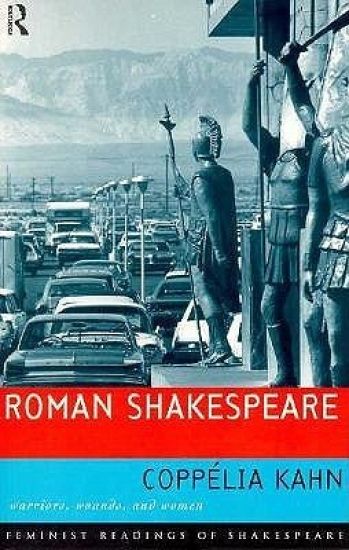
Roman Shakespeare

Roman Shakespeare

Coppélia Kahn

Routledge
1997
nidottu
In the first full-length study of Shakespeare's Roman plays, Coppélia Kahn brings to these texts a startling, critical perspective which interrogates the gender ideologies lurking behind 'Roman virtue'. Plays featured include: * Titus Andronicus * Julius Caesar * Antony and Cleopatra * Coriolanus * Cymbeline Setting the Roman works in the dual context of the popular theatre and Renaissance humanism, the author identifies new sources which she analyzes from a historicised feminist perspective.Roman Shakespeare is written in an accessible style and will appeal to scholars and students of Shakespeare and those interested in feminist theory, as well as classicists.
Roman Jakobson

Roman Jakobson

Richard Bradford

Routledge
1994
sidottu
In Roman Jakobson Richard Bradford reasserts the value of Jakobson's work, arguing that he has a great deal to offer contemporary critical theory and providing a critical appraisal the sweep of Jakobson's career. Bradford re-establishes Jakobson's work as vital to our understanding of the relationship between language and poetry. By exploring Jakobson's thesis that poetry is the primary object language, Roman Jakobson: Life, Language, Art offers a new reading of his work which includes the most radical elements of modernism. This book will be invaluable to students of Jakobson and to anyone interested in the development of critical theory, linguistics and stylistics.
Roman Jakobson

Roman Jakobson

Richard Bradford

Routledge
1994
nidottu
In Roman Jakobson Richard Bradford reasserts the value of Jakobson's work, arguing that he has a great deal to offer contemporary critical theory and providing a critical appraisal the sweep of Jakobson's career. Bradford re-establishes Jakobson's work as vital to our understanding of the relationship between language and poetry. By exploring Jakobson's thesis that poetry is the primary object language, Roman Jakobson: Life, Language, Art offers a new reading of his work which includes the most radical elements of modernism. This book will be invaluable to students of Jakobson and to anyone interested in the development of critical theory, linguistics and stylistics.
Roman Urbanism
The contributors to this volume provide an accessible and jargon-free insight into the notion of the Roman city; what shaped it, and how it both structured and reflected Roman society. Roman Urbanism challenges the established economic model for the Roman city and instead offers original and diverse approaches for examining Roman urbanization, bringing the Roman city into the nineties. Roman Urbanism is a lively and informative volume, particularly valuable in an age dominated by urban development.
Roman Eloquence
The present volume is part of a general renaissance in the study of rhetoric and bears testimony to a discipline undergoing rapid and exciting change. It draws together established and newer scholars in the field to produce a probing and innovative analysis of the role played by rhetoric in Roman culture. Utilizing a variety of critical approaches and methodologies, these scholars examine not only the role of rhetoric in Roman society but also the relationship between rhetoric and Rome's major literary genres. In addition to demonstrating rhetoric's critical significance for Roman culture, the studies reveal the important role played by rhetoric in the formation of the various genres of literature.