Kirjojen hintavertailu. Mukana 11 699 587 kirjaa ja 12 kauppaa.

Kirjahaku

Etsi kirjoja tekijän nimen, kirjan nimen tai ISBN:n perusteella.

1000 tulosta hakusanalla Rowson

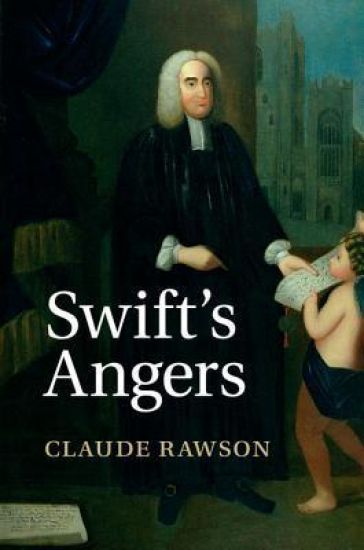
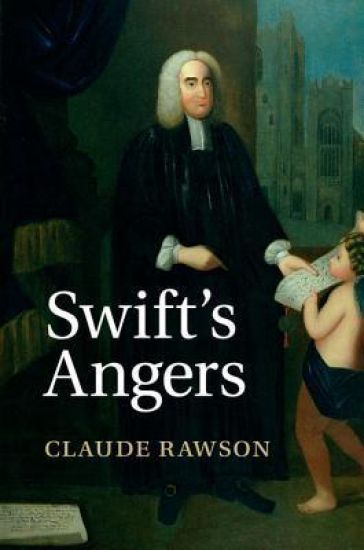
Swift's Angers

Swift's Angers

Claude Rawson

Cambridge University Press
2014
sidottu
Jonathan Swift's angers were all too real, though Swift was temperamentally equivocal about their display. Even in his most brilliant satire, A Tale of a Tub, the aggressive vitality of the narrative is designed, for all the intensity of its sting, never to lose its cool. Yet Swift's angers are partly self-implicating, since his own temperament was close to the things he attacked, and behind his angers are deep self-divisions. Though he regarded himself as 'English' and despised the Irish 'natives' over whom the English ruled, Swift became the hero of an Irish independence he would not have desired. In this magisterial account, Claude Rawson, widely considered the leading Swift scholar of our time, brings together recent work, as well as classic earlier discussions extensively revised, offering fresh insights into Swift's bleak view of human nature, his brilliant wit, and the indignations and self-divisions of his writings and political activism.
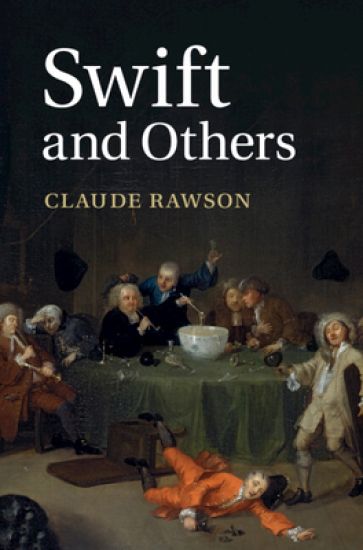
Swift and Others

Swift and Others

Claude Rawson

Cambridge University Press
2015
sidottu
Jonathan Swift's influence on the writings and politics of England and Ireland was reinforced by a combination of contradictory forces: an authoritarian attachment to tradition and rule, and a vivid responsiveness to the disorders of a modernity he resisted and yet helped to create. He was, perhaps even more than Pope, a dominant voice of his times. The rich variety of the literary culture to which he belonged shows the penetration of his ideas, personality and style. This is true of writers who were his friends and admirers (Pope), of adversaries (Mandeville, Johnson), of several who became great ironists in his shadow (Gibbon, Austen), and of some surprising examples of Swiftian afterlife (Chatterton). Claude Rawson, leading scholar of the works of Swift, brings together recent essays, as well as classic earlier work extensively revised, to offer fresh insights into an era when Swift's voice was a pervasive presence.
Scientific Software Design

Scientific Software Design

Damian Rouson; Jim Xia; Xiaofeng Xu

Cambridge University Press
2014
pokkari
The authors analyze how the structure of a package determines its developmental complexity according to such measures as bug search times and documentation information content. The work presents arguments for why these issues impact solution cost and time more than does scalable performance. The final chapter explores the question of scalable execution and shows how scalable design relates to scalable execution. The book's focus is on program organization, which has received considerable attention in the broader software engineering community, where graphical description standards for modeling software structure and behavior have been developed by computer scientists. These discussions might be enriched by engineers who write scientific codes. This book aims to bring such scientific programmers into discussion with computer scientists. The authors do so by introducing object-oriented software design patterns in the context of scientific simulation.
Swift's Angers

Swift's Angers

Claude Rawson

Cambridge University Press
2014
pokkari
Jonathan Swift's angers were all too real, though Swift was temperamentally equivocal about their display. Even in his most brilliant satire, A Tale of a Tub, the aggressive vitality of the narrative is designed, for all the intensity of its sting, never to lose its cool. Yet Swift's angers are partly self-implicating, since his own temperament was close to the things he attacked, and behind his angers are deep self-divisions. Though he regarded himself as 'English' and despised the Irish 'natives' over whom the English ruled, Swift became the hero of an Irish independence he would not have desired. In this magisterial account, Claude Rawson, widely considered the leading Swift scholar of our time, brings together recent work, as well as classic earlier discussions extensively revised, offering fresh insights into Swift's bleak view of human nature, his brilliant wit, and the indignations and self-divisions of his writings and political activism.

The Attorney in Eighteenth-Century England

The Attorney in Eighteenth-Century England

Robert Robson

Cambridge University Press
2013
pokkari
Originally published in 1959, this book examines the shifting role of attorneys and solicitors in the eighteenth century, a period that saw the growth and development of the professional classes and their affiliated organizations. Robson describes the changing social character of lawyers, the methods by which they were trained and the part they played in affairs of banking, politics and other public spheres. This book will be of value to anyone with an interest in British social or legal history.
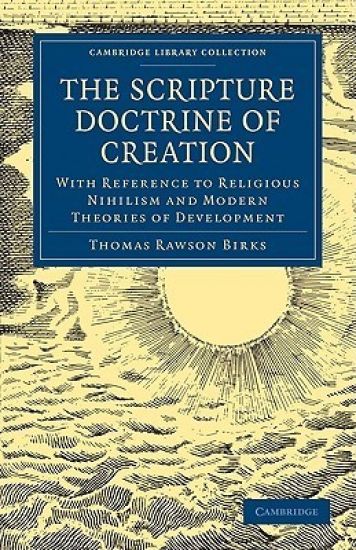
The Scripture Doctrine of Creation

The Scripture Doctrine of Creation

Thomas Rawson Birks

Cambridge University Press
2009
pokkari
Thomas Rawson Birks was a Fellow of Trinity College, Cambridge and a senior professor of philosophy. This book was first published in 1872, the year of his appointment to the prestigious Knightbridge Professorship. As an active Anglican clergyman, Birks engaged energetically in many heated theological controversies. In the Victorian debates on the relationship between religion and science he took a strongly anti-Darwinian stance, declaring that the theory of evolution contradicted the doctrine of creation and could not explain the mystery of life. In other areas, however, he argued that the findings of science confirmed the glory of God, since 'the telescope reveals the grandeur and vastness of the starry worlds' and 'the microscope discovers marks of design and beauty' which are evidence of a supreme designer. His influential evangelical views are expressed in this book, which argues for scripture as the ultimate key to the mystery of existence.
History of England from the Accession of James I to the Outbreak of the Civil War, 1603–1642
Samuel Rawson Gardiner (1829–1902) was a distinguished Victorian historian of the seventeenth century who coined the term 'Puritan Revolution' and was noted for his use of and editorial work on primary sources. This ten-volume work was published in 1883–4, though he had already published eight volumes on the period 1603–37, of which the first two were considerably revised for this edition; and in later works he continued the story through the Civil War, the Commonwealth and the Protectorate. The series was highly regarded in its time, and reprinted often, although it was not without its critics. Gardiner aimed at writing 'scientific history', relying on the facts to speak for themselves. This first volume spans the period 1603–7, and includes chapters covering the end of the Tudor monarchy, James I and the Catholics, the Gunpowder Plot, the pacification of Ireland and the plantation of Ulster.
History of England from the Accession of James I to the Outbreak of the Civil War, 1603–1642
Samuel Rawson Gardiner (1829–1902) was a distinguished Victorian historian of the seventeenth century who coined the term 'Puritan Revolution' and was noted for his use of and editorial work on primary sources. This ten-volume work was published in 1883–4, though he had already published eight volumes on the period 1603–37, of which the first two were considerably revised for this edition; and in later works he continued the story through the Civil War, the Commonwealth and the Protectorate. The series was highly regarded in its time, and reprinted often, although it was not without its critics. Gardiner aimed at writing 'scientific history', relying on the facts to speak for themselves. This second volume spans the period 1607–16, and includes chapters covering the colonisation of Virginia, James I's breach with the Commons, the Essex divorce, the Addled Parliament and the fall of Somerset.
History of England from the Accession of James I to the Outbreak of the Civil War, 1603–1642
Samuel Rawson Gardiner (1829–1902) was a distinguished Victorian historian of the seventeenth century who coined the term 'Puritan Revolution' and was noted for his use of and editorial work on primary sources. This ten-volume work was published in 1883–4, though he had already published eight volumes on the period 1603–37, of which the first two were considerably revised for this edition; and in later works he continued the story through the Civil War, the Commonwealth and the Protectorate. The series was highly regarded in its time, and reprinted often, although it was not without its critics. Gardiner aimed at writing 'scientific history', relying on the facts to speak for themselves. This third volume spans the period 1616–21, and includes chapters covering the Spanish marriage episode, Raleigh's last voyage, ecclesiastical issues in Scotland and England, and the outbreak of the Thirty Years' War.
History of England from the Accession of James I to the Outbreak of the Civil War, 1603–1642
Samuel Rawson Gardiner (1829–1902) was a distinguished Victorian historian of the seventeenth century who coined the term 'Puritan Revolution' and was noted for his use of and editorial work on primary sources. This ten-volume work was published in 1883–4, though he had already published eight volumes on the period 1603–37, of which the first two were considerably revised for this edition; and in later works he continued the story through the Civil War, the Commonwealth and the Protectorate. The series was highly regarded in its time, and reprinted often, although it was not without its critics. Gardiner aimed at writing 'scientific history', relying on the facts to speak for themselves. This fourth volume spans the period 1621–3, and includes chapters on the disgrace of Francis Bacon, the voyage of the Mayflower, and English diplomatic efforts to contain the spread of war in Europe.
History of England from the Accession of James I to the Outbreak of the Civil War, 1603–1642
Samuel Rawson Gardiner (1829–1902) was a distinguished Victorian historian of the seventeenth century who coined the term 'Puritan Revolution' and was noted for his use of and editorial work on primary sources. This ten-volume work was published in 1883–4, though he had already published eight volumes on the period 1603–37, of which the first two were considerably revised for this edition; and in later works he continued the story through the Civil War, the Commonwealth and the Protectorate. The series was highly regarded in its time, and reprinted often, although it was not without its critics. Gardiner aimed at writing 'scientific history', relying on the facts to speak for themselves. This fifth volume spans the period 1623–5, and includes chapters covering Prince Charles' journey to Madrid, the dissolution of the Spanish treaties, the last days of James I, and the first Parliaments of Charles I at Westminster and Oxford.
History of England from the Accession of James I to the Outbreak of the Civil War, 1603–1642
Samuel Rawson Gardiner (1829–1902) was a distinguished Victorian historian of the seventeenth century who coined the term 'Puritan Revolution' and was noted for his use of and editorial work on primary sources. This ten-volume work was published in 1883–4, though he had already published eight volumes on the period 1603–37, of which the first two were considerably revised for this edition; and in later works he continued the story through the Civil War, the Commonwealth and the Protectorate. The series was highly regarded in its time, and reprinted often, although it was not without its critics. Gardiner aimed at writing 'scientific history', relying on the facts to speak for themselves. This sixth volume spans the period 1625–9, and includes chapters covering the expedition to Cádiz, the second Parliament of Charles I, the Petition of Right and the impeachment and assassination of the Duke of Buckingham.
History of England from the Accession of James I to the Outbreak of the Civil War, 1603–1642
Samuel Rawson Gardiner (1829–1902) was a distinguished Victorian historian of the seventeenth century who coined the term 'Puritan Revolution' and was noted for his use of and editorial work on primary sources. This ten-volume work was published in 1883–4, though he had already published eight volumes on the period 1603–37, of which the first two were considerably revised for this edition; and in later works he continued the story through the Civil War, the Commonwealth and the Protectorate. The series was highly regarded in its time, and reprinted often, although it was not without its critics. Gardiner aimed at writing 'scientific history', relying on the facts to speak for themselves. This seventh volume spans the period 1629–35, and includes chapters covering the parliamentary session of 1629, divergent tendencies in politics and religion, Charles I's visit to Scotland and the beginning of Laud's archbishopric.
History of England from the Accession of James I to the Outbreak of the Civil War, 1603–1642
Samuel Rawson Gardiner (1829–1902) was a distinguished Victorian historian of the seventeenth century who coined the term 'Puritan Revolution' and was noted for his use of and editorial work on primary sources. This ten-volume work was published in 1883–4, though he had already published eight volumes on the period 1603–37, of which the first two were considerably revised for this edition; and in later works he continued the story through the Civil War, the Commonwealth and the Protectorate. The series was highly regarded in its time, and reprinted often, although it was not without its critics. Gardiner aimed at writing 'scientific history', relying on the facts to speak for themselves. This eighth volume spans the period 1635–9, and includes chapters covering Wentworth's rule in Ireland, religious and constitutional problems, the riots in Edinburgh and the Assembly of Glasgow.