More than 100 recipes for fun! Kids know its more fun to eat foods they make themselves, and this book makes learning to cook a blast! Nine-year-old Heather Nissenberg and her mom put together this collection of tasty recipes that help kids make their own snacks and even family meals. Favorites include:*Cake for Breakfast*Purple Cow*Sailing Tuna Boats*Bug Bites*Monkey Bread*Mini Chicken CheeseburgersWith lots of fun food jokes, kitchen crafts, and tips for kitchen safety and healthy eating, kids will have a great time learning their way around the kitchen! Q. What do race car drivers eat for lunch? A. Fast food
Help your child develop healthy eating habits that will last a lifetime Most children establish lifelong eating patterns between the ages of 8 and 18. This practical and authoritative guide is the ultimate resource for parents who want to help their children adopt and enjoy a diet that will keep them healthy, well nourished, and physically fit, both now and for the rest of their lives. Eating Right from 8 to 18 helps you educate your children about nutrition; steer them away from a constant diet of junk food and fast food; and provide them with delicious, nutritious meals that will appeal to even the pickiest eaters. Youll also find specific solutions to issues of special concern, such as eating disorders, chronic fad dieting, and more. In this reliable, comprehensive guide, youll discover: *Clear, easy-to-follow nutritional guidelines for children *More than 100 delicious, nutritious, easy-to-prepare recipes *What to do if your child is naturally underweight or overweight *How to ensure that vegetarian children are getting enough protein *Special nutritional guidelines for young athletes It is hard sometimes to know whether youre doing the right thing for your child. Using the proven solutions and techniques youll find in Eating Right from 8 to 18, you can solve your childs eating-related problems with complete confidence.
The ideas and concepts expressed in this book come from over a decade of studying and working with different organizations, watching a new paradigm emerge and being made to happen by the men and women who run some of the worlds leading corporations and institutions. "Understanding our customers, their needs and expectations has been and continues to be a journey for our company. The Eleventh Commandment is the perfect travel companion by offering a rare combination of experience-based insights from leading companies and challenging new concepts on the many dimensions of building and keeping long-term customer relationships. I am convinced that Sandra Vandermerwes book will provide our managers with a valuable source of inspiration for moving even closer to our customers in the future." Rolf Hiippi, Chairman & CEO, Zurich Insurance Company, Zurich, Smitzerland. "Sandra Vandermerwe is one of the most innovative thinkers in her field she has a deep insight into Services, based on her consulting work with leading companies, many of which have a global reach. This new book gives a new understanding to the creation of value in the eyes of the customers on a sustained basis."Fean-Charles Levy, General Manager, IBM Eurocoordination, Paris, France. "The Eleventh Commandment is an excellent book that first and foremost asks the right questions, but importantly it also provides many right answers. The Customer Activity Cycle is the key which opens the door to a rich menu of new theory based on latest best practice. For reflective practitioners who need to link theory to practice, its a must." Derek F. Abell, IMD, Lausanne, Smitzerland. "This is a very readable book but it is not an easy read. Its feisty and provocative and at times I felt downright uncomfortable. Were not really like that, are we? its not just theoretical, its practical and peppered with common-sense examples and good practices. A must read for anyone who thinks seriously about business." Steve Rogers, General Manager, Fuji Xerox Asia Pacific Pte Ltd. " goes beyond the talk of customer focus; it shows the depth of the new thinking, and how to succeed using it. I want everyone who joins us to read this." Patty Lyon, Senior Partner, Ogilvy & Mather Direct, New York, USA. "Unlike other strategic marketing books, she provides a real workable tool that all managers in any organization can quickly use to understand, explore and invent what a customer values most. The tool is most powerful and almost guarantees new business when used together with the customer to explore the new competitive spaces." Peter Lewis, Managing Director, Fiffy Packaging Company Ltd, Cheshire, UK.
In this new edition, Reader's Choice continues its legacy of teaching skills for academic success. The new edition of the classic textbook teaches readers that the most important skill is selecting the best reading strategies for solving everyday reading challenges. The exercises and readings in Reader's Choice help students become independent, efficient readers.Reader’s Choice provides 9 units that teach progressively more complex reading strategies. These units are accompanied by skills-focused activities as well as full reading passages. Units include readings and materials from respected news sites, commonly used items like transit maps, excerpts from well-known literary works such as Shirley Jackson’s “The Lottery,” and much more. Together, these readings provide engaging, real world examples that allow students to strengthen the reading skills vital to academic and career success. In Reader’s Choice, 6th Edition, students will:- Learn key critical reading skills for prose, charts, graphs, and data, such as analyzing context clues, using prefixes and suffixes, and more - Develop contextual reading skills through real life scenarios and practice exercises - Engage with high-interest examples from popular news sources, contemporary literature, and scientific studies - Complete interactive online quizzes and exercises to supplement and measure student learning Reader’s Choice, 6th Edition is accompanied by a companion website featuring student resources and by a set of teaching materials supporting classroom use. ?CEFR Levels: B1, B2, C1, C2
Growing numbers of people are displaced by war and violent conflict. In Ukraine, Afghanistan, Ethiopia, Myanmar, Syria, and elsewhere violence pushes civilian populations from their homes and sometimes from their countries, making them refugees. In previous decades, millions of refugees and displaced people returned to their place of origin after conflict or were resettled in countries in the Global North. Now displacements last longer, the number of people returning home is lower, and opportunities for resettlement are shrinking. More and more people spend decades in refugee camps or displaced within their own countries, raising their children away from their home communities and cultures. In this context, international policies encourage return to place of origin.Using case studies and first-person accounts from interviews and fieldwork in post-conflict settings such as Uganda, Liberia, and Kosovo, Sandra F. Joireman highlights the divergence between these policies and the preferences of conflict-displaced people. Rather than looking from the top down, at the rights that people have in international and domestic law, the perspective of this text is from the ground up—examining individual and household choices after conflict. Some refugees want to go home, some do not want to return, some want to return to their countries of origin but live in a different place, and others are repatriated against their will when they have no other options. Peace, Preference, and Property suggests alternative policies that would provide greater choice for displaced people in terms of property restitution and solutions to displacement.
The highly esteemed literary critic and poet Sandra M. Gilbert is best known for her feminist literary collaborations with Susan Gubar, with whom she coauthored The Madwoman in the Attic: The Woman Writer and the Nineteenth-Century Literary Imagination, as well as the three-volume No Man's Land: The Place of the Woman Writer in the Twentieth Century.The essays assembled in On Burning Ground display Gilbert's astonishing range and explore poetics, personal identity, feminism, and modern and contemporary literature. Among the pieces gathered here are essays on D. H. Lawrence, Robert Lowell, Sylvia Plath, and Louise Glück, as well as reviews and previously unpublished articles.Sandra M. Gilbert is Distinguished Professor of English Emerita at the University of California, Davis. She is the recipient of Guggenheim, Rockefeller, NEH, and Soros Foundation fellowships and is the author of seven collections of poetry, including Kissing the Bread: New and Selected Poems 1969-1999 and, most recently, Belongings. Praise for Sandra M.Gilbert"Sandra Gilbert's poems are beautifully situated at the intersection of craft and feeling. Belongings is a stellar collection by a virtuoso with heart." ---Billy Collins". . . brilliantly combines literary and cultural criticism with the intimacy of memoir." ---Joyce Carol Oates"An enduring contribution to the literature of grief." ---New York Times Book ReviewPoets on Poetry collects critical works by contemporary poets, gathering together the articles, interviews, and book reviews by which they have articulated the poetics of a new generation.
Fashion Nation argues that popular images of the United States as a place of glitter and lights, of gaudy costumes and dizzying visual surfaces—usually understood as features of technomodernity—were in fact brewed in the rich, strange world of early nineteenth-century British and European folk nationalism when nations were compelled to offer visual manifestations of their allegedly true ancestral form. Showing that folk and ethnic nationalism played a central role in writing and culture, the book draws on a rare and colorful visual archive of national costumes, cartoons, theatrical spectacles, and immersive entertainments to show how the United States sprung to life as a visual space for transatlantic audiences. Fashion Nation not only includes chapters on major U.S. travel writers like Nathaniel Parker Willis and James Fenimore Cooper, but it also presents explorations of the vogue for folk and ethnic costume, the role of Indigenous dress in Wild West spectacles, and the nationalistic décor on display at late nineteenth-century world’s fairs and amusement parks. Engagingly written and beautifully illustrated, Fashion Nation opens the door to a forgotten legacy of visual symbols that still inhabit ethnic and white nationalism in the United States today, showing how fantasies of glittery surfaces were designed to draw the eye away from a sordid history.
Fashion Nation argues that popular images of the United States as a place of glitter and lights, of gaudy costumes and dizzying visual surfaces—usually understood as features of technomodernity—were in fact brewed in the rich, strange world of early nineteenth-century British and European folk nationalism when nations were compelled to offer visual manifestations of their allegedly true ancestral form. Showing that folk and ethnic nationalism played a central role in writing and culture, the book draws on a rare and colorful visual archive of national costumes, cartoons, theatrical spectacles, and immersive entertainments to show how the United States sprung to life as a visual space for transatlantic audiences. Fashion Nation not only includes chapters on major U.S. travel writers like Nathaniel Parker Willis and James Fenimore Cooper, but it also presents explorations of the vogue for folk and ethnic costume, the role of Indigenous dress in Wild West spectacles, and the nationalistic décor on display at late nineteenth-century world’s fairs and amusement parks. Engagingly written and beautifully illustrated, Fashion Nation opens the door to a forgotten legacy of visual symbols that still inhabit ethnic and white nationalism in the United States today, showing how fantasies of glittery surfaces were designed to draw the eye away from a sordid history.
Firms in the United States have many political advantages when compared to other groups in society. They are the best-represented group in our nation's capital; they operate more Political Action Committees; and their lobbyists are among the most experienced political operatives. Yet firms are uncertain about their political power and hence about the effectiveness of their political strategies. This book deals with how firms decide which strategy to pursue among the existing alternatives when it comes to defending policies that play to their interests. Sandra Suárez looks at the efforts of business to influence government policy in a detailed study of the efforts of major American corporations to protect the tax credit applicable to profits from investments in Puerto Rico. This rare longitudinal case-study explores the abilities of U.S. pharmaceutical and electronics companies to adapt their political strategies to a fluid and uncertain political environment. Drawing on interviews with tax lawyers, corporate lobbyists and government officials, the author follows the behavior of the same group of companies over the past twenty years. This book advances a learning-based explanation of business political behavior, which argues that past political experience accounts for patterns of political behavior that government structures and salient issues alone cannot explain. Centered on attempts to protect an important tax break for business, the possessions tax battles provide an appropriate case for examining the value of the business learning approach. Although written with a political science audience in mind, this book addresses issues that will resonate widely with sociologists, management researchers and students alike. Sandra L. Suárez is Assistant Professor in the Department of Political Science, Temple University.
The "Vanity of the Philosopher" continues the themes introduced in Levy's acclaimed book How the Dismal Science Got Its Name.Here, Peart and Levy tackle the issues of racism, eugenics, hierarchy, and egalitarianism in classical economics and take a broad view of classical economics' doctrine of human equality. Responding to perennial accusations from the left and the right that the market economy has created either inequality or too much equality, the authors trace the role of the eugenics movement in pulling economics away from the classical economist's respect for the individual toward a more racist view at the turn of the century.The "Vanity of the Philosopher" reveals the consequences of hierarchy in social science. It shows how the "vanity of the philosopher" has led to recommendations that range from the more benign but still objectionable "looking after" paternalism, to overriding preferences, and, in the extreme, to eliminating purportedly bad preferences. The authors suggest that an approach that abstracts from difference and presumes equal competence is morally compelling."People in the know on intellectual history and economics await the next book from Peart and Levy with much the same enthusiasm that greets a new Harry Potter book in the wider world. This book delivers the anticipated delights big time!"-William Easterly, Professor of Economics and Africana Studies, NYU, and non-resident Senior Fellow, Center for Global Development"In their customary idiosyncratic manner, Sandra Peart and David Levy reexamine the way in which the views of classical economists on equality and hierarchy were shifted by contact with scholars in other disciplines, and the impact this had on attitudes towards race, immigration, and eugenics. This is an imaginative and solid work of scholarship, with an important historical message and useful lessons for scholars today."-Stanley Engerman, John Munro Professor of Economics and Professor of History, University of RochesterSandra J. Peart, Professor of Economics at Baldwin-Wallace College, has published articles on utilitarianism, the methodology of J. S. Mill, and the transition to neoclassicism. This is her fourth book. David M. Levy is Professor of Economics at George Mason University and Director of the Center for Study of Public Choice. This is his third book.
Adam Smith, asserting the common humanity of the street porter and the philosopher, articulated the classical economists' model of social interactions as exchanges among equals. This model had largely fallen out of favor until, recently, a number of scholars in the avant-garde of economic thought rediscovered it and rechristened it "analytical egalitarianism." In this volume, Sandra J. Peart and David M. Levy bring together an impressive array of authors to explore the ramifications of this analytical ideal and to discuss the ways in which an egalitarian theory of individuality can enable economists to reconcile ideas from opposite ends of the political spectrum."The analytical egalitarianism project that Peart and Levy have advanced has come to occupy a prominent place in the current agenda of historians of economic thought."---Ross Emmett, Associate Professor of Economics and Co-Director of the Michigan Center for Innovation and Economic Prosperity, Michigan State University"These essays and dialogs from the Summer Institute would make Adam Smith, economist and moral philosopher, proud."---J. Daniel Hammond, Hultquist Family Professor of Economics, Wake Forest UniversityWith essays by:James M. Buchanan, Alfred Nobel Memorial Prize in Economic Sciences recipient (1985) and Professor Emeritus, George Mason University and Virginia Polytechnic and State University Juan Pablo Couyoumdijian, Universidad del Desearrollo, Chile Tyler Cowen, George Mason University Eric Crampton, University of Canterbury, New Zealand Andrew Farrant, Dickinson College Samuel Hollander, Professor Emeritus, University of Toronto M. Ali Khan, Johns Hopkins University Thomas Leonard, Princeton University Deirdre McCloskey, University of Illinois, Chicago Leonidas Montes, Dean of School of Government, Universidad Adolfo Ibañez, Chile Maria Pia Paganelli, Yeshiva University and New York University Warren J. Samuels, Professor Emeritus, Michigan State University Eric Schliesser, VENI post-doctoral research fellow, Leiden University, and University of Amsterdam Gordon Tullock, George Mason UniversitySandra J. Peart is Dean of the Jepson School of Leadership Studies, University of Richmond, Virginia.David M. Levy is Professor of Economics at George Mason University (GMU) and Research Associate at the Center for Study of Public Choice at GMU.They are Co-Directors of George Mason University's Summer Institute for the Preservation of the History of Economics.
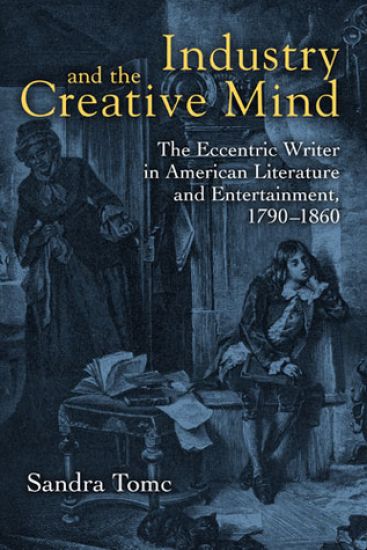
Industry and the Creative Mind takes a radically new look at the figure of the eccentric, alienated writer in American literature and entertainment from 1790 to 1860. Traditional scholarship takes for granted that the eccentric writer, modeled by such Romantic beings as Lord Byron and brought to life for American audiences by the gloomy person of Edgar Allan Poe, was a figure of rebellion against the excesses of modern commercial culture and industrial life. By contrast, Industry and the Creative Mind argues that in the United States myths of writerly moodiness, alienation, and irresponsibility predated the development of a commercial arts and entertainment industry and instead of forming a site of rebellion from this industry formed a bedrock for its development. Looking at the careers of a number of early American writers---Joseph Dennie, Nathaniel Parker Willis, Edgar Allan Poe, Fanny Fern, as well as a host of now forgotten souls who peopled the twilight worlds of hack fiction and industrial literature---this book traces the way in which early nineteenth-century American arts and entertainment systems incorporated writerly eccentricity in their "logical" economic workings, placing the mad, rebellious writer at the center of the industry's productivity and success.
Growing numbers of people are displaced by war and violent conflict. In Ukraine, Afghanistan, Ethiopia, Myanmar, Syria, and elsewhere violence pushes civilian populations from their homes and sometimes from their countries, making them refugees. In previous decades, millions of refugees and displaced people returned to their place of origin after conflict or were resettled in countries in the Global North. Now displacements last longer, the number of people returning home is lower, and opportunities for resettlement are shrinking. More and more people spend decades in refugee camps or displaced within their own countries, raising their children away from their home communities and cultures. In this context, international policies encourage return to place of origin.Using case studies and first-person accounts from interviews and fieldwork in post-conflict settings such as Uganda, Liberia, and Kosovo, Sandra F. Joireman highlights the divergence between these policies and the preferences of conflict-displaced people. Rather than looking from the top down, at the rights that people have in international and domestic law, the perspective of this text is from the ground up—examining individual and household choices after conflict. Some refugees want to go home, some do not want to return, some want to return to their countries of origin but live in a different place, and others are repatriated against their will when they have no other options. Peace, Preference, and Property suggests alternative policies that would provide greater choice for displaced people in terms of property restitution and solutions to displacement.
Sandra King went to university in China in September 1992. She was so excited. She had sold her home, furniture, car, and everything else. She had even given her wedding rings to her children. She asked them if they would consent to her going to China.They told Sandra that she had looked after them for many years, so the cry went up: "You go, Mum You should do something for yourself "When Sandra climbed into the taxi that would take her to the Auckland airport, the driver asked, "Where are you going?"She said, "I am going to strike the heart of China.""Do you know what the heart of China is?" the driver asked.Sandra did not know. Not yet, anyway."The heart of China is its children," he said.And so, a 30-year adventure began.
Having grown up in New Zealand, Sandra came to realise she had a strong calling on her life to sell all her furniture and belongings to follow Jesus. She shares her journey of learning to walk with Jesus and be led by the Holy Spirit in order to stand strong in the battles that lie ahead.In The Blessings from China, Sandra embarks on a new adventure full of love for the lost, tragedy, and courage.This book includes some testimonies from the children and parents who adopted them, as well as more miraculous encounters with angels and guidance from Holy Spirit.This is the third and last book in the series, describing Sandra's work in China. The first book is The Call to China, in which Sandra describes following God's call to work in China, and how she came to understand what God wanted her to do there.
"But seek first the Kingdom of God, and His righteousness..." Matthew 6:33This book is about the Kingdom of God, and how to seek God's righteousness and wisdom. You will also discover some of the mysteries of the Parables of the Kingdom, and how to apply Kingdom keys to live in wisdom and righteousness. My prayer is that this book will encourage you to seek more of God and HIS righteousness.
Viewing Louis Zukofsky as a reader, writer, and innovator of twentieth-century poetry, Sandra Stanley argues that his works serve as a crucial link between American modernism and post- modernism. Like Ezra Pound, Zukofsky saw himself as a participant in the transformation of a modern American poetics; but unlike Pound, Zukofsky, the ghetto-born son of an immigrant Russian Jew, was keenly aware of his marginal position in society. Championing the importance of the little words, such as a and the, Zukofsky effected his own proletarian "revolution of the word." Stanley explains how Zukofsky emphasized the materiality of language, refusing to reduce it to a commodity controlled by an "authorial/authoritarian" self. She also describes his legacy to contemporary poets, particularly such Language poets as Ron Silliman and Charles Bernstein.
"Broken Silence" brings together for the first time many of Japan's leading feminists, women who have been bucking the social mores of a patriarchal society for years but who remain virtually unknown outside Japan. While Japan is often thought to be without a significant feminist presence, these interviews and essays reveal a vital community of women fighting for social change. Sandra Buckley's dialogues with poets, journalists, teachers, activists, and businesswomen exemplify the diversity of Japanese feminism: we meet Kanazumi Fumiko, a lawyer who assists women in a legal system that has long discriminated against them; Kora Rumiko, a poet who reclaims and redefines language to convey her experiences as a woman; Nakanishi Toyoko, founder of the Japanese Women's Bookstore; and Ueno Chizuko, a professor who has tackled such issues as pornography and abortion reform both in and out of the academy. These women speak to a host of issues - the politics of language, the treatment of women in medicine and law, the deeply entrenched role of women as mothers and caregivers, the future of feminism in Japan, and the relationship between Japanese feminists and 'western' feminisms. "Broken Silence" will do much to dispel Western stereotypes about Japanese women and challenge North American attitudes about feminism abroad. With a timeline, glossary, and comprehensive list of feminist organizations, this is a long overdue collection sure to inform and excite all those interested in feminism and Japan.