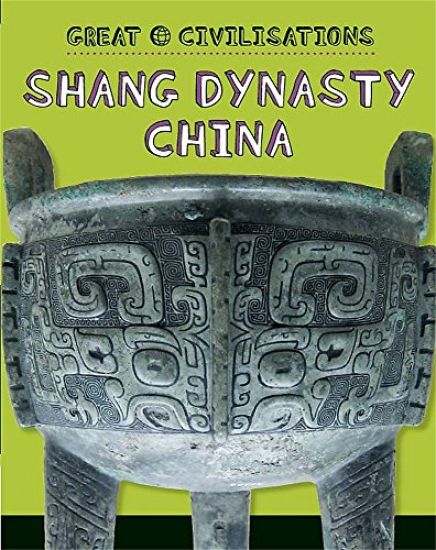
Shang Dynasty China looks at one of the most fascinating and advanced ancient civilisations. Through structures as imposing as the tomb of a warrior queen or objects as beautiful and complex as a decorated bronze vessel, readers aged 9 and up gain a picture of who was who in ancient China and how the civilisation in which they lived worked.Perfect for Key Stage 2, each book in Great Civilisations approaches its subject through a scene-setting spread Who/where were the... then introduces the achievements of the chosen civilisation through 12 structures or objects, each of which illustrates a key aspect or theme. Writing, architecture, industry, warfare, transport and learning are all covered in the same simple, colourful and engaging way. Fact boxes and panels present incidental information and point the reader to the importance of parallel developments in other parts of the world.
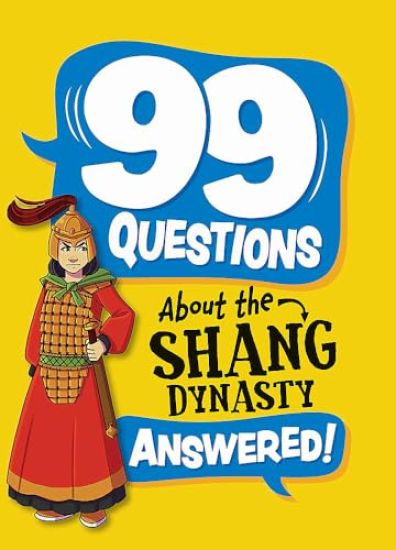
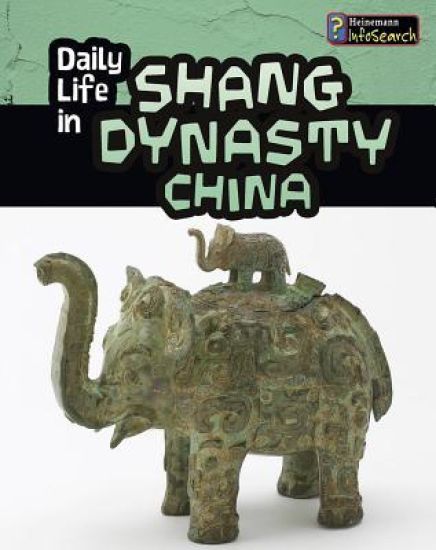
Step back in time to discover life during the Shang Dynasty with this handy time travel guidebook! Perfect for the KS2 history curriculum, and for readers aged 7 and up.Time travel back over 3,000 to visit the fascinating Shang dynasty in China, and find out all about Shang life and culture. Get ready to visit a bronze-making workshop, eat elephant at a banquet, play panpipes and shop for precious jade and silk at a bustling Shang market. Like modern travel guides, the books in this series highlight must-see features and explain local culture. Each highlighted destination contains an explanation of what took part in these areas, as well as a look at important artefacts found there providing a bigger picture of life in the past. Typical travel guide notes include, 'best time to visit', 'what to eat' and 'where to stay'. Perfect for the KS2 history curriculum, and for readers aged 7 and up.Titles in the series:The Ancient Egyptians and ThebesThe Ancient Greeks and AthensThe Maya and Chichén ItzáRoman Britain and LondiniumThe Shang Dynasty and YinxuThe Stone Age and Skara BraeThe Victorians and LondonViking Britain and Jorvik
Travel back in time to the ancient Shang city of Yinxu and find out all about Shang life and culture. Like modern travel guides, the books in this series highlight must-see features and explain local culture. Each highlighted destination contains an explanation of what took part in these areas, as well as a look at important artefacts found there providing a bigger picture of life in the past. Typical travel guide notes include, 'best time to visit', 'what to eat' and 'where to stay'. Perfect for the KS2 history curriculum.
Die Sammlung von Erz hlungen, M rchen und Gedichten hat der Autor von seiner ersten Reise nach Kyrgyzstan mitge-bracht. Es ist eine gef hlvolle Aufarbeitung seiner Erlebnisse, voller Liebe f r dieses Land, seiner Menschen und die Freun-de, die er dort gewonnen hat. Diese Erz hlungen zeigen auch das wahre kirgisische Leben, denn abseits der Touristenpfade lernte der Autor viele Men-schen kennen, ihre Sorgen und N te, aber auch ihre Freuden und ihre Lebenseinstellung.
"Asrar-e Shari'at" is author's major work which discusses the philosophy of the teachings of Islam. His main thesis was that nothing in the Qur'an is beyond the comprehension of human beings. Every single part of the Islamic teachings is understandable and logical.
Written by a group of prominent shari'ah scholars, academics and practitioners in the field of Islamic finance, this book contains 17 in-depth case studies of shari'ah governance practices and experiences as well as critical analysis of these practices. It serves as a standalone comprehensive reference work on shari'ah governance, containing an overview of its Islamic legal foundations, its evolution and development over the years, current practices and debates on shari'ah governance standards and future prospects for shari'ah governance in the global Islamic finance market.
This book explores what life was really like for everyday people in Shang Dynasty China. Using primary sources and information from archeological discoveries, it uncovers some fascinating insights and explodes some myths. Supported by timelines, maps, and references to important events and people, children will really feel they are on a time-traveling journey when reading this book.
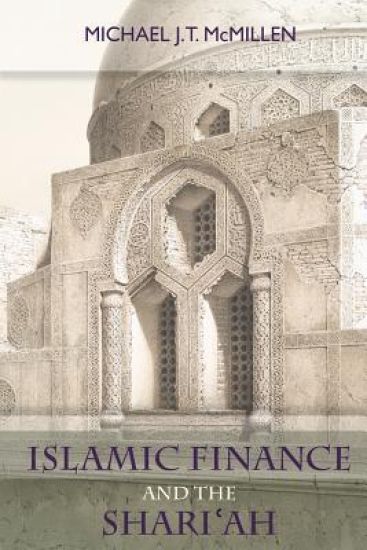
This book is about how Islamic finance is conducted in contemporary times. It is also about change and how change occurs in two areas. The first area is change in a body of law, both generally and specifically with respect to Islamic Shari ah in the areas of commerce and finance. The second area is Islamic finance. Change in the Shari ah and in Islamic finance are intimately and inextricably related: the Shari ah defines and constrains change in Islamic finance. Legal change necessarily involves consideration of the interpretive modalities that are employed in effecting that legal change, and interpretive modalities in Islamic finance are also considered.The book is divided into four parts. Part I outlines the context and provides background for later discussions. Part II introduces the Shari ah and its interpretation. Part III discusses a specific fatwa issued to Dow Jones in 1998 in respect of equity investing and equity indices (the Dow Jones Fatwa), its sequelae, and murabaha transactions. And Part IV addresses issues pertaining to and criticisms of Islamic finance.Part I describes the objectives and organization of the book, provides a short history of modern Islamic finance, and sets forth a categorized summary of the issues and criticisms raised by various critics.The discussion of Shari ah matters in Part II begins with a summary of the nature of the Shari ah (Islamic law) as applied in Islamic finance. This is followed by a detailed description of the Shari ah scholars and Shari ah boards that interpret and apply Islamic law in the field of Islamic finance. Topics considered include the qualifications of scholars, the nature and structure of Shari ah boards and how they are comprised and operate, and the roles and functions of Shari ah boards. The final chapter in this Part discusses the fatwa (legal opinion) that implements Islamic law in the transactional, operational entity and standard-setting context. Part III provides detailed discussions of the Dow Jones Fatwa, its equity investment tests, permissible and impermissible equity instruments, permissible and impermissible business activities, financial screens for impermissible interest income, and other important principles. In particular, the discussion focuses on the principles of "permissible variance" (or "permissible impurity") and "purification" that have been instrumental in the development and growth of Islamic finance. Succeeding chapters in this Part trace how the permissible variance principles have evolved and expanded in areas such as equity, private equity and real estate investing, and the financing of those activities, and in project and infrastructure finance. Six areas of evolution and expansion are considered. These include (1) modification of the initial tests, (2) new equity investing tests, (3) permissible and impermissible business activities in different areas of practice and the variations in impurity that are permitted in those areas, (4) the most commonly used structures in modern Islamic finance (the lease or ijara and the murabaha or cost-plus sale), and) (5) when and how purification (largely by donation to charity) are effected.The final group of chapters, in Part IV, discuss the various issues and criticisms in detail. Topics include (i) the amount of discretion afforded Shari ah scholars, (ii) the intentions of different transactional parties in Islamic finance transactions, (iii) the degree of formalism in application of interpretive modalities, (iv) complexities and transaction costs (both absolutely and relative to corresponding conventional transactions), (v) social justice and policy issues, and (vi) the application of interpretative modalities and their relationship to different jurisprudential theories of legal change.The book includes an extensive bibliography and index.For further information, please see http: //www.islamicfinanceinpractice.com
Er ist weder was sie will, noch was sie braucht. Und doch ist es f r Maya unm glich, ihm zu widerstehen. Immer tiefer zieht er sie in seinen Bann, und Mayas Verteidigung br ckelt St ck f r St ck.Sunnyboy Shane ist ein Spieler, ein Playboy, der sich nimmt, was er m chte. Dass Maya es ihm nicht leicht macht, reizt ihn nur zus tzlich und er nimmt sich fest vor, auch diese Wahnsinnsfrau in sein Bett zu locken.F r beide f hrt das Spiel mit den Gef hlen in tiefe Abgr nde. K nnen sie trotz ihrer Unterschiede einen Weg finden, zusammen zu sein?Dieses Buch ist der erste Teil einer Serie, dabei aber in sich abgeschlossen. Der n chste Teil, handelt von einer anderen Person dieser Gruppe.Der Liebesroman ist ca. 300 Taschenbuchseiten lang und enth lt explizite Sexszenen.Weitere Informationen: www.facebook.com/allie.kinsleywww.twitter.com/Allie_KinsleyFragen, Anregungen oder Kritik gerne auch an [email protected]