Kirjojen hintavertailu. Mukana 11 342 296 kirjaa ja 12 kauppaa.

Kirjahaku

Etsi kirjoja tekijän nimen, kirjan nimen tai ISBN:n perusteella.

1000 tulosta hakusanalla Sharad Mathur

The Shared Bear

The Shared Bear

Jody Stockton

Amazon Publishing Solutions
2023
sidottu
The Shared Bear is a free verse picture book for ages 3-12 that shows you the life of young Sherina as she plans her birthday and wants to invite her best friends. When her mother points out that Sherina could make people feel left out, she decides to invite her whole class. In this heartwarming true story of compassion, when her classmates show up to her party, young Sherina gets a surprise gift that changes many lives.
The Shared Soul: A journey toward truth, humanity, god and the Universe

The Shared Soul: A journey toward truth, humanity, god and the Universe

Andrew Kivistik

Createspace Independent Publishing Platform
2017
nidottu
The Shared Soul represents everyone's desire to connect to the things that really matter to us - our true purpose. We long for this connectedness all of our lives but never seem to be able to completely break through. In this short and insightful read, you will learn how to connect to the heart of humanity and the energy of the Universe.
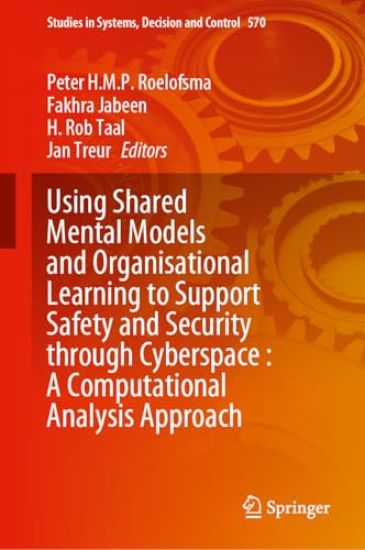
Using Shared Mental Models and Organisational Learning to Support Safety and Security Through Cyberspace: A Computational Analysis Approach
Ensuring patient safety and security through cyberspace requires that all care professionals operate as a team and community . In order to be successful, it is of paramount importance that all members of the team have a shared understanding of the diagnosis, the condition of the patient, the secure use of medical devices and the plan of action. At present, to ensure that all mem bers have this 'shared mental model', members communicate and observe each other's actions. Based upon this information, members sho uld be able to confirm if indeed all have a shared mental model and speak up when deviations in one or more members and/or processes are suspected. From a group dynamical and information processing perspective, this verification process is known to be very vulnerable: how can red flags be detected in complicated surgery settings and do members feel psychologically safe enough to speak up when they have concerns about being on the same page as the rest of their team? This book presents a new approach for saf ety and security through cyberspace through introducing a concept of co designed clinical pathways supported by the AI coach. The AI coach will be an intervention for both improving hospital wide safety and security through cyberspace. The AI Coach will empower users by supporting and facilitating the development of a shared mental model for team and organisational learning. The AI coach will function as an information, communication, cooperation and decision support system. The book advises to incorporate issues or cybersecurity risk management into the total safety and security process, among others through co-creating security.
Sustainable Shared Mobility
This reprint is a comprehensive compilation of research on new urban mobility. It contains proprietary, current studies on shared mobility, such as car sharing or scooter sharing in relation to commercial use as part of short-term rental systems or for use by postal services. In addition, it broadly refers to the subject of bicycles and bike-sharing systems. It includes research on professional e-bikes with parameters such as velocity, cadence and power data as well as research on measuring the intensity of bicycle traffic, which can be used to evaluate and improve bike-sharing systems. The reprint provides a valuable resource for researchers, practitioners, and policymakers who are interested in the challenges and opportunities associated with the development of new mobility solutions.
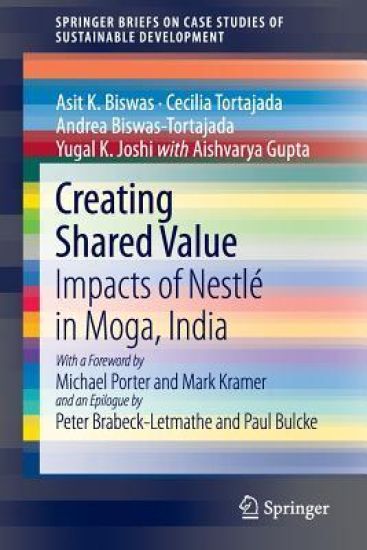
Creating Shared Value

Creating Shared Value

Asit K. Biswas; Cecilia Tortajada; Andrea Biswas-Tortajada; Yugal K. Joshi; Aishvarya Gupta

Springer International Publishing AG
2013
nidottu
Nestlé’s Moga factory was set up in 1961 and comprises of the primary milk collection area for Nestlé‘s operations. Since its inception in Moga, Nestlé has been working with its milk farmers and ancillary suppliers towards improving quality and productivity. The study presented in this book (carried out by the Third World Centre for Water Management, Mexico) highlights Nestlé’s way of doing business through its philosophy of Creating Shared Value (CSV) and how it contributed to the development of the region over the past 50 years through direct and indirect employment, steady income for milk and other suppliers, and technology transfer. The main objective of the study is to learn to what extent has Nestlé contributed to fulfilling the societal aspirations and expectations of the people working in and around its factory in terms of employment generation, poverty alleviation, general improvements in the community’s standards of living and environmental conservation. The study also tried to determine to what extent has the company created shared value for itself, milk farmers, ancillary firms, and the community at large. This effort aims at encouraging more research to be carried out to comprehensively and authoritatively look into the impacts private sector can have on and around the area where their factories are located and that way, contribute to our understanding of social-corporate-government interdependency. An important aspect of this pioneering monograph is the methodology that could be used to study how Corporate Social Responsibility (CSR) or Creating Shared Value (CSV) of a large multinational company can be properly monitored and objectively evaluated at a region-specific scale, especially as very few studies of this nature have been carried out anywhere in the world. This definitive book is further enriched by a foreword by Prof. Michael Porter of Harvard Business School and an epilogue by Peter Brabeck-Letmatheand Paul Bulcke, Chairman of the Board and CEO of Nestlé respectively.
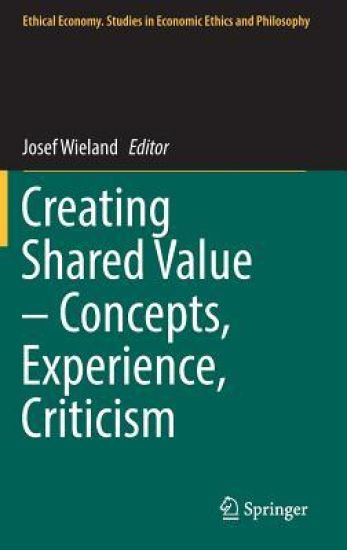
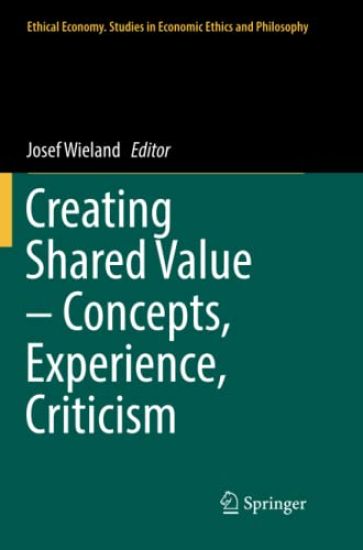
Creating Shared Value – Concepts, Experience, Criticism
Over the last years, “Creating Shared Value” has become a much discussed concept in business practice as well as in management theory and especially in the context of corporate social responsibility. This book offers a contribution to the current academic discussions on the well-received article of Michael Porter and Marc Kramer in Harvard Business Review in 2011. In the light of the increasing references to the shared value concept, it develops a critical discussion on its fundamentals and its implications for the relationship between economy and society. By that, the book seeks to shed light on the understanding of the role and the nature of the firm in a globalized economy. The result is a collection of interdisciplinary academic reviews which offer interdisciplinary reflections on “Creating Shared Value” to illuminate theoretical, conceptual and practical challenges of the topic. Within the fields of Business Ethics, Theory of the Firm, Management and Philosophy, researcher, students and practitioners will be given a deeper insight on how to approach to the concept in a conceptional and philosophical way.
Creating Shared Value – Concepts, Experience, Criticism
Over the last years, “Creating Shared Value” has become a much discussed concept in business practice as well as in management theory and especially in the context of corporate social responsibility. This book offers a contribution to the current academic discussions on the well-received article of Michael Porter and Marc Kramer in Harvard Business Review in 2011. In the light of the increasing references to the shared value concept, it develops a critical discussion on its fundamentals and its implications for the relationship between economy and society. By that, the book seeks to shed light on the understanding of the role and the nature of the firm in a globalized economy. The result is a collection of interdisciplinary academic reviews which offer interdisciplinary reflections on “Creating Shared Value” to illuminate theoretical, conceptual and practical challenges of the topic. Within the fields of Business Ethics, Theory of the Firm, Management and Philosophy, researcher, students and practitioners will be given a deeper insight on how to approach to the concept in a conceptional and philosophical way.
OpenMP Shared Memory Parallel Programming

OpenMP Shared Memory Parallel Programming

Springer-Verlag Berlin and Heidelberg GmbH Co. K
2003
nidottu
This book contains the proceedings of the Workshop on OpenMP Applications and Tools, WOMPAT 2003. WOMPAT 2003 was held on June 26and 27, 2003 in Toronto, Canada. The workshop brought together the users and developers of the OpenMP API to meet, share ideas and experiences, and to discuss the latest developments in OpenMP and its applications. The OpenMP API is now a widely accepted standard for high-level shar- memory parallel programming. Since its introduction in 1997, OpenMP has gained support from the majority of high-performance compiler and hardware vendors. WOMPAT 2003 was the latest in a series of OpenMP-related workshops, which have included the annual o?erings of the Workshop on OpenMP Appli- tions and Tools (WOMPAT), the European Workshop on OpenMP (EWOMP) and the Workshop on OpenMP: Experiences and Implementations (WOMPEI). The WOMPAT 2003 program committee formally solicited papers. Extended abstracts were submitted by authors and all abstracts were reviewed by three members of the program committee. Of the 17 submitted abstracts, 15 were selected for presentation at the workshop. This book was published in time to be available at WOMPAT 2003, and therefore we hope that the papers contained herein are timely and useful for current developers and researchers. This book also contains selected papers from WOMPAT 2002. No formal proceedings had been created for this previous o?ering of the workshop, and so presenters were invited to prepare their papers for inclusion in this volume.
OpenMP Shared Memory Parallel Programming

OpenMP Shared Memory Parallel Programming

Springer-Verlag Berlin and Heidelberg GmbH Co. K
2001
nidottu
This book contains the presentations given at the Workshop on OpenMP App- cations and Tools, WOMPAT 2001. The workshop was held on July 30 and 31, 2001 at Purdue University, West Lafayette, Indiana, USA. It brought together designers, users, and researchers of the OpenMP application programming int- face. OpenMP has emerged as the standard for shared memory parallel progr- ming. For the rst time, it is possible to write parallel programs that are portable across the majority of shared memory parallel computers. WOMPAT 2001 s- ved as a forum for all those interested in OpenMP and allowed them to meet, share ideas and experiences, and discuss the latest developments of OpenMP and its applications. WOMPAT 2001 was co-sponsored by the OpenMP Architecture Review Board (ARB). It followed a series of workshops on OpenMP, including WOMPAT 2000, EWOMP 2000, and WOMPEI 2000. For WOMPAT 2001, we solicited papers formally and published them in the form of this book. The authors submitted extended abstracts, which were reviewed by the program committee. All submitted papers were accepted. The authors were asked to prepare a nal paper in which they addressed the reviewers comments. The proceedings, in the form of this book, were created in time to be available at the workshop. In this way, we hope to have brought out a timely report of ongoing OpenMP-related research and development e orts as well as ideas for future improvements.
OpenMP Shared Memory Parallel Programming

OpenMP Shared Memory Parallel Programming

Springer-Verlag Berlin and Heidelberg GmbH Co. K
2008
nidottu
This book constitutes the thoroughly refereed post-workshop proceedings of the First and the Second International Workshop on OpenMP, IWOMP 2005 and IWOMP 2006, held in Eugene, OR, USA, and in Reims, France, in June 2005 and 2006 respectively. The first part of the book presents 16 revised full papers carefully reviewed and selected from the IWOMP 2005 program and organized in topical sections on performance tools, compiler technology, run-time environment, applications, as well as the OpenMP language and its evaluation. In the second part there are 19 papers of IWOMP 2006, fully revised and grouped thematically in sections on advanced performance tuning aspects of code development applications, and proposed extensions to OpenMP.
Financial Shared Service Center in Osterreichischen, Borsennotierten Konzernen
Diplomarbeit aus dem Jahr 2006 im Fachbereich Wirtschaft - Controlling, Note: 1, Fachhochschule Burgenland, 126 Eintragungen im Literaturverzeichnis, Sprache: Deutsch, Abstract: Diese Arbeit stellt das SSC-Konzept als alternative Organisationsform für Finanzfunktionen innerhalb eines Unternehmens dar. Gemäß der Definition dieser Arbeit sind FSSC interne Dienstleistungsstellen, welche Controlling-, Rechnungswesen-, Treasury- und/oder steuerliche Funktionen an mehrere andere Unternehmenseinheiten gegen Leistungsverrechung ausführen. Mit der Einführung von FSSC wird durch Prozessstandardisierung und -reengineering sowie mit der Institutionalisierung von Marktprinzipien eine Erhöhung der Effizienz, Qualität und des Kostenbewusstseins in den betroffenen Finanzprozessen bezweckt. In dieser Arbeit werden das SSC-Konzept und die Anforderungen an einen "Financial Shared Service" sowie die Vorgehensweise bei der Implementierung und der Steuerung von FSSC beschrieben. Anhand österreichischer, börsennotierter Konzerne werden FSSC in Österreich identifiziert und untersucht. Eine umfassende Literaturanalyse wurde durchgeführt. Unter den leitenden Angestellten des Finanz- oder Controllingbereichs österreichischer, börsennotierter Konzerne wurde eine quantitative Fragebogenbefragen durchgeführt, um Unternehmen mit FSSC zu identifizieren und jene Unternehmen, ohne FSSC, nach deren Beweggründe gegen eine bisherige Implementierung zu fragen. Im Anschluss wurden fünf der acht identifizierten Konzerne mit zumindest einem FSSC im Rahmen einer leitfadengestützten qualitativen Befragung auf deren Ziele der Implementierung und organisatorische Gestaltung der Center untersucht. 20 % der 39 mittels Fragebogen befragten Unternehmen gaben an, zumindest über ein FSSC zu verfügen. Ein Drittel erklärte jedoch, wahrscheinlich in den nächsten Jahren ein SSC im Finanzbereich zu implementieren. Als Hauptgründe gegen eine FSSC-Implementierung nannten die Unternehmen, dass es dazu bisher keinen Anlass gab, die Unternehmen zu klein sind und/oder den Aufwand solch einer Reorganisation höher als den Nutzen einschätzen. Fast mit allen der näher untersuchten FSSC wurde erstens Kostensenkungen und zweitens eine Erhöhung der Servicequalität angestrebt. Auch wenn fast alle FSSC Rechnungswesen- und Treasuryfunktionen anbieten, unterscheiden sie sich in Hinblick auf deren organisatorische Gestaltung, Leistungsvereinbarungen und -verrechnung, Implementierungsstrategien und Erfolgskontrolle etc.
Das Shared Service Center-Konzept. Zielsetzung, Controlling als Objekt, Vereinbarkeit mit der prozessorientierten Unternehmensfuhrung
Studienarbeit aus dem Jahr 2001 im Fachbereich Wirtschaft - Controlling, Note: 2,3, Europa-Universität Viadrina Frankfurt (Oder), 15 Eintragungen im Literaturverzeichnis, Sprache: Deutsch, Abstract: Shared Service Center eröffnen die Gelegenheit auch in Servicebereichen einer Unternehmung wettbewerbsfähig, effizient, wirtschaftlich und global zu arbeiten. Dieses Konzept stellt eine Möglichkeit dar, Gemeinkosten verursachungsgerecht zu zu ordnen, Kosten zu sparen, die Unternehmensperformance zu steigern und so einen Wettbewerbsvorteil zu erlangen.
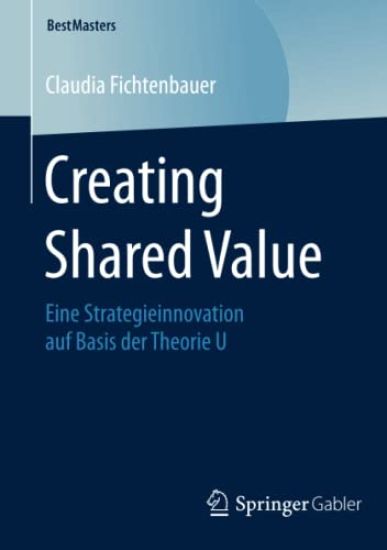
Creating Shared Value

Creating Shared Value

Claudia Fichtenbauer

Springer Gabler
2014
nidottu
Das Streben nach Shared Value muss die Gesamtstrategie eines Unternehmens bestimmen, damit es durch diesen Ansatz gesellschaftliche Herausforderungen lösen und zugleich seine Profitabilitätsziele erreichen kann – diese These legt Claudia Fichtenbauer ihrer Forschung zugrunde. Die Autorin erarbeitet ein theoretisches Modell auf Basis der Theorie U nach C. O. Scharmer, die originär als Rahmen zur Kreierung von Innovationen gilt, und untersucht, wie der Strategieentwicklungsprozess zu gestalten ist. Auf diesen Erkenntnissen aufbauend führt sie eine qualitative Befragung zur Vollendung dieses Strategieentwicklungsprozesses durch.
Creating Shared Value as Future Factor of Competition
Benedikt von Liel provides a theoretical and empirical analysis of the concept of Creating Shared Value (CSV). In the theoretical analysis, the author assesses the uniqueness of the theory of Creating Shared Value by comparing it to other relevant social responsibility concepts. The empirical analysis provides insights from over 60 industry case studies of Creating Shared Value. The assessment includes the influence of geography as well as a range of other relevant external and internal factors. As a result, the author identifies critical success factors for the creation of shared value.