Kirjojen hintavertailu. Mukana 11 590 110 kirjaa ja 12 kauppaa.

Kirjahaku

Etsi kirjoja tekijän nimen, kirjan nimen tai ISBN:n perusteella.

1000 tulosta hakusanalla Solis Magazine

Solid-Phase Organic Syntheses, Volume 2
Integrates solid-phase organic synthesis with palladium chemistry The Wiley Series on Solid-Phase Organic Syntheses keeps researchers current with major accomplishments in solid-phase organic synthesis, providing full experimental details. Following the validated, tested, and proven experimental procedures, readers can easily perform a broad range of complex syntheses needed for their own experiments and industrial applications. The series is conveniently organized into themed volumes according to the specific type of synthesis. This second volume in the series focuses on palladium chemistry in solid-phase synthesis, exploring palladium catalysts and reactions, procedures for preparation and utilization, ligands, and linker reactions. The first part of the volume offers a comprehensive overview of the field. Next, the chapters are organized into three parts: Part Two: Palladium-Mediated Solid-Phase Organic SynthesesPart Three: Immobilized Catalysts and LigandsPart Four: Palladium-Mediated Multifunctional Cleavage Each chapter is written by one or more leading international experts in palladium chemistry. Their contributions reflect a thorough examination and review of the current literature as well as their own first-hand laboratory experience. References at the end of each chapter serve as a gateway to the field's literature. The introduction of palladium-mediated, cross-coupling reactions more than thirty years ago revolutionized the science of carbon-carbon bond formation. It has now become a cornerstone of today's synthetic organic chemistry laboratory. With this volume, researchers in organic and medicinal chemistry have access to a single resource that explains the fundamentals of palladium chemistry in solid-phase synthesis and sets forth clear, step-by-step instructions for conducting their own syntheses.
Solid-Phase Organic Synthesis
Presents both the fundamental concepts and the most recent applications in solid-phase organic synthesis With its emphasis on basic concepts, Solid-Phase Organic Synthesis guides readers through all the steps needed to design and perform successful solid-phase organic syntheses. The authors focus on the fundamentals of heterogeneous supports in the synthesis of organic molecules, explaining the use of a solid material to facilitate organic synthesis. This comprehensive text not only presents the fundamentals, but also reviews the most recent research findings and applications, offering readers everything needed to conduct their own state-of-the-art science experiments. Featuring chapters written by leading researchers in the field, Solid-Phase Organic Synthesis is divided into two parts: Part One, Concepts and Strategies, discusses the linker groups used to attach the synthesis substrate to the solid support, colorimetric tests to identify the presence of functional groups, combinatorial synthesis, and diversity-oriented synthesis. Readers will discover how solid-phase synthesis is currently used to facilitate the discovery of new molecular functionality. The final chapter discusses how using a support can change or increase reaction selectivity. Part Two, Applications, presents examples of the solid-phase synthesis of various classes of organic molecules. Chapters explore general asymmetric synthesis on a support, strategies for heterocyclic synthesis, and synthesis of radioactive organic molecules, dyes, dendrimers, and oligosaccharides. Each chapter ends with a set of conclusions that underscore the key concepts and methods. References in each chapter enable readers to investigate any topic in greater depth. With its presentation of basic concepts as well as recent findings and applications, Solid-Phase Organic Synthesis is the ideal starting point for students and researchers in organic, medicinal, and combinatorial chemistry who want to take full advantage of current solid-phase synthesis techniques.
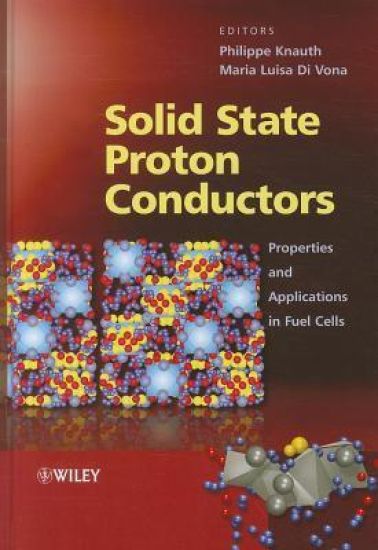
Solid State Proton Conductors

Solid State Proton Conductors

Philippe Knauth; Maria Luisa Di Vona

John Wiley Sons Inc
2012
sidottu
Proton conduction can be found in many different solid materials, from organic polymers at room temperature to inorganic oxides at high temperature. Solid state proton conductors are of central interest for many technological innovations, including hydrogen and humidity sensors, membranes for water electrolyzers and, most importantly, for high-efficiency electrochemical energy conversion in fuel cells. Focusing on fundamentals and physico-chemical properties of solid state proton conductors, topics covered include: Morphology and Structure of Solid Acids Diffusion in Solid Proton Conductors by Nuclear Magnetic Resonance Spectroscopy Structure and Diffusivity by Quasielastic Neutron Scattering Broadband Dielectric Spectroscopy Mechanical and Dynamic Mechanical Analysis of Proton-Conducting Polymers Ab initio Modeling of Transport and Structure Perfluorinated Sulfonic Acids Proton-Conducting Aromatic Polymers Inorganic Solid Proton Conductors Uniquely combining both organic (polymeric) and inorganic proton conductors, Solid State Proton Conductors: Properties and Applications in Fuel Cells provides a complete treatment of research on proton-conducting materials.
Solid State Radio Engineering

Solid State Radio Engineering

Herbert L. Krauss; Charles W. Bostian; Frederick H. Raab

John Wiley Sons Inc
1980
nidottu
A comprehensive text that covers both receiver and transmitter circuits, reflecting the past decade's developments in solid-state technology. Emphasizes design using practical circuit elements, with basic ideas of electrical noise, resonant impedance-matching circuits, and modulation theory thoroughly explained. Contains the latest techniques in radio frequency power amplifier design, accepted state-of-the-art technology based on bipolar junction transistors, VMOS RF power FETs, high-efficiency techniques, envelope elimination and restoration, envelope feedback, and other newly emerging technologies. Requires a knowledge of complex algebra, Fourier series, and Fourier transforms. Also includes numerous worked-out examples that relate the theory to practical circuit applications, and homework problems keyed to corresponding sections of the text.
Solids and Surfaces

Solids and Surfaces

Roald Hoffmann

John Wiley Sons Inc
1989
sidottu
This unique book shows how chemistry and physics come together in the solid state and on surfaces. Using a lively, graphic, descriptive approach, it teaches chemists the language that is necessary to understand the electronic structure of extended systems. And, at the same time, it demonstrates how a chemical, frontier-orbital, approach to solid state and surface bonding and reactivity may be constructed. The book begins with the language of crystal orbitals, band structures and densities of states. The tools for moving back from the highly delocalized orbitals of the solid are then built up in a transparent manner; they include decompositions of the densities of states and crystal orbital overlap populations. Using these tools, the book shapes a meeting ground between detailed quantum mechanical calculations and a chemical frontier orbital perspec- tive. Applications include a general picture of chemisorption, bond-breaking and making in the solid state, bonding in metals, the electronic structure of selected conducting and supercon- ducting structures, dissociation, migration and coupling on surfaces and the forces controlling deformation of extended systems.
Solid Polymer Electrolytes

Solid Polymer Electrolytes

Fiona M. Gray

John Wiley Sons Inc
1991
sidottu
This book is a welcome response to the general concerns for the generation and conservation of energy in the future. It gives a comprehensive overview of both the fundamental and applied aspects of solid polymer electrolytes. Topics discussed include: * Polymer Electrolyte-based Devices * Homopolymer Hosts * The Interaction between Polymer and Salt * Conductivity in Polymer Electrolytes * Polymer Electrolyte Architecture * Transport Properties Effects of Dynamic Disorder * The Electrode-Electrolyte Interface Newcomers and experts alike will greatly benefit from the lucid and objective analysis this book provides.
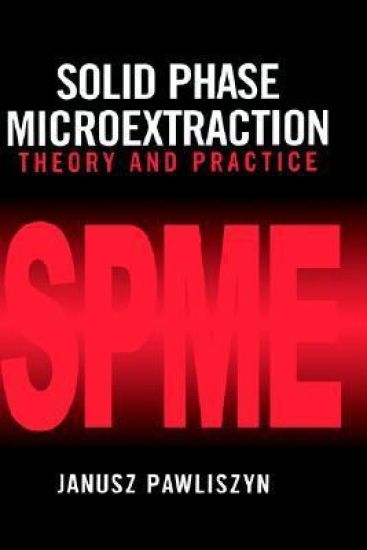
Solid Phase Microextraction

Solid Phase Microextraction

Janusz Pawliszyn

John Wiley Sons Inc
1997
sidottu
Solid Phase Microextraction: Theory and Practice Janusz Pawliszyn Solid phase microextraction (SPME) is a recently proposed solvent-free sampling and sample preparation technique. SPME represents a quick, sensitive, and economical approach that can be adopted for field work and can be easily integrated with present analytical instrumentation into an automation process. Written by the inventor of the technique, Solid Phase Microextraction: Theory and Practice describes the theoretical and practical aspects of this new technology, which received an "R&D 100" Award in 1994 recognizing its invention as a major advancement in the analytical sciences. Solid Phase Microextraction: Theory and Practice, the first book on SPME, offers the reader: * An overview of SPME technique, theory, method development, and applications; * Experiments for beginners; * A summary of the practical applications of SPME in environmental, food, pharmaceutical, and forensic settings; * Material suitable for SPME courses or self-guided study.
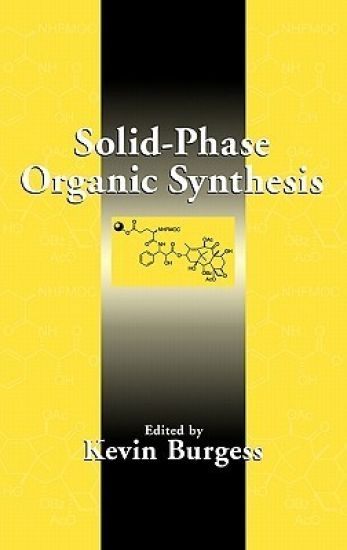
Solid-Phase Organic Synthesis

Solid-Phase Organic Synthesis

Kevin Burgess

John Wiley Sons Inc
1999
sidottu
Solid-Phase Organic Synthesis Edited by Kevin Burgess, Texas A & M University Efficient, high-throughput chemistry is now the focus of many research laboratories. Solid-phase organic syntheses are central to many of these combinatorial and parallel screening methodologies. Consequently, they have been a major scientific theme of the 1990s and promise to remain prominent for the first part of the new millennium. Indeed, a bewildering number of papers have entered the literature on this topic; some report minor modifications enabling transformation of solution-phase methods to a solid support, while others report major innovations. Solid-Phase Organic Synthesis collects, highlights, and critiques some of the key developments in the field. Leading practitioners explain different perspectives on diverse aspects of the area. Specific topics covered include: * Syntheses of guanidines * Palladium-catalyzed C-C bond forming reactions * S_nAr reactions for the formation of heterocycles * Sequence-specific arylalkyne oligomers * Resin-supported capture agents and other reagents * Synthesis on pins * Monitoring of supported reactions using IR * Solid-phase syntheses of natural product derivatives Of related interest . Combinatorial Chemistry and Molecular Diversity in Drug Discovery Eric M. Gordon and James F. Kerwin 1998 (0-471-15518-7) 544 pp. Combinatorial Chemistry Synthesis and Application Stephen R. Wilson and Anthony W. Czarnik 1997 (0-471-12687-X) 288 pp.
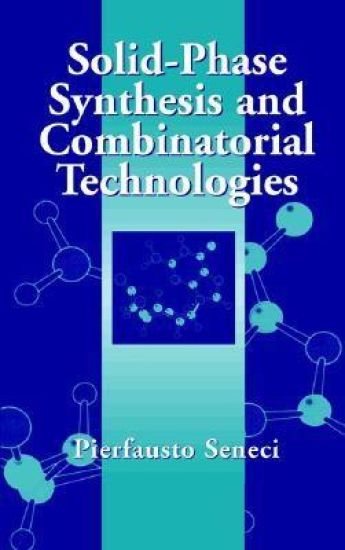
Solid-Phase Synthesis and Combinatorial Technologies

Solid-Phase Synthesis and Combinatorial Technologies

Pierfausto Seneci

John Wiley Sons Inc
2000
sidottu
A unique, integrated look at solid-phase synthesis and advances in combinatorial chemistry and technologies The last decade has seen a rapid expansion in combinatorial technologies, a field where chemistry disciplines intersect with automation, statistics, and information science, as well as certain biological disciplines. Reflecting these multidisciplinary trends, this new work provides a comprehensive overview of the most important aspects of solid-phase synthesis (SPS), combinatorial chemistry, and related combinatorial technologies. It clearly demonstrates how SPS and combinatorial chemistry have extended their application from the pharmaceutical arena to new areas, including biotechnology, material sciences, catalysis, and agrochemical industries, and explores in detail strategies for planning, designing, preparing, and testing of combinatorial libraries in various disciplines. Designed to meet the needs of both experienced combinatorial chemists and newcomers to the field, Solid-Phase Synthesis and Combinatorial Technologies: * Surveys the most recent developments in SPS and combinatorial chemistry * Explains the entire process, from determining the need for a library to the details necessary for synthesis of the library * Discusses choice of format, size, and the rationale behind the design of each synthetic step * Surveys the analytical techniques and the purification methods used to characterize and purify combinatorial libraries * Employs a large number of examples to illustrate important concepts * Includes problems geared toward applying acquired knowledge and designing the steps to SPS/library synthesis * Describes the quality control and activity screening of combinatorial libraries for various applications * Features a detailed bibliography of more than 1,700 relevant sources
Solid Support Oligosaccharide Synthesis and Combinatorial Carbohydrate Libraries
Thorough coverage of recent developments in the field of solid support oligosaccharide synthesis Solid-phase synthesis of carbohydrates presents unique challenges to synthetic chemists and currently represents one of the hottest areas of research in bioorganic chemistry. Solid Support Oligosaccharide Synthesis and Combinatorial Carbohydrate Libraries addresses the exciting expectation that solid-phase assembly of oligosaccharides will have a fundamental impact on the field of glycobiology. This publication details the methodologies currently investigated for the attachment of carbohydrates to beads, synthesis including coupling strategies, and removal of the product from beads. With chapters written by eminent contributing authors, the material explores different synthetic strategies, glycosylation protocols, the use of solid supports versus soluble polymeric supports, and "on-resin" analytical methods. Tremendous progress in the field has set the stage for Solid Support Oligosaccharide Synthesis and Combinatorial Carbohydrate Libraries to provide a wealth of information on such topics as: *Specific oligosaccharide structures used in signal transduction processes *Preparation and screening of glycopeptide libraries *Solid-phase carbohydrate synthesis Covering state-of-the-art developments in the field, Solid Support Oligosaccharide Synthesis and Combinatorial Carbohydrate Libraries is a comprehensive resource for bioorganic and organic chemists, biochemists, and medicinal chemists.
Solid State Engineering

Solid State Engineering

Elliot R. Brown

Wiley-Blackwell (an imprint of John Wiley Sons Ltd)
2015
sidottu
Addressing all key issues in a comprehensive fashion, Solid State Engineering for the Twenty-First Century provides the only solid state book aimed at electrical and mechanical engineering students. The text educates engineers in fundamental concepts, from semiconduting and mettalic electrical transport to ferroelectricity and ferromagnetics, without losing sight of the integration. This focus on integration sets this book apart from existing texts, which focus on just one or a few aspects of the integration. An accompanying Instructors Guide and Solutions Manual provide additional resources. This comprehensive reference will prove invaluable for students of electrical engineering, mechanical engineering, and materials science, as well as practicing engineers and physicists.
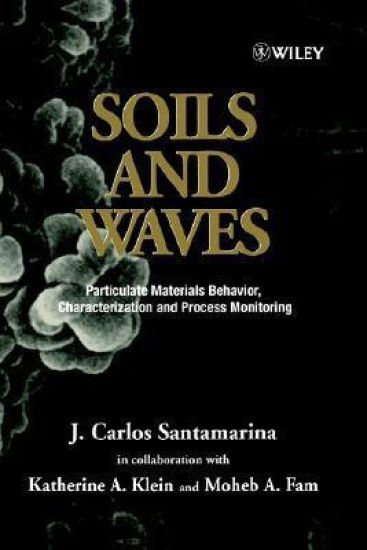
Soils and Waves

Soils and Waves

J. Carlos Santamarina; Katherine A. Klein; Moheb A. Fam

John Wiley Sons Inc
2001
sidottu
J. Carlos Santamarina, Georgia Institute of Technology, USA in collaboration with Katherine A. Klein, University of Toronto, Canada; Moheb A. Fam, Cairo University, Egypt Soils are unique materials. Analogous to all other particulate materials, their properties depend on environmental parameters, such as confinement and fluid characteristics. While their behavior is complex, simple micromechanical analyses at the particle level provide unparalleled insight. Furthermore, elastic and electromagnetic waves can be effectively used to gain complementary information about the particulate medium, leading to unique possibilities for studies in engineering and science, including field applications for site assessment and process monitoring. This book is divided into five parts. The first part dwells on the problem of scale and includes a general introduction to materials. In the second part, the behavior of particulate materials is reviewed, with emphasis on the microscale interpretation of macroscale behavior. Fundamental differences between fine and coarse particulate materials are highlighted. The third and fourth parts center on the propagation of mechanical and electromagnetic waves in particulate materials, addressing phenomena such as stiffness, polarization and losses. These two units include laboratory techniques to measure the elastic and electromagnetic spectral response of particulate materials, and an extensive compilation of experimental data. Finally, the fifth part applies elastic and electromagnetic waves to monitoring process in soils. Emphasis is placed on clear, simple analyses and explanations of complex physical phenomena, making this book ideal for self-study. Furthermore, no other book provides such an in-depth description of soils and their behavior and the interaction of elastic and electromagnetic waves and particulate materials (including material data and experimental methods). Thus, this is an invaluable reference for postgraduates, research scientists and practitioners in geotechnical, civil and environmental engineering, as well as scientists in related areas such as physics, geophysics and materials science.
Solid Mechanics in Engineering

Solid Mechanics in Engineering

Raymond Parnes

John Wiley Sons Inc
2001
nidottu
This book provides a systematic, modern introduction to solid mechanics that is carefully motivated by realistic Engineering applications. Based on 25 years of teaching experience, Raymond Parnes uses a wealth of examples and a rich set of problems to build the reader's understanding of the scientific principles, without requiring ´higher mathematics´. Highlights of the book include * The use of modern SI units throughout * A thorough presentation of the subject stressing basic unifying concepts * Comprehensive coverage, including topics such as the behaviour of materials on a phenomenological level. * Over 600 problems, many of which are designed for solving with MATLAB, MAPLE or MATHEMATICA. Solid Mechanics in Engineering is designed for 2-semester courses in Solid Mechanics or Strength of Materials taken by students in Mechanical, Civil or Aeronautical Engineering and Materials Science and may also be used for a first-year graduate program.
Solid-State Power Conversion Handbook

Solid-State Power Conversion Handbook

Ralph E. Tarter

John Wiley Sons Inc
1993
nidottu
Applications oriented, it contains all the pertinent and comprehensive information necessary to meet the growing demands placed upon solid-state power conversion equipment. These demands include improved reliability, increased efficiency, higher packing density, improved performance plus meeting safety and EMC regulations. Features a thorough assessment of basic electrical and magnetic aspects of power conversion as well as thermal, protection, radiation and reliability considerations. Stresses semiconductor and magnetic components and gives an analysis of diverse topologies.
Solid-Phase Extraction

Solid-Phase Extraction

E. Michael Thurman; M. S. Mills

John Wiley Sons Inc
1998
sidottu
Divided into three main parts, the book begins with a clearexplanation of basic SPE conceptsincluding theory, chemistry, andmechanisms of interaction as well as methods development,troubleshooting, and optimization. The next section presents anin-depth look at SPE applications, with separate chapters devotedto clinical, environmental, and natural product chemistry. Numerousexamples drawn from each of these three areas illustrate SPE inaction in the real world, successfully bridging the gap betweenprinciples and practice. The final section of this book discusses the latest SPEtechnology, with detailed coverage of the automation process,solid-phase extraction disks, and innovations such as solid-phasemicroextraction and small-volume solid-phase extraction. Suggestedreading and references are included throughout, providing a usefulspringboard for further research and study. Whether you are new to SPE or are looking to keep abreast of thenewest developments in SPE methods and uses, Solid-Phase Extractiongives you instant access to the information you needan essentialcompanion for chemists of all types who use SPE in their work. Complete coverage of SPE concepts and applicationsat yourfingertips Solid-Phase Extraction (SPE) equips chemists in anyfield with an incomparable one-stop source of up-to-dateinformation on SPE. With sections devoted to fundamentalprinciples, applications, and new technology, it is bothcomprehensive and easy to use the ideal working reference on thisimportant subject. * Presents a straightforward examination of SPE theory, methodsdevelopment, chemistry, and mechanisms of interaction * Provides detailed coverage of SPE applications in clinical,environmental, and natural product chemistry * Features practical examples illustrating a range of real-worldSPE uses * Prepares chemists to make informed decisions on sorbentselection * Covers the latest SPE technology, with valuable insights onautomation and new sample preparation methods * Offers suggestions for further reading, Internet resources, andproduct guides
Solid State Physics

Solid State Physics

J. R. Hook; H. E. Hall

John Wiley Sons Inc
1991
nidottu
This Second Edition is aimed at students taking a firstcourse in this subject, although it will also be of interest toprofessional physicists and electronic engineers requiring a graspof the fundamentals of this important area of physics. Basicconcepts are introduced in an easily accessible context: forexample, wave propagation in crystals is introduced using one-andtwo-dimensional geometries. Only when these basic ideas arefamiliar are generalisations to three dimensions and the elegantframework of the reciprocal lattice made. Extensively rewritten,the Second Edition now includes new and expanded coverage ofsemiconductor devices, the quantum Hall effect, quasicrystals, hightemperature superconductors and techniques for the study of thesurfaces of solids. A chapter on dielectrics and ferroelectrics hasalso been added. Solid State Physics, Second Edition features: * A carefully written and structured text to help students fullyunderstand this exciting subject. * A flow diagram allowing topics to be studied in differentorders or omitted altogether. * Optional "starred" and highlighted sections containing moreadvanced and specialised material for the more ambitiousreader. * Carefully selected problems at the end of each chapter designedto assist learning. Solutions are provided at the end of thebook.
Solid State Organometallic Chemistry
As solid state chemistry becomes increasingly important, organometallic chemistry will play a key role in addressing complex structures and developing novel interface chemistry. In a collection of reviews, leading chemists Focus on X-ray diffraction, Mössbauer spectroscopy and solid-state NMR in an overview of state-of-the-art structure analysis techniques and chemical applications in the solid state. Solid State Organometallic Chemistry*Summarizes the progress that has been made in physical models and physical measurements of organometallics in the solid state.*Critically analyses X-ray diffraction techniques in advanced and single crystal structure determination.*Discusses the potentials of Mössbauer spectroscopy, solid state NMR and X-ray spectroscopy in structural analysis.*Includes ab initio calculations on bonding in transition metal complexes.This book will be invaluable to organometallic and solid state chemists and will also be of interest to physicists as well as polymer and materials scientists.
Solids Far from Equilibrium

Solids Far from Equilibrium

Cambridge University Press
2011
pokkari
Originally published in 1991, this book, based on the 1989 Beg-Rohu summer school, contains six sets of pedagogical lectures by internationally respected researchers on the statistical physics of crystal growth. Providing a course in which the phenomena of shape and growth are viewed from a fresh vantage point, the lectures cover a variety of developments in the field and reflect on problems that have received inadequate attention. Statistical physicists, condensed matter physicists, metallurgists, and applied mathematicians will find this a stimulating and valuable book on an important topic.