With extraordinary chutzpa and deep philosophical seriousness, Solomon ben Joshua of Lithuania renamed himself after his medieval intellectual hero, Moses Maimonides. Maimon was perhaps the most brilliant and certainly the most controversial figure of the late-eighteenth century Jewish Enlightenment. He scandalized rabbinic authorities, embarrassed Moses Mendelssohn, provoked Kant, charmed Goethe, and inspired Fichte, among others. This is the first study of Maimon to integrate his idiosyncratic philosophical idealism with his popular autobiography, and with his early unpublished exegetical, mystical, and Maimonidean work in Hebrew. In doing so, it illuminates the intellectual and spiritual possibilities open to a European Jew at the turn of the eighteenth century.
This volume honors Solomon Asch, a pioneer in social psychology whose experiments in this field are considered classic. Asch has made important contributions to the fields of memory, learning and thinking, and perception along with extending Gestalt theories to social psychology research. Former students and colleagues honor Asch with essays that either expand on his research or describe original research on new topics of related interest. An interesting and informative text for faculty and researchers in the fields of cognition and perception as well as social, experimental, and personality psychology.
The influence of Solomon Lefschetz (1884-1972) in geometry and topology 40 years after his death has been very profound. Lefschetz's influence in Mexican mathematics has been even greater. In this volume, celebrating 50 years of mathematics at Cinvestav-México, many of the fields of geometry and topology are represented by some of the leaders of their respective fields.This volume opens with Michael Atiyah reminiscing about his encounters with Lefschetz and México. Topics covered in this volume include symplectic flexibility, Chern-Simons theory and the theory of classical theta functions, toric topology, the Beilinson conjecture for finite-dimensional associative algebras, partial monoids and Dold-Thom functors, the weak b-principle, orbit configuration spaces, equivariant extensions of differential forms for noncompact Lie groups, dynamical systems and categories, and the Nahm pole boundary condition.
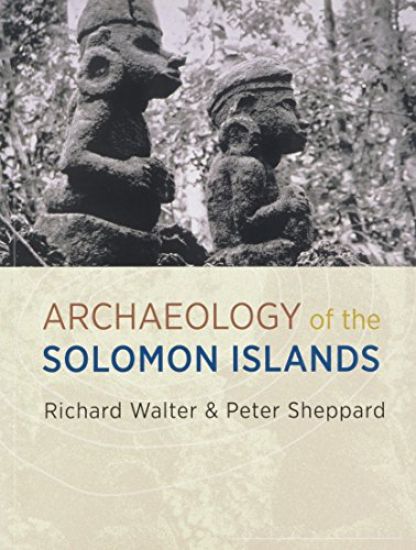
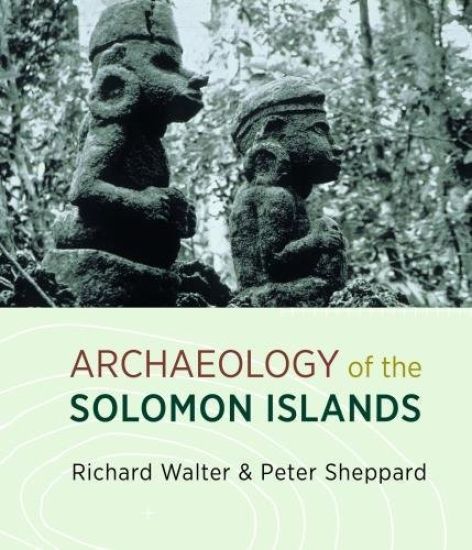
Archaeology of the Solomon Islands presents the outcome of 20 years’ research in the Solomon Islands undertaken jointly by Richard Walter and Peter Sheppard, both leaders in the field of Pacific archaeology.At the time of first European encounter, the peoples of Melanesia exhibited some of the greatest diversity in language, socio-political organisation and culture expression of any region on earth. This extraordinary diversity attracted scholars and resulted in coastal Melanesia becoming the birthplace of modern anthropology, and yet the area remains one of the least well-documented regions of the Pacific in archaeological terms.This synthesis of Solomon Island archaeology draws together all the research that has taken place in the field over the past 50 years. It takes a multidisciplinary theoretical and methodological approach and considers the work of archaeologists, environmental scientists, anthropologists and historians. At the same time this volume highlights the results of the authors’ own considerable field research.Until recently, much Pacific archaeological research focused primarily on colonisation events and cultural-ecological interactions. Walter and Sheppard are interested too in the long-term development of diversity in coastal Melanesia and in the evolution of ‘traditional’ Melanesian societies. As a case study they focus on the Roviana Chiefdom, an aggressive but highly successful polity based around headhunting, slave raiding and ritual violence that dominated the political economy of the Western Province into the early twentieth century.They also integrate the Solomon Islands into ongoing models and debates around Pacific culture-history, including in such key areas as human expansion during the Pleistocene, the spread of Austronesians, Lapita colonisation, the development of food production, the role of exchange systems, the concept and meaning of culture areas, and human impact on landscapes and ecosystems.This fascinating and very readable book is written for an archaeological audience but is also designed to be accessible to all readers interested in Pacific archaeology, anthropology and history. Featuring more than a hundred maps and figures, Archaeology of the Solomon Islands represents a ground-breaking contribution to Pacific archaeology.
In this highly sought-after, classic series from one of the most creative and articulate expositors of the twentieth century, each volume of the Ironside Expository Commentaries features: An internationally beloved Bible teacher and preacherClear, easily grasped outlines and a vivid writing styleScholarship that has stood the test of time without losing its relevance
The author of Dr Potter's Medicine Show conjures up another marvellous mixture of fantasy and the spirits of the Old West 1916, Butte, Montana: City of the Copper Kings. Solomon Parker is old, broken and in debt to very bad people. He's always managed to stay one step ahead of his last bad decision, but more than anything, he wishes life had turned out differently. Little does he know that for him and his young prot g , Billy Morgan, that wish is about to come true. The Above Ones, the gods of the People, are bored. Their servant, Marked Face is coming, and he's bringing his dice... File Under Fantasy Under the Headstocks Meet Marked Face Roll the Bones Put Your Hands Up ]
When a series of gruesome cult killings take place near the British Museum, DCI Harker and his assistant DS Critchley are called to London to solve the case. Middle class satanists, dusty old bookshops, a labyrinth under the museum, a frantic car chase and wry, cutting humour all combine in this love letter from creators Roger Gibson and Vince Danks to classic British detective television series.
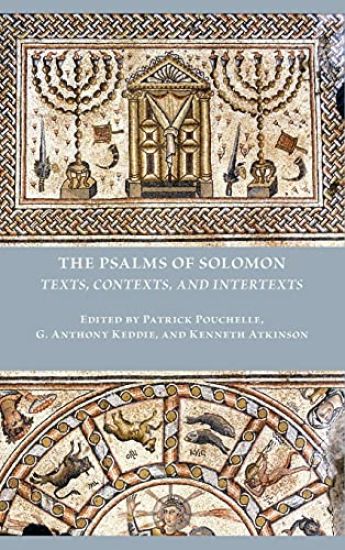
The Psalms of Solomon: Texts, Contexts, and Intertexts explores a unique pseudepigraphal document that bears witness to the 63 BCE Roman conquest of Jerusalem. Essays address a variety of themes including the original language of the Psalms and their political, social, religious, and historical contexts.
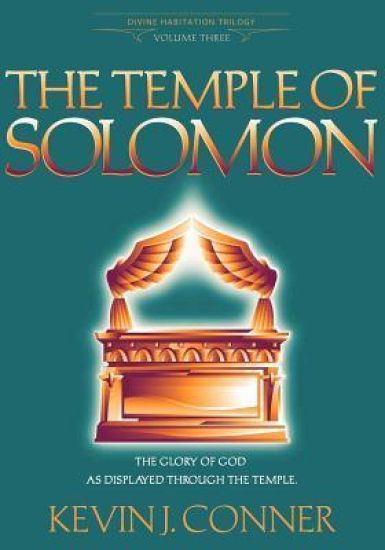
The Temple of Solomon completes the trilogy dealing with the dwelling places of God in the Old Testament. Kevin Conner's study yields rich and precious truths concerning Christ and His church. These truths are tied into the New Testament as the church is presented as the "Temple of God."
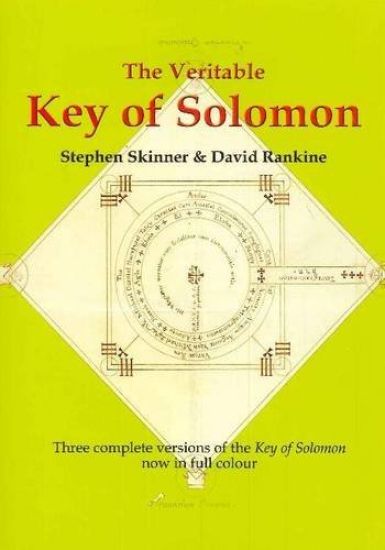
"The Key of Solomon" is one of the most famous and infamous of the Grimoires ever produced. This title offers a translation of three completely different 1796 French manuscripts of "The Key of Solomon".
My Song of Solomon is a story of true love. "Many waters cannot quench love neither can floods drown it..." These were the words that Solomon Pierre' spoke softly to Barina Grant. She was petite with long beautiful kinky colored hair and had smooth light cream colored skin. While Solomon on the other hand, a poet with words and a spiritual love song in his heart; who had a deep and intriguing voice, a 6' foot stature, honey nut colored skin and muscles to be noticed. His words were ineffable. They were incapable of being expressed into words--they were just that breath taking. The thought of her ever finding true love was almost impossible as she became a 14-year old mother, and went from being homeless to a warehouse worker, to a properous writer. After meeting Solomon her feelings turned to him possibly being her eternal love. But through time and wrong choices, she nearly lost her life, her dreams, her career, and almost lost her mind. Yes will be the story that Barina will tell in this hope-filled, dynamic, moving, and purpose filled fiction story of feigned love, later turned into destined divine love...
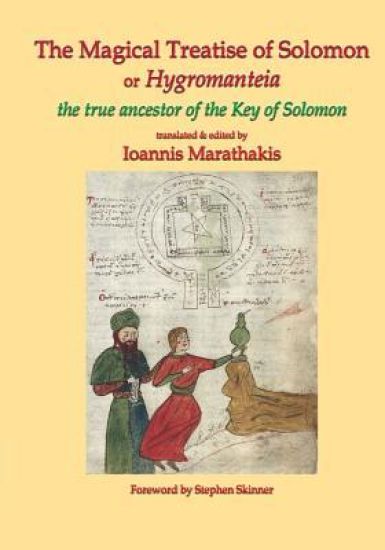
This is the true ancestor of the famous grimoire the Key of Solomon. The book includes translations of 12 different manuscripts of the Hygromanteia. This book is sometimes called the Hygromanteia. Throughout history thousands of people have been fascinated by the grimoire the Key of Solomon. This is the original Greek book of magic that was the source of the Key of Solomon, and in turn the ancestor of most of the grimoire-based ceremonial magic practiced in Europe and the US from the 15th century to the present day. This is a ground-breaking work. For the first time (outside of a handful of pages in academic works) the full Greek original of the Key of Solomon appears in English. Contrary to popular opinion the Key of Solomon was not translated from a Hebrew original. During the gradual decline and fall of the Byzantine Empire, this precious text, along with many others, was taken from Constantinople to Italy probably around 1453 were it was translated into Latin and Italian. Abridged Latin copies entitled the Clavicula Salomonis circulated in Europe, going through many changes, languages and versions to become the Key of Solomon as we know it (some of those manuscripts are published as Volume IV of the present series). Now for the first time you can read the whole text (large slabs of which were left out of the Latin translations) arranged clearly in the order in which it was meant to be read.