Kirjojen hintavertailu. Mukana 12 016 292 kirjaa ja 12 kauppaa.

Kirjahaku

Etsi kirjoja tekijän nimen, kirjan nimen tai ISBN:n perusteella.

1000 tulosta hakusanalla Stan Rimbas

Messianic Judaism is Not Christianity – A Loving Call to Unity

Messianic Judaism is Not Christianity – A Loving Call to Unity

Stan Telchin; Moishe Rosen

Chosen Books, a division of Baker Publishing Group
2004
nidottu
The apostle Paul wrote that all believers--Jewish and Gentile--are to serve the Lord together as "one new man." But a growing movement today seeks to keep that from happening.As Stan Telchin explains, proponents of Messianic Judaism are confusing both Jewish and Gentile followers of Jesus and dividing the church. Their insistence on following rabbinic form and their statements that Jewish believers need to be in Messianic synagogues in order to maintain their identities are unbiblical. Telchin discusses the growth of this movement, its unscriptural doctrines, and its ineffectiveness in Jewish evangelism. Those who have been swept up by the nostalgia and beauty of "Jewishness" or who have been hurt by division in the Body or who love Israel will find their hearts and minds freed by this firm but loving message.
Betrayed!

Betrayed!

Stan Telchin

Chosen Books, a division of Baker Publishing Group
2007
nidottu
Betrayed! is the page-turning account of a loving Jewish family caught on divergent prongs of a historic conflict. When Stan Telchin's daughter accepts Jesus as her Messiah, she makes a touching plea for him to search out the truth for himself. Intending to prove her wrong, Telchin sets out on a vigorous and critical examination of the claims of Jesus Christ. He is astonished at what he learns and finds himself facing a wrenching and life-changing decision.As readers travel with Telchin, they too will discover a deeper, fuller awareness of both Judaism and Christianity, as well as how God can heal wounds from the bitterest conflicts. Even more, readers will discover the inexorable power of the gospel. This new edition includes an update from the author and wisdom-filled words on Jewish identity.
The Five Star Church

The Five Star Church

Stan Toler; Alan Nelson; Elmer Towns

Baker Academic, Div of Baker Publishing Group
1999
nidottu
Ever wonder how a restaurant or hotel earns a five-star rating? Is it the people? The location? The service? In most cases, it is all of this and more. Why should your church be any different? The Five Star Church reveals how you can pursue Christian excellence and uphold the Lord's command to "honor one another above yourselves" (Romans 12:10). It contains tips, tools, and the inspiration you need to build a top-quality church that people will flock to and participate in. No matter how small your ministry or budget, God can use your church effectively to make everyone there feel welcome and cared for--the marks of a five-star church!
The Sand Creek Massacre

The Sand Creek Massacre

Stan Hoig

University of Oklahoma Press
1974
nidottu
Sometimes called ""The Chivington Massacre"" by those who would emphasize his responsibility for the attack and ""The Battle of Sand Creek"" by those who would imply that it was not a massacre, this event has become one of our nation's most controversial Indian conflicts. The subject of army and Congressional investigations and inquiries, a matter of vigorous newspaper debates, the object of much oratory and writing biased in both directions, the Sand Creek Massacre very likely will never be completely and satisfactorily resolved.This account of the massacre investigates the historical events leading to the battle, tracing the growth of the Indian-white conflict in Colorado Territory. The author has shown the way in which the discontent stemming from the treaty of Fort Wise, the depredations committed by the Cheyennes and Arapahoes prior to the massacre, and the desire of some of the commanding officers for a bloody victory against the Indians laid the groundwork for the battle at Sand Creek.
The Peace Chiefs of the Cheyennes

The Peace Chiefs of the Cheyennes

Stan Hoig

University of Oklahoma Press
1990
nidottu
A Plains tribe that subsisted on the buffalo, the Cheyennes depended for survival on the valor and skill of their braves in the hunt and in battle. The fiery spirit of the young warriors was balanced by the calm wisdom of the tribal headmen, the peace chiefs, who met yearly as the Council of the Forty-four. ""A Cheyenne chief was required to be a man of peace, to be brave, and to be of generous heart,"" writes Stan Hoig. ""Of these qualities the first was unconditionally the most important, for upon it rested the moral restraint required for the warlike Cheyenne Nation.""As the Cheyennes began to feel the westward crush of white civilization in the nineteenth century, a great burden fell to the peace chiefs. Reconciliation with the whites was the tribe's only hope for survival, and the chiefs were the buffers between their own warriors and the United States military, who were out to ""win the West."" The chiefs found themselves struggling to maintain the integrity of their people-struggling against overwhelming military forces, against disease, against the debauchery brought by ""firewater,"" and against the irreversible decline of their source of livelihood, the buffalo. They were trapped by history in a nearly impossible position. Their story is a heroic epic and, oftentimes, a tragedy.No single book has dealt as intensively as this one with the institution of the peace chiefs. The author has gleaned significant material from all available published sources and from contemporary newspapers. A generous selection of photographs and extensive quotations from ninteteenth-century observers add to the authenticity of the text. Following a brief analysis of the Sweet Medicine legend and its relation to the Council of the Forty-four, the more prominent nineteenth-century chiefs are treated individually in a lucid, felicitous style that will appeal to both students and lay readers of Indian history.As adopted Cheyenne chief Boyce D. Timmons says in his preface to this volume, ""Great wisdom, intellect, and love are expressed by the remarkable Cheyenne chiefs, and if you enter their tipi with an open heart and mind, you might have some understanding of the great 'Circle of Life.'""
Beyond the Frontier

Beyond the Frontier

Stan Hoig

University of Oklahoma Press
1998
nidottu
In Beyond the Frontier, Stan Hoig chronicles early explorations of Oklahoma. Focusing on expeditions during the first part of the nineteenth century, Hoig provides a useful history of the region during the period of its first discovery by the outside world.After describing what we know of Native life before the arrival of Europeans, Hoig recounts in vivid detail each successive intrusion, drawing on a wide variety of sources - diaries, memoirs, letters, and official documents - to bring these experiences to life. Writing of individuals famous and forgotten who braved an unknown world and provided lasting records of the land and its peoples, Hoig includes details of Indian and frontier life often overlooked in scholarly studies. Further enhancing the narrative is an ample selection of illustrations, including photographs drawings, and detailed maps showing exploration routes.A supplement to broader histories, Beyond the Frontier is written in a straightforward, engaging style accessible to all interested readers. The first book to synthesize accounts of explorations within the region, Hoig's narrative offers valuable insight into Oklahoma's - and western America's - colorful past.
Jesse Chisholm

Jesse Chisholm

Stan Hoig

University of Oklahoma Press
2005
nidottu
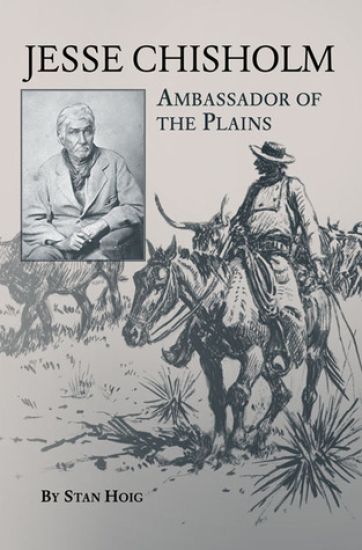
The Chisholm Trail, traveled by Texas longhorn cattle moving northward across present-day Oklahoma to Kansas, was named for mixed-blood Cherokee Jesse Chisholm (1805-1868). Though Chisholm's prominence in western lore rests largely on this connection, he was active on the frontier long before the naming of the trail. Because he left no diaries, letters, or personal documents, however, his life has been shrouded in mystery.Drawing from many sources, including early state and federal documents, newspaper accounts, and trade and military records, Stan Hoig offers the clearest picture to date of the many important roles Chisholm played: trailblazer, friend of Indian chiefs, linguist of Indian languages, scout, and - perhaps most important - liaison between Indian tribes, the U.S. government, and the Republic of Texas. With his formidable intellect and talent for diplomacy, Chisholm blazed a trail in the history of the American Southwest more fascinating even than the one that bears his name.
Tribal Wars of the Southern Plains

Tribal Wars of the Southern Plains

Stan Hoig

University of Oklahoma Press
2011
nidottu
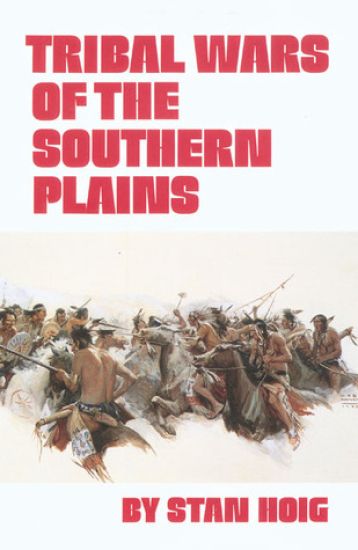
Tribal Wars of the Southern Plains is a comprehensive account of Indian conflicts in the area between the Platte River and the Rio Grande, from the first written reports of the Spaniards in the sixteenth century through the United States-Cheyenne Battle of the Sand Hills in 1875. The reader follows the exploits and defeats of such chiefs as Lone Wolf, Satanta, Black Kettle, and Dull Knife as they signed treaties, led attacks, battled for land, and defended their villages in the huge region that was home to the Wichitas, Comanches, Cheyennes, Arapahos, Kiowas, Osages, Pawnees, and other Indian nations.
The Knowledge Entrepreneur

The Knowledge Entrepreneur

Stan Skrzeszewski

Scarecrow Press
2005
nidottu
In a knowledge economy, it is most important that creative people with ideas, information skills, experience, and knowledge become engaged in entrepreneurial activity involving the creation and use of new knowledge for community, organizational, and personal development, in addition to developing new products and services. This book helps those who wish to engage in entrepreneurial activity realize that they too can work independently, both as an individual and within an organization. The Knowledge Entrepreneur introduces the principles, skills, and knowledge required to be a knowledge entrepreneur or "intrapreneur." It outlines the process for developing and implementing business plans and proposals for knowledge-based initiatives. It also offers insight into the nature of knowledge, innovation, and entrepreneurship. For the individual entrepreneur who is just starting to develop a business concept, employees who want to become employers, and for entrepreneurially-minded people working in larger information-related organizations (e.g. libraries and information, technology, and software businesses), this book will be an invaluable tool.
College Sports Traditions

College Sports Traditions

Stan Beck; Jack Wilkinson

Scarecrow Press
2013
sidottu
Every year since 1961, football and basketball players at Middlebury College in Vermont pick up their wheelchair-bound fan, Butch, and bring him to the stadium sidelines to watch their games. At John Brown University, the volleyball team distributes candy to fans before each match. For years, fans attending a University of Maryland football game rubbed the bronze statue of their terrapin mascot, Testudo. Traditions like these are visible statements of school loyalty, and they are part of why college sports are unforgettable. College Sports Traditions: Picking Up Butch, Silent Night, and Hundreds of Others details not only the well-known traditions of major universities, but also the obscure customs of smaller schools. Approximately 1,200 traditions are captured, covering almost every college sport. It depicts such traditions as The Ohio State University’s “Script Ohio,” University of Kansas’s “Waving the Wheat,” Linfield College’s “End Zone Couches,” and even a list of traditions that involve streaking. The wide variety of traditions covered in this book are grouped thematically, including: ·Before the game ·During the game ·After a score ·After the game ·Mascot traditions ·Preseason traditions ·Traditions probably not university sanctioned ·Rivalries ·Yells, cheers, and chants From the crazy and eccentric to the touching and meaningful, these traditions connect fans and athletes across generations. The first of its kind, this comprehensive volume encompasses hundreds of universities and colleges throughout the U.S. Featuring 75 photos that bring many of these events to life, College Sports Traditions will be an entertaining read for every sports fan.
Loving, Supporting, and Caring for the Cancer Patient

Loving, Supporting, and Caring for the Cancer Patient

Stan Goldberg

Rowman Littlefield Publishers
2017
nidottu
At least once in your life someone will say to you, “I have cancer,” and when she says the three words, you may struggle with a response. If a loved one or friend hasn’t informed you of a cancer diagnosis, it’s only a matter of time until they will. Every year fourteen million people worldwide learn they are living with or may die from this insidious illness. The uncertainty of cancer causes anxiety in those diagnosed and feelings of inadequacy in loved ones and friends who want to help. When someone says “I have cancer,” what will you say? More importantly, what will you do? In Loving, Supporting, and Caring for the Cancer Patient, readers will learn specific ways of going beyond the response “I’m so sorry,” and practical behaviors that will ease a loved one or friend’s journey. They range from being specific immediately after a diagnosis, to honoring their loved one or friend at the moment of passing. Based on Stan Goldberg’s own cancer journey, thirty years of counseling and coaching people living with cancer and their loved ones, and as a bedside volunteer in four hospices over eight years, the book is filled with poignant accounts of clients and patients, personal reflections, and age-old stories filled with infinite wisdom.