Kirjojen hintavertailu. Mukana 11 608 183 kirjaa ja 12 kauppaa.

Kirjahaku

Etsi kirjoja tekijän nimen, kirjan nimen tai ISBN:n perusteella.

1000 tulosta hakusanalla Steven Awalt

The Fear of Child Sexuality

The Fear of Child Sexuality

Steven Angelides

University of Chicago Press
2019
pokkari
Continued public outcries over such issues as the presence of young models in sexually suggestive ads and occurrences of intimate relationships between teachers and students speak to one of the most controversial fears of our time: the entanglement of children and sexuality. In this book, Steven Angelides confronts that very fear, arguing that adult alarm over child sexualization often masks the sexuality of children. Angelides explores how emotional vocabularies of anxiety, shame, and even contempt not only dominate discussions of youth sexuality but also allow adults to avoid acknowledging the sexual agency of young people. Introducing case studies and trends from Australia, the United Kingdom, and North America, he challenges prevalent assumptions toward a variety of topics, among them sex education, age-of-consent laws, and technology-driven phenomena like sexting. Along the way, Angelides contends that an unwillingness to recognize the sexual agency that children possess results less in the protection of young people than in their marginalization.

The Portraitist

The Portraitist

Steven Nadler

THE UNIVERSITY OF CHICAGO PRESS
2022
sidottu
A biography of the great portraitist Frans Hals that takes the reader into the turbulent world of the Dutch Golden Age. Frans Hals was one of the greatest portrait painters in history, and his style transformed ideas and expectations about what portraiture can do and what a painting should look like. Hals was a member of the great trifecta of Dutch Baroque painters alongside Rembrandt and Vermeer, and he was the portraitist of choice for entrepreneurs, merchants, professionals, theologians, intellectuals, militiamen, and even his fellow artists in the Dutch Golden Age. His works, with their visible brush strokes and bold execution, lacked the fine detail and smooth finish common among his peers, and some dismissed his works as sloppy and unfinished. But for others, they were fresh and exciting, filled with a sense of the sitter's animated presence captured with energy and immediacy. Steven Nadler gives us the first full-length biography of Hals in many years and offers a view into seventeenth-century Haarlem and this culturally rich era of the Dutch Republic. He tells the story not only of Hals's life, but also of the artistic, social, political, and religious worlds in which he lived and worked.
Urban Lowlands

Urban Lowlands

Steven T Moga

University of Chicago Press
2020
sidottu
In Urban Lowlands, Steven T. Moga looks closely at the Harlem Flats in New York City; Black Bottom in Nashville; Swede Hollow in St. Paul; and the Flats in Los Angeles to interrogate the connections between a city's physical landscape and the poverty and social problems that are often concentrated at its literal lowest points. Taking an interdisciplinary perspective on the history of US urban development that stretches from the nineteenth to the mid-twentieth century, Moga reveals patterns of inequitable land use, economic dispossession, and social discrimination against poor and working-class residents. In attending to the landscapes of neighborhoods typically considered slums, Moga shows how physical and policy-driven containment has shaped the lives of the urban poor, while wealth and access to resources have been historically concentrated in elevated areas--truly "the heights." Moga's innovative framework expands our understanding of how planning and economic segregation alike have molded the American city.
A Social History of Truth

A Social History of Truth

Steven Shapin

University of Chicago Press
1995
nidottu
How do we come to trust our knowledge of the world? What are the means by which we distinguish true from false accounts? Why do we credit one observational statement over another? This study engages these universal questions through a recreation of a crucial period in the history of early modern science: the social world of gentlemen-philosophers in 17th-century England. The author paints a picture of the relations between gentlemanly culture and scientific practice. He argues that problems of credibility in science were practically solved through the codes and conventions of genteel conduct: trust, civility, honour, and integrity. These codes formed, and arguably still form, an important basis for securing reliable knowledge about the natural world. Shapin uses detailed historical narrative to argue about the establishment of factual knowledge both in science and in everyday practice. Accounts of the mores and manners of gentlemen-philosophers are used to illustrate Shapin's broad claim that trust is imperative for constituting every kind of knowledge. Knowledge-making is always a collective enterprise: people have to know whom to trust in order to know something about the natural world.
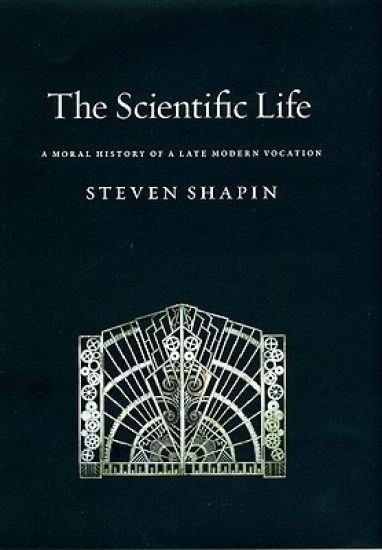
The Scientific Life

The Scientific Life

Steven Shapin

University of Chicago Press
2008
sidottu
Who are scientists? What kind of people are they? What capacities and virtues are thought to stand behind their considerable authority? "The Scientific Life" is historian Steven Shapin's story about who scientists are, who we think they are, and why our sensibilities about such things matter. From the early twentieth-century origins of corporate research laboratories to the high-flying scientific entrepreneurship of the present, Shapin argues that the radical uncertainties of much contemporary science have made personal virtues more central to its practice than ever before, and he also reveals how radically novel aspects of late modern science have unexpectedly deep historical roots. His elegantly conceived history of the scientific career and character ultimately encourages us to reconsider the very nature of the technical and moral worlds in which we now live.
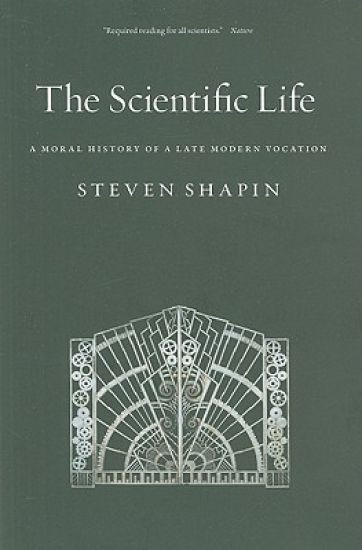
The Scientific Life

The Scientific Life

Steven Shapin

University of Chicago Press
2010
nidottu
Who are scientists? What kind of people are they? What capacities and virtues are thought to stand behind their considerable authority? "The Scientific Life" is historian Steven Shapin's story about who scientists are, who we think they are, and why our sensibilities about such things matter. From the early twentieth-century origins of corporate research laboratories to the high-flying scientific entrepreneurship of the present, Shapin argues that the radical uncertainties of much contemporary science have made personal virtues more central to its practice than ever before, and he also reveals how radically novel aspects of late modern science have unexpectedly deep historical roots. His elegantly conceived history of the scientific career and character ultimately encourages us to reconsider the very nature of the technical and moral worlds in which we now live.
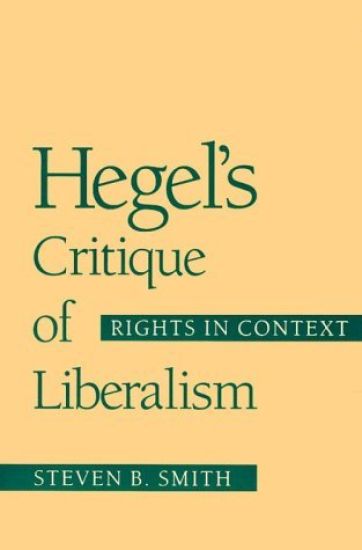
Hegel's Critique of Liberalism

Hegel's Critique of Liberalism

Steven B. Smith

University of Chicago Press
1991
nidottu
In Hegel's Critique of Liberalism, Steven B. Smith examines Hegel's critique of rights-based liberalism and its relevance to contemporary political concerns. Smith argues that Hegel reformulated classic liberalism, preserving what was of value while rendering it more attentive to the dynamics of human history and the developmental structure of the moral personality. Hegel's goal, Smith suggests, was to find a way of incorporating both the ancient emphasis on the dignity and even architectonic character of political life with the modern concern for freedom, rights, and mutual recognition. Smith's insightful analysis reveals Hegel's relevance not only to contemporary political philosophers concerned with normative issues of liberal theory but also to political scientists who have urged a revival of the state as a central concept of political inquiry.
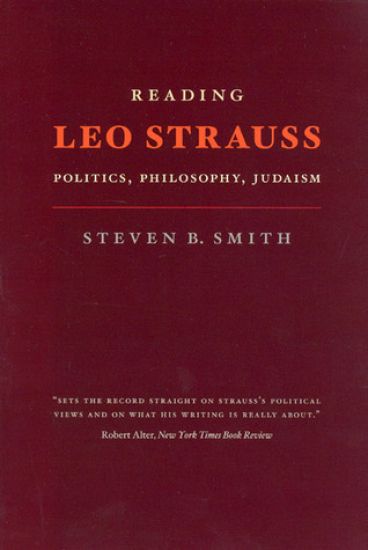
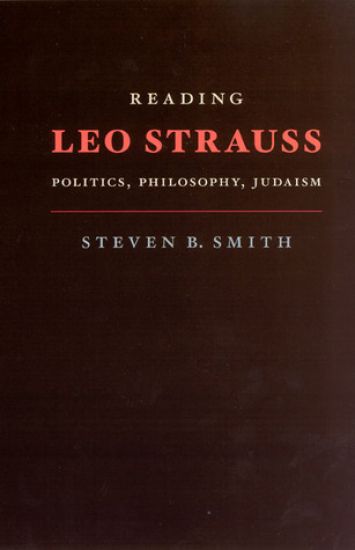
Reading Leo Strauss

Reading Leo Strauss

Steven B. Smith

University of Chicago Press
2007
nidottu
Interest in Leo Strauss is greater now than at any time since his death, mostly because of the purported link between his thought and the political movement known as neoconservatism. Steven B. Smith, though, surprisingly depicts Strauss not as the high priest of neoconservatism but as a friend of liberal democracy - perhaps the best defender democracy has ever had. Moreover, in "Reading Leo Strauss", Smith shows that Strauss' defense of liberal democracy was closely connected to his skepticism of both the extreme Left and extreme Right. It was as a skeptic, Smith argues, that Strauss considered the seemingly irreconcilable conflict between reason and revelation - a conflict Strauss dubbed the "theologico-political problem." Calling this problem "the theme of my investigations," Strauss asked the same fundamental question throughout his life: what is the relation of the political order to revelation in general and Judaism in particular? Smith bases his book on this question and assesses Strauss' attempt to direct the teaching of political science away from the examination of mass behavior and interest-group politics and toward the study of the philosophical principles on which politics are based. With his provocative, lucid study, Smith establishes a distinctive form of Straussian liberalism himself.
Reading Leo Strauss

Reading Leo Strauss

Steven B. Smith

University of Chicago Press
2006
sidottu
Interest in Leo Strauss is greater now than at any time since his death, mostly because of the purported link between his thought and the political movement known as neoconservatism. Steven B. Smith, though, surprisingly depicts Strauss not as the high priest of neoconservatism but as a friend of liberal democracy - perhaps the best defender democracy has ever had. Moreover, in "Reading Leo Strauss", Smith shows that Strauss's defense of liberal democracy was closely connected to his skepticism of both the extreme Left and the extreme Right. Smith asserts that this philosophical skepticism defined Strauss's thought. It was as a skeptic, Smith argues, that Strauss considered the seemingly irreconcilable conflict between reason and revelation - a conflict Strauss dubbed the "theologico-political problem". Calling this problem "the theme of my investigations," Strauss asked the same fundamental question throughout his life: what is the relation of the political order to revelation in general and Judaism in particular? Smith organizes his book with this question, first addressing Strauss's views on religion and then examining his thought on philosophical and political issues. In his investigation of these philosophical and political issues, Smith assesses Strauss's attempt to direct the teaching of political science away from the examination of mass behavior and interest group politics and toward the study of the philosophical principles on which politics are based. With his provocative, lucid essays, Smith goes a long way toward establishing a distinctive form of Straussian liberalism.
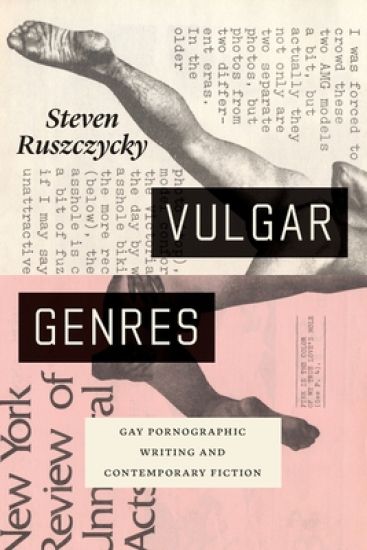
Vulgar Genres

Vulgar Genres

Steven Ruszczycky

University of Chicago Press
2022
sidottu
Vulgar Genres examines gay pornographic writing, showing how literary fiction was both informed by pornography and amounts to a commentary on the genre’s relation to queer male erotic life. Long fixated on visual forms, the field of porn studies is overdue for a book-length study of gay pornographic writing. Steven Ruszczycky delivers with an impressively researched work on the ways gay pornographic writing emerged as a distinct genre in the 1960s and went on to shape queer male subjectivity well into the new millennium. ?Ranging over four decades, Ruszczycky draws on a large archive of pulp novels and short fiction, lifestyle magazines and journals, reviews, editorial statements, and correspondence. He puts these materials in conversation with works by a number of contemporary writers, including William Carney, Dennis Cooper, Samuel Delany, John Rechy, and Matthew Stadler. While focused on the years 1966 to 2005, Vulgar Genres reveals that the history of gay pornographic writing during this period informs much of what has happened online over the past twenty years, from cruising to the production of digital pornographic texts. The result is a milestone in porn studies and an important contribution to the history of gay life.
Vulgar Genres

Vulgar Genres

Steven Ruszczycky

University of Chicago Press
2022
nidottu
Vulgar Genres examines gay pornographic writing, showing how literary fiction was both informed by pornography and amounts to a commentary on the genre’s relation to queer male erotic life. Long fixated on visual forms, the field of porn studies is overdue for a book-length study of gay pornographic writing. Steven Ruszczycky delivers with an impressively researched work on the ways gay pornographic writing emerged as a distinct genre in the 1960s and went on to shape queer male subjectivity well into the new millennium. ?Ranging over four decades, Ruszczycky draws on a large archive of pulp novels and short fiction, lifestyle magazines and journals, reviews, editorial statements, and correspondence. He puts these materials in conversation with works by a number of contemporary writers, including William Carney, Dennis Cooper, Samuel Delany, John Rechy, and Matthew Stadler. While focused on the years 1966 to 2005, Vulgar Genres reveals that the history of gay pornographic writing during this period informs much of what has happened online over the past twenty years, from cruising to the production of digital pornographic texts. The result is a milestone in porn studies and an important contribution to the history of gay life.
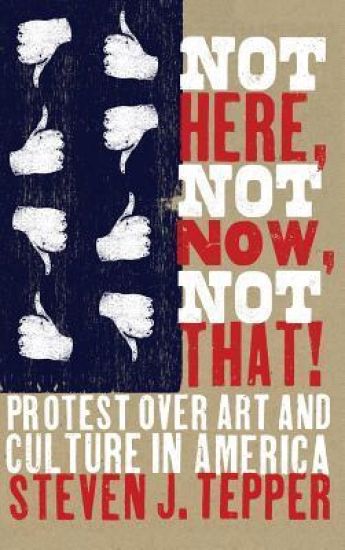
Not Here, Not Now, Not That!

Not Here, Not Now, Not That!

Steven J. Tepper

University of Chicago Press
2011
sidottu
In the late 1990s "Angels in America", Tony Kushner's epic play about homosexuality and AIDS in the Reagan era, toured the country, inspiring protests in a handful of cities while others received it warmly. Why do people fight over some works of art but not others? "Not Here, Not Now, Not That!" examines a wide range of controversies over films, books, paintings, sculptures, clothing, music, and television in dozens of cities across the country to find out what turns personal offense into public protest. What Steven J. Tepper discovers is that these protests are always deeply rooted in local concerns. Furthermore, they are essential to the process of working out our differences in a civil society. To explore the local nature of public protests in detail, Tepper analyzes cases in seventy-one cities, including an in-depth look at Atlanta in the late 1990s, finding that debates there over memorials, public artworks, books, and parades served as a way for Atlantans to develop a vision of the future at a time of rapid growth and change. Eschewing simplistic narratives that reduce public protests to political maneuvering, "Not Here, Not Now, Not That!" at last provides the social context necessary to fully understand this fascinating phenomenon.
Not Here, Not Now, Not That!

Not Here, Not Now, Not That!

Steven J. Tepper

University of Chicago Press
2011
nidottu
In the late 1990s "Angels in America", Tony Kushner's epic play about homosexuality and AIDS in the Reagan era, toured the country, inspiring protests in a handful of cities while others received it warmly. Why do people fight over some works of art but not others? "Not Here, Not Now, Not That!" examines a wide range of controversies over films, books, paintings, sculptures, clothing, music, and television in dozens of cities across the country to find out what turns personal offense into public protest. What Steven J. Tepper discovers is that these protests are always deeply rooted in local concerns. Furthermore, they are essential to the process of working out our differences in a civil society. To explore the local nature of public protests in detail, Tepper analyzes cases in seventy-one cities, including an in-depth look at Atlanta in the late 1990s, finding that debates there over memorials, public artworks, books, and parades served as a way for Atlantans to develop a vision of the future at a time of rapid growth and change. Eschewing simplistic narratives that reduce public protests to political maneuvering, "Not Here, Not Now, Not That!" at last provides the social context necessary to fully understand this fascinating phenomenon.
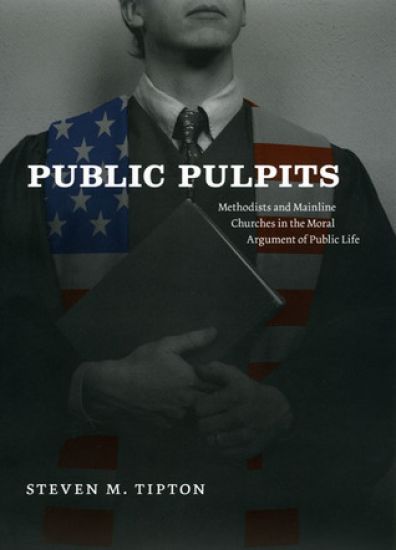
Public Pulpits

Public Pulpits

Steven M. Tipton

University of Chicago Press
2008
sidottu
Since the 2000 presidential election, debate over the role of religion in public life has followed a narrow course as pundits and politicians alike have focused on the influence wielded by conservative Christians. But what about more mainstream Christians? Here, Steven M. Tipton examines the political activities of Methodists and mainline churches in this groundbreaking investigation into a generation of denominational strife among church officials, lobbyists, and activists. The result is an unusually detailed and thoughtful account that upends common stereotypes while asking searching questions about the contested relationship between church and state. Documenting a wide range of reactions to two radically different events - the invasion of Iraq and the creation of the faith-based initiatives program - Tipton charts the new terrain of religious and moral argument under the Bush administration from Pat Robertson to Jim Wallis. He then turns to the case of the United Methodist Church, of which President Bush is a member, to uncover the twentieth-century history of their political advocacy, culminating in current threats to split the Church between liberal peace-and-justice activists and crusaders for evangelical renewal. "Public Pulpits" balances the firsthand drama of this internal account with a meditative exploration of the wider social impact that mainline churches have had in a time of diverging fortunes and diminished dreams of progress. An eminently fair-minded and ethically astute analysis of how churches keep moral issues alive in politics, "Public Pulpits" delves deep into mainline Protestant efforts to enlarge civic conscience and cast clearer light on the commonweal and offers a masterly overview of public religion in America.
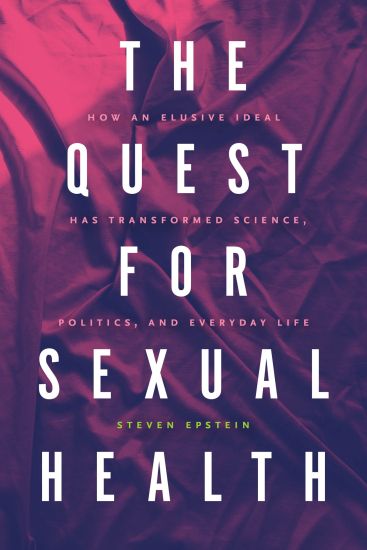
The Quest for Sexual Health

The Quest for Sexual Health

Steven G. Epstein

THE UNIVERSITY OF CHICAGO PRESS
2022
sidottu
Offering an entryway into the distinctive worlds of sexual health and a window onto their spillover effects, sociologist Steven Epstein traces the development of the concept and parses the debates that swirl around it. Since the 1970s, health professionals, researchers, governments, advocacy groups, and commercial interests have invested in the pursuit of something called "sexual health." Under this expansive banner, a wide array of programs have been launched, organizations founded, initiatives funded, products sold-and yet, no book before this one asks: What does it mean to be sexually healthy? When did people conceive of a form of health called sexual health? And how did it become the gateway to addressing a host of social harms and the reimagining of private desires and public dreams? Conjoining "sexual" with "health" changes both terms: it alters how we conceive of sexuality and transforms what it means to be healthy, prompting new expectations of what medicine can provide. Yet the ideal of achieving sexual health remains elusive and open-ended, and the benefits and costs of promoting it are unevenly distributed across genders, races, and sexual identities. Rather than a thing apart, sexual health is intertwined with nearly every conceivable topical debate-from sexual dysfunction to sexual violence, from reproductive freedom to the practicalities of sexual contact in a pandemic. In this book Steven Epstein analyzes the rise, proliferation, uptake, and sprawling consequences of sexual health activities, offering critical tools to assess those consequences, expand capacities for collective decision making, and identify pathways that promote social justice.
The Quest for Sexual Health

The Quest for Sexual Health

Steven G. Epstein

THE UNIVERSITY OF CHICAGO PRESS
2022
nidottu
Offering an entryway into the distinctive worlds of sexual health and a window onto their spillover effects, sociologist Steven Epstein traces the development of the concept and parses the debates that swirl around it. Since the 1970s, health professionals, researchers, governments, advocacy groups, and commercial interests have invested in the pursuit of something called "sexual health." Under this expansive banner, a wide array of programs have been launched, organizations founded, initiatives funded, products sold-and yet, no book before this one asks: What does it mean to be sexually healthy? When did people conceive of a form of health called sexual health? And how did it become the gateway to addressing a host of social harms and the reimagining of private desires and public dreams? Conjoining "sexual" with "health" changes both terms: it alters how we conceive of sexuality and transforms what it means to be healthy, prompting new expectations of what medicine can provide. Yet the ideal of achieving sexual health remains elusive and open-ended, and the benefits and costs of promoting it are unevenly distributed across genders, races, and sexual identities. Rather than a thing apart, sexual health is intertwined with nearly every conceivable topical debate-from sexual dysfunction to sexual violence, from reproductive freedom to the practicalities of sexual contact in a pandemic. In this book Steven Epstein analyzes the rise, proliferation, uptake, and sprawling consequences of sexual health activities, offering critical tools to assess those consequences, expand capacities for collective decision making, and identify pathways that promote social justice.
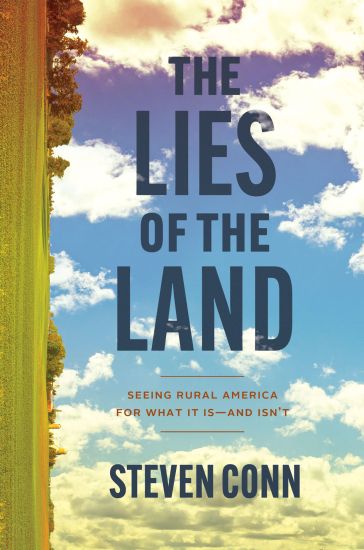
The Lies of the Land

The Lies of the Land

Steven Conn

THE UNIVERSITY OF CHICAGO PRESS
2023
sidottu
A "piercing, unsentimental" (New Yorker) history that boldly challenges the idea of a rural American crisis. It seems everyone has an opinion about rural America. Is it gripped in a tragic decline? Or is it on the cusp of a glorious revival? Is it the key to understanding America today? Steven Conn argues that we’re missing the real question: Is rural America even a thing? No, says Conn, who believes we see only what we want to see in the lands beyond the suburbs—fantasies about moral (or backward) communities, simpler (or repressive) living, and what it means to be authentically (or wrongheadedly) American. If we want to build a better future, Conn argues, we must accept that these visions don’t exist and never did. In The Lies of the Land, Conn shows that rural America—so often characterized as in crisis or in danger of being left behind—has actually been at the center of modern American history, shaped by the same forces as everywhere else in the country: militarization, industrialization, corporatization, and suburbanization. Examining each of these forces in turn, Conn invites us to dispense with the lies and half-truths we’ve believed about rural America and to pursue better solutions to the very real challenges shared all across our nation.
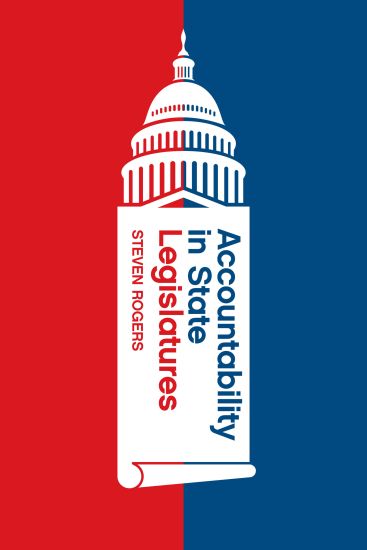
Accountability in State Legislatures

Accountability in State Legislatures

Steven Rogers

THE UNIVERSITY OF CHICAGO PRESS
2023
sidottu
A troubling portrait of democracy in US state legislatures. State legislatures hold tremendous authority over key facets of our lives, ranging from healthcare to marriage to immigration policy. In theory, elections create incentives for state legislators to produce good policies. But do they? Drawing on wide-ranging quantitative and qualitative evidence, Steven Rogers offers the most comprehensive assessment of this question to date, testing different potential mechanisms of accountability. His findings are sobering: almost ninety percent of American voters do not know who their state legislator is; over one-third of incumbent legislators run unchallenged in both primary and general elections; and election outcomes have little relationship with legislators’ own behavior. Rogers’s analysis of state legislatures highlights the costs of our highly nationalized politics, challenging theories of democratic accountability and providing a troubling picture of democracy in the states.
Accountability in State Legislatures

Accountability in State Legislatures

Steven Rogers

THE UNIVERSITY OF CHICAGO PRESS
2023
nidottu
A troubling portrait of democracy in US state legislatures. State legislatures hold tremendous authority over key facets of our lives, ranging from healthcare to marriage to immigration policy. In theory, elections create incentives for state legislators to produce good policies. But do they? Drawing on wide-ranging quantitative and qualitative evidence, Steven Rogers offers the most comprehensive assessment of this question to date, testing different potential mechanisms of accountability. His findings are sobering: almost ninety percent of American voters do not know who their state legislator is; over one-third of incumbent legislators run unchallenged in both primary and general elections; and election outcomes have little relationship with legislators’ own behavior. Rogers’s analysis of state legislatures highlights the costs of our highly nationalized politics, challenging theories of democratic accountability and providing a troubling picture of democracy in the states.