Kirjojen hintavertailu. Mukana 12 390 323 kirjaa ja 12 kauppaa.

Kirjahaku

Etsi kirjoja tekijän nimen, kirjan nimen tai ISBN:n perusteella.

1000 tulosta hakusanalla To Be Confirmed Atria

Born to Be Wild

Born to Be Wild

Jess Shatkin

TarcherPerigee
2018
nidottu
A groundbreaking, research-based guide that sheds new light on why young people make dangerous choices--and offers solutions that work Texting while driving. Binge-drinking. Unprotected sex. There are plenty of reasons for parents to worry about getting a late-night call about their teen. But most of the advice parents and educators hear about teens is outdated and unscientific--and simply doesn't work. Acclaimed adolescent psychiatrist and educator Jess Shatkin brings more than two decades' worth of research and clinical experience to the subject, along with cutting-edge findings from brain science, evolutionary psychology, game theory, and other disciplines -- plus a widely curious mind and the perspective of a concerned dad himself. Using science and stories, fresh analogies, clinical anecdotes, and research-based observations, Shatkin explains: * Why "scared straight," adult logic, and draconian punishment don't work * Why the teen brain is "born to be wild"--shaped by evolution to explore and take risks * The surprising role of brain development, hormones, peer pressure, screen time, and other key factors * What parents and teachers can do--in everyday interactions, teachable moments, and specially chosen activities and outings--to work with teens' need for risk, rewards and social acceptance, not against it. "Presents new research, as well as insights as a clinician and a father....This book is a clear argument to stop putting ourselves in our children's shoes, and to try putting ourselves in their minds, instead." -The Washington Post "With stories (personal and professional), neuroscience and cognition, psychology and clinical experience Dr. Shatkin offers an abundance of understandable, engaging and actionable information. He explains why and shows how. We can reduce risk in the adolescents we love and teach, but only if we know to how to do so and then do it. Born To Be Wild shows us the way to succeed."--Psychology Today Winner, National Parenting Product Award 2017
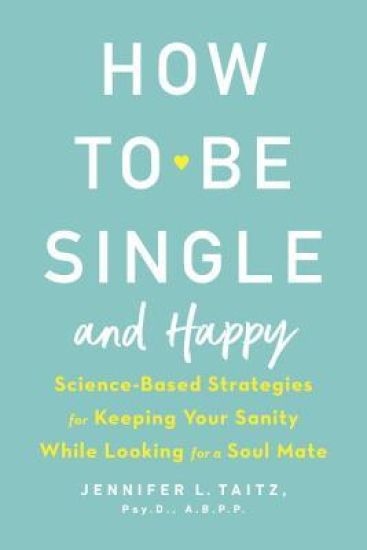
How To Be Single And Happy

How To Be Single And Happy

Jenny Taitz

Tarcher/Putnam,US
2018
nidottu
An inspiring, evidence-based guide for single women on how to navigate the stressful world of modern dating while living their best, happiest life, whether solo or coupled up It's ironic. There are more ways to meet a mate than ever before (just swipe the latest dating app), yet there are more single women than at any time in recent history. No wonder so many of us feel frustrated by the process of looking for a partner. From painful trends like "ghosting" to relatives' and friends' well-meaning questions ("Why are you still single?"), it's tough to avoid feeling "less-than" if you don't have a plus-one. Dr. Jenny Taitz, a respected clinical psychologist, has been there herself, and her new book, How to Be Single and Happy, offers readers a dose of mindfulness, self-compassion, plus a wealth of tools to live a more joyful and meaningful life, using her training as a board-certified expert in cognitive behavioral therapy and dialectical behavior therapy. Drawing on the latest clinical research (Did you know that worrying about being single can interfere with your thinking?), hundreds of patient interviews, and principles of positive psychology, Dr. Taitz challenges some popular myths about women and love: that a woman's relationship status has anything to do with her worth; that finding a relationship is a cure-all for unhappiness and that women need to suppress what they want (or play by an arbitrary set of "rules") to secure a relationship. Instead, this wise and empowering guide gives readers strategies to stop overanalyzing romantic encounters, get over regrets or guilt about failed relationships (not to mention guys who ghosted), and identify and cultivate the mindset, values and connections that make them most fulfilled. Dr. Taitz also shares proven strategies for identifying what they want and need in a partner--and becoming more skillful daters in the process. But more important, it makes clear what it takes to build a fulfilling life right now. Because ultimately, the only person who can make you happy is you.
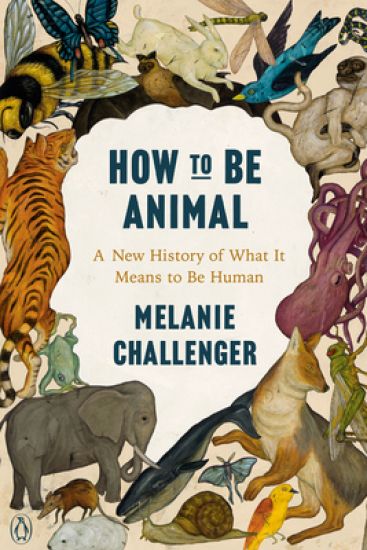
How to Be Animal: A New History of What It Means to Be Human
"A remarkable combination of biology, genetics, zoology, evolutionary psychology and philosophy." --Richard Powers, Pulitzer Prize-winning author of The Overstory "A brilliant, thought-provoking book." --Matt Haig, New York Times bestselling author of The Midnight Library A wide-ranging take on why humans have a troubled relationship with being an animal, and why we need a better one Human are the most inquisitive, emotional, imaginative, aggressive, and baffling animals on the planet. But we are also an animal that does not think it is an animal. How well do we really know ourselves? How to Be Animal tells a remarkable story of what it means to be human and argues that at the heart of our existence is a profound struggle with being animal. We possess a psychology that seeks separation between humanity and the rest of nature, and we have invented grand ideologies to magnify this. As well as piecing together the mystery of how this mindset evolved, Challenger's book examines the wide-reaching ways in which it affects our lives, from our politics to the way we distance ourselves from other species. We travel from the origin of homo sapiens through the agrarian and industrial revolutions, the age of the internet, and on to the futures of AI and human-machine interface. Challenger examines how technology influences our sense of our own animal nature and our relationship with other species with whom we share this fragile planet. That we are separated from our own animality is a delusion, according to Challenger. Blending nature writing, history, and moral philosophy, How to Be Animal is both a fascinating reappraisal of what it means to be human, and a robust defense of what it means to be an animal.
How to Be a Fascist: A Manual

How to Be a Fascist: A Manual

Michela Murgia

PENGUIN BOOKS
2020
nidottu
How fascist are you? A sharp, provocative conversation-starter about the authoritarian in us all The first and only guide to turning your 21st century democracy into a fascist paradise Democracy is difficult, flawed and unstable. It involves barely distinguishable political parties taking part in lengthy, overcomplicated and expensive decision-making processes. Trying to engage so many people with political issues seems to lead only to complexity and disagreement. So why bother? Doesn't fascism guarantee a more effective and efficient management of the state? In this short, bitingly ironic mixture of On Tyranny and The Psychopath Test, Italian political activist Michela Murgia explores the logic that is attracting increasing numbers of voters to right-wing populism. Far from its origins in the 20th century, fascism is once again on the rise in an age of increased connectivity and globalism. Murgia shows how many of the elements of our society that we might think would combat closed-mindedness and xenophobia actually fan the flames. Closing with a "fascistometer" to measure the reader's own authoritarian inclinations, How to be a Fascist is a refreshingly direct, polemical book that asks us to confront the fascisim in our governments, in our societies, and in our own political leanings.
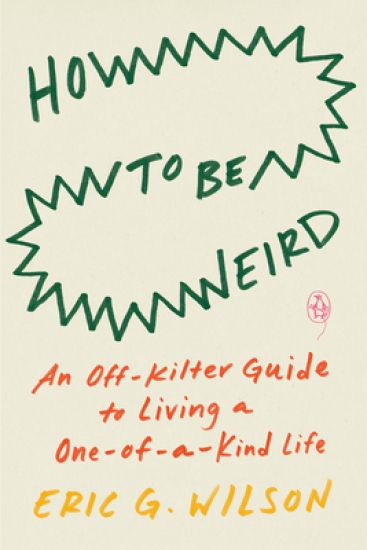
How To Be Weird

How To Be Weird

Eric G. Wilson

Penguin Putnam Inc
2022
nidottu
A guidebook for beating the monotony of the everyday by purposefully cultivating the surprising joys that come from living an off-kilter life It's all too easy to get caught up in the often monotonous nature of our day to day--moving from one rote task to the next, only to rinse and repeat the next day. Weirdness, however, is an easily accessible antidote to these feelings of languishing. The quirky, eccentric, and peculiar can take us out of our normal habits of thought and perception, surprising us by breaking up our routines and reminding us that there's more to life than the everyday. In How to Be Weird, Eric G. Wilson offers 99 fun and philosophically rich exercises for embracing all the weird in the world around us--taking aimless walks, creating a reverie nook, exploring the underside of bridges, making tombstone rubbings, finding your own Narnia, and more. With brief digestible entries on how to make sense of the random, guidelines on how to defamiliarize familiar objects through meditation, and exercises for locating weird states and phenomena for ourselves, How to Be Weird is an invitation to lean into the weird and to live a fuller life.
How to Be a Mathemagician

How to Be a Mathemagician

Aditi Singhal

Penguin Ebury Press
2017
nidottu
Mathematics is an integral part of our life but many of us think of it only as a subject to be studied in school or college. In this book, Aditi and Sudhir Singhal, renowned maths educators, demystify mathematical principles and outline fascinating, fun and easy-to-learn techniques to excel in this field. Divided into two parts, How to Be a Mathemagician is a double-sided book (flip the book around to switch between sections!) that packs twice the punch, with one section containing tricks and delightful activities, and the other stimulating problem-solving steps to simplify calculations, quirky maths facts and much more. Meant for all age groups-students, teachers and parents alike, How to Be a Mathemagician will make you fall in love with the world of numbers.
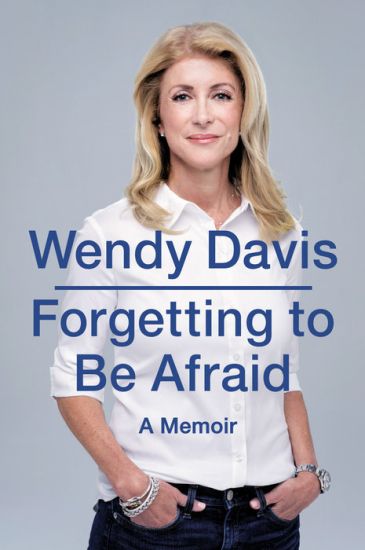
Forgetting To Be Afraid

Forgetting To Be Afraid

Wendy Davis

Plume
2015
nidottu
An inspiring memoir by one of the country s brightest new political stars and hero to women s rights supporters everywhere In June of 2013, Texas state senator Wendy Davis became an overnight political sensation when she singlehandedly filibustered Governor Rick Perry s sweeping anti-abortion bill. Her personal story is just as remarkable. The daughter of a single mother, Davis, at age 19, was on her way to becoming a single mother herself. She was living with her own young daughter in a trailer park while working two jobs and struggling to make ends meet. Still, she managed to attend and graduate from Texas Christian University and Harvard Law School, be elected to the Fort Worth City Council and the Texas Senate, and, in 2014, became the most serious Democrat in two decades to make a run for governor. Refreshing and forthright, Forgetting to Be Afraid is a deeply moving testament to the enduring power of the American Dream."
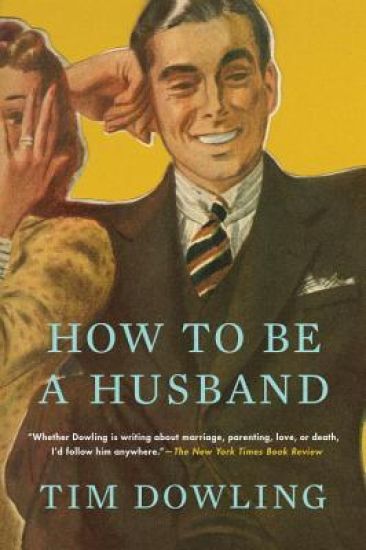
How to Be a Husband

How to Be a Husband

Tim Dowling

Blue Rider Press
2016
nidottu
While this book is indeed titled How to Be a Husband, please do not mistake it for a self-help book. Tim Dowling--columnist for The Guardian, husband, father of three, a person who once got into a shark tank for money--does not purport to have any pearls of wisdom about wedded life. What he does have is more than twenty years of marriage experience, and plenty of hilarious advice for what not to do in almost every conjugal situation. With the sharp wit that has made his Guardian columns a weekly must-read, Dowling explores what it means to be a good husband in the twenty-first century. The bar has been raised dramatically in the last hundred years: back in the day, every time you went out for cigarettes, it was simply expected that you came back. Now, every time you're sent out for espresso pods and tampons, it is expected that you come back with the right sort. And being a father doesn't seem to command much innate respect these days, either. When his first child was born, Dowling imagined himself eliciting a natural awe as the distant, authoritative figurehead; he did not anticipate his children hijacking his Twitter account to post heartfelt admissions of loserdom like, "Hi, I suck at everything I try in life." Still, two decades of wedded bliss is nothing to sneeze at, particularly from a couple who agreed to get married with the resigned determination of two people plotting to bury a body in the woods. How to Be a Husband is a wickedly funny guide to surviving the era of "The End of Men" (hint: it involves DIY), and an unexpectedly poignant memoir about love, marriage, and staying together until death doth you part.
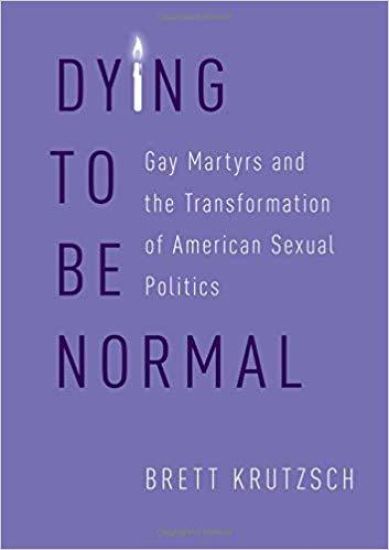
Dying to Be Normal

Dying to Be Normal

Brett Krutzsch

Oxford University Press Inc
2019
sidottu
Finalist, Best LGBTQ Nonfiction Book, Lambda Literary Awards 2020 On October 14, 1998, five thousand people gathered on the steps of the U.S. Capitol to mourn the death of Matthew Shepard, a gay college student who had been murdered in Wyoming eight days earlier. Politicians and celebrities addressed the crowd and the televised national audience to share their grief with the country. Never before had a gay citizen's murder elicited such widespread outrage or concern from straight Americans. In Dying to Be Normal, Brett Krutzsch argues that gay activists memorialized people like Shepard as part of a political strategy to present gays as similar to the country's dominant class of white, straight Christians. Through an examination of publicly mourned gay deaths, Krutzsch counters the common perception that LGBT politics and religion have been oppositional and reveals how gay activists used religion to bolster the argument that gays are essentially the same as straights, and therefore deserving of equal rights. Krutzsch's analysis turns to the memorialization of Shepard, Harvey Milk, Tyler Clementi, Brandon Teena, and F. C. Martinez, to campaigns like the It Gets Better Project, and national tragedies like the Pulse nightclub shooting to illustrate how activists used prominent deaths to win acceptance, influence political debates over LGBT rights, and encourage assimilation. Throughout, Krutzsch shows how, in the fight for greater social inclusion, activists relied on Christian values and rhetoric to portray gays as upstanding Americans. As Krutzsch demonstrates, gay activists regularly reinforced a white Protestant vision of acceptable American citizenship that often excluded people of color, gender-variant individuals, non-Christians, and those who did not adhere to Protestant Christianity's sexual standards. The first book to detail how martyrdom has influenced national debates over LGBT rights, Dying to Be Normal establishes how religion has shaped gay assimilation in the United States and the mainstreaming of particular gays as "normal" Americans.
How to Be Childless

How to Be Childless

Rachel Chrastil

Oxford University Press Inc
2019
sidottu
In How to Be Childless: A History and Philosophy of Life Without Children, Rachel Chrastil explores the long and fascinating history of childlessness, putting this often-overlooked legacy in conversation with the issues that childless women and men face in the twenty-first century. Eschewing two dominant narratives, that the childless are either barren and alone, or that they are carefree and selfish, How to Be Childless instead argues that the lives of childless individuals from the past can help all of us expand our range of possibilities for the good life. In uncovering the voices and experiences of childless women from the past five hundred years, Chrastil demonstrates that the pathways to childlessness, so often simplified as "choice" and "circumstance," are far more complex and interweaving. Balanced, deeply researched, and richly realized, How to be Childless will empower readers, parents, and childless alike, to navigate their lives with purpose.
Ways to be Blameworthy

Ways to be Blameworthy

Elinor Mason

Oxford University Press
2021
nidottu
There must be some connection between our deontic notions, rightness and wrongness, and our responsibility notions, praise- and blameworthiness. Yet traditional approaches to each set of concepts tend to take the other set for granted. This book takes an integrated approach to these questions, drawing on both ethics and responsibility theory, and thereby illuminating both sets of concepts. Elinor Mason describes this as ‘normative responsibility theory’: the primary aim is
Learning to be Capitalists

Learning to be Capitalists

Annette Miae Kim

Oxford University Press Inc
2008
sidottu
Given the overwhelming number of ineffective economic reform policies and programs, a central question for international development concerns how significant economic change happens. In the midst of this quandary, a puzzle has been growing quietly the last two decades. Vietnam has transitioned from a poor, centrally planned economy to one of the fastest growing, market economies in the world, despite ignoring conventional reform strategies. This book focuses on solving a specific puzzle of Vietnam's transition. Its fastest growing city, Ho Chi Minh City, has a real estate industry that ranks as the worst place in the world for private capital to invest . Nevertheless, entrepreneurs have emerged to form private firms within the first decade of transition. Where did these people come from? How could they conduct business in such an inhospitable economic environment? The book finds that the transition to capitalism is neither the natural propensity of individuals nor the decision of an all-powerful state nor necessarily requires a long, evolutionary process. The major, rapid, and discontinuous economic change that occurred in Vietnam was fundamentally enabled by a social reconstruction of cognitive paradigms. The new social cognition framework accounts for why some firms were more successful than others as well as why Vietnam's capitalism has surprising characteristics.
How To Be A Young #Writer

How To Be A Young #Writer

Christopher Edge

Oxford University Press
2017
nidottu
Get started on your writing journey with this go-to-guide designed to get budding writers crafting brilliant stories! It gives practical advice on beating the fear of the blank page, plot structuring, choosing a viewpoint, creating characters, writing killer openings and perfect endings. It will support you as you start writing and keep you going through to getting people reading your stories. Key features include: • Invaluable writing support, with grammar embedded, to inspire young writers • Tips on how to make your story contemporary, edgy and original • Advice and extracts from the best authors to provide inspiration • Includes ideas and vocabulary from the Oxford word experts • Engaging graphic illustrations to ignite young imaginations • Perfect for children ages 11+
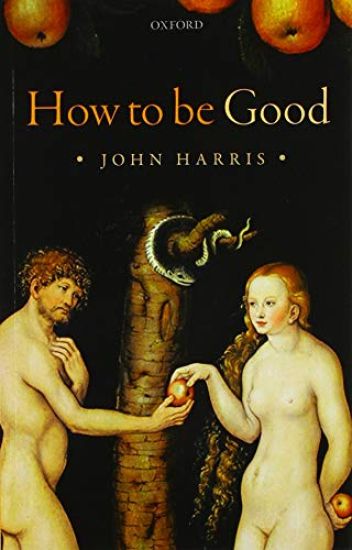
How to be Good

How to be Good

John Harris

Oxford University Press
2016
sidottu
'How to be Good?' is the pre-eminent question for ethics, although one that philosophers and ethicists seldom address head on. Knowing how to be good, or perhaps (more modestly and more accurately) knowing how to go about trying to be good, and the ways in which it is pointless or self-defeating to try to be good, is of immense theoretical and practical importance. And what goes for trying to be good oneself, goes also for trying to provide others with ways of being good, and for trying to make them good whether they like it or not. This is what is meant by 'moral enhancement'. There are many proposed methodologies or technologies for moral enhancement. Some of them are ancient and/or familiar: we may attempt moral enhancement by setting a good example, by good parenting, by education or training, by peer pressure, by telling stories with a moral, in words or in pictures, and so on. We can imbibe substances with mood changing or motivational effects. We can also use medical, biological, or other scientific means; we can search for and deploy chemicals, or biological or molecular agents, which we believe will change people for the better; and we can modify the environment to make bad outcomes of all sorts less likely. We can experiment with political and social systems, institutions, and arrangements designed to make the world a better place or people better people. The question whether and to what extent moral enhancement is possible is the subject of this book.
How to be Good

How to be Good

John Harris

Oxford University Press
2018
nidottu
'How to be Good?' is the pre-eminent question for ethics, although one that philosophers and ethicists seldom address head on. Knowing how to be good, or perhaps (more modestly and more accurately) knowing how to go about trying to be good, and the ways in which it is pointless or self-defeating to try to be good, is of immense theoretical and practical importance. And what goes for trying to be good oneself, goes also for trying to provide others with ways of being good, and for trying to make them good whether they like it or not. This is what is meant by 'moral enhancement'. There are many proposed methodologies or technologies for moral enhancement. Some of them are ancient and/or familiar: we may attempt moral enhancement by setting a good example, by good parenting, by education or training, by peer pressure, by telling stories with a moral, in words or in pictures, and so on. We can imbibe substances with mood changing or motivational effects. We can also use medical, biological, or other scientific means; we can search for and deploy chemicals, or biological or molecular agents, which we believe will change people for the better; and we can modify the environment to make bad outcomes of all sorts less likely. We can experiment with political and social systems, institutions, and arrangements designed to make the world a better place or people better people. The question whether and to what extent moral enhancement is possible is the subject of this book.
Ways to be Blameworthy

Ways to be Blameworthy

Elinor Mason

Oxford University Press
2019
sidottu
There must be some connection between our deontic notions, rightness and wrongness, and our responsibility notions, praise- and blameworthiness. Yet traditional approaches to each set of concepts tend to take the other set for granted. This book takes an integrated approach to these questions, drawing on both ethics and responsibility theory, and thereby illuminating both sets of concepts. Elinor Mason describes this as 'normative responsibility theory': the primary aim is not to give an account of the conditions of agency, but to give an account of what sort of wrong action makes blame fitting. She presents a pluralistic view of both obligation and blameworthiness, identifying three different ways to be blameworthy, corresponding to different ways of acting wrongly. First, ordinary blameworthiness is essentially connected to subjective wrongness, to acting wrongly by one's own lights. Subjective obligation, and ordinary blame, apply only to those who are within our moral community, who understand and share our value system. By contrast, detached blame can apply even when the agent is outside our moral community, and has no sense that her act is morally wrong. In detached blame, the blame rather than the blameworthiness is fundamental. Finally, agents can take responsibility for some inadvertent wrongs, and thus become responsible. This third sort of blameworthiness, 'extended blameworthiness', applies when the agent understands the objective wrongness of her act, but has no bad will. In such cases, the social context may be such that the agent should take responsibility, and accept ordinary blame from the wronged party.
How To Be Trustworthy

How To Be Trustworthy

Katherine Hawley

Oxford University Press
2019
sidottu
We become untrustworthy when we break our promises, miss our deadlines, or offer up unreliable information. If we aim to be a trustworthy person, we need to act in line with our existing commitments and we must also take care not to bite off more than we can chew when new opportunities come along. But often it is not clear what we will be able to manage, what obstacles may prevent us from keeping our promises, or what changes may make our information unreliable. In the face of such uncertainties, trustworthiness typically directs us towards caution and hesitancy, and away from generosity, spontaneity, or shouldering burdens for others. In How To Be Trustworthy, Katherine Hawley explores what trustworthiness means in our lives and the dilemmas which arise if we value trustworthiness in an uncertain world. She argues there is no way of guaranteeing a clean conscience. We can become untrustworthy by taking on too many commitments, no matter how well-meaning we are, yet we can become bad friends, colleagues, parents, or citizens if we take on too few commitments. Hawley shows that we can all benefit by being more sensitive to obstacles to trustworthiness, and recognising that those who live in challenging personal circumstances face greater obstacles than other members of society--whether visibly or invisibly disadvantaged through material poverty, poor health, social exclusion, or power imbalances.
How to be a Successful Economist

How to be a Successful Economist

Vicky Pryce; Andy Ross; Alvin Birdi; Ian Harwood

Oxford University Press
2022
nidottu
Exploring the wealth of career opportunities open to those with an interest in economics, Pryce, Ross, Birdi, and Harwood reflect on how students can become successful economists. An ideal complement to skills and employability modules on economics courses, or as pre-course reading, the authors explain the attributes that employers want and guide students to assemble the essential toolkit that all good economists need. The content uniquely brings together chapters which demystify the roles and industries that typically recruit economists; explore the importance of strong communication, quantitative, and broader soft skills and how to develop these; and coaches readers through the application and interview process for graduate positions. Readers will benefit from candid reflections on the advantages and drawbacks of particular career paths as well as the insights contributed by the authors, recent graduates, and experienced industry professionals. Professionals with experience working in industries such as financial services, government and policy, journalism, and consultancy participated in conversations with the authors about their careers. The valuable insights and advice they shared are included throughout the book and full video interviews can be found either in the e-book version of this title, or with the accompanying online resources. Digital formats and resources This book is available for students and institutions to purchase in a variety of formats, and is supported by online resources. The e-book offers a mobile experience and convenient access along with video content capturing conversations between the authors and practitioners and links that offer extra learning support: www.oxfordtextbooks.co.uk/ebooks