Cross-cultural collaboration in popular music represents opportunities for the audibility of multiple voices and the creation of new sounds, but it also presents many challenges. These challenges are both musical – that is, how to technically match voices – and ethical – that is, how to negotiate historically entrenched power discrepancies. Practice-based research has recently developed as a field in popular music studies. This burgeoning area has much to offer in terms of new knowledge, based on embodied insights, lived experience, and an arts practice. Through a practitioner-centred account of three projects involving traditional Persian and Vietnamese musicians, and western folk/rock musicians, this Element suggests pragmatic strategies and conceptual frameworks for making pop music with people of different cultural backgrounds.
Opera Remixed critically examines operatic hybridity and considers the opportunities and challenges of disrupting traditional paradigms of classical singing. Accounts of crossover forms like 'popera' and musical theatre explore alternative approaches to operatic vocality, examining how entrenched genre ideologies are challenged by creative agents, practices, and technologies at work near opera's borders. To illustrate these dynamics, the second half of the Element presents a case study of operatic arias reimagined for TikTok as one possible blueprint for how opera might embrace innovation and 'remix' itself for a contemporary audience. Opera Remixed concludes with a critique of the elitist traditions that hinder opera's capacity for renewal, arguing that the art form will only be able to embrace a truly inclusive future by relinquishing constraints of canonical purity.
Opera Remixed critically examines operatic hybridity and considers the opportunities and challenges of disrupting traditional paradigms of classical singing. Accounts of crossover forms like 'popera' and musical theatre explore alternative approaches to operatic vocality, examining how entrenched genre ideologies are challenged by creative agents, practices, and technologies at work near opera's borders. To illustrate these dynamics, the second half of the Element presents a case study of operatic arias reimagined for TikTok as one possible blueprint for how opera might embrace innovation and 'remix' itself for a contemporary audience. Opera Remixed concludes with a critique of the elitist traditions that hinder opera's capacity for renewal, arguing that the art form will only be able to embrace a truly inclusive future by relinquishing constraints of canonical purity.
This book argues that it can be both reasonable and appropriate to adopt a certain kind of misanthropy. The author defends a cognitivist version of misanthropy, an attitude whose central feature is the judgment that humanity is morally bad.Misanthropy is often dismissed on moral grounds. Many people hold that malice toward human persons is problematic and vulnerable to moral objections. In this book, the author advocates for cognitivist misanthropy. He defends an Asymmetry Thesis, according to which a morally bad deed carries more weight than a morally good deed, even if the harm of the former is exactly equal to the benefit of the latter. He makes the case that being misanthropic in the cognitivist sense is morally permissible and compatible with a broad range of moral reasons for action. He also considers the role of misanthropy in environmental thought, arguing that charges of misanthropy against certain "non-anthropocentric" views do not have the force they are typically thought to carry. Finally, the author investigates the practical implications of adopting cognitivist misanthropy, asking what living with such an attitude would involve.A Philosophical Defense of Misanthropy will appeal to researchers and advanced students working in ethics and the philosophy of human nature.
This book argues that it can be both reasonable and appropriate to adopt a certain kind of misanthropy. The author defends a cognitivist version of misanthropy, an attitude whose central feature is the judgment that humanity is morally bad.Misanthropy is often dismissed on moral grounds. Many people hold that malice toward human persons is problematic and vulnerable to moral objections. In this book, the author advocates for cognitivist misanthropy. He defends an Asymmetry Thesis, according to which a morally bad deed carries more weight than a morally good deed, even if the harm of the former is exactly equal to the benefit of the latter. He makes the case that being misanthropic in the cognitivist sense is morally permissible and compatible with a broad range of moral reasons for action. He also considers the role of misanthropy in environmental thought, arguing that charges of misanthropy against certain "non-anthropocentric" views do not have the force they are typically thought to carry. Finally, the author investigates the practical implications of adopting cognitivist misanthropy, asking what living with such an attitude would involve.A Philosophical Defense of Misanthropy will appeal to researchers and advanced students working in ethics and the philosophy of human nature.
Auditing at the speed of risk requires internal auditors to rethink the way we work. Agile auditing provides a path forward that blends the best elements from agile project management and internal audit best practices.Leaders in internal audit are ready to incorporate an agile audit mindset in their departments, but most of the available resources provide theoretical ideas. Even when outside consultants lead an agile transition, the consultants primarily focus on adding agile ceremonies without addressing the fundamental mindset change required for an agile audit transformation. This book provides a practical guide for audit leaders to follow as a playbook for implementing agile across their department, impacting every facet of the audit lifecycle, and addressing the mental shift required for making a lasting change. Every chapter includes discussion questions to facilitate discourse or just to help you analyze your own department. Next, we look at a typical internal audit department as they attempt the transition from a traditional audit methodology to agile auditing so we can learn from their missteps and successes.The guidance in Agile Audit Transformation and Beyond includes the basics of agile auditing, practical directions for shifting each phase of the audit life cycle, common hurdles faced during the transition, and forward-looking thought leadership on expanding beyond internal audit into agile assurance.
Auditing at the speed of risk requires internal auditors to rethink the way we work. Agile auditing provides a path forward that blends the best elements from agile project management and internal audit best practices.Leaders in internal audit are ready to incorporate an agile audit mindset in their departments, but most of the available resources provide theoretical ideas. Even when outside consultants lead an agile transition, the consultants primarily focus on adding agile ceremonies without addressing the fundamental mindset change required for an agile audit transformation. This book provides a practical guide for audit leaders to follow as a playbook for implementing agile across their department, impacting every facet of the audit lifecycle, and addressing the mental shift required for making a lasting change. Every chapter includes discussion questions to facilitate discourse or just to help you analyze your own department. Next, we look at a typical internal audit department as they attempt the transition from a traditional audit methodology to agile auditing so we can learn from their missteps and successes.The guidance in Agile Audit Transformation and Beyond includes the basics of agile auditing, practical directions for shifting each phase of the audit life cycle, common hurdles faced during the transition, and forward-looking thought leadership on expanding beyond internal audit into agile assurance.
This book offers the first comparative monograph on the management of elections. The book defines electoral management as a new, inter-disciplinary area and advances a realist sociological approach to study it. A series of new, original frameworks are introduced, including the PROSeS framework, which can be used by academics and practitioners around the world to evaluate electoral management quality. A networked governance approach is also introduced to understand the full range of collaborative actors involved in delivering elections, including civil society and the international community. Finally, the book evaluates some of the policy instruments used to improve the integrity of elections, including voter registration reform, training and the funding of elections. Extensive mixed methods are used throughout including thematic analysis of interviews, (auto-)ethnography, comparative historical analysis and, cross-national and national surveys of electoral officials. This text will be of key interest to scholars, students and practitioners interested and involved in electoral integrity and elections, and more broadly to comparative politics, public administration, international relations and democracy studies.Chapter 1 of this book is freely available as a downloadable Open Access PDF under a Creative Commons Attribution-Non Commercial-No Derivatives 4.0 license: https://tandfbis.s3-us-west-2.amazonaws.com/rt-files/docs/Open+Access+Chapters/9781138682412_oachapter01.pdfChapter 4 of this book is freely available as a downloadable Open Access PDF under a Creative Commons Attribution-Non Commercial-No Derivatives 4.0 license: https://tandfbis.s3-us-west-2.amazonaws.com/rt-files/docs/Open+Access+Chapters/9781138682412_oachapter04.pdf
This new book from Toby Miller engages with journalism from within the cultural studies tradition, addressing fundamental claims for the profession and its biggest contemporary challenges: critiques, objectivity, and insecurity. Why Journalism? A Polemic considers four key aspects of contemporary journalism in terms of theoretical relevance and historic tasks that are not usually considered in parallel:Citizenship: political, economic, and culturalEnvironment: the climate crisis and reporters’ material impactSports: the importance of the popular; andTechnology: its former, current, and future significanceWith examples drawn from Latin America, Spain, and France as well as the US and Britain, the query animating these investigations returns again and again, implicitly and explicitly: why journalism? Miller argues for an answer to that dilemma that will involve a fundamental shift in how reporters, proprietors, professors, students, and states view the profession. This is essential reading for scholars and students of media and cultural studies as well as journalism studies.
This new book from Toby Miller engages with journalism from within the cultural studies tradition, addressing fundamental claims for the profession and its biggest contemporary challenges: critiques, objectivity, and insecurity. Why Journalism? A Polemic considers four key aspects of contemporary journalism in terms of theoretical relevance and historic tasks that are not usually considered in parallel:Citizenship: political, economic, and culturalEnvironment: the climate crisis and reporters’ material impactSports: the importance of the popular; andTechnology: its former, current, and future significanceWith examples drawn from Latin America, Spain, and France as well as the US and Britain, the query animating these investigations returns again and again, implicitly and explicitly: why journalism? Miller argues for an answer to that dilemma that will involve a fundamental shift in how reporters, proprietors, professors, students, and states view the profession. This is essential reading for scholars and students of media and cultural studies as well as journalism studies.
Our current ecological crisis—featuring problems such as climate change, ocean acidification, and mass extinction—raises various moral issues, including a high probability of injustice and massive harm. This book defends a position called ecological pessimism, an attitude whose core feature is the belief that ecological catastrophe is likely to occur in the future.The author’s defense of ecological pessimism has two components. First, he makes the case that the relevant ecological facts about our world make ecological pessimism a reasonable, and indeed plausible, expectation. Second, he argues that ecological pessimism is morally and practically appropriate. Ecological pessimism is a distinctively moral kind of pessimism because the failure to avert ecological catastrophe leads to great ills for human beings and non-human nature. The author’s account responds to likely objections to ecological pessimism and makes the case against ecological optimism. Despite this, the author makes clear that being pessimistic about our ecological prospects is compatible with the melioristic project of improving our bad condition. He argues that environmental philosophy as a way of life, with its emphasis on environmental virtue and rich resources for developing spiritual exercises, is both a robust and attractive option for an ecological pessimist.A Philosophical Case for Ecological Pessimism will appeal to scholars and graduate students working on ethics and environmental philosophy.
"A small eternity I did spend in near solitude, with naught but a mad-man as company. In consequence, I find it did leave me ill-prepared to approach some circumstances."-Sam (773 AF).Lieutenant Thomas Walker's mission was successful, but he will not be thanked for it. His rediscovery of the colony's now-repentant ancient ene-my is not the salvation they hoped for...and may have arrived too late. The increasing threat of the monstrous, alien Others, coupled with fear-fueled unrest over a supposed alliance with the beings who forced the colony to rebuild from nothing, could all too easily spell their doom.Worse yet, it seems that Earth has not forgotten about the colony after all, and their intentions are, at best, unclear...
"A small eternity I did spend in near solitude, with naught but a mad-man as company. In consequence, I find it did leave me ill-prepared to approach some circumstances."-Sam (773 AF).Lieutenant Thomas Walker's mission was successful, but he will not be thanked for it. His rediscovery of the colony's now-repentant ancient ene-my is not the salvation they hoped for...and may have arrived too late. The increasing threat of the monstrous, alien Others, coupled with fear-fueled unrest over a supposed alliance with the beings who forced the colony to rebuild from nothing, could all too easily spell their doom.Worse yet, it seems that Earth has not forgotten about the colony after all, and their intentions are, at best, unclear...
Artificial intelligence is an essential part of our lives - for better or worse. It can be used to influence what we buy, who gets shortlisted for a job and even how we vote. Without AI, medical technology wouldn't have come so far, we'd still be getting lost on backroads in our GPS-free cars, and smartphones wouldn't be so, well, smart. But as we continue to build more intelligent and autonomous machines, what impact will this have on humanity and the planet? Professor Toby Walsh, a world-leading researcher in the field of artificial intelligence, explores the ethical considerations and unexpected consequences AI poses - Is Alexa racist? Can robots have rights? What happens if a self-driving car kills someone? What limitations should we put on the use of facial recognition? Machines Behaving Badly is a thought-provoking look at the increasing human reliance on robotics and the decisions that need to be made now to ensure the future of AI is as a force for good, not evil.
Meeting my true mate is supposed to be the best day of my life, but when I step in front of Elwood's door, expecting to jump into my alpha's arms and live happily ever after, I am sorely disappointed. I have no idea why my mate doesn't want me but I'm determined to keep him in my life, even if it's just as my friend. How long can I take keeping my alpha at arm's length before it breaks me? FrankieWhat is it about the adorable red-headed boy that draws me in and has my dragon wanting? I can't help but realize Frankie is everything I've ever wanted in a mate. Everyday it gets harder to remember I'm supposed to be holding back my feelings because we're only friends. When we do finally touch, I know it'll be explosive and change both of our lives forever. ElwoodThis 35k novella, which is book two in A Collection of Strays, is guaranteed to give you the mpreg, shifters, and happily ever after you love. Touching Fate is filled with knotty fun, shiny eggs, friends to lovers, true mates, and laugh out loud shenanigans and is intended for those 18 or over.
Enter a world of fantasy, dark humour and a city of a thousand delights, but probably far more troubles that one would like to shake a stick at. If one had a handy stick. Hieronymus, our hero has been tasked with tracking down a murderer, and his path will lead him into the paths of many colourful and interesting characters. Not least of which are zombies, vampires, wanna-be-vampires and homesick puppies. (the last may not be entirely accurate.) Welcome to the world of Cascus Purgamen.
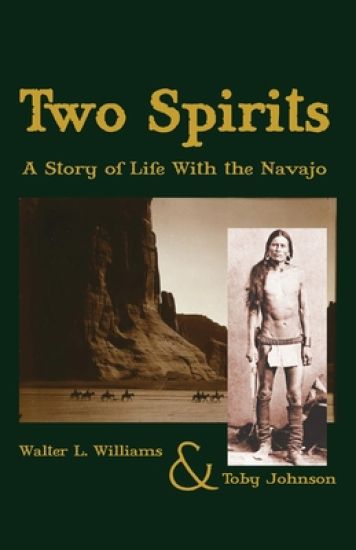
Set in the Civil War era of the 1860s, this novel tells the story of an innocent young Virginian who comes West by railroad to escape his domineering preacher-father and find adventure and a new life. He is duped into accepting the feckless job of Indian Agent at Fort Sumner in the New Mexico desert. There the Navajo were being imprisoned in an "experiment in Indian management" known as the Bosque Redondo Reservation. But the young hero is hardly the pawn his commanders intended him to be after he finds himself captivated by a crossdressing Two-Spirit male shaman, highly respected as spiritual leader and healer among the Din , as The People call themselves. Together the pair expose the real motives behind this "experiment" and help the Din escape imprisonment and return to their sacred homelands in the mountains. Anthropologist Walter L. Williams has teamed up with award-winning novelist and spiritual writer Toby Johnson to produce a work of historical fiction that presents the Native American philosophies, spiritualities, and gender wisdom which Williams documented in his groundbreaking The Spirit and The Flesh: Sexual Diversity in American Indian Culture. It was that book in 1986 that helped introduce the Two-Spirit tradition to modern readers. Williams' and Johnson's novel Two Spirits was winner of a prize for Historical Fiction from the Arch & Bruce Brown Foundation. This is a story, based on the real history of the Bosque Redondo, of tragedy, oppression, and discrimination, but it is also an enlightening tale of love, personal discovery, and natural beauty. Full of suspense, plot twists, and endearing romance, Two Spirits will captivate readers with its positive approach to life and love and its wonderful happy and satisfying ending. The novel is, at once, educational, entertaining, sexy, romantic, mystical, enlightened. Walter L Williams is author of the award-winning The Spirit and the Flesh and more than a dozen other books and novels. He has been professor of anthropology, history and gender studies at the University of Southern California, where he taught gay, lesbian, bisexual and transgender studies, and also American Indian Studies. He is past president of ONE Institute International Gay and Lesbian Archives.Toby Johnson is author of four non-fiction books that apply the wisdom of Joseph Campbell, his teacher and personal "wise old man," to modern-day social and religious problems, three gay genre novels that dramatize spiritual issues at the heart of gay consciousness, and two books on gay men's spiritualities, gay spirit, and the mystical experience of homosexuality.