Kirjojen hintavertailu. Mukana 12 083 983 kirjaa ja 12 kauppaa.

Kirjahaku

Etsi kirjoja tekijän nimen, kirjan nimen tai ISBN:n perusteella.

1000 tulosta hakusanalla W Timbrell Pierce

The Children's Plutarch: Tales of the Greeks (1910). By: Frederick James Gould, introduction By: W. D. Howells: Frederick James Gould (19 Decem
Frederick James Gould (19 December 1855 - 6 April 1938) was an English teacher, writer, and pioneer secular humanist. Early life and career: He was born in Brighton, the son of William James Gould and his wife Julia, who were evangelicalist Anglicans.He grew up in London, and at the age of seven was sent to study and sing in the choir at St George's Chapel, Windsor Castle. He then went to school at Chenies, Buckinghamshire, where he became a day and Sunday school teacher. At the age of fifteen, he thought he heard voices in his head exclaiming "How wonderful is the love of God ", following which he studied theology "in a kind of devout fury". However, after he was appointed head teacher at Great Missenden church school in 1877, he began to develop doubts about his own religious faith.In 1879 he moved to London, married, and began working as a teacher in publicly funded board schools in poorer parts of the East End. By the early 1880s he had become actively involved in the Secularist movement.He was transferred from the school in Bethnal Green to Limehouse in 1887, after his published notes in the Secular Review were seen by his employers, the London School Board, and he was exempted from teaching the Bible. He later asked to be allowed to resume Bible teaching, to stress its ethical rather than supernatural elements, but this was refused. William Dean Howells ( March 1, 1837 - May 11, 1920) was an American realist novelist, literary critic, and playwright, nicknamed "The Dean of American Letters". He was particularly known for his tenure as editor of The Atlantic Monthly, as well as for his own prolific writings, including the Christmas story "Christmas Every Day" and the novels The Rise of Silas Lapham and A Traveler from Altruria. Early life and family: William Dean Howells was born on March 1, 1837 in Martinsville, Ohio (now known as Martins Ferry, Ohio) to William Cooper Howells and Mary Dean Howells, the second of eight children. His father was a newspaper editor and printer who moved frequently around Ohio. In 1840, the family settled in Hamilton, Ohio, where his father oversaw a Whig newspaper and followed Swedenborgianism.Their nine years there were the longest period that they stayed in one place. The family had to live frugally, although the young Howells was encouraged by his parents in his literary interests. He began at an early age to help his father with typesetting and printing work, a job known at the time as a printer's devil. In 1852, his father arranged to have one of his poems published in the Ohio State Journal without telling him. Early career: In 1856, Howells was elected as a clerk in the State House of Representatives. In 1858, he began to work at the Ohio State Journal where he wrote poetry and short stories, and also translated pieces from French, Spanish, and German. He avidly studied German and other languages and was greatly interested in Heinrich Heine. In 1860, he visited Boston and met with writers James Thomas Fields, James Russell Lowell, Oliver Wendell Holmes, Sr., Nathaniel Hawthorne, Henry David Thoreau, and Ralph Waldo Emerson. He became a personal friend to many of them, including Henry Adams, William James, Henry James, and Oliver Wendell Holmes, Jr. In 1860 Howells wrote Abraham Lincoln's campaign biography Life Of Abraham Lincoln and subsequently gained a consulship in Venice. He married Elinor Mead on Christmas Eve 1862 at the American embassy in Paris. She was a sister of sculptor Larkin Goldsmith Mead and architect William Rutherford Mead of the firm McKim, Mead, and White. Among their children was architect John Mead Howells..........
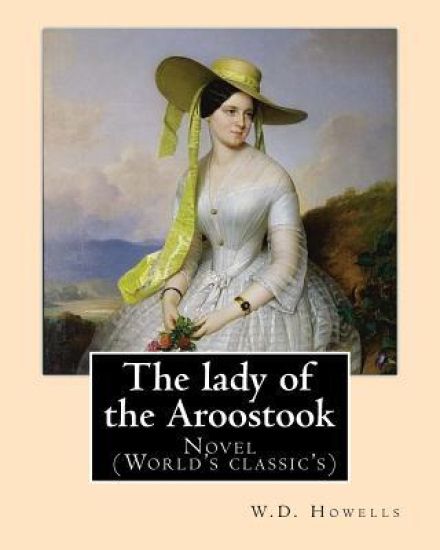
The lady of the Aroostook (NOVEL) By: W.D.Howells: Novel (World's classic's)

The lady of the Aroostook (NOVEL) By: W.D.Howells: Novel (World's classic's)

W. D. Howells

Createspace Independent Publishing Platform
2017
nidottu
The Lady of The Aroostook is a novel written by William Dean Howells in 1879. It was published in Cambridge, Massachusetts by H. O. Houghton and Company. PLOT: The story begins in South Bradfield, Massachusetts, with the main character, Lydia Blood, accompanied by her Aunt Maria and her grandfather Deacon Latham on their family farm. Both of Lydia's parents had died of illness when Lydia was young and she is now, at the age of nineteen, being sent to live with her other aunt, on her father's side of the family, Aunt Josephine, in Venice, Italy. Lydia was not only blessed with good looks and good smarts, but she also was blessed with a beautiful singing voice which she is going to cultivate in Venice and attempt to make a career out of. Her Aunt Josephine wrote to her grandfather suggesting that Lydia should come to Venice to live with her. She also suggested that he should go to Boston to find a ship to bring Lydia to Europe, which is how he found Captain Jenness and the Aroostook. Lydia and her grandfather travel to Boston where the Aroostook, a large and beautiful ship, awaits to take Lydia and several other passengers to Trieste. While looking for the wharf that the Aroostook is anchored at, Lydia and her grandfather become lost and decide to rest for a minute. During their rest they encounter two men who ask if Lydia is all right because she looks very pale and distraught. Her grandfather ensures the men that she is just tired from traveling and they leave. Lydia is angered that they would ask this question because she felt that they did not have the right to ask such a question. Finally the captain of the Aroostook, Captain Jenness, finds Lydia and her grandfather and shows them to the ship. Captain Jenness is a warm and confident man and he assures Lydia that she will be right at home on the Aroostook being that he has two daughters of his own who travel with him quite a lot. Lydia leaves her grandfather and boards the ship. Her room is the stateroom on the ship, the largest and most elegant room that Captain Jenness had designed for his wife. ......... William Dean Howells ( March 1, 1837 - May 11, 1920) was an American realist novelist, literary critic, and playwright, nicknamed "The Dean of American Letters". He was particularly known for his tenure as editor of The Atlantic Monthly, as well as for his own prolific writings, including the Christmas story "Christmas Every Day" and the novels The Rise of Silas Lapham and A Traveler from Altruria. Early life and family: William Dean Howells was born on March 1, 1837 in Martinsville, Ohio (now known as Martins Ferry, Ohio) to William Cooper Howells and Mary Dean Howells, the second of eight children. His father was a newspaper editor and printer who moved frequently around Ohio. In 1840, the family settled in Hamilton, Ohio, where his father oversaw a Whig newspaper and followed Swedenborgianism.Their nine years there were the longest period that they stayed in one place. The family had to live frugally, although the young Howells was encouraged by his parents in his literary interests. He began at an early age to help his father with typesetting and printing work, a job known at the time as a printer's devil. In 1852, his father arranged to have one of his poems published in the Ohio State Journal without telling him...............
The Undiscovered Country (1880). By: W.D.Howells: Willam Dean Howells was a novelist, short story writer, magazine editor, and mentor who wrote for va
A father uses his daughter to try to prove his belief in spiritualism. When his efforts fail, they retreat to a Shaker community to recover from the debacle.......... William Dean Howells ( March 1, 1837 - May 11, 1920) was an American realist novelist, literary critic, and playwright, nicknamed "The Dean of American Letters". He was particularly known for his tenure as editor of The Atlantic Monthly, as well as for his own prolific writings, including the Christmas story "Christmas Every Day" and the novels The Rise of Silas Lapham and A Traveler from Altruria. Early life and family: William Dean Howells was born on March 1, 1837 in Martinsville, Ohio (now known as Martins Ferry, Ohio) to William Cooper Howells and Mary Dean Howells, the second of eight children. His father was a newspaper editor and printer who moved frequently around Ohio. In 1840, the family settled in Hamilton, Ohio, where his father oversaw a Whig newspaper and followed Swedenborgianism.Their nine years there were the longest period that they stayed in one place. The family had to live frugally, although the young Howells was encouraged by his parents in his literary interests. He began at an early age to help his father with typesetting and printing work, a job known at the time as a printer's devil. In 1852, his father arranged to have one of his poems published in the Ohio State Journal without telling him. Early career: In 1856, Howells was elected as a clerk in the State House of Representatives. In 1858, he began to work at the Ohio State Journal where he wrote poetry and short stories, and also translated pieces from French, Spanish, and German. He avidly studied German and other languages and was greatly interested in Heinrich Heine. In 1860, he visited Boston and met with writers James Thomas Fields, James Russell Lowell, Oliver Wendell Holmes, Sr., Nathaniel Hawthorne, Henry David Thoreau, and Ralph Waldo Emerson. He became a personal friend to many of them, including Henry Adams, William James, Henry James, and Oliver Wendell Holmes, Jr. In 1860 Howells wrote Abraham Lincoln's campaign biography Life Of Abraham Lincoln and subsequently gained a consulship in Venice. He married Elinor Mead on Christmas Eve 1862 at the American embassy in Paris. She was a sister of sculptor Larkin Goldsmith Mead and architect William Rutherford Mead of the firm McKim, Mead, and White. Among their children was architect John Mead Howells. Editorship and other literary pursuits: The Howells returned to America in 1865 and settled in Cambridge, Massachusetts. He wrote for various magazines, including the Atlantic Monthly and Harper's Magazine. In January 1866, James Fields offered him a position as assistant editor at the Atlantic Monthly; he accepted after successfully negotiating for a higher salary, though he was frustrated by Fields' close supervision. Howells was made editor in 1871, after five years as assistant editor, and he remained in this position until 1881. In 1869, he met Mark Twain with whom he formed a longtime friendship. But his relationship with journalist Jonathan Baxter Harrison was more important for the development of his literary style and his advocacy of Realism. Harrison wrote a series of articles for the Atlantic Monthly during the 1870s on the lives of ordinary Americans.Howells gave a series of twelve lectures on "Italian Poets of Our Century" for the Lowell Institute during its 1870-71 season. He published his first novel Their Wedding Journey in 1872, but his literary reputation soared with the realist novel A Modern Instance (1882), which described the decay of a marriage. His 1885 novel The Rise of Silas Lapham became his best known work, describing the rise and fall of an American entrepreneur of the paint business. His social views were also strongly represented in the novels Annie Kilburn (1888), A Hazard of New Fortunes (1890), and An Imperative Duty (1891).....
Annie Kilburn, a novel . By: W.D.Howells: William Dean Howells ( March 1, 1837 - May 11, 1920) was an American realist novelist, literary critic, a
After the death of Judge Kilburn his daughter came back to America. They had been eleven winters in Rome, always meaning to return, but staying on from year to year, as people do who have nothing definite to call them home. Toward the last Miss Kilburn tacitly gave up the expectation of getting her father away, though they both continued to say that they were going to take passage as soon as the weather was settled in the spring. At the date they had talked of for sailing he was lying in the Protestant cemetery, and she was trying to gather herself together, and adjust her life to his loss. This would have been easier with a younger person, for she had been her father's pet so long, and then had taken care of his helplessness with a devotion which was finally so motherly, that it was like losing at once a parent and a child when he died, and she remained with the habit of giving herself when there was no longer any one to receive the sacrifice............ William Dean Howells ( March 1, 1837 - May 11, 1920) was an American realist novelist, literary critic, and playwright, nicknamed "The Dean of American Letters". He was particularly known for his tenure as editor of The Atlantic Monthly, as well as for his own prolific writings, including the Christmas story "Christmas Every Day" and the novels The Rise of Silas Lapham and A Traveler from Altruria. Early life and family: William Dean Howells was born on March 1, 1837 in Martinsville, Ohio (now known as Martins Ferry, Ohio) to William Cooper Howells and Mary Dean Howells, the second of eight children. His father was a newspaper editor and printer who moved frequently around Ohio. In 1840, the family settled in Hamilton, Ohio, where his father oversaw a Whig newspaper and followed Swedenborgianism.Their nine years there were the longest period that they stayed in one place. The family had to live frugally, although the young Howells was encouraged by his parents in his literary interests. He began at an early age to help his father with typesetting and printing work, a job known at the time as a printer's devil. In 1852, his father arranged to have one of his poems published in the Ohio State Journal without telling him. Early career: In 1856, Howells was elected as a clerk in the State House of Representatives. In 1858, he began to work at the Ohio State Journal where he wrote poetry and short stories, and also translated pieces from French, Spanish, and German. He avidly studied German and other languages and was greatly interested in Heinrich Heine. In 1860, he visited Boston and met with writers James Thomas Fields, James Russell Lowell, Oliver Wendell Holmes, Sr., Nathaniel Hawthorne, Henry David Thoreau, and Ralph Waldo Emerson. He became a personal friend to many of them, including Henry Adams, William James, Henry James, and Oliver Wendell Holmes, Jr. In 1860 Howells wrote Abraham Lincoln's campaign biography Life Of Abraham Lincoln and subsequently gained a consulship in Venice. He married Elinor Mead on Christmas Eve 1862 at the American embassy in Paris. She was a sister of sculptor Larkin Goldsmith Mead and architect William Rutherford Mead of the firm McKim, Mead, and White. Among their children was architect John Mead Howells. Editorship and other literary pursuits: The Howells returned to America in 1865 and settled in Cambridge, Massachusetts. He wrote for various magazines, including the Atlantic Monthly and Harper's Magazine. In January 1866, James Fields offered him a position as assistant editor at the Atlantic Monthly; he accepted after successfully negotiating for a higher salary, though he was frustrated by Fields' close supervision....
Modern Italian poets: essays and versions (1887). By: W .D. Howells: essays and versions, with portraits.
William Dean Howells ( March 1, 1837 - May 11, 1920) was an American realist novelist, literary critic, and playwright, nicknamed "The Dean of American Letters". He was particularly known for his tenure as editor of The Atlantic Monthly, as well as for his own prolific writings, including the Christmas story "Christmas Every Day" and the novels The Rise of Silas Lapham and A Traveler from Altruria. Early life and family: William Dean Howells was born on March 1, 1837 in Martinsville, Ohio (now known as Martins Ferry, Ohio) to William Cooper Howells and Mary Dean Howells, the second of eight children. His father was a newspaper editor and printer who moved frequently around Ohio. In 1840, the family settled in Hamilton, Ohio, where his father oversaw a Whig newspaper and followed Swedenborgianism.Their nine years there were the longest period that they stayed in one place. The family had to live frugally, although the young Howells was encouraged by his parents in his literary interests. He began at an early age to help his father with typesetting and printing work, a job known at the time as a printer's devil. In 1852, his father arranged to have one of his poems published in the Ohio State Journal without telling him. Early career: In 1856, Howells was elected as a clerk in the State House of Representatives. In 1858, he began to work at the Ohio State Journal where he wrote poetry and short stories, and also translated pieces from French, Spanish, and German. He avidly studied German and other languages and was greatly interested in Heinrich Heine. In 1860, he visited Boston and met with writers James Thomas Fields, James Russell Lowell, Oliver Wendell Holmes, Sr., Nathaniel Hawthorne, Henry David Thoreau, and Ralph Waldo Emerson. He became a personal friend to many of them, including Henry Adams, William James, Henry James, and Oliver Wendell Holmes, Jr. In 1860 Howells wrote Abraham Lincoln's campaign biography Life Of Abraham Lincoln and subsequently gained a consulship in Venice. He married Elinor Mead on Christmas Eve 1862 at the American embassy in Paris. She was a sister of sculptor Larkin Goldsmith Mead and architect William Rutherford Mead of the firm McKim, Mead, and White. Among their children was architect John Mead Howells. Editorship and other literary pursuits: The Howells returned to America in 1865 and settled in Cambridge, Massachusetts. He wrote for various magazines, including the Atlantic Monthly and Harper's Magazine. In January 1866, James Fields offered him a position as assistant editor at the Atlantic Monthly; he accepted after successfully negotiating for a higher salary, though he was frustrated by Fields' close supervision. Howells was made editor in 1871, after five years as assistant editor, and he remained in this position until 1881. In 1869, he met Mark Twain with whom he formed a longtime friendship. But his relationship with journalist Jonathan Baxter Harrison was more important for the development of his literary style and his advocacy of Realism. Harrison wrote a series of articles for the Atlantic Monthly during the 1870s on the lives of ordinary Americans.Howells gave a series of twelve lectures on "Italian Poets of Our Century" for the Lowell Institute during its 1870-71 season. He published his first novel Their Wedding Journey in 1872, but his literary reputation soared with the realist novel A Modern Instance (1882), which described the decay of a marriage. His 1885 novel The Rise of Silas Lapham became his best known work, describing the rise and fall of an American entrepreneur of the paint business. His social views were also strongly represented in the novels Annie Kilburn (1888), A Hazard of New Fortunes (1890), and An Imperative Duty (1891)..........
April Hopes (1888). By: W .D. Howells: William Dean Howells ( March 1, 1837 - May 11, 1920) was an American realist novelist, literary critic,
From his place on the floor of the Hemenway Gymnasium Mr. Elbridge G. Mavering looked on at the Class Day gaiety with the advantage which his stature, gave him over most people there. Hundreds of these were pretty girls, in a great variety of charming costumes, such as the eclecticism of modern fashion permits, and all sorts of ingenious compro-mises between walking dress and ball dress. It struck him that the young men on whose arms they hung, in promenading around the long oval within the crowd of stationary spectators, were very much younger than students used to be, whether they wore the dress-coats of the Seniors or the cut-away of the Juniors and Sophomores; and the young girls themselves did not look so old as he remembered them in his day. There was a band playing somewhere, and the galleries were well filled with spectators seated at their ease, and intent on the party-coloured turmoil of the floor, where from time to time the younger promenaders broke away from the ranks into a waltz, and after some turns drifted back, smiling and controlling their quick breath, and resumed their promenade. The place was intensely light, in the candour of a summer day which had no reserves; and the brilliancy was not broken by the simple decorations. Ropes of wild laurel twisted up the pine posts of the aisles, and swung in festoons overhead; masses of tropical plants in pots were set along between the posts on one side of the room; and on the other were the lunch tables, where a great many people were standing about, eating chicken and salmon salads, or strawberries and ice-cream, and drinking claret-cup.................. William Dean Howells ( March 1, 1837 - May 11, 1920) was an American realist novelist, literary critic, and playwright, nicknamed "The Dean of American Letters". He was particularly known for his tenure as editor of The Atlantic Monthly, as well as for his own prolific writings, including the Christmas story "Christmas Every Day" and the novels The Rise of Silas Lapham and A Traveler from Altruria. Early life and family: William Dean Howells was born on March 1, 1837 in Martinsville, Ohio (now known as Martins Ferry, Ohio) to William Cooper Howells and Mary Dean Howells, the second of eight children. His father was a newspaper editor and printer who moved frequently around Ohio. In 1840, the family settled in Hamilton, Ohio, where his father oversaw a Whig newspaper and followed Swedenborgianism.Their nine years there were the longest period that they stayed in one place. The family had to live frugally, although the young Howells was encouraged by his parents in his literary interests. He began at an early age to help his father with typesetting and printing work, a job known at the time as a printer's devil. In 1852, his father arranged to have one of his poems published in the Ohio State Journal without telling him..........................
The Shadow of a Dream (1890). By: W .D. Howells: William Dean Howells ( March 1, 1837 - May 11, 1920) was an American realist novelist, literary criti
William Dean Howells ( March 1, 1837 - May 11, 1920) was an American realist novelist, literary critic, and playwright, nicknamed "The Dean of American Letters". He was particularly known for his tenure as editor of The Atlantic Monthly, as well as for his own prolific writings, including the Christmas story "Christmas Every Day" and the novels The Rise of Silas Lapham and A Traveler from Altruria. Early life and family: William Dean Howells was born on March 1, 1837 in Martinsville, Ohio (now known as Martins Ferry, Ohio) to William Cooper Howells and Mary Dean Howells, the second of eight children. His father was a newspaper editor and printer who moved frequently around Ohio. In 1840, the family settled in Hamilton, Ohio, where his father oversaw a Whig newspaper and followed Swedenborgianism.Their nine years there were the longest period that they stayed in one place. The family had to live frugally, although the young Howells was encouraged by his parents in his literary interests. He began at an early age to help his father with typesetting and printing work, a job known at the time as a printer's devil. In 1852, his father arranged to have one of his poems published in the Ohio State Journal without telling him. Early career: In 1856, Howells was elected as a clerk in the State House of Representatives. In 1858, he began to work at the Ohio State Journal where he wrote poetry and short stories, and also translated pieces from French, Spanish, and German. He avidly studied German and other languages and was greatly interested in Heinrich Heine. In 1860, he visited Boston and met with writers James Thomas Fields, James Russell Lowell, Oliver Wendell Holmes, Sr., Nathaniel Hawthorne, Henry David Thoreau, and Ralph Waldo Emerson. He became a personal friend to many of them, including Henry Adams, William James, Henry James, and Oliver Wendell Holmes, Jr. In 1860 Howells wrote Abraham Lincoln's campaign biography Life Of Abraham Lincoln and subsequently gained a consulship in Venice. He married Elinor Mead on Christmas Eve 1862 at the American embassy in Paris. She was a sister of sculptor Larkin Goldsmith Mead and architect William Rutherford Mead of the firm McKim, Mead, and White. Among their children was architect John Mead Howells. Editorship and other literary pursuits: The Howells returned to America in 1865 and settled in Cambridge, Massachusetts. He wrote for various magazines, including the Atlantic Monthly and Harper's Magazine. In January 1866, James Fields offered him a position as assistant editor at the Atlantic Monthly; he accepted after successfully negotiating for a higher salary, though he was frustrated by Fields' close supervision. Howells was made editor in 1871, after five years as assistant editor, and he remained in this position until 1881. In 1869, he met Mark Twain with whom he formed a longtime friendship. But his relationship with journalist Jonathan Baxter Harrison was more important for the development of his literary style and his advocacy of Realism. Harrison wrote a series of articles for the Atlantic Monthly during the 1870s on the lives of ordinary Americans.Howells gave a series of twelve lectures on "Italian Poets of Our Century" for the Lowell Institute during its 1870-71 season. He published his first novel Their Wedding Journey in 1872, but his literary reputation soared with the realist novel A Modern Instance (1882), which described the decay of a marriage. His 1885 novel The Rise of Silas Lapham became his best known work, describing the rise and fall of an American entrepreneur of the paint business. His social views were also strongly represented in the novels Annie Kilburn (1888), A Hazard of New Fortunes (1890), and An Imperative Duty (1891).....
A boy's town, described for "Harper's young people," (1890). By: W .D. Howells (ILLUSTRATED): William Dean Howells ( March 1, 1837 - May 11, 1920) was
Describes the typical adventures of a mid-nineteenth-century boy from his third to eleventh years...... William Dean Howells ( March 1, 1837 - May 11, 1920) was an American realist novelist, literary critic, and playwright, nicknamed "The Dean of American Letters". He was particularly known for his tenure as editor of The Atlantic Monthly, as well as for his own prolific writings, including the Christmas story "Christmas Every Day" and the novels The Rise of Silas Lapham and A Traveler from Altruria. Early life and family: William Dean Howells was born on March 1, 1837 in Martinsville, Ohio (now known as Martins Ferry, Ohio) to William Cooper Howells and Mary Dean Howells, the second of eight children. His father was a newspaper editor and printer who moved frequently around Ohio. In 1840, the family settled in Hamilton, Ohio, where his father oversaw a Whig newspaper and followed Swedenborgianism.Their nine years there were the longest period that they stayed in one place. The family had to live frugally, although the young Howells was encouraged by his parents in his literary interests. He began at an early age to help his father with typesetting and printing work, a job known at the time as a printer's devil. In 1852, his father arranged to have one of his poems published in the Ohio State Journal without telling him. Early career: In 1856, Howells was elected as a clerk in the State House of Representatives. In 1858, he began to work at the Ohio State Journal where he wrote poetry and short stories, and also translated pieces from French, Spanish, and German. He avidly studied German and other languages and was greatly interested in Heinrich Heine. In 1860, he visited Boston and met with writers James Thomas Fields, James Russell Lowell, Oliver Wendell Holmes, Sr., Nathaniel Hawthorne, Henry David Thoreau, and Ralph Waldo Emerson. He became a personal friend to many of them, including Henry Adams, William James, Henry James, and Oliver Wendell Holmes, Jr. In 1860 Howells wrote Abraham Lincoln's campaign biography Life Of Abraham Lincoln and subsequently gained a consulship in Venice. He married Elinor Mead on Christmas Eve 1862 at the American embassy in Paris. She was a sister of sculptor Larkin Goldsmith Mead and architect William Rutherford Mead of the firm McKim, Mead, and White. Among their children was architect John Mead Howells. Editorship and other literary pursuits: The Howells returned to America in 1865 and settled in Cambridge, Massachusetts. He wrote for various magazines, including the Atlantic Monthly and Harper's Magazine. In January 1866, James Fields offered him a position as assistant editor at the Atlantic Monthly; he accepted after successfully negotiating for a higher salary, though he was frustrated by Fields' close supervision.
Criticism and fiction, By: W .D. Howells: William Dean Howells ( March 1, 1837 - May 11, 1920) was an American realist novelist, literary critic,
William Dean Howells ( March 1, 1837 - May 11, 1920) was an American realist novelist, literary critic, and playwright, nicknamed "The Dean of American Letters". He was particularly known for his tenure as editor of The Atlantic Monthly, as well as for his own prolific writings, including the Christmas story "Christmas Every Day" and the novels The Rise of Silas Lapham and A Traveler from Altruria. Early life and family: William Dean Howells was born on March 1, 1837 in Martinsville, Ohio (now known as Martins Ferry, Ohio) to William Cooper Howells and Mary Dean Howells, the second of eight children. His father was a newspaper editor and printer who moved frequently around Ohio. In 1840, the family settled in Hamilton, Ohio, where his father oversaw a Whig newspaper and followed Swedenborgianism.Their nine years there were the longest period that they stayed in one place. The family had to live frugally, although the young Howells was encouraged by his parents in his literary interests. He began at an early age to help his father with typesetting and printing work, a job known at the time as a printer's devil. In 1852, his father arranged to have one of his poems published in the Ohio State Journal without telling him. Early career: In 1856, Howells was elected as a clerk in the State House of Representatives. In 1858, he began to work at the Ohio State Journal where he wrote poetry and short stories, and also translated pieces from French, Spanish, and German. He avidly studied German and other languages and was greatly interested in Heinrich Heine. In 1860, he visited Boston and met with writers James Thomas Fields, James Russell Lowell, Oliver Wendell Holmes, Sr., Nathaniel Hawthorne, Henry David Thoreau, and Ralph Waldo Emerson. He became a personal friend to many of them, including Henry Adams, William James, Henry James, and Oliver Wendell Holmes, Jr. In 1860 Howells wrote Abraham Lincoln's campaign biography Life Of Abraham Lincoln and subsequently gained a consulship in Venice. He married Elinor Mead on Christmas Eve 1862 at the American embassy in Paris. She was a sister of sculptor Larkin Goldsmith Mead and architect William Rutherford Mead of the firm McKim, Mead, and White. Among their children was architect John Mead Howells. Editorship and other literary pursuits: The Howells returned to America in 1865 and settled in Cambridge, Massachusetts. He wrote for various magazines, including the Atlantic Monthly and Harper's Magazine. In January 1866, James Fields offered him a position as assistant editor at the Atlantic Monthly; he accepted after successfully negotiating for a higher salary, though he was frustrated by Fields' close supervision...........
The coast of Bohemia By: W .D. Howells (Biographical edition): William Dean Howells ( March 1, 1837 - May 11, 1920) was an American realist nov
William Dean Howells ( March 1, 1837 - May 11, 1920) was an American realist novelist, literary critic, and playwright, nicknamed "The Dean of American Letters". He was particularly known for his tenure as editor of The Atlantic Monthly, as well as for his own prolific writings, including the Christmas story "Christmas Every Day" and the novels The Rise of Silas Lapham and A Traveler from Altruria. Early life and family: William Dean Howells was born on March 1, 1837 in Martinsville, Ohio (now known as Martins Ferry, Ohio) to William Cooper Howells and Mary Dean Howells, the second of eight children. His father was a newspaper editor and printer who moved frequently around Ohio. In 1840, the family settled in Hamilton, Ohio, where his father oversaw a Whig newspaper and followed Swedenborgianism.Their nine years there were the longest period that they stayed in one place. The family had to live frugally, although the young Howells was encouraged by his parents in his literary interests. He began at an early age to help his father with typesetting and printing work, a job known at the time as a printer's devil. In 1852, his father arranged to have one of his poems published in the Ohio State Journal without telling him. Early career: In 1856, Howells was elected as a clerk in the State House of Representatives. In 1858, he began to work at the Ohio State Journal where he wrote poetry and short stories, and also translated pieces from French, Spanish, and German. He avidly studied German and other languages and was greatly interested in Heinrich Heine. In 1860, he visited Boston and met with writers James Thomas Fields, James Russell Lowell, Oliver Wendell Holmes, Sr., Nathaniel Hawthorne, Henry David Thoreau, and Ralph Waldo Emerson. He became a personal friend to many of them, including Henry Adams, William James, Henry James, and Oliver Wendell Holmes, Jr. In 1860 Howells wrote Abraham Lincoln's campaign biography Life Of Abraham Lincoln and subsequently gained a consulship in Venice. He married Elinor Mead on Christmas Eve 1862 at the American embassy in Paris. She was a sister of sculptor Larkin Goldsmith Mead and architect William Rutherford Mead of the firm McKim, Mead, and White. Among their children was architect John Mead Howells. Editorship and other literary pursuits: The Howells returned to America in 1865 and settled in Cambridge, Massachusetts. He wrote for various magazines, including the Atlantic Monthly and Harper's Magazine. In January 1866, James Fields offered him a position as assistant editor at the Atlantic Monthly; he accepted after successfully negotiating for a higher salary, though he was frustrated by Fields' close supervision. Howells was made editor in 1871, after five years as assistant editor, and he remained in this position until 1881. In 1869, he met Mark Twain with whom he formed a longtime friendship. But his relationship with journalist Jonathan Baxter Harrison was more important for the development of his literary style and his advocacy of Realism. Harrison wrote a series of articles for the Atlantic Monthly during the 1870s on the lives of ordinary Americans.Howells gave a series of twelve lectures on "Italian Poets of Our Century" for the Lowell Institute during its 1870-71 season. He published his first novel Their Wedding Journey in 1872, but his literary reputation soared with the realist novel A Modern Instance (1882), which described the decay of a marriage. His 1885 novel The Rise of Silas Lapham became his best known work, describing the rise and fall of an American entrepreneur of the paint business. His social views were also strongly represented in the novels Annie Kilburn (1888), A Hazard of New Fortunes (1890), and An Imperative Duty (1891).............
The mouse-trap, and other farces By: W .D. Howells: Illustrated

The mouse-trap, and other farces By: W .D. Howells: Illustrated

W. D. Howells

Createspace Independent Publishing Platform
2017
nidottu
William Dean Howells ( March 1, 1837 - May 11, 1920) was an American realist novelist, literary critic, and playwright, nicknamed "The Dean of American Letters". He was particularly known for his tenure as editor of The Atlantic Monthly, as well as for his own prolific writings, including the Christmas story "Christmas Every Day" and the novels The Rise of Silas Lapham and A Traveler from Altruria. Early life and family: William Dean Howells was born on March 1, 1837 in Martinsville, Ohio (now known as Martins Ferry, Ohio) to William Cooper Howells and Mary Dean Howells, the second of eight children. His father was a newspaper editor and printer who moved frequently around Ohio. In 1840, the family settled in Hamilton, Ohio, where his father oversaw a Whig newspaper and followed Swedenborgianism.Their nine years there were the longest period that they stayed in one place. The family had to live frugally, although the young Howells was encouraged by his parents in his literary interests. He began at an early age to help his father with typesetting and printing work, a job known at the time as a printer's devil. In 1852, his father arranged to have one of his poems published in the Ohio State Journal without telling him. Early career: In 1856, Howells was elected as a clerk in the State House of Representatives. In 1858, he began to work at the Ohio State Journal where he wrote poetry and short stories, and also translated pieces from French, Spanish, and German. He avidly studied German and other languages and was greatly interested in Heinrich Heine. In 1860, he visited Boston and met with writers James Thomas Fields, James Russell Lowell, Oliver Wendell Holmes, Sr., Nathaniel Hawthorne, Henry David Thoreau, and Ralph Waldo Emerson. He became a personal friend to many of them, including Henry Adams, William James, Henry James, and Oliver Wendell Holmes, Jr. In 1860 Howells wrote Abraham Lincoln's campaign biography Life Of Abraham Lincoln and subsequently gained a consulship in Venice. He married Elinor Mead on Christmas Eve 1862 at the American embassy in Paris. She was a sister of sculptor Larkin Goldsmith Mead and architect William Rutherford Mead of the firm McKim, Mead, and White. Among their children was architect John Mead Howells. Editorship and other literary pursuits: The Howells returned to America in 1865 and settled in Cambridge, Massachusetts. He wrote for various magazines, including the Atlantic Monthly and Harper's Magazine. In January 1866, James Fields offered him a position as assistant editor at the Atlantic Monthly; he accepted after successfully negotiating for a higher salary, though he was frustrated by Fields' close supervision. Howells was made editor in 1871, after five years as assistant editor, and he remained in this position until 1881. In 1869, he met Mark Twain with whom he formed a longtime friendship. But his relationship with journalist Jonathan Baxter Harrison was more important for the development of his literary style and his advocacy of Realism. Harrison wrote a series of articles for the Atlantic Monthly during the 1870s on the lives of ordinary Americans.Howells gave a series of twelve lectures on "Italian Poets of Our Century" for the Lowell Institute during its 1870-71 season....
A traveler from Altruria: romance (1894). By: W .D. Howells: A Traveler from Altruria is a Utopian novel by William Dean Howells.
A Traveler from Altruria is a Utopian novel by William Dean Howells. It was first published in installments in The Cosmopolitan between November 1892 and October 1893, and eventually in book form by Harper & Brothers in 1894. The novel is a critique of unfettered capitalism and its consequences, and of the Gilded Age.Set during the early 1890s in a fashionable summer resort somewhere on the East Coast of the United States, the book is narrated by a Mr Twelvemough, a popular author of light fiction who has been selected to function as host to a visitor from the faraway island of Altruria called Mr Homos. Homos has come all the way to the United States to experience first-hand everyday life in the country which prides itself to represent democracy and equality, to see for himself how the principle that "all men are created equal" is being practiced. However, due to Altruria's secluded existence very little is known about that state, so Twelvemough and his circle of acquaintances, all of whom are staying at the same hotel, are more eager to learn something about Altruria than to explain American life and institutions. To their dismay, it becomes gradually clear to everyone involved in the conversations with Mr Homos-who in the course of the novel becomes less and less reluctant to talk about his own country-that the United States is greatly lagging behind Altruria in practically every aspect of life, be it political, economical, cultural, or moral. Thus, in the novel the island state of Altruria serves as a foil to America, whose citizens, compared to Altrurians, appear selfish, obsessed with money, and emotionally imbalanced. Mainly, A Traveller from Altruria is a critique of unfettered capitalism and its consequences, and of the Gilded Age in particular. In A Traveler from Altruria, Howells acknowledges the history of Utopian literature by having his group of educated characters refer to eminent representatives of that literary tradition such as Campanella (La citt del Sole, 1602) and Francis Bacon (New Atlantis, 1623), but also to quite recent authors like Edward Bellamy (Looking Backward, 1888) and William Morris (News from Nowhere, 1890). "With all those imaginary commonwealths to draw upon, from Plato, through More, Bacon, and Campanella, down to Bellamy and Morris, he has constructed the shakiest effigy ever made of old clothes stuffed with straw," says the professor, one of Homos's discussion partners, to his fellow Americans. "Depend upon it, the man is a humbug. He is not an Altrurian at all."...... William Dean Howells ( March 1, 1837 - May 11, 1920) was an American realist novelist, literary critic, and playwright, nicknamed "The Dean of American Letters".
The story of a play; a novel By: W .D. Howells: Novel (World's classic's)

The story of a play; a novel By: W .D. Howells: Novel (World's classic's)

W. D. Howells

Createspace Independent Publishing Platform
2017
nidottu
William Dean Howells ( March 1, 1837 - May 11, 1920) was an American realist novelist, literary critic, and playwright, nicknamed "The Dean of American Letters". He was particularly known for his tenure as editor of The Atlantic Monthly, as well as for his own prolific writings, including the Christmas story "Christmas Every Day" and the novels The Rise of Silas Lapham and A Traveler from Altruria. Early life and family: William Dean Howells was born on March 1, 1837 in Martinsville, Ohio (now known as Martins Ferry, Ohio) to William Cooper Howells and Mary Dean Howells, the second of eight children. His father was a newspaper editor and printer who moved frequently around Ohio. In 1840, the family settled in Hamilton, Ohio, where his father oversaw a Whig newspaper and followed Swedenborgianism.Their nine years there were the longest period that they stayed in one place. The family had to live frugally, although the young Howells was encouraged by his parents in his literary interests. He began at an early age to help his father with typesetting and printing work, a job known at the time as a printer's devil. In 1852, his father arranged to have one of his poems published in the Ohio State Journal without telling him. Early career: In 1856, Howells was elected as a clerk in the State House of Representatives. In 1858, he began to work at the Ohio State Journal where he wrote poetry and short stories, and also translated pieces from French, Spanish, and German. He avidly studied German and other languages and was greatly interested in Heinrich Heine. In 1860, he visited Boston and met with writers James Thomas Fields, James Russell Lowell, Oliver Wendell Holmes, Sr., Nathaniel Hawthorne, Henry David Thoreau, and Ralph Waldo Emerson. He became a personal friend to many of them, including Henry Adams, William James, Henry James, and Oliver Wendell Holmes, Jr. In 1860 Howells wrote Abraham Lincoln's campaign biography Life Of Abraham Lincoln and subsequently gained a consulship in Venice. He married Elinor Mead on Christmas Eve 1862 at the American embassy in Paris. She was a sister of sculptor Larkin Goldsmith Mead and architect William Rutherford Mead of the firm McKim, Mead, and White. Among their children was architect John Mead Howells. Editorship and other literary pursuits: The Howells returned to America in 1865 and settled in Cambridge, Massachusetts. He wrote for various magazines, including the Atlantic Monthly and Harper's Magazine. In January 1866, James Fields offered him a position as assistant editor at the Atlantic Monthly; he accepted after successfully negotiating for a higher salary, though he was frustrated by Fields' close supervision. Howells was made editor in 1871, after five years as assistant editor, and he remained in this position until 1881. In 1869, he met Mark Twain with whom he formed a longtime friendship. But his relationship with journalist Jonathan Baxter Harrison was more important for the development of his literary style and his advocacy of Realism. Harrison wrote a series of articles for the Atlantic Monthly during the 1870s on the lives of ordinary Americans.Howells gave a series of twelve lectures on "Italian Poets of Our Century" for the Lowell Institute during its 1870-71 season. He published his first novel Their Wedding Journey in 1872, but his literary reputation soared with the realist novel A Modern Instance (1882), which described the decay of a marriage. His 1885 novel The Rise of Silas Lapham became his best known work, describing the rise and fall of an American entrepreneur of the paint business. His social views were also strongly represented in the novels Annie Kilburn (1888), A Hazard of New Fortunes (1890), and An Imperative Duty (1891)....
The landlord at Lion's Head; a novel By: W .D. Howells: The Landlord at Lion's Head is a novel by American writer William Dean Howells.
The Landlord at Lion's Head is a novel by American writer William Dean Howells. The book was first published in 1897 by Harper & Brothers. Plot summary: The Durgin family, owners of a New Hampshire country house near a mountain whose peak resembles the head of a lion, plan to move to California because of a bad crop season and Mr. Durgin's ill health. As the family is packing, Mr. Westover, an artist, arrives. He pays the Durgins to stay in their home while he paints an image of the mountain. Jeff Durgin, the youngest son of the family, caters to Mr. Westover, who scolds him for scaring the nearby Whitwell children, Cynthia and Frank, with his dog. Instead of moving, Mrs. Durgin decides to change their home into a hotel; Mr. Durgin passes away in the winter before the hotel is opened. Five years later, Mr. Westovers pays another visit and is welcomed as a friend. The small country house has been renovated and expanded, and the Inn at Lion's Head is a huge success. The Whitwell family now helps run the inn. Mr. Westover catches a glimpse of Cynthia Whitwell and notices how beautiful she has become. When Jeff brings out a picnic lunch to the boarders of the hotel, Mrs. Marven, an upper class lady, does not allow him to eat with them; when Mrs. Durgin hears of this she kicks Mrs. Marven and her daughter out of the hotel. Jeff studies law at Harvard, but he is shunned by the wealthier upper-class students. He is suspended from school when he is caught with a friend who breaks a streetlight. Instead of going back to Lion's Head, he goes to Europe for the summer, and learns all about the hotels there. Once more, Mr. Westover spends the summer at Lion's head; Jeff arrives back from Europe on the same ship as wealthy Mrs. Vostrand and her daughter Genivieve. Jeff is attracted to Genivieve, but Mrs. Durgin does not allow him to associate with the upper-class boarders and sends Jeff back to Boston.The Vostrands settle in Boston, spending more and more time with Jeff Durgin. Jeff's proposes marriage to Genivieve, but she tells him that she is in love with an Italian. The Vostrands depart for Italy, leaving Jeff heartbroken. He returns to Lion's Head and is soon engaged to Cynthia, who Westover believes is far too fine for a blackguard like Jeff. Jeff tells his mother that he is content with being the Landlord at Lion's Head; she disapproves of both his low ambitions and his engagement to Cynthia. Jackson, Jeff's eldest brother, falls ill and is sent to Egypt for the winter to try to regain his health. Although Jeff no longer has plans to become a lawyer, Cynthia and Mrs. Durgin insist that he return to Harvard for his final year...... William Dean Howells ( March 1, 1837 - May 11, 1920) was an American realist novelist, literary critic, and playwright, nicknamed "The Dean of American Letters". He was particularly known for his tenure as editor of The Atlantic Monthly, as well as for his own prolific writings, including the Christmas story "Christmas Every Day" and the novels The Rise of Silas Lapham and A Traveler from Altruria................
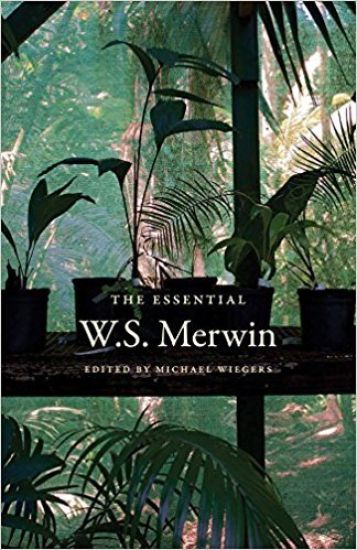
The Essential W.S. Merwin

The Essential W.S. Merwin

W. S. Merwin

Copper Canyon Press
2017
nidottu
The Essential W.S. Merwin traces a poetic legacy that changed the landscape of American letters: seven decades of audacity, rigor, and candor distilled into one definitive volume curated to represent the very best works from a vast oeuvre, from his 1952 debut, A Mask for Janus, to 2016's Garden Time. The Essential W.S Merwin includes favorite poems from two Pulitzer Prize-winning volumes; a selection of iconic translations; and lesser-known prose narratives. As the formalism of Merwin's early work loosened into the open, unpunctuated style he developed during the Civil Rights Movement--when urgent times demanded innovative modes of expression--readers can trace the evolution of one voice's commitment to moral, spiritual, and aesthetic inquiry. Across the decades, beyond headlines, policies, and trends, W.S. Merwin's poems point to the lessons that hide in the shadows of sentience.
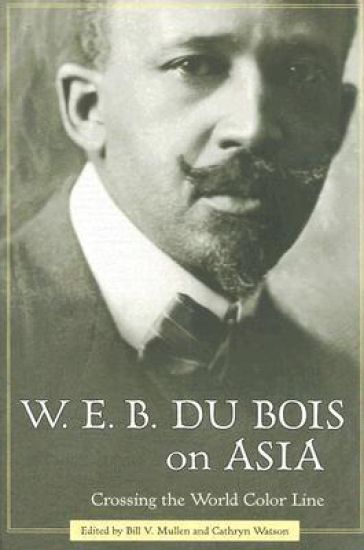
W. E. B. Du Bois on Asia

W. E. B. Du Bois on Asia

University Press of Mississippi
2005
nidottu
After Japan's defeat of Russia in the 1904 territorial war, W. E. B. Du Bois declared, ""The Color Line in civilization has been crossed in modern times as it was in the great past. The awakening of the yellow races is certain. That the awakening of the brown and black races will follow in time, no unprejudiced student of history can doubt."" Du Bois's lifelong certitude that Asia would play a central role in determining the fates of races, nations, and world systems of power has not until now been made fully available. W. E. B. Du Bois on Asia captures in unprecedented detail Du Bois's first-person experiences of and responses to Indian nationalism, the war between China and Japan, the life of Mahatma Gandhi, colonialism in Malaysia and Burma, and the promise of China's Communist Revolution. It also provides critical understanding of Du Bois's obsession with the eternal relationship between Asia and Africa dating from antiquity to the postcolonial era. The Du Bois of this collection emerges as a forerunner of postcolonialist thought, a lifelong internationalist, and the most important African American reader of Asia's place in the making of the modern world. Bill V. Mullen is professor of English at the University of Texas at San Antonio. He is the author of Afro-Orientalism and Popular Fronts: Chicago and African American Cultural Politics, 1935-1946. Cathryn Watson is a graduate research assistant at the University of Texas at San Antonio.