

Kirjahaku
Etsi kirjoja tekijän nimen, kirjan nimen tai ISBN:n perusteella.
1000 tulosta hakusanalla W. Neumann


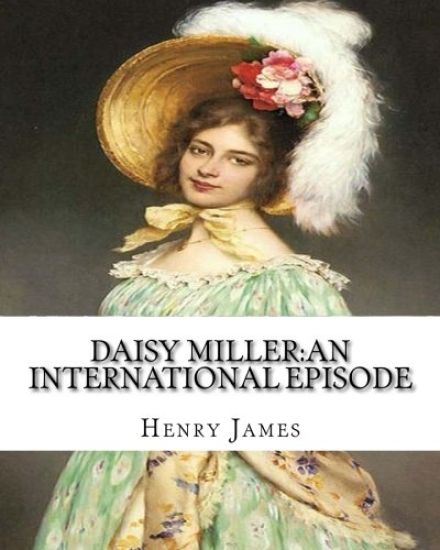
Daisy Miller: an international episode, By Henry James introdutcion By W.D.Howells: William Dean Howells (March 1, 1837 - May 11, 1920)
W. D. Howells; Henry James
Createspace Independent Publishing Platform
2016
nidottu
Daisy Miller is a novella by Henry James that first appeared in Cornhill Magazine in June-July 1878, and in book form the following year. 1] It portrays the courtship of the beautiful American girl Daisy Miller by Winterbourne, a sophisticated compatriot of hers. His pursuit of her is hampered by her own flirtatiousness, which is frowned upon by the other expatriates when they meet in Switzerland and Italy.Plot summary Annie "Daisy" Miller and Frederick Winterbourne first meet in Vevey, Switzerland, in a garden of the grand hotel 2] where Winterbourne is allegedly vacationing from his studies (an attachment to an older lady is rumoured). They are introduced by Randolph Miller, Daisy's 9-year-old brother. Randolph considers their hometown of Schenectady, New York, to be absolutely superior to all of Europe. Daisy, however, is absolutely delighted with the continent, especially the high society she wishes to enter. Winterbourne is at first confused by her attitude, and though greatly impressed by her beauty, he soon determines that she is nothing more than a young flirt. He continues his pursuit of Daisy in spite of the disapproval of his aunt, Mrs. Costello, who spurns any family with so close a relationship to their courier as the Millers have with their Eugenio. She also thinks Daisy is a shameless girl for agreeing to visit the Ch teau de Chillon with Winterbourne after they have known each other for only half an hour. The next day, the two travel to Ch teau de Chillon and although Winterbourne had paid the janitor for privacy, Daisy is not quite impressed. Winterbourne then informs Daisy that he must go to Geneva the next day. Daisy feels disappointment and chaffs him, eventually asking him to visit her in Rome later that year. In Rome, Winterbourne and Daisy meet unexpectedly in the parlor of Mrs. Walker, an American expatriate. Her moral values have adapted to those of Italian society. Rumors about Daisy meeting with young Italian gentlemen make her socially exceptionable under these criteria. Winterbourne learns of Daisy's increasing intimacy with a young Italian of questionable society, Giovanelli, as well as the growing scandal caused by the pair's behavior. Daisy is undeterred by the open disapproval of the other Americans in Rome, and her mother seems quite unaware of the underlying tensions. Winterbourne and Mrs. Walker attempt to persuade Daisy to separate from Giovanelli, but she refuses any help that is offered. One night, Winterbourne takes a walk through the Colosseum and sees a young couple sitting at its center. He realizes that they are Giovanelli and Daisy. Winterbourne, infuriated with Giovanelli, asks him how he could dare to take Daisy to a place where she runs the risk of catching "Roman Fever". Daisy says she does not care and Winterbourne leaves them. Daisy falls ill and dies a few days later.......... Henry James (15 April 1843 - 28 February 1916) was an American-born writer. He is regarded as one of the key figures of 19th-century literary realism. He was the son of Henry James, Sr. and the brother of philosopher and psychologist William James and diarist Alice James. He is best known for a number of novels showing Americans encountering Europe and Europeans. His method of writing from a character's point of view allowed him to explore issues related to consciousness and perception, and his style in later works has been compared to impressionist painting. His imaginative use of point of view, interior monologue and unreliable narrators brought a new depth to narrative fiction....

Three villages, By W. D. Howells: William Dean Howells
W. D. Howells
Createspace Independent Publishing Platform
2016
nidottu
William Dean Howells ( March 1, 1837 - May 11, 1920) was an American realist novelist, literary critic, and playwright. Nicknamed "The Dean of American Letters", he was particularly known for his tenure as editor of The Atlantic Monthly as well as his own prolific writings, including the Christmas story "Christmas Every Day", and the novels The Rise of Silas Lapham and A Traveler from Altruria. Early life and family William Dean Howells was born on March 1, 1837, in Martinsville, Ohio (now known as Martins Ferry, Ohio), to William Cooper, and Mary Dean, Howells.He was the second of eight children. His father was a newspaper editor and printer, who moved frequently around Ohio. In 1840, the family settled in Hamilton, Ohio, where William Cooper Howells oversaw a Whig newspaper and followed Swedenborgianism;their nine years there marked the longest they would stay in one place.Though the family had to live frugally, the young Howells was encouraged by his parents in his literary interests.Howells began to help his father with typesetting and printing work at an early age, a job known at the time as a printer's devil. In 1852, his father arranged to have one of Howells' poems published in the Ohio State Journal without telling him. Early career In 1856, Howells was elected as a clerk in the State House of Representatives. In 1858 he began to work at the Ohio State Journal where he wrote poetry, short stories, and also translated pieces from French, Spanish, and German. He avidly studied German and other languages and was greatly interested in Heinrich Heine. In 1860 he visited Boston and met with other American writers James Thomas Fields, James Russell Lowell, Oliver Wendell Holmes, Sr., Nathaniel Hawthorne, Henry David Thoreau, and Ralph Waldo Emerson, and became a personal friend to many, including Henry Adams, William James, Henry James and Oliver Wendell Holmes, Jr.Said to have been rewarded for an official biographyof Abraham Lincoln used during the election of 1860, he gained a consulship in Venice. On Christmas Eve 1862, at the American embassy in Paris, he married Elinor Mead, a sister of the sculptor Larkin Goldsmith Mead and the architect William Rutherford Mead, the Mead of McKim, Mead, and White. Among their children was the future architect John Mead Howells.
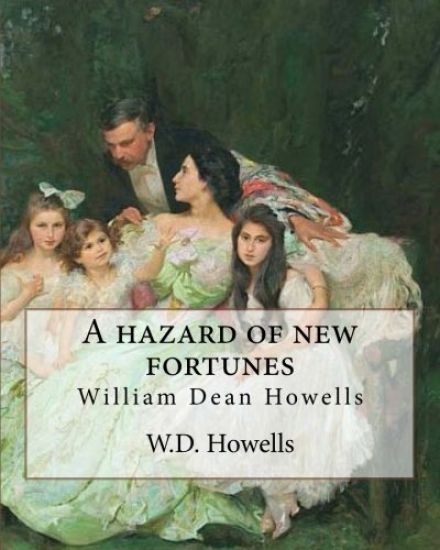
A hazard of new fortunes, By W.D.Howells A NOVEL (World's Classics) illustrated: William Dean Howells
W. D. Howells
Createspace Independent Publishing Platform
2016
nidottu

In Greek waters; a story of the Grecian war of independence (1821-1827): By G. A. Henty, illustrated By W. S. Walter Sydney STACEY (1846-1929)
W. S. Stacey; G. a. Henty
Createspace Independent Publishing Platform
2016
nidottu
George Alfred Henty (8 December 1832 - 16 November 1902) was a prolific English novelist and war correspondent.He is best known for his historical adventure stories that were popular in the late 19th century. His works include The Dragon & The Raven (1886), For The Temple (1888), Under Drake's Flag (1883) and In Freedom's Cause (1885).Biography--G.A.Henty was born in Trumpington, near Cambridge. He was a sickly child who had to spend long periods in bed. During his frequent illnesses he became an avid reader and developed a wide range of interests which he carried into adulthood. He attended Westminster School, London, and later Gonville and Caius College, Cambridge, where he was a keen sportsman. He left the university early without completing his degree to volunteer for the Army Hospital Commissariat when the Crimean War began. He was sent to the Crimea and while there he witnessed the appalling conditions under which the British soldier had to fight. His letters home were filled with vivid descriptions of what he saw. His father was impressed by his letters and sent them to The Morning Advertiser newspaper which printed them. This initial writing success was a factor in Henty's later decision to accept the offer to become a special correspondent, the early name for journalists now better known as war correspondents. Shortly before resigning from the army as a captain in 1859 he married Elizabeth Finucane. The couple had four children. Elizabeth died in 1865 after a long illness and shortly after her death Henty began writing articles for the Standard newspaper. In 1866 the newspaper sent him as their special correspondent to report on the Austro-Italian War where he met Giuseppe Garibaldi. He went on to cover the 1868 British punitive expedition to Abyssinia, the Franco-Prussian War, the Ashanti War, the Carlist Rebellion in Spain and the Turco-Serbian War.He also witnessed the opening of the Suez Canal and travelled to Palestine, Russia and India. Henty was a strong supporter of the British Empire all his life; according to literary critic Kathryn Castle: "Henty...exemplified the ethos of the new imperialism, and glorified in its successes".Henty's ideas about politics were influenced by writers such as Sir Charles Dilke and Thomas Carlyle.Henty once related in an interview how his storytelling skills grew out of tales told after dinner to his children. He wrote his first children's book, Out on the Pampas in 1868, naming the book's main characters after his children. The book was published by Griffith and Farran in November 1870 with a title page date of 1871. While most of the 122 books he wrote were for children, he also wrote adult novels, non-fiction such as The March to Magdala and Those Other Animals, short stories for the likes of The Boy's Own Paper and edited the Union Jack, a weekly boy's magazine... Walter Sydney STACEY (1846-1929)

Through Russian snows: a story of Napoleon's retreat from Moscow: By G. A. Henty, illustrated By W. H. Overend(1851-1898)was a painter and il
W. H. Overend; G. a. Henty
Createspace Independent Publishing Platform
2016
nidottu
WILLIAM HEYSHAM OVEREND (1851-1898) William Heysham Overend was a painter and illustrator, specialising in naval and other marine subjects. Despite his short career, he was prolific and successful. William Heysham Overend was born on 5 October 1851 in Coatham, near Middlesborough, now in the county of North Yorkshire. He was the third son of James Overend, a flax spinner, and Martha n e Hodgson. When he was 10 years old, he and his family moved south to Hackney, London, where his father took up a position as a railway contractor. They later lived at Buccleuch Terrace, Clapton Common. Overend was educated as a dayboy at Charterhouse, in 1863, and then at Bruce Castle, a progressive school in Tottenham. Determined to become a painter, he studied for three years in the studio of the painter, Davis Cooper. Developing as a marine artist, he exhibited paintings mainly at the Royal Academy of Arts and the Royal Institute of Oil Painters (being elected a member of the latter in 1886). He also contributed to magazines, especially the Illustrated London News (1872-96), and illustrated books, most notably boys' stories, such as those by G A Henty. Having had various addresses through the 1870s, Overend is recorded in 1881 as living with his wife, Sofia, at a boarding house at 64 Guilford Street, Bloomsbury, and keeping a studio close by at 39a Queen Square. In 1882, Overend sailed to New York, in order to fulfil a commission to commemorate Admiral David Porter's naval conquest of New Orleans, during the American Civil War. The resulting painting proved a great success. He would also exhibit at the World's Columbian Exposition, held in Chicago in 1893. Overend died at home at 17 Southampton Street, Fitzroy Square, London, on 18 March 1898. George Alfred Henty (8 December 1832 - 16 November 1902) was a prolific English novelist and war correspondent.He is best known for his historical adventure stories that were popular in the late 19th century. His works include The Dragon & The Raven (1886), For The Temple (1888), Under Drake's Flag (1883) and In Freedom's Cause (1885).Biography--G.A.Henty was born in Trumpington, near Cambridge. He was a sickly child who had to spend long periods in bed. During his frequent illnesses he became an avid reader and developed a wide range of interests which he carried into adulthood. He attended Westminster School, London, and later Gonville and Caius College, Cambridge, where he was a keen sportsman. He left the university early without completing his degree to volunteer for the Army Hospital Commissariat when the Crimean War began. He was sent to the Crimea and while there he witnessed the appalling conditions under which the British soldier had to fight. His letters home were filled with vivid descriptions of what he saw. His father was impressed by his letters and sent them to The Morning Advertiser newspaper which printed them. This initial writing success was a factor in Henty's later decision to accept the offer to become a special correspondent, the early name for journalists now better known as war correspondents.....

W(hole) Hearted: Discovering the Design of Your Life and the Message of the Heart
Rick Reitz
Createspace Independent Publishing Platform
2016
nidottu


With Cochrane the dauntless: a tale of the exploits of Lord Cochrane in South: American waters, By: G. A. Henty and W. H. Margetson(illustrator(Lon
W. H. Margetson; G. a. Henty
Createspace Independent Publishing Platform
2016
nidottu
With Cochrane the dauntless: a tale of the exploits of Lord Cochrane in South American waters, By: G. A. Henty and W. H. Margetson(illustrator).George Alfred Henty (8 December 1832 - 16 November 1902) was a prolific English novelist and war correspondent.He is best known for his historical adventure stories that were popular in the late 19th century. His works include The Dragon & The Raven (1886), For The Temple (1888), Under Drake's Flag (1883) and In Freedom's Cause (1885).Biography--G.A.Henty was born in Trumpington, near Cambridge. He was a sickly child who had to spend long periods in bed. During his frequent illnesses he became an avid reader and developed a wide range of interests which he carried into adulthood. He attended Westminster School, London, and later Gonville and Caius College, Cambridge, where he was a keen sportsman. He left the university early without completing his degree to volunteer for the Army Hospital Commissariat when the Crimean War began. He was sent to the Crimea and while there he witnessed the appalling conditions under which the British soldier had to fight. His letters home were filled with vivid descriptions of what he saw. His father was impressed by his letters and sent them to The Morning Advertiser newspaper which printed them. This initial writing success was a factor in Henty's later decision to accept the offer to become a special correspondent, the early name for journalists now better known as war correspondents. Shortly before resigning from the army as a captain in 1859 he married Elizabeth Finucane. The couple had four children. Elizabeth died in 1865 after a long illness and shortly after her death Henty began writing articles for the Standard newspaper. In 1866 the newspaper sent him as their special correspondent to report on the Austro-Italian War where he met Giuseppe Garibaldi. He went on to cover the 1868 British punitive expedition to Abyssinia, the Franco-Prussian War, the Ashanti War, the Carlist Rebellion in Spain and the Turco-Serbian War.He also witnessed the opening of the Suez Canal and travelled to Palestine, Russia and India. William Henry Margetson (Londen, 1860 - Wallingford, 2 januari 1940) was een Engels kunstschilder en illustrator, vooral bekend om zijn esthetische portretten van vrouwen.Leven en werk Margetson studeerde aan het Dulwich College, en vervolgens aan de South Kensington Schools en de Royal Academy Schools. In 1885 exposeerde hij ook voor het eerst bij de Royal Academy, en later ook bij de Royal Society of British Artists, het Royal Institute of Oil Painters en de Grosvenor Gallery. In 1909 werd hij lid van het Royal Institute. Margetson schilderde in olie en in waterverf. Hij maakte vooral naam als portrettist van mooie vrouwen, vaak met modern aandoende korte kapsels en hoeden. Ook maakte hij religieuze en allegorische werken. Aanvankelijk werkte bij in een academische, Victoriaans stijl. Later hanteerde hij een meer losse penseelvoering, beinvloed door het post-impressionisme en de prerafa lieten, meer in het bijzonder door Laurens Alma-Tadema. Zijn meest succesvolle werk is het klassiek-decoratieve The Sea Hath its Pearls, waarmee hij in 1897 exposeerde bij de Royal Academy, thans in het bezit van de 'Art Gallery of New South Wales', Australi . Een door Margetson geschilderd portret van Alfred Tennyson hangt in de National Portrait Gallery te Londen. Margetson werkte ook veel als boekillustrator. Hij was gehuwd met kunstenares Helen Hatton, die hij had leren kennen tijdens een gezamenlijke illustratieopdracht. Hij woonde en werkte eerst in Londen en later in Blewbury en Wallingford. Hij overleed in 1940, 79 jaar oud.
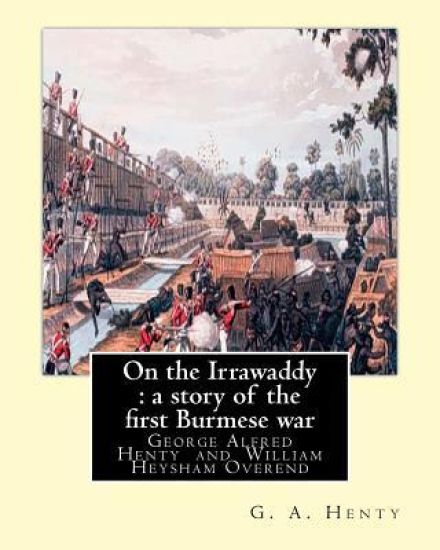
On the Irrawaddy: a story of the first Burmese war, By: G. A. Henty: illustrated By W. H.(William Heysham) Overend OVEREND (1851-1898).(
W. H. Overend; G. a. Henty
Createspace Independent Publishing Platform
2016
nidottu
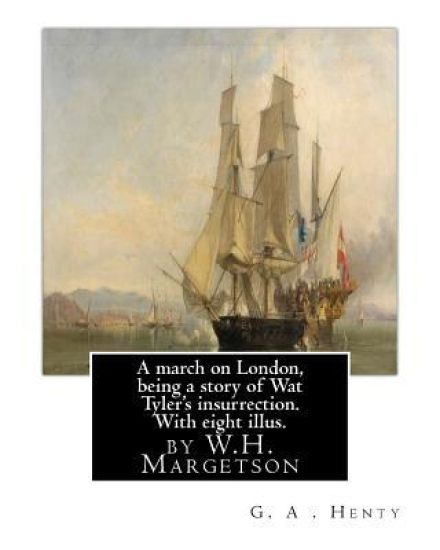
A march on London, being a story of Wat Tyler's insurrection. With eight illus.: by W.H. Margetson and author By: G.A.Henty. William Henry Margetson (
W. H. Margetson; G. a. Henty
Createspace Independent Publishing Platform
2016
nidottu
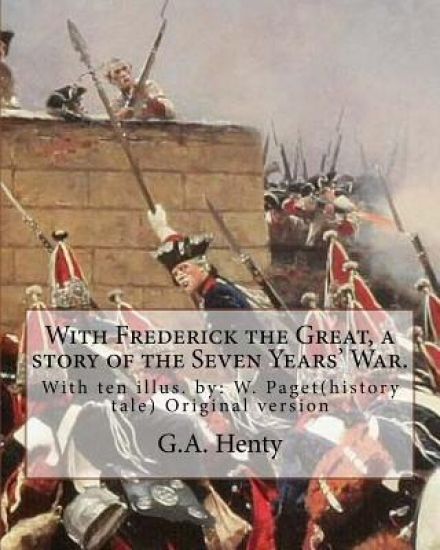
With Frederick the Great, a story of the Seven Years' War. With ten illus.: W. Paget( Walter Stanley Paget (1863-1935)), the youngest and perhaps the
W. Paget; G. a. Henty
Createspace Independent Publishing Platform
2016
nidottu
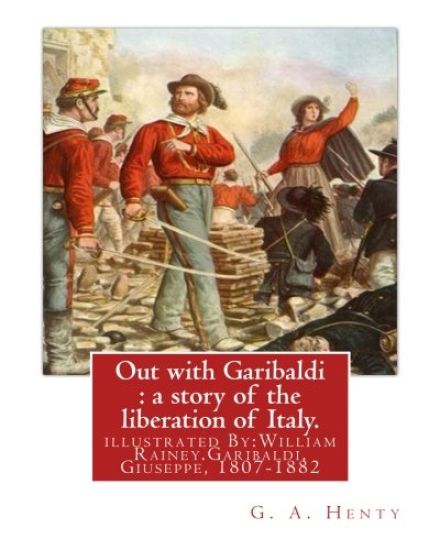
Out with Garibaldi: a story of the liberation of Italy. By: G. A. Henty: illustrated By: W.(William) Rainey, R.I. (1852-1936).Garibaldi, G
W. Rainey; G. a. Henty
Createspace Independent Publishing Platform
2016
nidottu
Giuseppe Garibaldi ( 4 July 1807 in Nice - 2 June 1882 on Caprera) was an Italian general, politician and nationalist who played a large role in the history of Italy.He is considered, with Camillo Cavour, Victor Emmanuel II and Giuseppe Mazzini, as one of Italy's "fathers of the fatherland".Garibaldi was a central figure in the Italian Risorgimento, since he personally commanded and fought in many military campaigns that led eventually to the formation of a unified Italy. He was appointed general by the provisional government of Milan in 1848, General of the Roman Republic in 1849 by the Minister of War, and led the Expedition of the Thousand on behalf and with the consent of Victor Emmanuel II. He has been called the "Hero of Two Worlds" because of his military enterprises in Brazil, Uruguay and Europe. These earned him a considerable reputation in Italy and abroad, aided by exceptional international media coverage at the time. Many of the greatest intellectuals of his time, such as Victor Hugo, Alexandre Dumas, and George Sand, showered him with admiration. The United Kingdom and the United States helped him a great deal, offering him financial and military support in difficult circumstances. In the popular telling of his story, he is associated with the red shirts worn by his volunteers in lieu of a uniform.... Rainey, W. (William), 1852-1936 ill: With Kitchener in the Soudan; a story of Atbara and Omdurman, by G. A. Henty ... with ten illustrations by William Rainey, R.I., and three maps. (New York, C. Scribner's Sons, 1902), also by G. A. Henty, N.Y.) prt Caxton Press (New York, and Charles Scribner's Sons. pbl (page images at HathiTrust)... George Alfred Henty (8 December 1832 - 16 November 1902) was a prolific English novelist and war correspondent.He is best known for his historical adventure stories that were popular in the late 19th century. His works include The Dragon & The Raven (1886), For The Temple (1888), Under Drake's Flag (1883) and In Freedom's Cause (1885).Biography--G.A.Henty was born in Trumpington, near Cambridge. He was a sickly child who had to spend long periods in bed. During his frequent illnesses he became an avid reader and developed a wide range of interests which he carried into adulthood. He attended Westminster School, London, and later Gonville and Caius College, Cambridge, where he was a keen sportsman. He left the university early without completing his degree to volunteer for the Army Hospital Commissariat when the Crimean War began.He was sent to the Crimea and while there he witnessed the appalling conditions under which the British soldier had to fight. His letters home were filled with vivid descriptions of what he saw. His father was impressed by his letters and sent them to The Morning Advertiser newspaper which printed them. This initial writing success was a factor in Henty's later decision to accept the offer to become a special correspondent, the early name for journalists now better known as war correspondents. Shortly before resigning from the army as a captain in 1859 he married Elizabeth Finucane. The couple had four children. Elizabeth died in 1865 after a long illness and shortly after her death Henty began writing articles for the Standard newspaper. In 1866 the newspaper sent him as their special correspondent to report on the Austro-Italian War where he met Giuseppe Garibaldi. He went on to cover the 1868 British punitive expedition to Abyssinia, the Franco-Prussian War, the Ashanti War, the Carlist Rebellion in Spain and the Turco-Serbian War.He also witnessed the opening of the Suez Canal and travelled to Palestine, Russia and India......
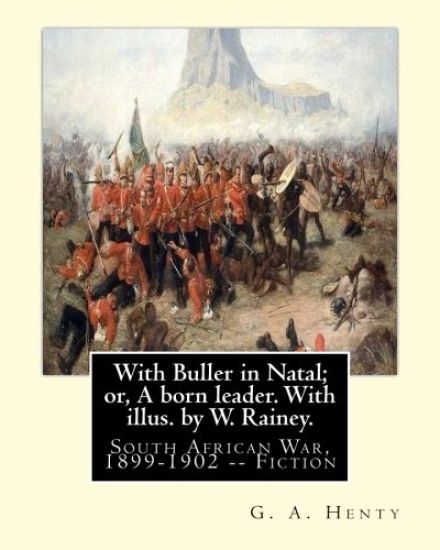
With Buller in Natal; or, A born leader. With illus. by W. Rainey. By: G. A.Henty: Rainey, W. (William), 1852-1936 ill: With Kitchener in the Soudan;
W. Rainey; G. a. Henty
Createspace Independent Publishing Platform
2016
nidottu
Rainey, W. (William), 1852-1936 ill: With Kitchener in the Soudan; a story of Atbara and Omdurman, by G. A. Henty ... with ten illustrations by William Rainey, R.I., and three maps. (New York, C. Scribner's Sons, 1902), also by G. A. Henty, N.Y.) prt Caxton Press (New York, and Charles Scribner's Sons. pbl (page images at HathiTrust)... George Alfred Henty (8 December 1832 - 16 November 1902) was a prolific English novelist and war correspondent.He is best known for his historical adventure stories that were popular in the late 19th century. His works include The Dragon & The Raven (1886), For The Temple (1888), Under Drake's Flag (1883) and In Freedom's Cause (1885).Biography--G.A.Henty was born in Trumpington, near Cambridge. He was a sickly child who had to spend long periods in bed. During his frequent illnesses he became an avid reader and developed a wide range of interests which he carried into adulthood. He attended Westminster School, London, and later Gonville and Caius College, Cambridge, where he was a keen sportsman. He left the university early without completing his degree to volunteer for the Army Hospital Commissariat when the Crimean War began. He was sent to the Crimea and while there he witnessed the appalling conditions under which the British soldier had to fight. His letters home were filled with vivid descriptions of what he saw. His father was impressed by his letters and sent them to The Morning Advertiser newspaper which printed them. This initial writing success was a factor in Henty's later decision to accept the offer to become a special correspondent, the early name for journalists now better known as war correspondents. Shortly before resigning from the army as a captain in 1859 he married Elizabeth Finucane. The couple had four children. Elizabeth died in 1865 after a long illness and shortly after her death Henty began writing articles for the Standard newspaper. In 1866 the newspaper sent him as their special correspondent to report on the Austro-Italian War where he met Giuseppe Garibaldi. He went on to cover the 1868 British punitive expedition to Abyssinia, the Franco-Prussian War, the Ashanti War, the Carlist Rebellion in Spain and the Turco-Serbian War.He also witnessed the opening of the Suez Canal and travelled to Palestine, Russia and India. Henty was a strong supporter of the British Empire all his life; according to literary critic Kathryn Castle: "Henty...exemplified the ethos of the new imperialism, and glorified in its successes".Henty's ideas about politics were influenced by writers such as Sir Charles Dilke and Thomas Carlyle.Henty once related in an interview how his storytelling skills grew out of tales told after dinner to his children. He wrote his first children's book, Out on the Pampas in 1868, naming the book's main characters after his children. The book was published by Griffith and Farran in November 1870 with a title page date of 1871. While most of the 122 books he wrote were for children, he also wrote adult novels, non-fiction such as The March to Magdala and Those Other Animals, short stories for the likes of The Boy's Own Paper and edited the Union Jack, a weekly boy's magazine.

At the point of the bayonet, a tale of the Mahratta War. With illus. by W. Paget: By: G. A. Henty, Maratha War, 1803 -- Fiction. Walter Stanley Paget
W. Paget; G. a. Henty
Createspace Independent Publishing Platform
2016
nidottu
George Alfred Henty (8 December 1832 - 16 November 1902) was a prolific English novelist and war correspondent.He is best known for his historical adventure stories that were popular in the late 19th century. His works include The Dragon & The Raven (1886), For The Temple (1888), Under Drake's Flag (1883) and In Freedom's Cause (1885).Biography--G.A.Henty was born in Trumpington, near Cambridge. He was a sickly child who had to spend long periods in bed. During his frequent illnesses he became an avid reader and developed a wide range of interests which he carried into adulthood. He attended Westminster School, London, and later Gonville and Caius College, Cambridge, where he was a keen sportsman. He left the university early without completing his degree to volunteer for the Army Hospital Commissariat when the Crimean War began. He was sent to the Crimea and while there he witnessed the appalling conditions under which the British soldier had to fight. His letters home were filled with vivid descriptions of what he saw. His father was impressed by his letters and sent them to The Morning Advertiser newspaper which printed them. This initial writing success was a factor in Henty's later decision to accept the offer to become a special correspondent, the early name for journalists now better known as war correspondents. Shortly before resigning from the army as a captain in 1859 he married Elizabeth Finucane. The couple had four children. Elizabeth died in 1865 after a long illness and shortly after her death Henty began writing articles for the Standard newspaper. In 1866 the newspaper sent him as their special correspondent to report on the Austro-Italian War where he met Giuseppe Garibaldi. He went on to cover the 1868 British punitive expedition to Abyssinia, the Franco-Prussian War, the Ashanti War, the Carlist Rebellion in Spain and the Turco-Serbian War.He also witnessed the opening of the Suez Canal and travelled to Palestine, Russia and India. Henty was a strong supporter of the British Empire all his life; according to literary critic Kathryn Castle: "Henty...exemplified the ethos of the new imperialism, and glorified in its successes".Henty's ideas about politics were influenced by writers such as Sir Charles Dilke and Thomas Carlyle.Henty once related in an interview how his storytelling skills grew out of tales told after dinner to his children. He wrote his first children's book, Out on the Pampas in 1868, naming the book's main characters after his children. The book was published by Griffith and Farran in November 1870 with a title page date of 1871. While most of the 122 books he wrote were for children, he also wrote adult novels, non-fiction such as The March to Magdala and Those Other Animals, short stories for the likes of The Boy's Own Paper and edited the Union Jack, a weekly boy's magazine.... Walter Stanley Paget (1863-1935), the youngest and perhaps the least artistically talented of the three Paget brothers, held a gold medal from the Royal Academy of Art, and, like his brothers, illustrated books and magazines in late nineteenth-century and early twentieth-century London, signing himself as "Wal Paget": His eldest brother, Henry, attended the Royal Academy Schools and worked for The Sphere as a "special artist" during the Balkan War of 1912-13. Walter had worked for this magazine, too, in London during the Boer War, turning the rough sketches sent by the paper's "specials" in South Africa into complete illustrations for publication. Walter's second brother, Sidney, also attended the Academy Schools. . . . Walter Paget's art was usually workmanlike but for the most part uninspired. (Arabian Nights Books online source]) Walter Paget "also . . . produc ed] coloured illustrations of pretty girls, rather feeble rustic interiors, and easy-to-view scenes of country life, soldiers and girls, and courting couples. .........

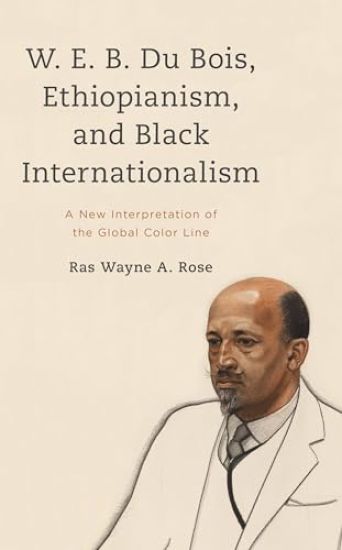
W. E. B. Du Bois, Ethiopianism, and Black Internationalism
Ras Wayne A. Rose
ROWMAN LITTLEFIELD
2023
sidottu
Scholarship on Black internationalism has experienced a revival. Whilst this scholarship has increasingly turned towards examining Du Bois’s thoughts on the “color line” in a global rather than national context, none do so by centering his Ethiopian-centered perspective. This book provides an examination of Du Bois’s efforts to link African Americans, Afro-Caribbean, and the Pan African project to Ethiopia as a response to the emerging question of Black historical identity.For Du Bois, Ethiopia, Ethiopian history, and its monarchial leadership were essential to resolving the global problem of the “color line”. He believed that Africans in the Diaspora, especially in the United States, and Africans across Ethiopia should build reciprocal relations with Ethiopia for the benefit of the Black Race and their mutual development. Du Bois also made multiple attempts to engage and establish relations with Ethiopia and worked through official and unofficial channels to develop those relations.By revisiting and reevaluating Du Bois’s engagement strategies with Ethiopia, the book suggests ways in which his evolving Pan-Africanism might be understood differently to how it has been deployed in scholarship on Black internationalism. The book provides new perspectives on Du Bois’s famous invocation of the global “color line” by uncovering his conceptual and practical reasons for specifically connecting Ethiopia to African Americans and the issues of global social and economic justice.