

Kirjahaku
Etsi kirjoja tekijän nimen, kirjan nimen tai ISBN:n perusteella.
1000 tulosta hakusanalla Warren Hately

Mercy Otis Warren
OmniScriptum
2026
pokkari

Labor Leaders View the Warren Era
Nabu Press
2010
pokkari


Jack 'Rabbit' Warren My Side Of The Story
UK Publishing House Ltd
2026
pokkari
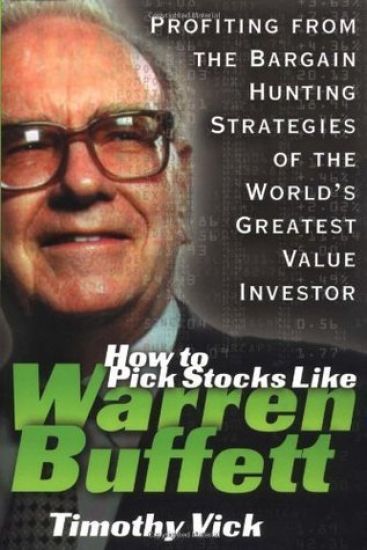
How to Pick Stocks Like Warren Buffett: Profiting from the Bargain Hunting Strategies of the World's Greatest Value Investor
Timothy Vick
McGraw-Hill Companies
2000
sidottu
A $10,000 investment in Warren Buffett's original 1956 portfolio would today be worth a staggering $250 million ... after taxes What are his investing secrets? How to Pick Stocks Like Warren Buffett contains the answers and shows, step-by-profitable-step, how any investor can follow Buffett's path to consistently find bargains in all markets: up, down, or sideways. How to Pick Stocks Like Warren Buffett sticks to the basics: how Buffett continually finds bargain stocks passed over by others. Written by an actual financial analyst who uses Buffett's strategies professionally, this tactical how-to book includes: Comprehensive financial tools and information Strategy-packed "Buffett in action" boxes Buffett's own stock portfolio--continually updated on the author's website
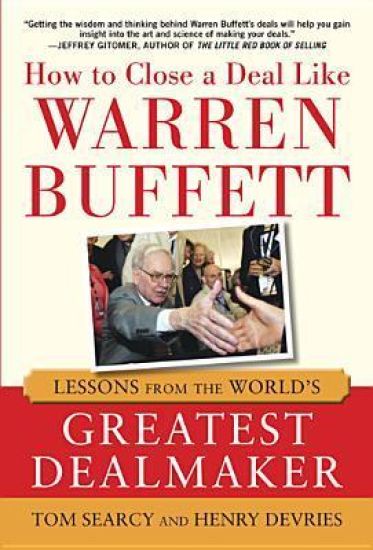
How to Close a Deal Like Warren Buffett: Lessons from the World's Greatest Dealmaker
Tom Searcy; Henry DeVries
McGraw-Hill Professional
2012
sidottu
Silver Winner--Tops Sales World's Best Sales and Marketing BookRevealed: the winning blueprint for making deals like The Oracle of OmahaWarren Buffett didn't become the world's third wealthiest individual on his investing instincts alone. Buffett is a master dealmaker. In fact, one of his greatest single successes came when he closed multiple deals to own 100 percent of the Government Employees Insurance Company--also known as GEICO.Highly successful dealmakers themselves, Tom Searcy and Henry DeVries have been studying Buffett's unique approach for many years. Now, they reveal the secrets of the Oracle of Omaha. How to Close a Deal Like Warren Buffett gives you the 101 top deal-making maxims of a legend in his own time. Here's just a small sampling of what'sinside:Warren Way #22: Choose quality."It's better to own a portion of the Hope diamond than 100 percent of a rhinestone."Warren Way #41: Deal making is a no-called-strikegame."You don't have to swing at everything--you can wait for your pitch."Warren Way #75. Think long term."Our favorite holding period is forever."Warren Way #92. Don't do deals just to do deals."We don't get paid for activity, just for being right."Warren Way #98. Think for yourself."My idea of a group decision is to look in the mirror."Warren Way #99. Be honest in your deal making."It takes 20 years to build a reputation and five minutes to ruin it."Searcy and DeVries round it all out with an abundance of their own expertise--approaches that, added up, have generated billions of dollars in new sales.Take the advice in this hands-on guide and learn How to Close a Deal Like Warren Buffett.How to Close a Deal Like Warren Buffett reveals the method behind Buffett's near-mythic deal-making prowess. Guaranteed to help you come out on the right side of every deal!"Tom Searcy and Henry DeVries have done a masterful job of distilling Buffett's wisdom into a highly readable book you’ll want to refer to again and again. A must-havefor dealmakers!" -- Ken Blanchard, coauthor of The One Minute Manager and Leading at a Higher Level"Almost anybody interested in deal making will find something of interest here. Simply the most important new book on deal making and big account sales strategy." -- Marshall Goldsmith, author of the New York Times bestsellers MOJO and What Got You Here Won't Get You There"Read this inspiring, advice-filled book to discover how you can leverage Warren Buffett's deal-making strategies to negotiate and win big contracts." -- Jill Konrath, author of SNAP Selling and Selling to Big Companies"This book is Dale Carnegie reconfigured for the business world." -- Thomas Barnett, contributing editor at Esquire and author of Great Powers: America and the World After Bush"This is the first book we've read that truly explains how Buffett thinks and how his lessons can be applied to your business." -- Neil Senturia and Barbara Bry, serial entrepreneurs and entrepreneurship columnists for U-T San Diego

The Unpublished Opinions of the Warren Court
Bernard Schwartz
Oxford University Press Inc
1985
sidottu
An important contribution to constitutional literature, this collection of ten unpublished decisions by the Warren Court puts the decision making process of the Supreme Court in a new light. By following the major changes that occur in each case from the circulation of tentative majority opinions to the final issuance of opinion, the book portrays how the justices communicate with each other and how they are influenced by each other's arguments. Interpretations and commentaries by the author illuminate the significance of each case and provide insight into the different judicial philosophies and personal styles of the justices. This book will be of substantial value to law schools, law libraries, bar associations, and lawyers practicing in the field of constitutional law.

Catharine Macaulay and Mercy Otis Warren were radical friends in a revolutionary age. They produced definitive histories of the English Civil War and the American Revolution, attacked the British government and the United States federal constitution, and instigated a debate on women's rights which inspired Mary Wollstonecraft, Judith Sargent Murray, and other feminists. Drawing on new research (including recently discovered correspondence) this is the first book to consider Macaulay and Warren in the context of the revolutionary Atlantic. In a series of detailed interdisciplinary studies, Davies suggests the centrality of both women to transatlantic political cultures between the middle of the eighteenth century and the turn of the nineteenth. The experience of Anglo-American conflict formed Macaulay and Warren's friendship and radically changed their writing lives. In showing how it did so, Davies also explains how the revolutionary Atlantic shaped modern ideas of gender difference. Anglo-American separation had a politics of gender which defined Warren and Macaulay's awareness of themselves as women and of which their writing also offered important critiques. Davies's book reveals the political significance of Mercy Otis Warren and Catharine Macaulay to an era when the truths of patriotism, nationhood and empire were never wholly self-evident but were hotly contested.


A Review Of The Principal Charges Against Warren Hastings, Esq., Late Governor General Of Bengal
John Logan
Kessinger Pub
2007
pokkari
"The Four Filters Invention of Warren Buffett and Charlie Munger" examines each of the steps that Buffett and Munger perform in "framing and making" an investment decision. This book is a focused look into this amazing innovation within "Behavioral Finance." The genius of Buffett and Munger's parsimonious four filters process was to "capture all the important stakeholders" in a "multi-variable" decision forming process.
Part of the four-book Queens of the Resistance series, saluting some of the most beloved boss ladies in Congress: a celebration of Elizabeth Warren, the star senator from Massachusetts and a leading 2020 presidential candidate All hail Queen Elizabeth She's a "queen" but not a monarch who's spent her life fighting to create a more equal society. Now one of the most recognizable women in politics, Warren took a winding road to become the badass senator from Massachusetts--the first woman senator ever elected from the state. Day-to-day struggle to make ends meet? Check. Single motherhood? Check. Law degree? Check. Tenured Harvard Law professor? You bet And oh, she created a whole new government agency to protect consumers from predatory businesses. This the story of Liz's hard-earned rise to the top of the game. With illustrations, deep research, and writing as endlessly quotable as she is, Queens of the Resistance pays tribute to this phenomenal woman. About the series: Each book of the Queens of the Resistance series will be a celebration of the rebellion against the oppression of women and an embracement of the new in the United States government. The series is adorned with sass, discernment, and the badassery of the present and future leadership. The Doomsday Clock is at a minute to midnight, and the patriarchal power grid that lights "the shining city on a Hill" is about to black out. It's time to yield to the alternative--the power of women.
"The Four Filters Invention of Warren Buffett and Charlie Munger" examines each of the basic steps they perform in "framing and making" an investment decision. This book is a focused look into this amazing invention within "Behavioral Finance." The genius of Buffett and Munger's parsimonious four filters process was to "capture all the important stakeholders" in a "multi-variable" equation or formula. Imagine...Products, Enduring Customers, Managers, and Margin-of-Safety...all in one mixed "qual + quant" formula. Other important ideas are embedded in each chapter. The book can be used as a supplemental textbook in a Valuation or Decision Sciences course.

Inauguration of the Statue of Warren
Bunker Hill Monument Association
Trieste Publishing
2018
nidottu


Crisscrossing the sprawling landscape of Robert Penn Warren, James H. Justus offers us the first comprehensive survey of Warren's complete canon, including the poetry of 1980. The temptation for everyone who has written on Warren, our most distinguished man of letters still active in American literature, asserts Justus, ""is to analyse those themes and moral situations that, because they recur so frequently and obsessively, constitute the massive centrality of an entire corpus."" Justus attempts ""to emphasise the ways by which we become aware of such themes and situations, the technical accomplishment of their rendering, which alone justifies our thinking of Warren as a literary artist."" The Achievement of Robert Penn Warren shows how Warren's work, his fiction, poetry, literary criticism, historical and personal essays, journalism, is shaped largely by the circumstances not only of his birth and early career as a border-state southerner but also oh his training and later career as a transregional artist and intellectual.Dividing his book into four parts, Justus discusses in Part I Warren's cycle of themes, the most enduring of which is self-knowledge, the very source of Warren's life work. He devotes Part II to Warren's poetry: the ""mannered archaism"" of his early work, the increasing mastery of the tendencies practiced by his fellow Agrarians, the metaphysical mode, and the advantage of technique in his most recent poems.Part III concern's Warren's nonfiction prose, with emphasis on Who Speaks for the Negro and I'll Take My Stand. In Part IV, Justus, analyses the novels as political and moral statements in Night Rider, At Heaven's Gate, and All the King's Men; as romance and history in World Enough and Time, Band of Angels, and Wilderness; and as ""art of transparency,"" in The Cave, Flood, Meet Me in the Green Glen, and A Place to Come To. Justus demonstrates Warren's relish for ""crowded densities of actuality"" as fulfilled in the novelist's skill in observing detail. ""No other writer has made so much out of our cultural artifacts. . . . WPA murals, big houses and shotgun bungalows, letters and broadsides.""Warren continues in a southern literary tradition. The values of the country and small town, those affecting attitudes toward social cohesion and Christian assumptions about the nature of man, are often seen in conflict with the values of a life governed by art and the academy. Justus also places Warren's work in the larger context of the various streams of American writing of the nineteenth and early twentieth centuries. He cites in particular Warren's unresolved relationship to Emerson and compares Warren to Mark Twain and Nathaniel Hawthorne.In examining Warren's technical accomplishments, Justus proclaims the novelist/poet to be a man whose distinguished career has surpassed those of Edmund Wilson and Allen Tate. Warren calls himself ""a little footnote"" in the long history of the intellectual tension between transcendentalism and puritanism. Certainly readers of The Achievement of Robert Penn Warren will begin to understand how Warren's discrete works relate to each other, how from poems to novels to prose, early and late ""nothing is lost."" The undertaking by Justus is massive; the accomplishment, monumental.