Kirjahaku
Etsi kirjoja tekijän nimen, kirjan nimen tai ISBN:n perusteella.
1000 tulosta hakusanalla William L Perry
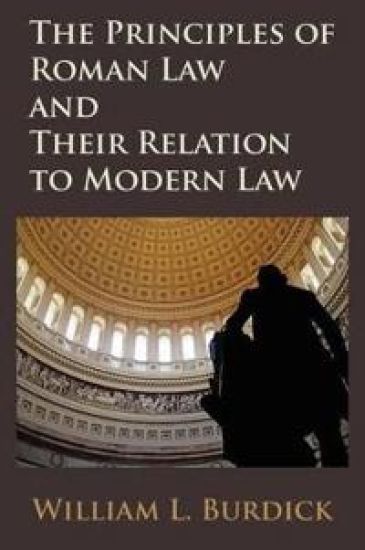
The Principles of Roman Law and Their Relation to Modern Law
William L Burdick
Lawbook Exchange, Ltd.
2012
pokkari


Over the course of nearly half a century, five American presidents-three Democrats and two Republicans-have relied on the financial acumen, and the integrity, of Paul A. Volcker. During his tenure as chairman of the Federal Reserve Board, when he battled the Great Inflation of the 1970s, Volcker did nothing less than restore the reputation of an American financial system on the verge of collapse. After the 2008 financial meltdown, the nation turned again to Volcker to restore trust in a shaky financial system: President Obama would name his centerpiece Wall Street regulation the Volcker Rule. Volcker's career demonstrated that a determined central banker can prevail over economic turmoil-so long as he can resist relentless political pressure. His resolve and independent thinking-sorely tested by Richard Nixon, Jimmy Carter, and Ronald Reagan-laid the foundation for a generation of economic stability. Indeed, William L. Silber argues, it was only Volcker's toughness on monetary policy that "forced Reagan to be Reagan" and to rein in America's deficit.Noted scholar and finance expert Silber draws on hours of candid personal interviews and complete access to Volcker's personal papers to render dramatic behind-the-scenes accounts from Volcker's career at the Treasury Department and the Federal Reserve: secret negotiations with European ministers; confrontations with the White House; crisis conferences with Wall Street titans, and even tense boardroom rebellions within the Fed itself. Filled with frank commentary from Volcker himself-including why he was personally irked with the "Volcker Rule" label-this will be the definitive account of Volcker's indispensable role in American economic history.

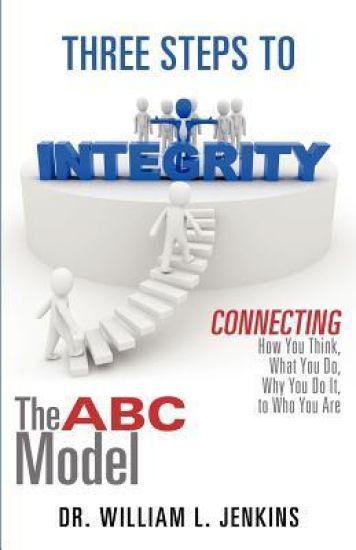


The American-Built Clipper Ship, 1850-1856: Characteristics, Construction, and Details
William L. Crothers
Echo Point Books Media
2017
sidottu


Following up on his earlier best-seller, The Global Police State, this exciting new study by critically-acclaimed scholar and activist William I. Robinson offers a big-picture contribution to understanding contemporary global society in the aftermath of the coronavirus pandemic. It puts forth an original and cutting-edge expos of the radical transformation of global capitalism now underway, driven by new digital technologies and turbo-charged by the pandemic. It provides shocking data and analysis on the concentration of power and control in the hands of corporate conglomerates, tech giants, mega-banks, and the military-industrial complex. The book documents the extent of unprecedented global inequalities as the mass of humanity faces violent dispossession and uncertain survival. Enabled by digital applications, the ruling groups, unless they are pushed to change course by mass pressure from below, will turn to ratcheting up the global police state to contain the global revolt. If the book issues a dire warning against the emergence of a dystopic digitalized dictatorship it also finds great hope and inspiration in the burgeoning social movements of the poor and the dispossessed as humanity descends into global civil war. While deeply analytical and theoretically sophisticated, the study is written in such a style that it is eminently accessible to a wider public beyond the academy. While the work will satisfy scholars, it is destined to become a companion text to those struggling on the frontlines for global social justice and a more hopeful future.


The Left's Little Red Book on Forming a New Green Republic
William L Kovacs
Liberty Hill Publishing
2020
pokkari
Words matter Words are the primary way we describe our world. Words persuade and inspire. They can also manipulate thinking. The radical Left corrupts words so people believe something other than their true intent. The simple corruption of two words allows them to paint their movement "green" to cover a "red" socialist core. The reference to a "Little Red Book" alludes to Chairman Mao's book of quotations; words proclaiming "truth", but used to impose political domination. By setting out the actual words of the radical Left, i.e. hatred of capitalism, truth is not relevant and humans must go, The Left's Little Red Book on Forming a New Green Republic, equips the reader with skills to challenge lies that sound truthful and evaluate solutions that might benefit society. William L. Kovacs, author of Reform the Kakistocracy: Rule by the Least Able or Least Principled Citizens; contributor to The Libertarian Republic, The Hill and ReformTheKakistocracy.com Mr. Kovacs has been involved in the nation's policy-making process for forty years. As a senior vice president at the U.S. Chamber of Commerce, he testified before Congress forty times, and participated in several hundred federal rulemakings. Prior to his Chamber service, he was a chief counsel on Capitol Hill, chairman of a Virginia state environmental Board and partner in Washington, DC law firms.

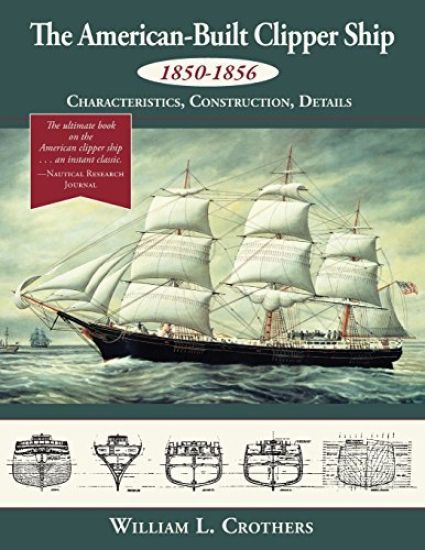
"A monumental work on the design and construction of the clipper ships at their apogee . . . a boon to maritime historians and modelmakers." --Wooden Boat "The ultimate book on the American clipper ship . . . an instant classic." --National Research Journal With the sweep of its bow, its graceful lines, and its clouds of canvas, the clipper ship sparked a romance with the American public that still endures 150 years later. The public fervor surrounding locally-built clippers generated intense intercity rivalries--and a new type of thinking. Ships suddenly were christened with romantic names; interior decor of passenger-carrying vessels reached a new level of embellishment. Pushed by their masters, who drove them as no ships had been driven before, clippers reached and maintained speeds that were previously unheard of, setting records for sailing ship passages that were never to be surpassed. Their heyday was astonishingly brief--by the 1860s giving way to safer, more commodious, iron steamships, which were not at the mercy of the wind. The product of more than 35 years of exacting research, The American-Built Clipper Ship presents in exquisite detail 152 clippers that comprise the culmination of the shipbuilders' art. Every facet of clipper ship design and construction is covered, including wood species, scantlings, fastenings, midship sections, interior living areas, and details of scarphs, keels, stem- and stern-post assemblies, frames, timbers, and bracing--all included in some 160 intricately drawn illustrations by a man whose unequaled work has earned him a national following among modelers and maritime museum directors. This is possibly the most complete reference on clipper ship construction ever published. No other single source covers so many vessels in such detail. The American-Built Clipper Ship will be an invaluable resource for historians, model builders, and maritime artists, as well as for any newcomer who is only now learning how addictive the subject can become. In a real sense, William J. Crothers spent his entire adult life preparing this book. Hired by the Philadelphia Naval Shipyard in the early 1930s, he retired after 35 years' service in naval ship design. During his long and productive career he developed the ability to draw extraordinarily crisp and detailed ship plans. And he developed a fascination with the American clipper ship--which he pursued through all the maritime museums in the United States and several in England.

Welcome to a future Earth, where forty short stories/chapters have extreme consequences on both Mother Earth and Father Universe.The short stories show how our precious existence can end at any obliterating moment. This decimation may cause nothing to exist from our point of view on our "grain of sand" known to us feeble humans as "eArth."As an example, Earth could, in all actuality, get hit by a rogue planet. These planets traverse the cosmos by traveling at over 30 million miles per hour. They are the fastest moving celestial bodies out in the universe.This example is but one of forty different short stories where Humanity questions the length of time, if any, of their survival upon a possible cosmic collision heading straight for Earth's doorstep.Cosmological cataclysmic events could even cause a chain reaction. This phenomenon will annihilate everything ever known from Humanity's perspective in our universe and any other existing universes.Take a psychologically (possibly) many horrifying trips across the planet and the cosmos. You will see what happens in situations where the cosmos decides to fight back against the tyrannies and inequities of Humanity. The universe will leave a path of countless fatalities in its wake.After the dust settles, you may or may not survive, although the odds of survival are not looking to be in your favor. Unfortunately, you never know what happens until it happens. At that point, it may be too late to save Humanity.This book is essential for those who like the classic "The Twilight Zone" series. These stories clearly show how these forty stories could have been in the vane of this immortal television series.So surrender yourselves to the untamed cosmos and see if Humanity survives each cosmic bullet thrust upon them...

Persuasive Attack
William L. Benoit; Kevin A. Stein; Matthew Barton
PETER LANG PUBLISHING INC
2024
nidottu
Persuasive attacks have captured public interest for centuries. These attacks uniquely span the range from high level politics to celebrity scandal. Each context highlights totally different harmful behaviors, yet key strategies are employed in consistent, and surprisingly unique, ways. This book investigates the nature of persuasive attack by examining the strategies used in various cases to denigrate an individual or organization for their behavior and/or character. Beginning with a review of previous scholarly work on persuasive attack, this book then explicates Benoit’s Theory of Persuasive Attack, and utilizes the theory to illuminate case studies from a variety of contexts including memes, political cartoons, selfies, documentaries, PAC advertisements, presidential debates, international relations, sports, and business. The book concludes with applications for educators, students, and scholars looking to better understand the way attack discourse functions in real world contexts. "This timely book presents a compelling argument that persuasive attack and character assassination have become the trademarks of our time. Hence, this publication is not only recommended for scholars of persuasion, but all academics and practitioners who study reputational attacks and defenses in the worlds of politics, business, and entertainment. This seminal work not only advances communication theory, but also offers valuable insights for political consultants and policymakers dealing with threats to reputation on a daily basis." —Sergei A. Samoilenko, Assistant Professor, George Mason University, Co-Founder of the Research Lab for Character Assassination and Reputation Politics (CARP)