

Kirjahaku
Etsi kirjoja tekijän nimen, kirjan nimen tai ISBN:n perusteella.
1000 tulosta hakusanalla Wilson Muoha Maina

Maggie Wilson's WACKY Worlds III: Maggie Returns Home to Chaos
Allen C. McKinzie
Createspace Independent Publishing Platform
2014
nidottu
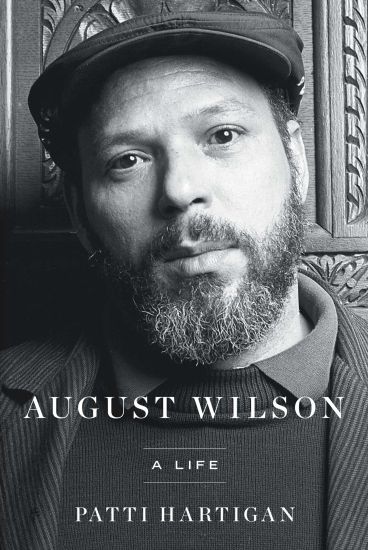
The first authoritative biography of August Wilson, the most important and successful American playwright of the late 20th century, by a theater critic who knew him. August Wilson wrote a series of ten plays celebrating African American life in the 20th century, one play for each decade. No other American playwright has completed such an ambitious oeuvre. Two of the plays became successful films, Fences, starring Denzel Washington and Viola Davis; and Ma Rainey's Black Bottom, starring Viola Davis and Chadwick Boseman. Fences and The Piano Lesson won the Pulitzer Prize for Drama; Fences won the Tony Award for Best Play, and years after Wilson's death in 2005, Jitney earned a Tony Award for Best Revival of a Play. Through his brilliant use of vernacular speech, Wilson developed unforgettable characters who epitomized the trials and triumphs of the African American experience. He said that he didn't research his plays but wrote from "the blood's memory," a sense of racial history that he believed African Americans shared. Author and theater critic Patti Hartigan traced his ancestry back to slavery, and his plays echo with uncanny similarities to the history of his ancestors. She interviewed Wilson many times before his death and traces his life from his childhood in Pittsburgh (where nine of the plays take place) to Broadway. She also interviewed scores of friends, theater colleagues and family members, and conducted extensive research to tell the story of a writer who left an indelible imprint on American theater and opened the door for future playwrights of color.
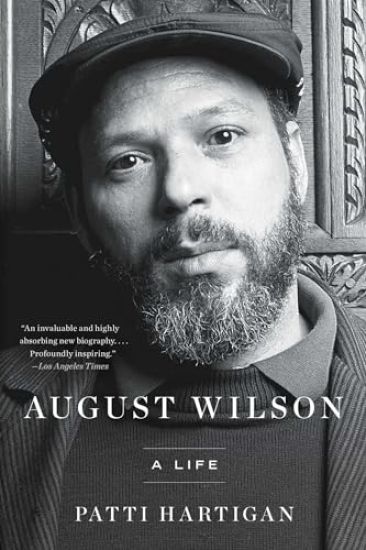
The "masterful" (The Wall Street Journal), "invaluable" (Los Angeles Times) first authoritative biography of August Wilson, the most important and successful American playwriting of the late 20th century, by a theater critic who knew him.August Wilson wrote a series of ten plays celebrating African American life in the 20th century, one play for each decade. No other American playwright has completed such an ambitious oeuvre. Two of the plays became successful films, Fences, starring Denzel Washington and Viola Davis; and Ma Rainey's Black Bottom, starring Viola Davis and Chadwick Boseman. Fences and The Piano Lesson won the Pulitzer Prize for Drama; Fences won the Tony Award for Best Play, and years after Wilson's death in 2005, Jitney earned a Tony Award for Best Revival of a Play. Through his brilliant use of vernacular speech, Wilson developed unforgettable characters who epitomized the trials and triumphs of the African American experience. He said that he didn't research his plays but wrote them from "the blood's memory," a sense of racial history that he believed African Americans shared. Author and theater critic Patti Hartigan traced his ancestry back to slavery, and his plays echo with uncanny similarities to the history of his ancestors. She interviewed Wilson many times before his death and traces his life from his childhood in Pittsburgh (where nine of the plays take place) to Broadway. She also interviewed scores of friends, theater colleagues and family members, and conducted extensive research to tell the "absorbing, richly detailed" (Chicago Tribune) story of a writer who left an indelible imprint on American theater and opened the door for future playwrights of color.

Luzena Stanley Wilson '49er: Her Memoirs as Taken Down by Her Daughter in 1881
Correnah Wilson Wright
Createspace Independent Publishing Platform
2014
nidottu
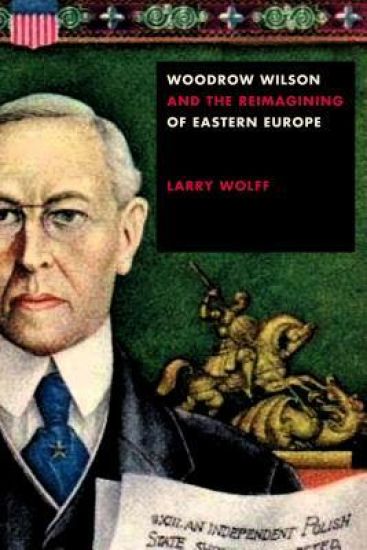
Woodrow Wilson and the Reimagining of Eastern Europe
Larry Wolff
Stanford University Press
2020
sidottu
At the 1919 Paris Peace Conference, where the victorious Allied powers met to reenvision the map of Europe in the aftermath of World War I, President Woodrow Wilson's influence on the remapping of borders was profound. But it was his impact on the modern political structuring of Eastern Europe that would be perhaps his most enduring international legacy: neither Czechoslovakia nor Yugoslavia exist today, but their geopolitical presence persisted across the twentieth century from the end of World War I to the end of the Cold War. They were created in large part thanks to Wilson's advocacy, and in particular, his Fourteen Points speech of January 1918, which hinged in large part on the concept of national self-determination. But despite his deep involvement in the region's geopolitical transformation, President Wilson never set eyes on Eastern Europe, and never traveled to a single one of the eastern lands whose political destiny he so decisively influenced. Eastern Europe, invented in the age of Enlightenment by the travelers and philosophies of Western Europe, was reinvented on the map of the early twentieth century with the crucial intervention of an American president who deeply invested his political and emotional energies in lands that he would never visit. This book traces how Wilson's emerging definition of national self-determination and his practical application of the principle changed over time as negotiations at the Paris Peace Conference unfolded. Larry Wolff exposes the contradictions between Wilson's principles and their implementation in the peace settlement for Eastern Europe, and sheds light on how his decisions were influenced by both personal relationships and his growing awareness of the history of the Ottoman and Habsburg empires.
Woodrow Wilson and the Reimagining of Eastern Europe
Larry Wolff
Stanford University Press
2020
pokkari
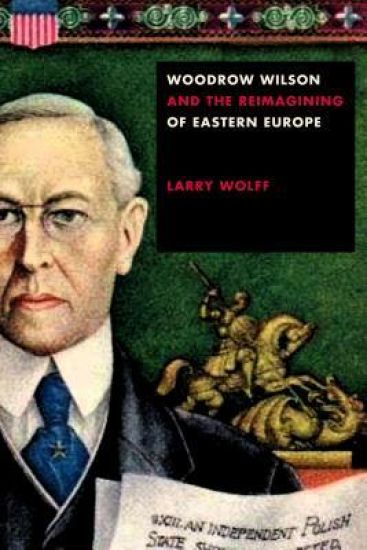
At the 1919 Paris Peace Conference, where the victorious Allied powers met to reenvision the map of Europe in the aftermath of World War I, President Woodrow Wilson's influence on the remapping of borders was profound. But it was his impact on the modern political structuring of Eastern Europe that would be perhaps his most enduring international legacy: neither Czechoslovakia nor Yugoslavia exist today, but their geopolitical presence persisted across the twentieth century from the end of World War I to the end of the Cold War. They were created in large part thanks to Wilson's advocacy, and in particular, his Fourteen Points speech of January 1918, which hinged in large part on the concept of national self-determination. But despite his deep involvement in the region's geopolitical transformation, President Wilson never set eyes on Eastern Europe, and never traveled to a single one of the eastern lands whose political destiny he so decisively influenced. Eastern Europe, invented in the age of Enlightenment by the travelers and philosophies of Western Europe, was reinvented on the map of the early twentieth century with the crucial intervention of an American president who deeply invested his political and emotional energies in lands that he would never visit. This book traces how Wilson's emerging definition of national self-determination and his practical application of the principle changed over time as negotiations at the Paris Peace Conference unfolded. Larry Wolff exposes the contradictions between Wilson's principles and their implementation in the peace settlement for Eastern Europe, and sheds light on how his decisions were influenced by both personal relationships and his growing awareness of the history of the Ottoman and Habsburg empires.
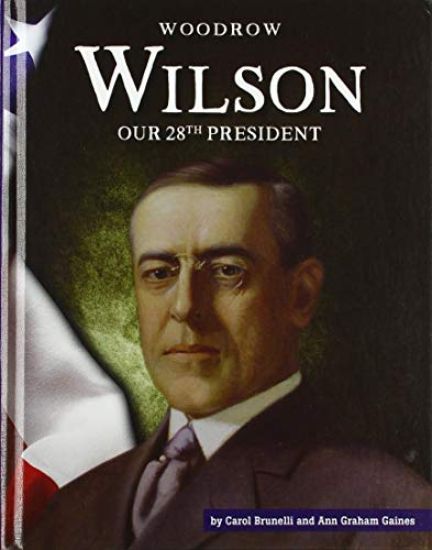
A thorough, illustrated biography discussing the childhood, career, family, and term of Woodrow Wilson, twenty-eighth president of the United States. Includes a table of contents, time line, phonetic glossary, sources for further research, an index, and detailed captions and sidebars to aid in comprehension.

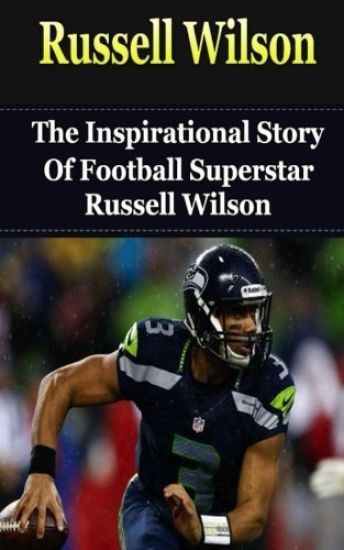
Russell Wilson: The Inspirational Story of Football Superstar Russell Wilson
Bill Redban
Createspace Independent Publishing Platform
2013
nidottu
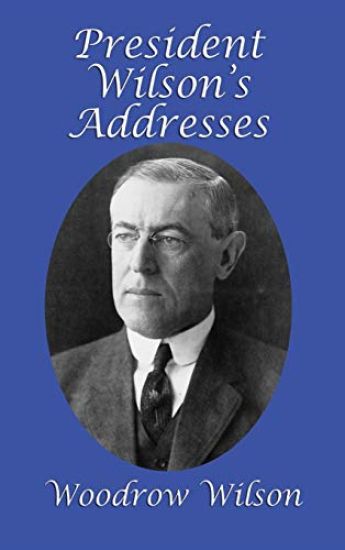
President Wilson's Addresses
Woodrow Wilson
Createspace Independent Publishing Platform
2015
nidottu

The Memoirs of Harriette Wilson
Harriette Wilson
Createspace Independent Publishing Platform
2015
nidottu
"The Memoirs of Harriette Wilson", Harriette Wilson. Harriette Wilson was a celebrated British Regency courtesan (1786-1845)..
Woodrow Wilson's Letter to Almont Barnes: Together with the Article Under Discussion, "the Study of Administration" from the Political Science Quarter
Almont Barnes
Createspace Independent Publishing Platform
2015
nidottu
This is the Second Edition of a rare but significant book published in 1924. It includes the following new material: an Introduction, an
Woodrow Wilson and the World of Today
University of Pennsylvania Press
1957
sidottu
This book is a volume in the Penn Press Anniversary Collection. To mark its 125th anniversary in 2015, the University of Pennsylvania Press rereleased more than 1,100 titles from Penn Press's distinguished backlist from 1899-1999 that had fallen out of print. Spanning an entire century, the Anniversary Collection offers peer-reviewed scholarship in a wide range of subject areas.
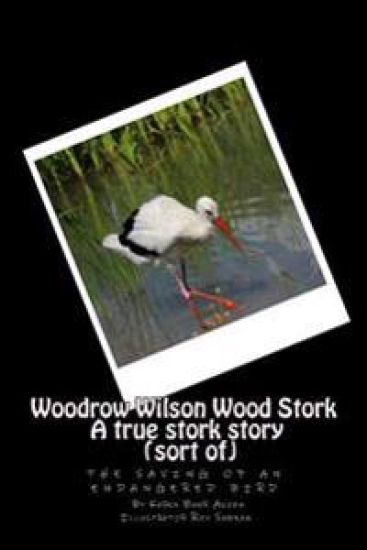
Woodrow Wilson Woodstork A true stork story (sort of): the saving of an endangered bird
Karen Baer Aiken
Createspace Independent Publishing Platform
2015
nidottu
This work has been selected by scholars as being culturally important and is part of the knowledge base of civilization as we know it.This work is in the public domain in the United States of America, and possibly other nations. Within the United States, you may freely copy and distribute this work, as no entity (individual or corporate) has a copyright on the body of the work.Scholars believe, and we concur, that this work is important enough to be preserved, reproduced, and made generally available to the public. To ensure a quality reading experience, this work has been proofread and republished using a format that seamlessly blends the original graphical elements with text in an easy-to-read typeface.We appreciate your support of the preservation process, and thank you for being an important part of keeping this knowledge alive and relevant.

Rusty Wilson's Alaskan Bigfoot Campfire Stories
Rusty Wilson
Createspace Independent Publishing Platform
2015
pokkari
Always wanted to go see Alaska, the 49th state, but never could work it out? Well, never fear, because after reading these stories, you'll probably change your mind and decide to instead visit someplace safe and predictable.In this baker's dozen of all new and original stories from Rusty Wilson, the World's Greatest Bigfoot Storyteller, you'll see an Alaska that few see, an Alaska that maybe even fewer want to see, and an Alaska that puts all the other states to shame for mysterious places and happenings, as well as having the highest number per capita of people who go missing without a trace.Come read about a photographer who finally gets his wish to see the Northern Lights, only to find there are other things that glow in the Arctic wilds-then read about the Kodiak bear guide who finds much more than he was hunting for-and there's the soldier who ends up finding something just a little unusual while out surveying the Alcan Highway-then read about the native Alaskan who's haunted by a dream of epic proportions-and, if you dare, ride along with a young native girl on a snowmachine as her attempt to save her mother's life looks like it may end in sinister disaster-and there's the strange sight seen by two roustabouts out checking an oil pipeline-and the bush pilot who sees a chilling sight on one of Alaska's largest glaciers-and the story of almost catching something besides salmon in fish camp-then read about the elusive and very destructive Copper People-two guys who go hunting with a drone and find exactly what they were looking for after they've changed their minds-and a woman who finds there's much more to the deep wilderness than what can be seen-then read about unexpected trouble in Alaska's version of the Bermuda Triangle-and finally, explore the deep rainforest of strange and mysterious Yakobi Island, hoping you live to tell about it.All these and more great campfire tales are guaranteed to make you happy you're safe and sound in your house instead of listening to a strange howling in the darkness from inside your thin nylon tent, deep in the Alaskan wilds. Or, if you're truly the adventurous type, maybe you'll want to buy a thin nylon tent and head to Alaska, but good luck if you do Fly-fishing guide Rusty Wilson spent years collecting these stories from his clients around the campfire, stories guaranteed to scare the pants off you-or make you want to meet the Big Guy "I don't typically get a lot of clients from Alaska, as they have their own great fishing holes up there, but I do have many who were originally from Alaska and have moved Outside (what the Alaskans call the rest of the world). Some of the absolute best stories I've ever heard came from these intrepid souls, many who are far braver than I think I could ever be, given the often hairy circumstances they experienced." -Rusty Wilson
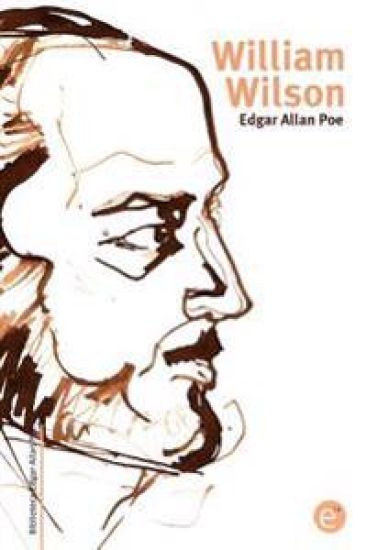
La historia comienza con el narrador que se hace llamar William Wilson, denunciando su pasado derrochador, aunque ste no se siente culpable, pues entiende que ning n otro hombre ha sido tentado de igual manera antes. Narra la infancia y juventud de William en un colegio isabelino. Relata que all conoci a otro chico con su mismo nombre, parecido a l y nacido el mismo d a, el 19 de enero, fecha de cumplea os del mismo autor. Compite con este muchacho, pero l le supera f cilmente, de manera que lo considera prueba de su aut ntica superioridad. Este chico comienza a imitar la forma de vestir, la manera de andar e incluso la forma de hablar del protagonista (aunque tiene un defecto en el habla que solo le permite hablar susurrando), y llega un momento en que William descubre que ste tiene exactamente su misma cara. Al ver esto, William abandona inmediatamente la academia, s lo para descubrir que su doble se ha marchado el mismo d a. William con el tiempo estudia en Eton y Oxford, haci ndose cada vez m s depravado y ganando enormes cantidades de dinero mediante enga os al jugar a las cartas con un pobre noble y la seducci n de una mujer casada. En esta etapa aparece su doble de nuevo, con la cara siempre cubierta, susurrando unas pocas palabras que alertan a otros sobre el comportamiento de William. En el ltimo de estos incidentes, en un baile en Roma, William arrastra a su doble a una antec mara y lo apu ala. Tras la acci n de William, aparece un enorme espejo en el que ste ve el rostro del fallecido, momento en el que el narrador siente que est pronunciando las palabras: en m exist as, y en mi muerte, ve cu n profundamente te has asesinado a ti mismo.