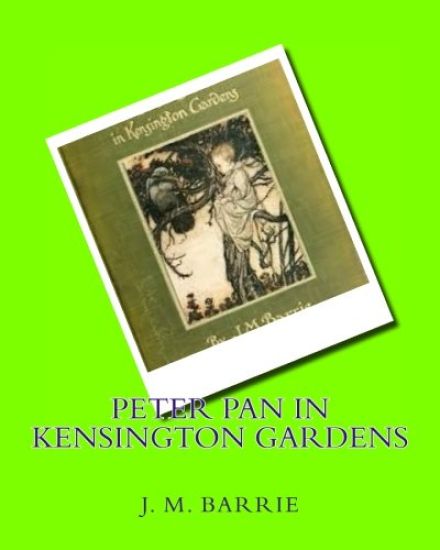
Peter is a seven-day-old infant who, "like all infants", used to be part bird. Peter has complete faith in his flying abilities, so, upon hearing a discussion of his adult life, he is able to escape out of the window of his London home and return to Kensington Gardens. Upon returning to the Gardens, Peter is shocked to learn from the crow Solomon Caw that he is not still a bird, but more like a human - Solomon says he is crossed between them as a "Betwixt-and-Between". Unfortunately, Peter now knows he cannot fly, so he is stranded in Kensington Gardens.
Robert Barr (16 September 1849 - 21 October 1912 was a Scottish-Canadian short story writer and novelist, born in Glasgow, Scotland.Barr emigrated with his parents to Upper Canada at age four and was educated in Toronto at Toronto Normal School. Barr became a teacher and eventual headmaster of the Central School of Windsor, Ontario. While he had that job he began to contribute short stories-often based on personal experiences-to the Detroit Free Press. In 1876 Barr quit his teaching position to become a staff member of that publication, in which his contributions were published with the pseudonym "Luke Sharp." This nom de plume was derived from the time he attended school in Toronto. At that time he would pass on his daily commute a shop sign marked, "Luke Sharpe, Undertaker", a combination of words Barr considered amusing in their incongruity. Barr was promoted by the Detroit Free Press, eventually becoming its news editor.
The Triumphs of Eugene Valmont (1906) brings together tales of the multifarious exploits of Robert Barr's elegant and cunning sleuth, Valmont, a brilliantly ironic parody of Sherlock Holmes. Exhibiting the crucial combination of realism and imagination that characterizes the finest crime writing, the stories exude playfulness and wit, blending mystery and quasi-Gothic thrills with humorous detours and romantic adventure. Robert Barr (16 September 1849 - 21 October 1912 was a Scottish-Canadian short story writer and novelist, born in Glasgow, Scotland.Barr emigrated with his parents to Upper Canada at age four and was educated in Toronto at Toronto Normal School. Barr became a teacher and eventual headmaster of the Central School of Windsor, Ontario. While he had that job he began to contribute short stories-often based on personal experiences-to the Detroit Free Press. In 1876 Barr quit his teaching position to become a staff member of that publication, in which his contributions were published with the pseudonym "Luke Sharp." This nom de plume was derived from the time he attended school in Toronto. At that time he would pass on his daily commute a shop sign marked, "Luke Sharpe, Undertaker", a combination of words Barr considered amusing in their incongruity. Barr was promoted by the Detroit Free Press, In 1881 Barr decided to "vamoose the ranch", as he stated, and relocated to London, to establish there the weekly English edition of the Detroit Free Press.In 1892 he founded the magazine The Idler, choosing Jerome K. Jerome as his collaborator (wanting, as Jerome said, "a popular name"). He retired from its co-editorship in 1895. In London of the 1890s Barr became a more prolific author-publishing a book a year-and was familiar with many of the best-selling authors of his day, including Bret Harte and Stephen Crane. Most of his literary output was of the crime genre, then quite in vogue. When Arthur Conan Doyle's Sherlock Holmes stories were becoming well-known Barr published in the Idler the first Holmes parody, "The Adventures of Sherlaw Kombs" (1892), a spoof that was continued a decade later in another Barr story, "The Adventure of the Second Swag" (1904). Despite the jibe at the growing Holmes phenomenon Barr and Doyle remained on very good terms. Doyle describes him in his memoirs Memories and Adventures as, "a volcanic Anglo-or rather Scot-American, with a violent manner, a wealth of strong adjectives, and one of the kindest natures underneath it all."
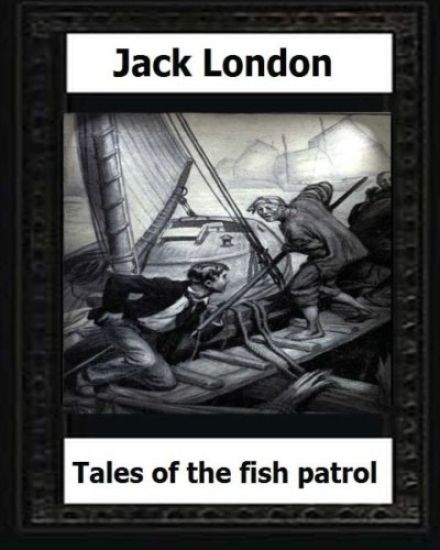
John Griffith "Jack" London (born John Griffith Chaney, January 12, 1876 - November 22, 1916) was an American novelist, journalist, and social activist. A pioneer in the then-burgeoning world of commercial magazine fiction, he was one of the first fiction writers to obtain worldwide celebrity and a large fortune from his fiction alone. Some of his most famous works include The Call of the Wild and White Fang, both set in the Klondike Gold Rush, as well as the short stories "To Build a Fire", "An Odyssey of the North", and "Love of Life". He also wrote of the South Pacific in such stories as "The Pearls of Parlay" and "The Heathen", and of the San Francisco Bay area in The Sea Wolf. London was part of the radical literary group "The Crowd" in San Francisco and a passionate advocate of unionization, socialism, and the rights of workers. He wrote several powerful works dealing with these topics, such as his dystopian novel The Iron Heel, his non-fiction expos The People of the Abyss, and The War of the Classes.London was born near Third and Brannan Streets in San Francisco. The house burned down in the fire after the 1906 San Francisco earthquake; the California Historical Society placed a plaque at the site in 1953. Although the family was working class, it was not as impoverished as London's later accounts claimed citation needed]. London was largely self-educated citation needed]. In 1885, London found and read Ouida's long Victorian novel Signa. He credited this as the seed of his literary success. 11] In 1886, he went to the Oakland Public Library and found a sympathetic librarian, Ina Coolbrith, who encouraged his learning. (She later became California's first poet laureate and an important figure in the San Francisco literary community). In 1889, London began working 12 to 18 hours a day at Hickmott's Cannery. Seeking a way out, he borrowed money from his foster mother Virginia Prentiss, bought the sloop Razzle-Dazzle from an oyster pirate named French Frank, and became an oyster pirate. In his memoir, John Barleycorn, he claims also to have stolen French Frank's mistress Mamie.After a few months, his sloop became damaged beyond repair. London hired on as a member of the California Fish Patrol. In 1893, he signed on to the sealing schooner Sophie Sutherland, bound for the coast of Japan. When he returned, the country was in the grip of the panic of '93 and Oakland was swept by labor unrest. After grueling jobs in a jute mill and a street-railway power plant, London joined Kelly's Army and began his career as a tramp. In 1894, he spent 30 days for vagrancy in the Erie County Penitentiary at Buffalo, New York. In The Road, he wrote: Man-handling was merely one of the very minor unprintable horrors of the Erie County Pen. I say 'unprintable'; and in justice I must also say undescribable. They were unthinkable to me until I saw them, and I was no spring chicken in the ways of the world and the awful abysses of human degradation. It would take a deep plummet to reach bottom in the Erie County Pen, and I do but skim lightly and facetiously the surface of things as I there saw them. After many experiences as a hobo and a sailor, he returned to Oakland and attended Oakland High School. He contributed a number of articles to the high school's magazine, The Aegis. His first published work was "Typhoon off the Coast of Japan", an account of his sailing experiences.