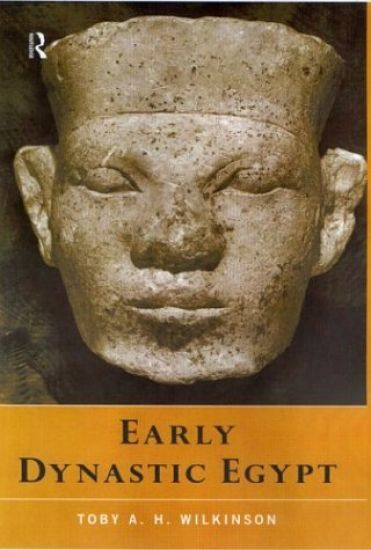
Early Dynastic Egypt spans the five centuries preceding the construction of the Great Pyramid at Giza. This was the formative period of ancient Egyptian civilization, and it witnessed the creation of a distinctive culture that was to endure for 3,000 years. This book examines the background to that great achievement, the mechanisms by which it was accomplished, and the character of life in the Nile valley during the first 500 years of Pharaonic rule.The results of over thirty years of international scholarship and excavation are presented in a single highly illustrated volume. It traces the re-discovery of Early Dynastic Egypt, explains how the dynasties established themselves in government and concludes by examining the impact of the early state on individual communities and regions.
Magnus Felix Ennodius (474-521), deacon of Milan and bishop of Pavia in the turbulent years after the fall of the Roman Empire in the West, was a prolific writer of letters, poetry, speeches, and pamphlets on the controversies that beset the church in his day. In the Middle Ages, he was read as a model of style and source of canon law. More recently, however, Ennodius' writings have been denigrated as the vapid product of a frivolous mind more concerned with form than content. Magnus Felix Ennodius: A Gentleman of the Church sets the record straight by restoring Ennodius to his social and literary context. Ennodius stands revealed as a man on the cusp of the ancient and medieval worlds, his thought still shaped according to classical norms, but his writings informed with a sensibility that prefigures that of the Christian Middle Ages. As the only book-length study of Ennodius, here the author explores all aspects of Ennodius' life and literary production to augment the collective understanding of him on two major fronts, rhetoric and meaning, so that he can take his place as an important author and historical figure. Deeply insightful, and refreshingly original, the author breaks new ground in studying this period of history, so often overshadowed by the classical and middle ages that immediately precede and succeed it.S. A. H. Kennell is Adjunct Professor of Classics, Memorial University of Newfoundland.
Kate, a lawyer from Australia, has moved to London for a fresh start. Her life has been chaotic and miserable since her husband Ethan left her suddenly. Little does she know that Matt Harmon, an old flame has also moved and that their paths will soon cross. Kate soon becomes entangled in a web of lies after a client hides the truth from her. She believes she can control the outcome but soon finds herself way out of her depth.She reaches to Matt for help and soon they find themselves on the other side of the world, running for their lives.Both Matt and Kate are hiding secrets from each other leading to consequences that prove to be deadly. What would you do?
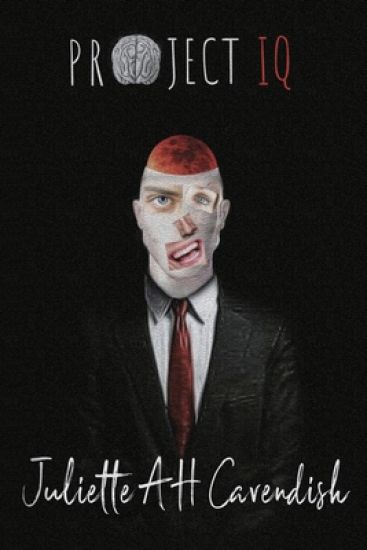
Project IQ. Home Base Mars.Project IQ is a futuristic dystopian novel set in 2048, and written by author Juliette A H Cavendish. It follows the lives of several characters, all of whom are trying to survive in a world which has become a victim of runaway climate change. It's a world of repression, Orwellian surveillance, climate extremes and a sense of impending failure. Time is ticking, infrastructure is failing, and Governments are losing control.Can anyone be trusted?Morag Belcher, the newly elected President of The United Southern States of America intends on quietly escaping the planet, taking world leaders with her. She devises Project IQ, a plan that buys time, so that billionaire Paxton Wells, who currently owns and runs Mars Home Base, can create the Martian infrastructure to accommodate them all. Meanwhile, Wells has created the Underground Generation, a group of humans who live underground and without direct sunlight. He hopes that as they turn eighteen and he sends them to Home Base that they are more resilient than the first group he sent to Mars, that developed severe mental illness and murdered each other.Ellie and Austin have moved to Gaia Settlement Thirteen, a place that promised Utopia away from suburban chaos. Instead, they discover that they are now part of an oppressive business model which has no empathy for weakness or defiance. They devise a plan to escape, hoping to find somewhere better. Jack has been plucked from his solitary existence in a basement science lab to lead Project IQ. An AI specialist in self-learning chip intelligence, his job is to lead Project IQ with a team he's dug out of his old yearbook. Belcher forces the team to create an intelligence chip that lacks any ethical testing and Jack is challenged when asked to perform experiments on human brains.In order for humanity to survive, we have to be nice to each other. Can we do that? Will we find our way to Mars and ensure the survival of the Human race?
The Psychopath Who Nearly Lost His Arm. Love-Bomb. Devalue. Discard. A story of courage, grit and realism. Not for the faint-hearted. A story about family dysfunction, narcissists and psychopaths. Set in Australia and Paris, following the life of Pippa O'Shea. Can she ever find true and healthy love or is she trapped in a cycle of love-bombing, devalue and discard? Pippa's life is a mess. Her family is so dysfunctional, Dr Phil could do a year-long series on them and have a second season prepared. Even in her twenties she secretly hopes she may find out that she was adopted and that there is a different option for family waiting for her. Born with a short straw in her plump little hand, her parents are narcissists, her siblings are trying to bring her down, she's been labelled as the black sheep of her family and family get togethers she likens to wrestling in the mud with pigs. No wonder Pippa's life isn't going to plan at all. Then she meets Noah - who may or may not need to have his arm amputated. A love story that goes as wrong as a love story can go.Anyone who has been burned by a narcissist or psychopath will relate to Pippa's story. She is loved bombed, horribly devalued and then there is the discard she endures. Love sometimes, just isn't pretty.Can she find love and happiness in Paris, after her life is turned upside down? Trigger warning included, as the story deals with significant and impactful adult topics in amongst sprinkles of humour.
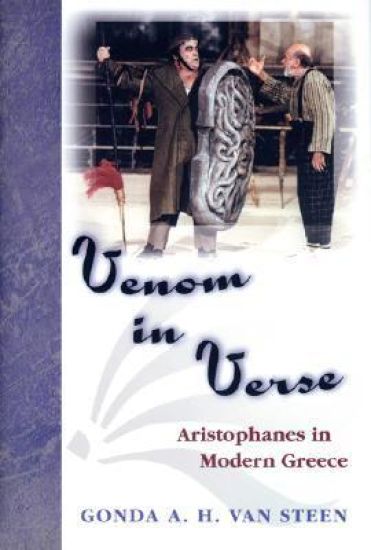
Aristophanes has enjoyed a conspicuous revival in nineteenth- and twentieth-century Greece. Here, Gonda Van Steen provides the first critical analysis of the role of the classical Athenian playwright in modern Greek culture, explaining how the sociopolitical "venom" of Aristophanes' verses remains relevant and appealing to modern Greek audiences. Deriding or challenging well-known figures and conservative values, Aristophanes' comedies transgress authority and continue to speak to many social groups in Greece who have found in him a witty, pointed, and accessible champion from their "native" tradition. The book addresses the broader issues reflected in the poet's revival: political and linguistic nationalism, literary and cultural authenticity versus creativity, censorship, and social strife. Van Steen's discussion ranges from attitudes toward Aristophanes before and during Greece's War of Independence in the 1820s to those during the Cold War, from feminist debates to the significance of the popular music integrated into comic revival productions, from the havoc transvestite adaptations wreaked on gender roles to the political protest symbolized by Karolos Koun's directorial choices. Crossing boundaries of classical philology, critical theory, and performance studies, the book encourages us to reassess Aristophanes' comedies as both play-acts and modern methods of communication. Van Steen uses material never before accessible in English as she proves that Aristophanes remains Greece's immortal comic genius and political voice.
The federal government and its policies transform Canadian cities in myriad ways. Canada in Cities examines this relationship to better understand the interplay among changing demographics, how local governments and citizens frame their arguments for federal action, and the ways in which the national government uses its power and resources to shape urban Canada. Most studies of local governance in Canada focus on politics and policy within cities. The essays in this collection turn such analysis on its head, by examining federal programs, rather than municipal ones, and observing how they influence local policies and work with regional authorities and civil societies. Through a series of case studies - ranging from federal policy concerning Aboriginal people in cities, to the introduction of the federal gas tax transfer to municipalities, to the impact of Canada's emergency management policies on cities - the contributors provide insights about how federal politics influence the local political arena. Analyzing federal actions in diverse policy fields, the authors uncover meaningful patterns of federal action and outcome in Canadian cities. A timely contribution, Canada in Cities offers a comprehensive study of diverse areas of municipal public policy that have emerged in Canada in recent years.
The federal government and its policies transform Canadian cities in myriad ways. Canada in Cities examines this relationship to better understand the interplay among changing demographics, how local governments and citizens frame their arguments for federal action, and the ways in which the national government uses its power and resources to shape urban Canada. Most studies of local governance in Canada focus on politics and policy within cities. The essays in this collection turn such analysis on its head, by examining federal programs, rather than municipal ones, and observing how they influence local policies and work with regional authorities and civil societies. Through a series of case studies - ranging from federal policy concerning Aboriginal people in cities, to the introduction of the federal gas tax transfer to municipalities, to the impact of Canada's emergency management policies on cities - the contributors provide insights about how federal politics influence the local political arena. Analyzing federal actions in diverse policy fields, the authors uncover meaningful patterns of federal action and outcome in Canadian cities. A timely contribution, Canada in Cities offers a comprehensive study of diverse areas of municipal public policy that have emerged in Canada in recent years.
Offering a Canadian perspective on the emotional health of servicemen and women, Military Operations and the Mind brings together researchers and practitioners from across the country to consider the impact that ethical issues have on the well-being of those who serve. Stemming from an initiative to enhance the lives of serving members by providing them with the best education and training in military ethics before and after deployments, this volume will better inform politics and public policies and enhance the welfare of the soldiers, sailors, and airmen and women who serve in singular, often harsh, and sometimes dangerous conditions. By integrating into the analysis the critical issue of well-being, this emerging field demonstrates a more holistic approach and is distinct from other fields in military, historical, philosophical, and behavioural studies. The first study of its kind, Military Operations and the Mind presents a new and helpful way to focus on the life of soldiers not only in operations overseas, but also once they return home. Contributors include Peter Bradley (Royal Military College of Canada), Victor M. Catano (Saint Mary's University), Danielle Charbonneau (Royal Military College of Canada), Howard Coomb (Royal Military College of Canada), Karen D. Davis (Defence Research and Development Canada), Colonel Richard Dickson (Canadian Army Land Warfare Centre), Joe Doty (Duke University), Allan English (Queen's University), Peter Gizewski (Department of National Defence), Heather Hrychuk (Centre for Operational Research and Analysis), E Kevin Kjelloway (Saint Mary's University), Allister MacIntyre (Royal Military College of Canada), Deanna Messervey (Queen's University), Damian O'Keefe (Saint Mary's University), Brigadier General (Ret'ed) G. E. Sharpe, Shaun Tymchuk (retired Canadian infantry officer), SLt Ethan Whitehead (Royal Canadian Navy), and Daphne Xu (National Institute of Education, Singapore).
Offering a Canadian perspective on the emotional health of servicemen and women, Military Operations and the Mind brings together researchers and practitioners from across the country to consider the impact that ethical issues have on the well-being of those who serve. Stemming from an initiative to enhance the lives of serving members by providing them with the best education and training in military ethics before and after deployments, this volume will better inform politics and public policies and enhance the welfare of the soldiers, sailors, and airmen and women who serve in singular, often harsh, and sometimes dangerous conditions. By integrating into the analysis the critical issue of well-being, this emerging field demonstrates a more holistic approach and is distinct from other fields in military, historical, philosophical, and behavioural studies. The first study of its kind, Military Operations and the Mind presents a new and helpful way to focus on the life of soldiers not only in operations overseas, but also once they return home. Contributors include Peter Bradley (Royal Military College of Canada), Victor M. Catano (Saint Mary's University), Danielle Charbonneau (Royal Military College of Canada), Howard Coomb (Royal Military College of Canada), Karen D. Davis (Defence Research and Development Canada), Colonel Richard Dickson (Canadian Army Land Warfare Centre), Joe Doty (Duke University), Allan English (Queen's University), Peter Gizewski (Department of National Defence), Heather Hrychuk (Centre for Operational Research and Analysis), E Kevin Kjelloway (Saint Mary's University), Allister MacIntyre (Royal Military College of Canada), Deanna Messervey (Queen's University), Damian O'Keefe (Saint Mary's University), Brigadier General (Ret'ed) G. E. Sharpe, Shaun Tymchuk (retired Canadian infantry officer), SLt Ethan Whitehead (Royal Canadian Navy), and Daphne Xu (National Institute of Education, Singapore).
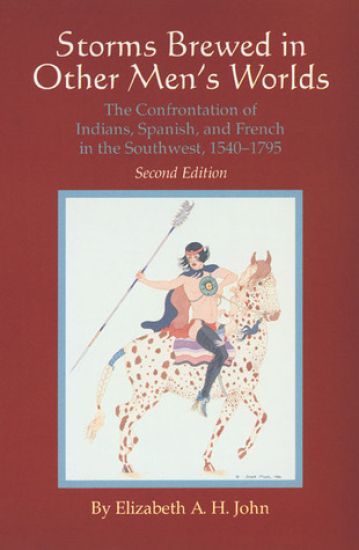
Spanning two and a half centuries, from the earliest contacts in the 1540s to the crumbling of Spanish power in the 17908, Storms Brewed in Other Men's Worlds is a panoramic view of Indian peoples and Spanish and French intruders in the early Southwest. The primary focus is the world of the American Indian, ranging from the Caddos in the east to the Hopis in the west, and including the histories of the Pueblo, Apache, Navajo, Ute, and Wichita peoples. Within this region, from Texas to New Mexico, the Comanches played a key, formative role, and no less compelling is the story of the Hispanic frontier peoples who weathered the precarious, often arduous process of evolving coexistence with the Indians on the northern frontier of New Spain. First published in 1975, this second edition includes a new preface and afterword by Elizabeth A. H. John, in which she discusses current research issues and the status of the Indian peoples of the Southwest.
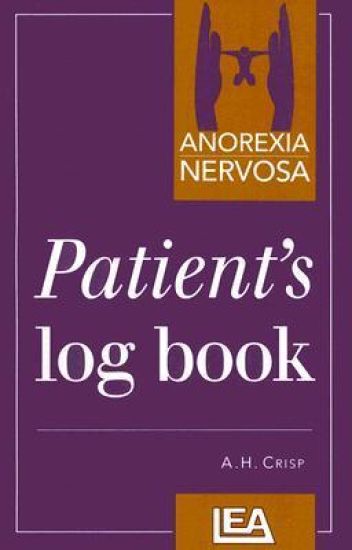
This log book brings together the in-patient version originally designed by Professor Arthur Crisp and Dr Kingsley Norton for use by people undergoing treatment in the Anorexia Nervosa Unit at Atkinson Morley's Hosptial, and the out-patient version published by Professor Crisp in 1993. The latter has been used by those attending the out-patient treatment programme of St George's Hospital Medical School and the related Highly Specialist Services section of Pathfinder Mental Health Services NHS Trust, and in other centres in the UK.The overall treatment programme is presented in the author's Anorexia Nervosa: Let me Be, first published in 1980 and now reprinted by Psychology Press.The Patient's Log Book is intended for both in-patient and out-patient use, as part of a clinically supervised treatment programme based on the "St George's" approach outlined in Anorexia Nervosa: Guidelines for Assessment and Treatment in Primary and Secondary Care.
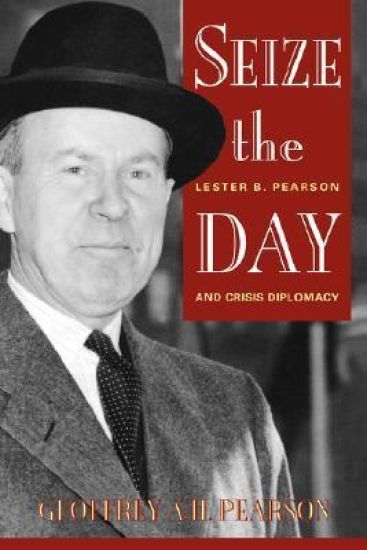
In this uniquely informed account of Pearson's foreign policy in the years 1948-1957, his son places the "Golden Age" of Canadian diplomacy in historical perspective. Called "a clear, fair and well-researched book" by the Ottawa Citizen, and rated as a book of exceptional merit by Quill & Quire.