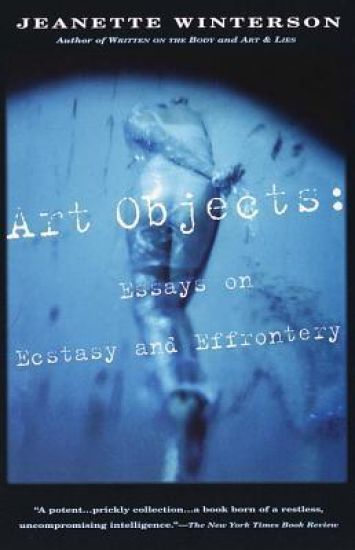
In these ten intertwined essays, one of our most provocative young novelists proves that she is just as stylish and outrageous an art critic. For when Jeanette Winterson looks at works as diverse as the Mona Lisa and Virginia Woolf's The Waves, she frees them from layers of preconception and restores their power to exalt and unnerve, shock and transform us. "Art Objects is a book to be admired for its effort to speak exorbitantly, urgently and sometimes beautifully about art and about our individual and collective need for serious art."--Los Angeles Times
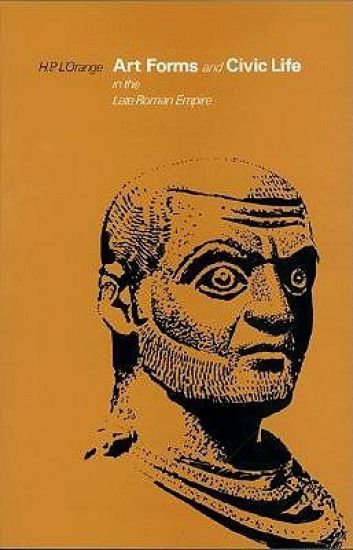
In this study, originally published in Norway as Fra Principat Til Dominat, Professor L'Orange sets down the essence of his thought on the crucial period of transition from decentralization to standardization in civic and cultural life-a period not unlike our own.
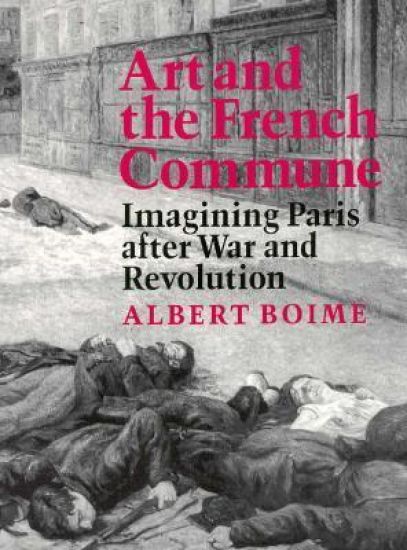
In this bold exploration of the political forces that shaped Impressionism, Albert Boime proposes that at the heart of the modern is a "guilty secret"--the need of the dominant, mainly bourgeois, classes in Paris to expunge from historical memory the haunting nightmare of the Commune and its socialist ideology. The Commune of 1871 emerged after the Prussian war when the Paris militia chased the central government to Versailles, enabling the working class and its allies to seize control of the capital. Eventually violence engulfed the city as traditional liberals and moderates joined forces with reactionaries to restore Paris to "order"--the bourgeois order. Here Boime examines the rise of Impressionism in relation to the efforts of the reinstated conservative government to "rebuild" Paris, to return it to its Haussmannian appearance and erase all reminders of socialist threat. Boime contends that an organized Impressionist movement owed its initiating impulse to its complicity with the state's program. The exuberant street scenes, spaces of leisure and entertainment, sunlit parks and gardens, the entire concourse of movement as filtered through an atmosphere of scintillating light and color all constitute an effort to reclaim Paris visually and symbolically for the bourgeoisie. Amply documented, richly illustrated, and compellingly argued, Boime's thesis serves as a challenge to all cultural historians interested in the rise of modernism.
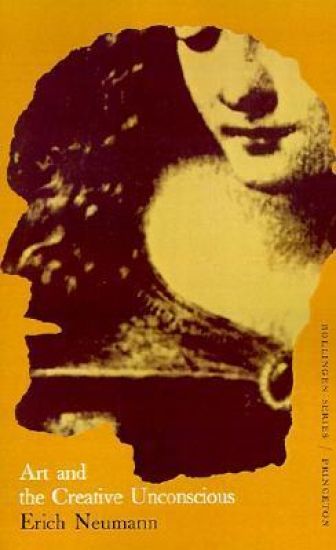
Four essays on the psychological aspects of art. A study of Leonardo treats the work of art, and art itself, not as ends in themselves, but rather as instruments of the artist's inner situation. Two other essays discuss the relation of art to its epoch and specifically the relation of modern art to our own time. An essay on Chagall views this artist in the context of the problems explored in the other studies.
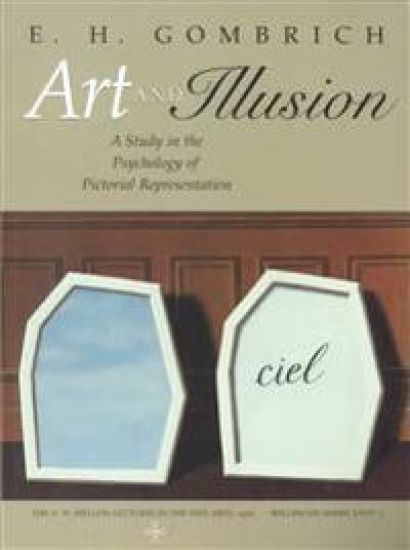
A groundbreaking account of perception and art, from one of the twentieth century's most important art historians E. H. Gombrich is widely considered to be one of the most influential art historians of the twentieth century, and Art and Illusion is generally agreed to be his most important book. Bridging science and the humanities, this classic work examines the history and psychology of pictorial representation in light of modern theories of information and learning in visual perception. Searching for a rational explanation of the changing styles of art, Gombrich reexamines ideas about the imitation of nature and the function of tradition. In testing his arguments, he ranges over the history of art, from the ancient Greeks, Leonardo, and Rembrandt to the impressionists and the cubists. But the triumphant originality of Art and Illusion is that Gombrich is less concerned with the artists than with the psychological experience of the viewers of their work.
"This innovative work allows the objects it covers to breathe as living things. McClusky has evolved what appears to be a new way of writing a catalogue on African art. The writing is interesting, the stories surrounding the objects often fascinating. Thompson's essay is wonderfully composed. This is a work that can be enjoyed by the non-specialist reader for the tales it tells alone. Further, the objects are impressive, often spectacular."--Simon Ottenberg, University of Washington
This strikingly unusual and beautifully illustrated book represents a turning point in African art history. The authors draw on personal memories, interviews, and oral narratives to present twelve "case histories" of objectsor clusters of objectsin the Seattle Art Museum's renowned collection of African art. Each case history is enriched by comments from artists, art historians, writers, community members, and patrons who guide readers back into the markets, palaces, ceremonies, shrines, and streets where African art originated. Often sitting still and silent in a museum display case, African art is frozen in an alien frame. Vibrant music, movement, debate, and cryptic voices are among the missing elements that once surrounded the mask, sculpture, ring, or stool. Reframing the objects, Art from Africa proposes looking at what was once done with them while also listening carefully to what was once said in their presence. As the case histories reveal, the gross mislabeling of objects as "fetishes," "idols," and "devil masks" dissolves as art becomes better known as medicine, philosophy, personality correctives, and blessings for the future. Known for his scintillating analyses of African art, Robert Farris Thompson devotes his opening essay to introducing the missing dimension of motion, exploring the meaning of postures and gestures in various African cultures. A curator dedicated to telling the stories behind such art, Pamela McClusky explores subjects ranging from royal art of the Kom and Asante kingdoms, masquerades from the Yoruba, Dan, and Mende cultures, hunters' shirts from the Mande empire, sculpture from the Kongo kingdom, Mercedes-Benz coffins from the streets of Ghana, photographs from Mali, and Maasai body ornaments. This book accompanies a special exhibition of the museum's collection, but, as all art lovers who look beyond museum walls will appreciate, it is much more than an exhibition catalogue. EXHIBITION SCHEDULE Seattle Art MuseumFebruary 7, 2002-May 19, 2002 Author Biography: Pamela McClusky founded the Seattle Art Museum's Department of the Arts of Africa, Oceania, and the Americas in 1980, and she is currently Curator of African and Oceanic Art there. She has published African Masks and Muses: Selections of African Art in the Seattle Art Museum. Robert Farris Thompson is Professor of African and African American Art History at Yale University. His publications include The Four Moments of the Sun: Kongo Art in Two Worlds and Flash of the Spirit: African and Afro-American Art and Philosophy (Random House).
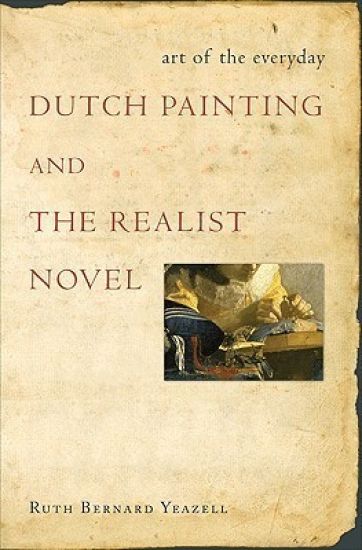
Realist novels are celebrated for their detailed attention to ordinary life. But two hundred years before the rise of literary realism, Dutch painters had already made an art of the everyday--pictures that served as a compelling model for the novelists who followed. By the mid-1800s, seventeenth-century Dutch painting figured virtually everywhere in the British and French fiction we esteem today as the vanguard of realism. Why were such writers drawn to this art of two centuries before? What does this tell us about the nature of realism? In this beautifully illustrated and elegantly written book, Ruth Yeazell explores the nineteenth century's fascination with Dutch painting, as well as its doubts about an art that had long challenged traditional values. After showing how persistent tensions between high theory and low genre shaped criticism of novels and pictures alike, Art of the Everyday turns to four major novelists--Honore de Balzac, George Eliot, Thomas Hardy, and Marcel Proust--who strongly identified their work with Dutch painting. For all these writers, Dutch art provided a model for training themselves to look closely at the particulars of middle-class life. Yet even as nineteenth-century novelists strove to create illusions of the real by modeling their narratives on Dutch pictures, Yeazell argues, they chafed at the model. A concluding chapter on Proust explains why the nineteenth century associated such realism with the past and shows how the rediscovery of Vermeer helped resolve the longstanding conflict between humble details and the aspirations of high art.
This is a sweeping and provocative work of aesthetic theory: a trenchant critique of the philosophy of art as it developed from the eighteenth century to the early twentieth century, combined with a carefully reasoned plea for a new and more flexible approach to art. Jean-Marie Schaeffer, one of France's leading aestheticians, explores the writings of Kant, Schlegel, Novalis, Hegel, Schopenhauer, Nietzsche, and Heidegger to show that these diverse thinkers shared a common approach to art, which he calls the "speculative theory." According to this theory, art offers a special kind of intuitive, quasi-mystical knowledge, radically different from the rational knowledge acquired by science. This view encouraged theorists to consider artistic geniuses the high-priests of humanity, creators of works that reveal the invisible essence of the world. Philosophers came to regard inexpressibility as the aim of art, refused to consider second-tier creations genuine art, and helped to create conditions in which the genius was expected to shock, puzzle, and mystify the public. Schaeffer shows that this speculative theory helped give birth to romanticism, modernism, and the avant-garde, and paved the way for an unfortunate divorce between art and enjoyment, between "high art" and popular art, and between artists and their public. Rejecting the speculative approach, Schaeffer concludes by defending a more tolerant theory of art that gives pleasure its due, includes popular art, tolerates less successful works, and accounts for personal tastes. "[A] remarkable work...[Schaeffer's] writing is governed by ...the ideals of clarity and consequence, the ideas of logic, truth, and evidence...Schaeffer is so precise and unrelenting a philosophical critic that one wonders how some of the philosophies he anatomizes here can possibly survive the operation."--From the foreword by Arthur C. Danto
Art today is defined by its relationship to money as never before. Prices have been driven to unprecedented heights, conventional boundaries within the art world have collapsed, and artists think ever more strategically about how to advance their careers. Art is no longer simply made, but packaged, sold, and branded. In Art of the Deal, Noah Horowitz exposes the inner workings of the contemporary art market, explaining how this unique economy came to be, how it works, and where it's headed. In a new postscript, Horowitz reflects on the evolution of the trade since the book's original release in 2011, shining light on the market's continued ascent as well as its most urgent challenges.
How creative freedom, race, class, and gender shaped the rebellion of two visionary artistsPostwar America experienced an unprecedented flourishing of avant-garde and independent art. Across the arts, artists rebelled against traditional conventions, embracing a commitment to creative autonomy and personal vision never before witnessed in the United States. Paul Lopes calls this the Heroic Age of American Art, and identifies two artists—Miles Davis and Martin Scorsese—as two of its leading icons.In this compelling book, Lopes tells the story of how a pair of talented and outspoken art rebels defied prevailing conventions to elevate American jazz and film to unimagined critical heights. During the Heroic Age of American Art—where creative independence and the unrelenting pressures of success were constantly at odds—Davis and Scorsese became influential figures with such modern classics as Kind of Blue and Raging Bull. Their careers also reflected the conflicting ideals of, and contentious debates concerning, avant-garde and independent art during this period. In examining their art and public stories, Lopes also shows how their rebellions as artists were intimately linked to their racial and ethnic identities and how both artists adopted hypermasculine ideologies that exposed the problematic intersection of gender with their racial and ethnic identities as iconic art rebels.Art Rebels is the essential account of a new breed of artists who left an indelible mark on American culture in the second half of the twentieth century. It is an unforgettable portrait of two iconic artists who exemplified the complex interplay of the quest for artistic autonomy and the expression of social identity during the Heroic Age of American Art.
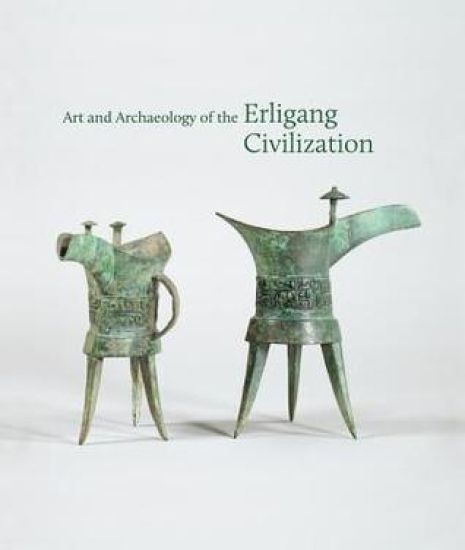
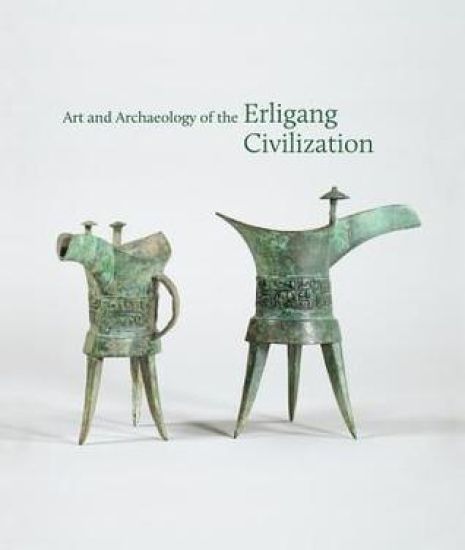
Named after an archaeological site discovered in 1951 in Zhengzhou, China, the Erligang civilization arose in the Yellow River valley around the middle of the second millennium BCE. Shortly thereafter, its distinctive elite material culture spread to a large part of China's Central Plain, in the south reaching as far as the banks of the Yangzi River. The Erligang culture is best known for the remains of an immense walled city at Zhengzhou, a smaller site at Panlongcheng in Hubei, and a large-scale bronze industry of remarkable artistic and technological sophistication. This richly illustrated book is the first in a western language devoted to the Erligang culture. It brings together scholars from a variety of disciplines, including art history and archaeology, to explore what is known about the culture and its spectacular bronze industry. The opening chapters introduce the history of the discovery of the culture and its most important archaeological sites. Subsequent essays address a variety of important methodological issues related to the study of Erligang, including how to define the culture, the usefulness of cross-cultural comparative study, and the difficulty of reconciling traditional Chinese historiography with archaeological discoveries. The book closes by examining the role the Erligang civilization played in the emergence of the first bronze-using societies in south China and the importance of bronze studies in the training of Chinese art historians. The contributors are Robert Bagley, John Baines, Maggie Bickford, Rod Campbell, Li Yung-ti, Robin McNeal, Kyle Steinke, Wang Haicheng, and Zhang Changping.
Named after an archaeological site discovered in 1951 in Zhengzhou, China, the Erligang civilization arose in the Yellow River valley around the middle of the second millennium BCE. Shortly thereafter, its distinctive elite material culture spread to a large part of China's Central Plain, in the south reaching as far as the banks of the Yangzi River. The Erligang culture is best known for the remains of an immense walled city at Zhengzhou, a smaller site at Panlongcheng in Hubei, and a large-scale bronze industry of remarkable artistic and technological sophistication. This richly illustrated book is the first in a western language devoted to the Erligang culture. It brings together scholars from a variety of disciplines, including art history and archaeology, to explore what is known about the culture and its spectacular bronze industry. The opening chapters introduce the history of the discovery of the culture and its most important archaeological sites. Subsequent essays address a variety of important methodological issues related to the study of Erligang, including how to define the culture, the usefulness of cross-cultural comparative study, and the difficulty of reconciling traditional Chinese historiography with archaeological discoveries. The book closes by examining the role the Erligang civilization played in the emergence of the first bronze-using societies in south China and the importance of bronze studies in the training of Chinese art historians. The contributors are Robert Bagley, John Baines, Maggie Bickford, Rod Campbell, Li Yung-ti, Robin McNeal, Kyle Steinke, Wang Haicheng, and Zhang Changping.
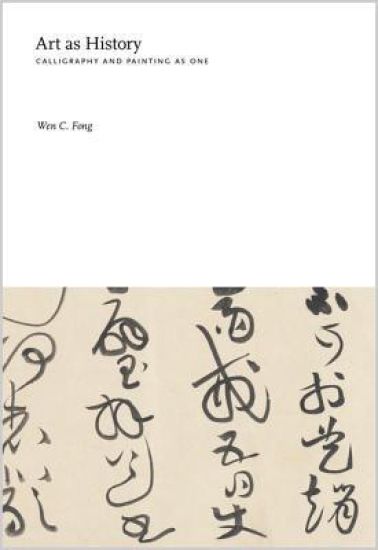
This richly illustrated book provides an anthology and summation of the work of one of the world's leading historians of Chinese painting and calligraphy. Wen Fong helped create the field of East Asian art history during a distinguished five-decade career at Princeton University and the Metropolitan Museum of Art. Few if any writers in English have such a broad knowledge of the history and practice of Chinese painting and calligraphy. In this collection of some of his most recent essays, Fong gives a sweeping tour through the history of Chinese painting and calligraphy as he offers new and revised views on a broad range of important subjects. The topics addressed include "art as history," in which each art object preserves a moment in art's own significant history; the museum as a place of serious study and education; the close historical relationship between calligraphy and painting and their primacy among Chinese fine arts; the parallel development of representational painting and sculpture in early painting history; the greater significance of brushwork, seen abstractly as a means of personal expression by the artist, in later painting history; the paradigmatic importance of the master-to-follower lineage as a social force in shaping the continuity and directing the subtle changes in Chinese painting history; the role of collectors; and the critical necessity of authenticated works for establishing an accurate art history. Throughout the book, Fong skillfully combines close analysis and detailed contextualization of individual works to reveal how the study of Chinese painting and calligraphy yields deep insights about Chinese culture and history.
A revisionist reading of modern art that examines how artworks are captured as property to legitimize powerIn this provocative new account, David Joselit shows how art from the nineteenth to the twenty-first centuries began to function as a commodity, while the qualities of the artist, nation, or period themselves became valuable properties. Joselit explores repatriation, explaining that this is not just a contemporary conflict between the Global South and Euro-American museums, noting that the Louvre, the first modern museum, was built on looted works and faced demands for restitution and repatriation early in its history. Joselit argues that the property values of white supremacy underlie the ideology of possessive individualism animating modern art, and he considers issues of identity and proprietary authorship.Joselit redefines art’s politics, arguing that these pertain not to an artwork’s content or form but to the way it is “captured,” made to represent powerful interests—whether a nation, a government, or a celebrity artist collected by oligarchs. Artworks themselves are not political but occupy at once the here and now and an “elsewhere”—an alterity—that can’t ever be fully appropriated. The history of modern art, Joselit asserts, is the history of transforming this alterity into private property.Narrating scenes from the emergence and capture of modern art—touching on a range of topics that include the Byzantine church, French copyright law, the 1900 Paris Exposition, W.E.B. Du Bois, the conceptual artist Adrian Piper, and the controversy over Dana Schutz’s painting Open Casket—Joselit argues that the meaning of art is its infinite capacity to generate experience over time.
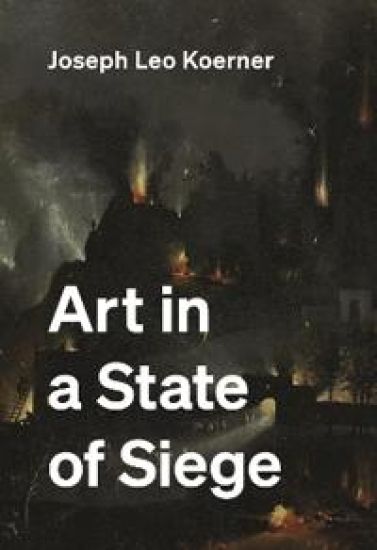
An art historical epic for dangerous timesWhat do artworks look like in extreme cases of collective experience? What signals do artists send when enemies are at the city walls and the rule of law breaks down, or when a tyrant suspends the law to attack from inside? Art in a State of Siege tells the story of three compelling images created in dangerous moments and the people who experienced them—from Philip II of Spain to Carl Schmitt—whose panicked gaze turned artworks into omens.Acclaimed art historian Joseph Koerner reaches back to the eve of iconoclasm and religious warfare to explore the most elusive painting ever painted. In Hieronymus Bosch’s Garden of Delights, enemies are everywhere: Jews and Ottomans at the gates, witches and heretics at home, sins overtaking the mind. Following a paper trail leading from Bosch’s time to World War II, Koerner considers a monumental self-portrait painted by Max Beckmann in 1927. Created when Germany was often governed by emergency decree, this image brazenly claimed to decide Europe’s future—until the Nazis deemed it to be a threat to the German people. For South African artist William Kentridge, Beckmann exemplified “art in a state of siege.” Koerner shows how his work served as beacon during South Africa’s racialist apartheid rule and inspired Kentridge’s breakthrough animations of drawings being made, erased, and remade.Spanning half a millennium but urgent today, Art in a State of Siege reveals how, in dire straits, art becomes the currency of last resort.
In this interdisciplinary study, Henry Maguire examines the influence of several literary genres and rhetorical techniques on the art of narration in Byzantium. He reveals the important and wide-reaching influence of literature on the visual arts. In particular, he shows that the literary embellishments of the sermons and hymns of the church nourished the imaginations of artists, and fundamentally affected the iconography, style, and arrangement of their work. Using provocative material previously unfamiliar to art historians, he concentrates on religious art from A.D. 843 to 1453.Professor Maguire first considers the Byzantine view of the link between oratory and painting, and then the nature of rhetoric and its relationship to Christian literature. He demonstrates how four rhetorical genres and devices—description, antithesis, hyperbole, and lament—had a special affinity with the visual arts and influenced several scenes in the Byzantine art, including the Annunciation, the Nativity, the Massacre of the Innocents, the Presentation, Christ's Passion, and the Dormition of the Virgin.Through the literature of the church, Professor Maguire concludes, the methods of rhetoric indirectly helped Byzantine artists add vividness to their narratives, structure their compositions, and enrich their work with languages. Once translated into visual language, the artifices of rhetoric could be appreciated by many.Henry Maguire is Assistant Professor of Art History at the University of Illinois at Urbana-Champaign.Originally published in 1982.The Princeton Legacy Library uses the latest print-on-demand technology to again make available previously out-of-print books from the distinguished backlist of Princeton University Press. These editions preserve the original texts of these important books while presenting them in durable paperback and hardcover editions. The goal of the Princeton Legacy Library is to vastly increase access to the rich scholarly heritage found in the thousands of books published by Princeton University Press since its founding in 1905.
In this interdisciplinary study, Henry Maguire examines the influence of several literary genres and rhetorical techniques on the art of narration in Byzantium. He reveals the important and wide-reaching influence of literature on the visual arts. In particular, he shows that the literary embellishments of the sermons and hymns of the church nourished the imaginations of artists, and fundamentally affected the iconography, style, and arrangement of their work. Using provocative material previously unfamiliar to art historians, he concentrates on religious art from A.D. 843 to 1453.Professor Maguire first considers the Byzantine view of the link between oratory and painting, and then the nature of rhetoric and its relationship to Christian literature. He demonstrates how four rhetorical genres and devices—description, antithesis, hyperbole, and lament—had a special affinity with the visual arts and influenced several scenes in the Byzantine art, including the Annunciation, the Nativity, the Massacre of the Innocents, the Presentation, Christ's Passion, and the Dormition of the Virgin.Through the literature of the church, Professor Maguire concludes, the methods of rhetoric indirectly helped Byzantine artists add vividness to their narratives, structure their compositions, and enrich their work with languages. Once translated into visual language, the artifices of rhetoric could be appreciated by many.Henry Maguire is Assistant Professor of Art History at the University of Illinois at Urbana-Champaign.Originally published in 1982.The Princeton Legacy Library uses the latest print-on-demand technology to again make available previously out-of-print books from the distinguished backlist of Princeton University Press. These editions preserve the original texts of these important books while presenting them in durable paperback and hardcover editions. The goal of the Princeton Legacy Library is to vastly increase access to the rich scholarly heritage found in the thousands of books published by Princeton University Press since its founding in 1905.