Kirjojen hintavertailu. Mukana 11 717 486 kirjaa ja 12 kauppaa.

Kirjahaku

Etsi kirjoja tekijän nimen, kirjan nimen tai ISBN:n perusteella.

1000 tulosta hakusanalla Alain Goetzmann

Mean Field Games and Mean Field Type Control Theory

Mean Field Games and Mean Field Type Control Theory

Alain Bensoussan; Jens Frehse; Phillip Yam

Springer-Verlag New York Inc.
2013
nidottu
?Mean field games and Mean field type control introduce new problems in Control Theory. The terminology “games” may be confusing. In fact they are control problems, in the sense that one is interested in a single decision maker, whom we can call the representative agent. However, these problems are not standard, since both the evolution of the state and the objective functional is influenced but terms which are not directly related to the state or the control of the decision maker. They are however, indirectly related to him, in the sense that they model a very large community of agents similar to the representative agent. All the agents behave similarly and impact the representative agent. However, because of the large number an aggregation effect takes place. The interesting consequence is that the impact of the community can be modeled by a mean field term, but when this is done, the problem is reduced to a control problem. ?

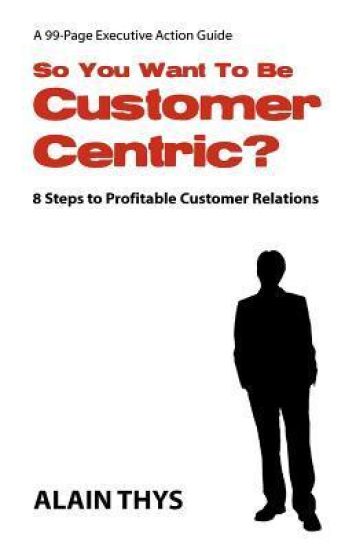
So You Want To Be Customer-Centric?: 8 Steps To Profitable Customer Relations

So You Want To Be Customer-Centric?: 8 Steps To Profitable Customer Relations

Alain Thys

Createspace Independent Publishing Platform
2011
nidottu
Despite proclaiming the contrary, most businesses don't really care about their customers. Sure, they swear blind that the customer is at the heart of everything they do. But when push comes to shove, customer happiness comes second to quarterly profits and Christmas bonuses. In just 99 pages, So You Want to Be Customer-Centric? helps you shake the habits that are preventing companies being truly customer-centric. This straight-talking executive action guide helps you focus on customers in spite of budget constraints, corporate politics, organizational silos and ambivalent data. Not because it's a nice thing to do, but because it is ultimately more profitable. The book includes case studies and best practice insight from senior executives who have been there: C&A, ING, Lexus Europe, L'Or al Group, Orange Business Services, Philips, Sanoma Magazines International and the World Economic Forum.
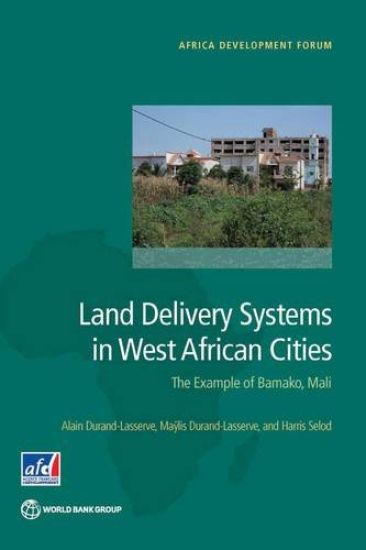
Land Delivery Systems in West African Cities

Land Delivery Systems in West African Cities

Alain Durand-Lasserve; Maÿlis Durand-Lasserve; Harris Selod

World Bank Publications
2015
nidottu
Urban and peri-urban land markets in rapidly expanding West African cities operate within and across different coexisting tenure regimes and involve complex procedures to obtain or make land available for housing. Because a structured framework lacks for the analysis of such systems, this book proposes a systemic approach and applies it to Bamako and its surrounding areas. The framework revolves around the description of land delivery channels: starting from the status of tenure when the land is first placed in circulation for residential use, it identifies the processes whereby tenure can be improved, the types of transactions that take place along the way, and interactions between land delivery channels.The analysis of the system shows that land is initially provided through a customary land delivery channel-which predominates in peri-urban areas where land is being transformed from agricultural to residential use--and through a public and para-public channel, which involves the administrative allocation of residential plots to inhabitants and the transfer of land to developers. These two channels feed into the formal private channel which delivers serviced plots with ownership title at much higher prices. Plots in the various channels may be traded successively, with a degree of informality varying according to tenure, legality and registration of transactions. Whereas the development of the formal market is hindered by structural factors, the informal land market provides little tenure security. Targeted towards low and middle-incomes, it also attracts wealthy and well-connected buyers who have access to information and administrative and political power and can more easily formalize tenure.The sustained increase in land prices, numerous conflicts over land, high transaction costs and time-consuming formalization procedures, together with the involvement of a large number of stakeholders, combine to reduce affordability significantly and make access to secure land very difficult for the urban poor.
Le Système D'approvisionnement En Terres Dans Les Villes D'Afrique De L'Ouest

Le Système D'approvisionnement En Terres Dans Les Villes D'Afrique De L'Ouest

Alain Durand-Lasserve; Maÿlis Durand-Lasserve; Selod Harris

World Bank Publications
2015
nidottu
Les marchés fonciers urbains et périurbains des villes d’Afrique de l’Ouest en expansion rapide opèrent dans des contextes où coexistent des régimes fonciers différents et où les procédures d’accès aux terrains sont complexes. Un cadre d’analyse faisant défaut jusqu’ici, ce livre propose une approche systémique et l'applique à la zone urbaine et périurbaine de Bamako et à son hinterland rural. La méthode repose sur une analyse des différentes filières d’approvisionnement en terres et identifie, depuis la mise en circulation des terres agricoles pour répondre aux besoins en terrains à usage résidentiel, les changements de tenure et types de transactions qui accompagnent le passage aux terrains urbains, ainsi que les interactions entre les différentes filières. L'analyse montre que l’approvisionnement en terre est à l’origine assurée par la filière coutumière, qui prédomine dans les zones périurbaines, et par la filière publique et parapublique où l’État alloue des terrains à usage d’habitation aux individus ou les cède à des sociétés de promotion foncière et immobilières. Ces filières alimentent la filière privée formelle qui met ensuite sur le marché, à des prix élevés, des parcelles viabilisées avec titre de propriété. Les parcelles peuvent être cédées successivement, avec un degré d'informalité qui dépend de la tenure, de la légalité de la transaction et de son enregistrement. Alors que le développement du marché formel est entravé par des facteurs structurels, le marché foncier informel offre peu de sécurité.
Implementing Standardized Work

Implementing Standardized Work

Alain Patchong

CRC Press Inc
2012
nidottu
This book, the first in The One-Day Expert series dedicated to Standardized Work, is about operator performance measurement. Implementing Standardized Work: Measuring Operators’ Performance explains how to measure the performance of operators quickly and simply without sacrificing accuracy.Detailing how to identify the most efficient operators and how to monitor their improvement over time, it describes a method that has been applied with success for years in the automotive industry. Grounded in one of the basic laws of factory physics—mastery of variability—this method can be automated very easily and thereby requires no labor consumption.In this episode of The One-Day Expert, Thomas, a plant director in an industrial group, is reassigned to another plant that is losing money. Morale in the plant is very low and the staff is pessimistic about the plant’s future and is distrustful of senior management. Thomas’ urgent mission is to turn the plant around. Previous plant managers have tried several initiatives with limited results. To face these challenges, Thomas has decided to use Standardized Work deployment to achieve quick and visible results while rebuilding a real team. This book recounts these initial steps of the Standardized Work deployment. It explains how to find and apply the best operational method that will lead to cost reductions, better product quality, and increased operator safety. Additional steps will be detailed in forthcoming books in the series.
Implementing Standardized Work

Implementing Standardized Work

Alain Patchong

CRC Press Inc
2026
nidottu
Process analysis is the first tool needed to capture the initial situation before any improvement. Process analysis helps collect the "facts and data" that gives the overall production capacity of the process, shows all opportunities for improvement their amount and source. It is therefore possible to establish the target picture of the process condition and prioritize the needed actions to get there. This book uses numerous examples, charts and drawings to explain the deployment of process analysis and to convey the knowledge effectively.
Implementing Standardized Work

Implementing Standardized Work

Alain Patchong

CRC Press Inc
2013
nidottu
The first book in The One-Day Expert series detailed the initial steps that Thomas, a young, high-potential plant manager in an industrial group, took to assess his plant’s situation through measurement of operators’ performance. The second book in the series, Implementing Standardized Work: Writing Standardized Work Forms focuses on the next step of this assessment—writing Standardized Work forms to help identify variability and waste.The book uses numerous examples, charts, and drawings to illustrate the interaction between operator, machine, and material. Besides process analysis, the book discusses process analysis charts, Standardized Work charts, Standardized Work combination tables, and operator work instructions. It also:Summarizes key points after each step to reinforce understanding Contains many illustrations to help make application easyIncludes access to additional materials on the book’s websiteSince an operation can only be standardized if it is repeatable, the most important requirement for a real application of Standardized Work is minimum stability in the process. The book explains how to estimate the stability level of a process by performing process analysis. It also presents a multistage bar called Yamazumihyo to help you perform your own process analysis. After reading this book you will understand how to use Standardized Work forms as the starting point to establishing a safe and ergonomic work place that delivers quality products in an efficient manner.
Implementing Standardized Work

Implementing Standardized Work

Alain Patchong

CRC Press Inc
2014
nidottu
This book, the third in a series dedicated to Standardized Work, focuses on process improvement. Implementing Standardized Work: Process Improvement begins by explaining why standardization and process improvement are two sides of the same coin—both needing each other to achieve true sustainability.Describing how to use Standardized Work forms to identify easy opportunities for process improvement, the book includes simple tools and forms that readers can use to achieve quick improvements to boost morale and sustain motivation during the work ahead. Maintaining a focus on process improvement, it covers essential knowledge using a compelling story format. Following in the tradition of other books in The One-Day Expert series, this book tells the story of Thomas, a young, high-potential plant manager in an industrial group. In this installment, Thomas opens a new front line in his quest to turn around the plant's inefficiency. He tries a new type of relationship with the labor union based on mutual trust and constructive partnership, while negotiating a competitiveness plan. Readers will also see how he continues to push for the implementation of Standardized Work.Covering the essential methods and tools of process improvement in a manner that is easy to understand, this book can help you become familiar with the key concepts of Standardized Work and process improvement in just one day. That means you can read the book and immediately start implementing improvements that produce quick wins. The book’s clear examples and illustrations will guide you through proper application of the techniques discussed.
Implementing Standardized Work

Implementing Standardized Work

Alain Patchong

CRC Press Inc
2015
nidottu
Standardized Work refers to the process of finding and applying the best operational methods that will lead to cost reduction, better product quality, and increased operator safety. This book, the latest in a series dedicated to Standardized Work, focuses on operator training and auditing. It describes the methods and tools used to train operators and then check their work against the standard defined in Standardized Work forms. It also discusses how to introduce these tools in the most effective way.Following in the tradition of the other books in this series, Implementing Standardized Work: Training and Auditing covers essential knowledge using a compelling story format. It follows Thomas, a young, high-potential plant manager in an industrial group, as he deploys Standardized Work to turn around a plant that is losing money. This latest installment recounts the next steps in his process—preparing for training, conducting the training itself, and introducing an auditing process to measure its success.The book explains how to structure and present the newly improved operational methods to facilitate the training. It introduces the Job Breakdown Sheet, which gives operators the "why" for actions and provides illustrations covering key points. The book presents a customized version of the training industry’s four-step training method that provides simple actionable tools that will help you perform quick and effective operator training. It also provides a number of key tips to ensure the successful establishment of auditing processes.Implementing Standardized Work: Training and Auditing provides you with the right tools and the right processes to train and sustain Standardized Work. Everyone’s role, from the plant manager to the operator, is described and illustrated by simple examples in this book. Covering the essentials of training and auditing in a streamlined, easy-to-understand format, this book can have you applying its concepts in just one day.
Movies Without Baggage: How to Make Feature a Film for Under $10,000
With the rise of 3D, CGI, and nine-figure budgets, the movie business has never seemed more expensive than it does today. But, in reality, making a movie for next to nothing has never been easier. In "Movies Without Baggage," longtime filmmaker Alain Silver shows how twenty-first-century technology makes it possible to produce high-quality, full-length feature films for less than $50,000, $25,000, or even $10,000. There has never been a book like this written by a filmmaker with so much experience on both sides of the camera. Silver covers everything from finding/creating the right script; budgeting, casting, and signing contracts; scheduling, crewing, and shooting; post-production; and finally marketing and securing distribution. Richly illustrated with stills from his own ultra-low-budget films, "Movies Without Baggage" is the ultimate guide for the aspiring guerilla filmmaker.
Performance and Computer-Aided Design

Performance and Computer-Aided Design

Alain. Liegeois

Springer-Verlag New York Inc.
2012
nidottu
What are the design or selection criteria for robots that will be capable of carrying out particular functions? How can robots and machines be installed in work locations to obtain maximum effectiveness? How can their programming be made easier? How can a work location be arranged so as to accommodate successfully automatic machines? Traditionally, these questions have only been answered as a result of long and exhaustive study, involving complex calculations and the use of many sketches and plans. Computers and interactive computer graphics provide the possibility of automation for this type of analysis, thus making the task of robot designers and users easier. This volume is concerned with mathematical modelling and graphics representation of robot performance (eg their fields of action, their performance index) as a function of their structure, mechanical parts and memory systems. Used in conjunction with operating specifications, such as movement programs and computer-aided design (CAD) data bases that describe parts or tools, these perform­ ance models can allow the potential of different robots or different models of the same type of robot to be compared, workstations to be organized efficiently, responses to be optimized, errors to be minimized and can make off-line programming by computer a real possibility. In the future, it is certain that the appearance of robots designed to monitor their own performances will allow applications and safety conditions to be considerably improved.