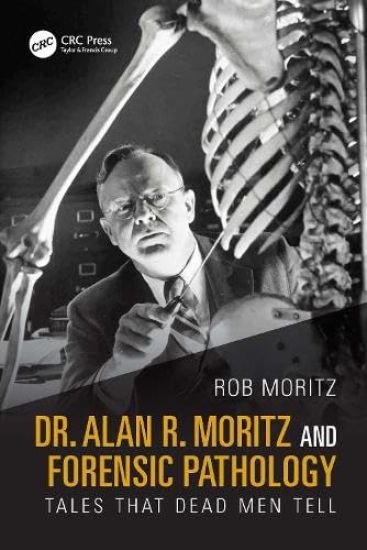
Forensic science has become a mainstay of popular culture on television, in movies, books, and podcasts. Dr. Alan R. Moritz (1899-1986) was a highly influential figure in the development of the field of forensic science as we know it today.Dr. Alan R. Moritz and Forensic Pathology: Tales that Dead Men Tell, written by Dr. Moritz’s journalist grandson Rob Moritz, recounts his life and career from personal papers and correspondence, interviews, newspaper accounts and other sources, including archived materials from Harvard Medical School, the Rockefeller Foundation, Case Western Reserve University and the University Hospitals of Cleveland. Chapters chronicle more than a half-century of ground-breaking research and high-profile investigations, including some of the 20th century’s most infamous cases. This includes the assassination of President John F. Kennedy, the Sam Shepherd case, the Cocoanut Grove nightclub fire, the Attica prison riots and the Texas Tower sniper, as well as his contributions to the well-known Nutshell Studies of Unexplained Death. Dr. Moritz, the inspiration for the first on-screen forensic scientist, is credited with being one of the most prominent pioneers of the last century, helping to move forensic medicine from the political jurisdiction of untrained local coroners to a respected scientific discipline that fascinates the public.The book also details Dr. Moritz’s travels, during which he experienced some of society’s darkest chapters. This includes an infamous lynching during the “Red Summer” of 1919, the rise of Nazi Germany and the degradation of apartheid in South Africa, all of which influenced and shaped his worldview. Highlights of Dr. Moritz’s work, recounted in detail, include career stops at Case Western Reserve University in Cleveland and Harvard Medical School in Boston. Coverage details his most salient and well-known research—as well as insightful anecdotes and stories that demonstrate Dr. Moritz’s character and the development and evolution of his scientific views over the years.This book:Profiles the life of a well-known and impactful figure in the advancement of forensic pathology’s public perception and practices in the United States.Provides background on Dr. Moritz’s seminal work, the article Classical Mistakes in Forensic Pathology Is of interest to medical practitioners, history of science buffs, and forensic practitioners interested in the early history and development of forensic pathology as a disciplineDr. Alan R. Moritz and Forensic Pathology fills in a missing chapter on the life, research, and lasting legacy of Dr. Moritz, providing insight into the development of modern forensic pathology practice by examining the momentous contributions and character of one of its true pioneers.
Forensic science has become a mainstay of popular culture on television, in movies, books, and podcasts. Dr. Alan R. Moritz (1899-1986) was a highly influential figure in the development of the field of forensic science as we know it today.Dr. Alan R. Moritz and Forensic Pathology: Tales that Dead Men Tell, written by Dr. Moritz’s journalist grandson Rob Moritz, recounts his life and career from personal papers and correspondence, interviews, newspaper accounts and other sources, including archived materials from Harvard Medical School, the Rockefeller Foundation, Case Western Reserve University and the University Hospitals of Cleveland. Chapters chronicle more than a half-century of ground-breaking research and high-profile investigations, including some of the 20th century’s most infamous cases. This includes the assassination of President John F. Kennedy, the Sam Shepherd case, the Cocoanut Grove nightclub fire, the Attica prison riots and the Texas Tower sniper, as well as his contributions to the well-known Nutshell Studies of Unexplained Death. Dr. Moritz, the inspiration for the first on-screen forensic scientist, is credited with being one of the most prominent pioneers of the last century, helping to move forensic medicine from the political jurisdiction of untrained local coroners to a respected scientific discipline that fascinates the public.The book also details Dr. Moritz’s travels, during which he experienced some of society’s darkest chapters. This includes an infamous lynching during the “Red Summer” of 1919, the rise of Nazi Germany and the degradation of apartheid in South Africa, all of which influenced and shaped his worldview. Highlights of Dr. Moritz’s work, recounted in detail, include career stops at Case Western Reserve University in Cleveland and Harvard Medical School in Boston. Coverage details his most salient and well-known research—as well as insightful anecdotes and stories that demonstrate Dr. Moritz’s character and the development and evolution of his scientific views over the years.This book:Profiles the life of a well-known and impactful figure in the advancement of forensic pathology’s public perception and practices in the United States.Provides background on Dr. Moritz’s seminal work, the article Classical Mistakes in Forensic Pathology Is of interest to medical practitioners, history of science buffs, and forensic practitioners interested in the early history and development of forensic pathology as a disciplineDr. Alan R. Moritz and Forensic Pathology fills in a missing chapter on the life, research, and lasting legacy of Dr. Moritz, providing insight into the development of modern forensic pathology practice by examining the momentous contributions and character of one of its true pioneers.
From the author of the #1 best seller The Girl in the Spider's Web--an electrifying thriller that begins with Alan Turing's suicide and plunges into a post-war Britain of immeasurable repression, conformity and fear On June 8, 1954, Alan Turing is found dead in his home in the sleepy suburb of Wilmslow--an apparent suicide. Investigators assumed he purposely ate a cyanide-laced apple because he was unable to cope with the humiliation of his criminal conviction for gross indecency. But Leonard Corell, a young detective constable who once dreamed of a career in higher mathematics, suspects greater forces are involved. In the face of opposition from his superiors and in the paranoid atmosphere of the Cold War, he inches closer to the truth and to one of the most closely guarded secrets of the Second World War--what was going on at Bletchley Park. With state secrets swirling in his mind and a growing fear that he is under surveillance, Corell realizes that he has much to learn about the dangers of forbidden knowledge.
The definitive biography of Alan Shepard, America's first man in space, with a new Foreword by Chris Kraft "One of the finest books ever written about the space program."--Homer Hickan, author of Rocket Boys "A wonderful and gripping biography . . . meticulously reported in the best tradition of David Halberstam."--Buzz Bissinger, New York Times bestselling author of Friday Night Lights Alan Shepard was the brashest, cockiest, and most flamboyant of America's original Mercury Seven, but he was also regarded as the best. Intense, colorful, and dramatic, he was among the most private of America's public figures and, until his death in 1998, he guarded the story of his life zealously. Light This Candle, based on Neal Thompson's exclusive access to private papers and interviews with Shepard's family and closest friends--including John Glenn, Wally Schirra, and Gordon Cooper--offers a riveting, action-packed account of Shepard's life.
Warren and Brandeis's "The Right to Privacy," with 2010 Foreword by Steven Alan Childress, J.D., Ph.D., a senior law professor at Tulane University. Includes photos and rare news clippings. Part of the Legal Legends Series by Quid Pro Books. The most influential piece of legal scholarship, many scholars say, is this 1890 Harvard Law Review article by two Boston lawyers (one of whom later became a legendary Supreme Court Justice). Warren and Brandeis created -- by cleverly weaving strands of precedent, policy, and logic -- the legal concept of privacy and the power of legal protection for that right. Their clear and effective prose stands the test of time, and influenced such modern notions as "inviolate personality" and law's "elasticity." They saw the threat of new technology. Most of all, they asserted the fundamental "right to be let alone," and its implications to modern law are profound. Their privacy concept has grown over the decades, now raising issues about abortion, drug testing, surveillance, sexual orientation, free speech, the "right to die," and medical confidentiality. All these spinoffs trace their origins to this master work. It is simply one of the most significant parts of the modern canon of law, politics, and sociology. The extensive new Foreword by Professor Childress shares not only this import and effect, but also the fascinating backstory behind the article. Its origins are found in Warren's own prickly experiences with the press and the paparazzi of the day, famously after their reports about and photos of his family weddings.
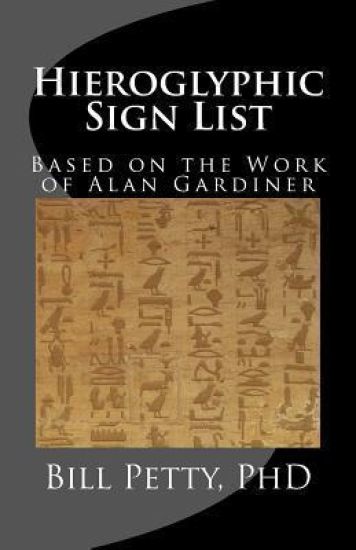
The Hieroglyphic Sign List is part of Museum Tours' series "The Essentials" ... books that anyone serious about the study of Egyptology will find useful. Now available in both print and digital formats. Definitions have been expanded. Sign descriptions have been added. More relevant examples have been included. Words have been spelled out in glyphs as well as in transliteration. In order to maintain ease of use, the order and the numbering generally follow the sign list in Gardiner's Egyptian Grammar. From BF Press. For the eBook version, search Amazon under "hieroglyphic sign list ebook"
"Adeus, Alan" um romance estrelado pelo jovem Alan Valencci, narrador e personagem principal da hist ria. Com 21 anos, ele tenta seguir a vida de escritor em uma cidade do interior, recebendo um sal rio med ocre e morando em uma pens o barata. Al m disso, precisa lidar com o aparecimento de uma nova rela o amorosa em sua vida e o ressurgimento de uma antiga. O livro tem uma linguagem simples e bem-humorada, com o intuito de proporcionar uma leitura f cil e prazerosa.⠀Lucas Gutierres nasceu na cidade de Santa Maria (RS), em 1998. Seus primeiros rabiscos de escrita foram feitos em 2015, quando tinha 17 anos e estava no 3 ano do ensino m dio. Em 2017, come ou a divulgar seu trabalho nas redes sociais atrav s de um blog, at que, em 2019, publicou por conta pr pria seus primeiros livros. O autor j escreveu e lan ou mais de 5 obras, nas categorias Poemas, Contos e Romance.⠀Instagram: @doisecinquentaTwitter: @doisecinquentaaFacebook: @doisecinquenta
This is a short, 10,400 word, biography of the USA in the years of Chester A. Arthur of Vermont. It is not the story of Chester Arthur, although he is a major part of it. Arthur inherited the presidency upon the death of Garfield in September, 1881, and, by all accounts, did a surprisingly good job Read about problems with Chile, Geronimo's War, the trial of assassin Guiteau, and the rise of the modern American Navy with the construction of the first three steel cruisers. 'Elegant Arthur' was a cultured man who changed outfits three times a day, just because he was into clothes. This book is written with clarity, passion and a little humor here and there. You will like this little book.
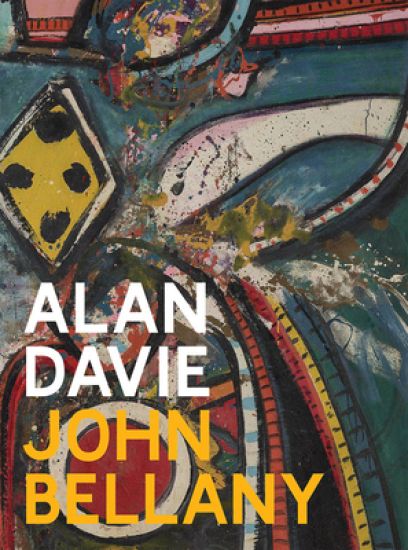
Cradle of Magic brings together two giants of 20th-century British painting: John Bellany and Alan Davie Alan Davie (1920–2014) was one of the first British artists to explore abstract expressionist forms and techniques, and his gestural paintings, rich with symbolism, demonstrate an interest in tribal art, as well as Zen Buddhism. John Bellany (1942–2013), over a long and prolific career, came to be considered one of Britain's foremost figurative painters. His intimate works, often filled with ghoulish, hybridized creatures, balance the uncanny, joyful and violent in powerful and original ways. The book comes with two different covers—one by each artist—and includes an essay by the acclaimed art historian Mel Gooding exploring the connections between the artists and the themes underpinning their paintings. Also included are two newly transcribed interviews with the artists recorded as part of the Artists' Lives oral history project at the British Library.
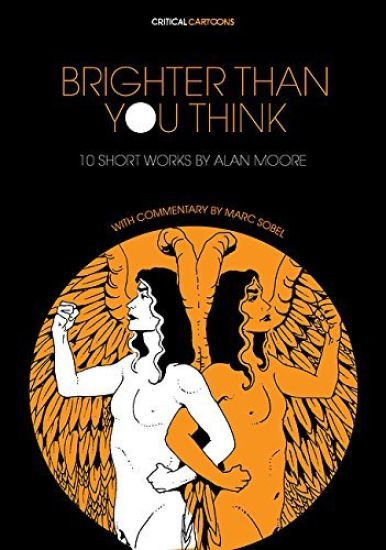
A collection of Alan Moore's (Watchmen, From Hell) difficult-to-find comics short stories. From bold experiments, through early takes on his favorite subjects, to self-critiques of his older work, this wide-ranging collection is an essential look at Moore's illuminating short stories. Each story is drawn by some of the best artists in comics from mainstream mavericks like Steven (Swamp Thing, Tyrant) Bissette, Rick (Swamp Thing, Bratpack) Veitch & John Totleben (Miracelman) to underground iconoclasts like Mark Beyer (RAW) and Peter Bagge(Hate, Woman Rebel: The Margaret Sanger Story). Comic book critic Marc Sobel provides insightful commentary and context for each of the stories. Marc Sobel is the co-editor of The Love and Rockets Companion published by Fantagraphics Books. He is also the author of the forthcoming Love and Rockets Reader, also from Fantagraphics. He is also a freelance journalist and scholar in the field of comic book studies. Alan Moore is an English writer primarily known for his work in comic books, including Watchmen, V for Vendetta, and From Hell (and many others). Frequently described as the best graphic novel writer in history, and he has been called "one of the most important British writers of the last fifty years."
Through a series of intimate, feature-length conversations with Alan Clements, Burma's Voices of Freedom brings together dozens of the country's most respected and well-known politicians, pro-democracy activists, artists and religious leaders to provide one of the most detailed accounts of Burma's decades long struggle for freedom ever compiled. Together, these voices describe the courage and conviction required to nonviolently confront injustice anywhere, whether on a stage, in a demonstration, or in solitary confinement.Combined with extensive archival material spanning 30 years, and drawing upon Clements' lifetime of connections within Burma, these four volumes provide an inside account of the ongoing struggle for democracy as it has evolved from the time of Aung San Suu Kyi's release from house arrest in 2010, through the National League for Democracy election victory in 2015, and on to the upcoming national elections in late 2020, detailing their implications on the very future of freedom itself.Volume 1: Key excerpts from decades of interviews, speeches and presentations by Aung San Suu Kyi, followed by expansive conversations with three of her longest and closest colleagues, U Tin Oo, U Win Tin and U Win Htein (542 pages).Volume 2: Interviews with key National League for Democracy party members, prominent Buddhist, Muslim and Catholic leaders, and veteran activists such as Min Ko Naing and Ko Ko Gyi, both of whom served nearly two decades in prison (416 pages).Volume 3: Includes interviews with a broader range of spoken-word activist comedians, musicians, award-winning artists, journalists, and renowned politicians (466 pages).Volume 4: Finishes the series with a set of scholarly appendices, including historical speeches and articles and a lengthy detailed chronology and analysis of key political events over the last 30 years (570 pages).ALAN CLEMENTS, author of The Voice of Hope: Conversations with Aung San Suu Kyi (1996) and one of the first Americans to ordain and live as a Buddhist monk in Burma, is the founder of World Dharma and the Burma Project USA and a veteran activist, author, artist, and speaker whose previous books have been met with critical acclaim.FERGUS HARLOW has been Alan Clements' assistant and co-author since late 2012, and an unaffiliated student of the Dhamma since 2004. World Dharma Publicationswww.WorldDharma.com/Books
Through a series of intimate, feature-length conversations with Alan Clements, Burma's Voices of Freedom brings together dozens of the country's most respected and well-known politicians, pro-democracy activists, artists and religious leaders to provide one of the most detailed accounts of Burma's decades long struggle for freedom ever compiled. Together, these voices describe the courage and conviction required to nonviolently confront injustice anywhere, whether on a stage, in a demonstration, or in solitary confinement.Combined with extensive archival material spanning 30 years, and drawing upon Clements' lifetime of connections within Burma, these four volumes provide an inside account of the ongoing struggle for democracy as it has evolved from the time of Aung San Suu Kyi's release from house arrest in 2010, through the National League for Democracy election victory in 2015, and on to the upcoming national elections in late 2020, detailing their implications on the very future of freedom itself.Volume 1: Key excerpts from decades of interviews, speeches and presentations by Aung San Suu Kyi, followed by expansive conversations with three of her longest and closest colleagues, U Tin Oo, U Win Tin and U Win Htein (542 pages).Volume 2: Interviews with key National League for Democracy party members, prominent Buddhist, Muslim and Catholic leaders, and veteran activists such as Min Ko Naing and Ko Ko Gyi, both of whom served nearly two decades in prison (416 pages).Volume 3: Includes interviews with a broader range of spoken-word activist comedians, musicians, award-winning artists, journalists, and renowned politicians (466 pages).Volume 4: Finishes the series with a set of scholarly appendices, including historical speeches and articles and a lengthy detailed chronology and analysis of key political events over the last 30 years (570 pages).ALAN CLEMENTS, author of The Voice of Hope: Conversations with Aung San Suu Kyi (1996) and one of the first Americans to ordain and live as a Buddhist monk in Burma, is the founder of World Dharma and the Burma Project USA and a veteran activist, author, artist, and speaker whose previous books have been met with critical acclaim.FERGUS HARLOW has been Alan Clements' assistant and co-author since late 2012, and an unaffiliated student of the Dhamma since 2004. World Dharma Publicationswww.WorldDharma.com/Books