Kirjojen hintavertailu. Mukana 11 627 067 kirjaa ja 12 kauppaa.

Kirjahaku

Etsi kirjoja tekijän nimen, kirjan nimen tai ISBN:n perusteella.

1000 tulosta hakusanalla Alexander Danzig

Alexander of Aphrodisias: On Aristotle Topics 2
Aristotle’s Topics is a handbook for dialectic, which can be understood as a philosophical debate between a questioner and a respondent. In book 2, Aristotle mainly develops strategies for making deductions about ‘accidents’, which are properties that might or might not belong to a subject (for instance, Socrates has five fingers, but might have had six), and about properties that simply belong to a subject without further specification.In the present commentary, here translated into English for the first time, Alexander develops a careful study of Aristotle’s text. He preserves objections and replies from other philosophers whose work is now lost, such as the Stoics. He also offers an invaluable picture of the tradition of Aristotelian logic down to his time, including innovative attempts to unify Aristotle’s guidance for dialectic with his general theory of deductive argument (the syllogism), found in the Analytics.The work will be of interest not only for its perspective on ancient logic, rhetoric, and debate, but also for its continuing influence on argument in the Middle Ages and later.
'Alexander': On Aristotle Metaphysics 12
This volume presents a commentary on Aristotle’s Metaphysics Book 12 by pseudo-Alexander in a new translation accompanied by explanatory notes, introduction and indexes. Fred D. Miller, Jr. argues that the author of the commentary is in fact not Alexander of Aphrodisias, Aristotle’s distant successor in early 3rd century CE Athens and his leading defender and interpreter, but Michael of Ephesus from Constantinople as late as the 12th century CE. Robert Browning had earlier made the case that Michael was enlisted by Princess Anna Comnena in a project to restore and complete the ancient Greek commentaries on Aristotle, including those of Alexander; he did so by incorporating available ancient commentaries into commentaries of his own.Metaphysics Book 12 posits a god as the supreme cause of motion in the cosmic system Aristotle had elaborated elsewhere as having the earth at the centre. The fixed stars are whirled around it on an outer sphere, the sun, moon and recognised planets on interior spheres, but with counteracting spheres to make the motions of each independent of the motions of others and of the fixed stars, thus yielding a total of 55 spheres. Motion is transmitted from a divine unmoved mover through divine moved movers which move the celestial spheres, and on to the perishable realms. Chapters 1 to 5 describe the principles and causes of the perishable substances nearer the centre of the universe, while Chapters 6 to 10 seek to prove the existence and attributes of the celestial substances beyond.
'Alexander': On Aristotle Metaphysics 12
This volume presents a commentary on Aristotle’s Metaphysics Book 12 by pseudo-Alexander in a new translation accompanied by explanatory notes, introduction and indexes. Fred D. Miller, Jr. argues that the author of the commentary is in fact not Alexander of Aphrodisias, Aristotle’s distant successor in early 3rd century CE Athens and his leading defender and interpreter, but Michael of Ephesus from Constantinople as late as the 12th century CE. Robert Browning had earlier made the case that Michael was enlisted by Princess Anna Comnena in a project to restore and complete the ancient Greek commentaries on Aristotle, including those of Alexander; he did so by incorporating available ancient commentaries into commentaries of his own.Metaphysics Book 12 posits a god as the supreme cause of motion in the cosmic system Aristotle had elaborated elsewhere as having the earth at the centre. The fixed stars are whirled around it on an outer sphere, the sun, moon and recognised planets on interior spheres, but with counteracting spheres to make the motions of each independent of the motions of others and of the fixed stars, thus yielding a total of 55 spheres. Motion is transmitted from a divine unmoved mover through divine moved movers which move the celestial spheres, and on to the perishable realms. Chapters 1 to 5 describe the principles and causes of the perishable substances nearer the centre of the universe, while Chapters 6 to 10 seek to prove the existence and attributes of the celestial substances beyond.
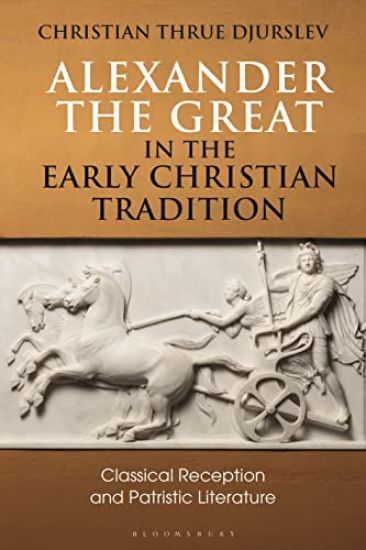
Alexander the Great in the Early Christian Tradition

Alexander the Great in the Early Christian Tradition

Christian Thrue Djurslev

Bloomsbury Academic
2021
nidottu
What has Alexander the Great to do with Jesus Christ? Or the legendary king’s conquest of the Persian Empire (335–23 BCE) to do with the prophecies of the Old Testament?In many ways, the early Christian writings on Alexander and his legacy provide a lens through which it is possible to view the shaping of the literature and thought of the early church in the Greek East and the Latin West. This book articulates that fascinating discourse for the first time by focusing on the early Christian use of Alexander. Delving into an impressively deep pool of patristic literature written between 130–313 CE, Christian Thrue Djurslev offers original interpretations of various important authors, from the learned lawyer Tertullian to the ‘Christian Cicero’ Lactantius, and from the apologist Tatian to the first church historian Eusebius. He demonstrates that the early Christian adaptations of the Alexandrian myths created a new tradition that has continued to develop and expand ever since. This innovative work of reception studies is important reading for all scholars of Alexander the Great and early church history.
Alexander of Aphrodisias: On Aristotle Topics 2
Aristotle’s Topics is a handbook for dialectic, which can be understood as a philosophical debate between a questioner and a respondent. In book 2, Aristotle mainly develops strategies for making deductions about ‘accidents’, which are properties that might or might not belong to a subject (for instance, Socrates has five fingers, but might have had six), and about properties that simply belong to a subject without further specification.In the present commentary, here translated into English for the first time, Alexander develops a careful study of Aristotle’s text. He preserves objections and replies from other philosophers whose work is now lost, such as the Stoics. He also offers an invaluable picture of the tradition of Aristotelian logic down to his time, including innovative attempts to unify Aristotle’s guidance for dialectic with his general theory of deductive argument (the syllogism), found in the Analytics.The work will be of interest not only for its perspective on ancient logic, rhetoric, and debate, but also for its continuing influence on argument in the Middle Ages and later.
Alexander of Aphrodisias: On Aristotle Topics 3
Aristotle's Topics is a handbook for dialectic, i.e. the exercise for philosophical debates between a questioner and a respondent. Alexander takes the Topics as a sort of handbook teaching how to defend and how attack any philosophical claim against philosophical adversaries. In book 3, Aristotle develops strategies for arguing about comparative claims, in which properties are said to belong to subjects to a greater, lesser, or equal degree. Aristotle illustrates the different argumentative patterns that can be used to establish or refute a comparative claim through one single example: whether something is more or less or equally to be chosen or to be avoided than something else. In his commentary on Topics 3, here translated for the first time into English, Alexander of Aphrodisias spells out Aristotle’s text by referring to issues and examples from debates with other philosophical school (especially: the Stoics) of his time. The commentary provides new evidence for Alexander’s views on the logic of comparison and is a relatively neglected source for Peripatetic ethics in late antiquity. This volume will be valuable reading for students of Aristotle and of the developments of Peripatetic logic and ethics in late antiquity.
Alexander of Aphrodisias: On Aristotle Topics 3
Aristotle's Topics is a handbook for dialectic, i.e. the exercise for philosophical debates between a questioner and a respondent. Alexander takes the Topics as a sort of handbook teaching how to defend and how attack any philosophical claim against philosophical adversaries. In book 3, Aristotle develops strategies for arguing about comparative claims, in which properties are said to belong to subjects to a greater, lesser, or equal degree. Aristotle illustrates the different argumentative patterns that can be used to establish or refute a comparative claim through one single example: whether something is more or less or equally to be chosen or to be avoided than something else. In his commentary on Topics 3, here translated for the first time into English, Alexander of Aphrodisias spells out Aristotle’s text by referring to issues and examples from debates with other philosophical school (especially: the Stoics) of his time. The commentary provides new evidence for Alexander’s views on the logic of comparison and is a relatively neglected source for Peripatetic ethics in late antiquity. This volume will be valuable reading for students of Aristotle and of the developments of Peripatetic logic and ethics in late antiquity.
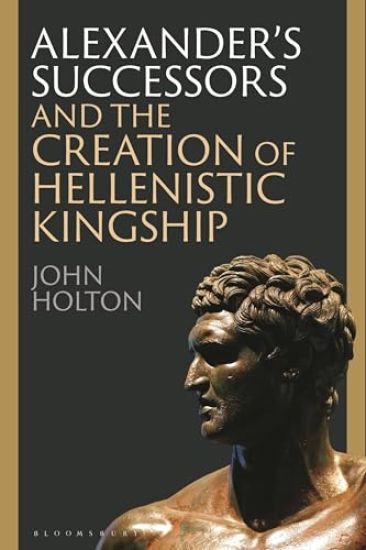
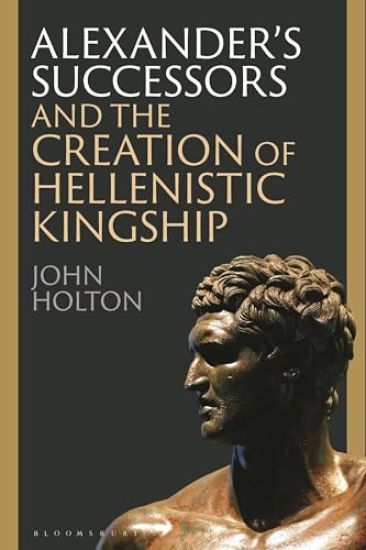
Alexander’s Successors and the Creation of Hellenistic Kingship
What happened to Alexander the Great’s empire when he died, and to the generals and companions that had conquered that empire with him? How did they begin to develop their own power and positions after his death? Alexander’s Successors and the Creation of Hellenistic Kingship reconstructs how the development of royal ideologies led to five powerful new kingships after Alexander’s death. It reveals how ideological performances and ongoing competition among the post-Alexander elite created the reality of the long-lasting institution of Hellenistic kingship, which would last for generations and even centuries as the model for autocratic power in the ancient world. A parallel study, Royal Traditions and the Consolidation of Power by Alexander’s Successors, then examines the innovative new traditions of royal ideology that were developed in the consolidation of the new Hellenistic kingships. Ranging from the early regencies and civil wars after Alexander’s death to the formation of multiple independent kingdoms and beyond, the generation of Alexander’s successors (323-276 BC) is comprehensively investigated. With a comparative perspective and detailed studies of diverse evidence, this is the first dedicated study of the beginnings of Hellenistic kingship and the first to put these beginnings in an international context.
Alexander’s Successors and the Creation of Hellenistic Kingship
What happened to Alexander the Great’s empire when he died? How did his generals and companions, who had once conquered that empire with him, shape the political landscape after his death? John Holton reconstructs how the development of royal ideologies by Alexander’s Successors led to the emergence of five powerful new kingships across the former Macedonian empire. He demonstrates the creation of Hellenistic kingship as a unified phenomenon and shows how ideas of superior status were articulated in the earliest post-Alexander years, including through monumental display and heroic imagery. He also explores the power of symbolism in the form of the royal diadem and the drama of staged royal accessions, plus the value of concepts like 'spear-won land' in the shared ideological environment of this period.Ranging from the early regencies and civil wars after Alexander’s death to the formation of multiple independent kingdoms and beyond, Holton reveals how the competitive and performative development of royal ideology in the generation of Alexander’s Successors (323–276 BC) created the reality of the long-lasting institution of Hellenistic kingship, which would stand for centuries, as the model for autocratic power in the ancient world. With a comparative perspective and detailed studies of diverse evidence, this is the first dedicated study of the beginnings of Hellenistic kingship at the hands of Alexander’s Successors that puts these beginnings into an international context and draws the main actors into a joint analysis.
The Undying Soul and Other Writings of Alexander Wilder
Thirty-eight articles by Alexander Wilder (1823-1908), Introduction, Addendum and Index. Wilder was a Platonist scholar, Physician, historian, translator, editor and prolific writer. He had hundreds of articles in publications of his time on Platonic, medical, philosophic and hermetic subjects, was editor of H.P. Blavatsky's "Isis Unveiled" and author of much of the Introductory chapter. Blavatsky held that only Wilder and Thomas Taylor had a deep intuition on Platonic subjects.
Eclectic Medicine and Other Writings of Alexander Wilder
Wilder is best known for his philosophic writings and as Editor of H. P. Blavatsky's "Isis Unveiled," but he was also one of the best known Physicians of his time, having been an instructor in Medicine and Psychology at three colleges, Editor of at least 3 Medical Journals, and author of the 900 pp. "History of Medicine." He'd be regarded as an Holistic practitioner today, believing that medicine must regard the whole of human nature and not just the body. This volume contains 35 articles of Wilder's related to the holistic practice of medicine and psychology and the balance of articles including a long pamphlet on Neoplatonism and Alchemy, historical biographies, an Addendum of biographical material, and Index.
The Perfective Rites and Other Writings of Alexander Wilder
This is the fourth volume of a series of Collected Writings of Alexander Wilder, 410 pages, Preface and Index. The 56 Wilder articles here include 8 from Johnson's "The Platonist" and "Blibliotheca Platonica," with Wilder's series "Platonic Technology" which is a glossary of 265 terms important in Greek Philosophy. Other articles include "Bacchus the Prophet-God," "Paul the Founder of Christianity," "Hebrew and Christian Occultism," "The Religions of Ancient Greece and Rome," and "A Study of Plato's Phaedo." Wilder was one of the best students of Platonism and Ancient History of his time, and there is much information on the Eleusinian, Cabeirien, Bacchic/Dionysian, Egyptian and Mithraic Mysteries. He was editor of H.P. Blavatsky's "Isis Unveiled" and she held that only Wilder and Thomas Taylor had a deep intuition on Platonic subjects.
Alexander Petöfi, Poet Of The Hungarian War Of Independence
This work has been selected by scholars as being culturally important, and is part of the knowledge base of civilization as we know it. This work was reproduced from the original artifact, and remains as true to the original work as possible. Therefore, you will see the original copyright references, library stamps (as most of these works have been housed in our most important libraries around the world), and other notations in the work.This work is in the public domain in the United States of America, and possibly other nations. Within the United States, you may freely copy and distribute this work, as no entity (individual or corporate) has a copyright on the body of the work.As a reproduction of a historical artifact, this work may contain missing or blurred pages, poor pictures, errant marks, etc. Scholars believe, and we concur, that this work is important enough to be preserved, reproduced, and made generally available to the public. We appreciate your support of the preservation process, and thank you for being an important part of keeping this knowledge alive and relevant.
Communication From The Governor, Transmitting The Report Of Alexander Vattemare On The Universal Exhibition At Paris
This work has been selected by scholars as being culturally important, and is part of the knowledge base of civilization as we know it. This work was reproduced from the original artifact, and remains as true to the original work as possible. Therefore, you will see the original copyright references, library stamps (as most of these works have been housed in our most important libraries around the world), and other notations in the work.This work is in the public domain in the United States of America, and possibly other nations. Within the United States, you may freely copy and distribute this work, as no entity (individual or corporate) has a copyright on the body of the work.As a reproduction of a historical artifact, this work may contain missing or blurred pages, poor pictures, errant marks, etc. Scholars believe, and we concur, that this work is important enough to be preserved, reproduced, and made generally available to the public. We appreciate your support of the preservation process, and thank you for being an important part of keeping this knowledge alive and relevant.
Remains of Alexander Knox, Esq

Remains of Alexander Knox, Esq

Alexander Knox; James J Hornby

Palala Press
2018
pokkari
This work has been selected by scholars as being culturally important, and is part of the knowledge base of civilization as we know it. This work was reproduced from the original artifact, and remains as true to the original work as possible. Therefore, you will see the original copyright references, library stamps (as most of these works have been housed in our most important libraries around the world), and other notations in the work.This work is in the public domain in the United States of America, and possibly other nations. Within the United States, you may freely copy and distribute this work, as no entity (individual or corporate) has a copyright on the body of the work.As a reproduction of a historical artifact, this work may contain missing or blurred pages, poor pictures, errant marks, etc. Scholars believe, and we concur, that this work is important enough to be preserved, reproduced, and made generally available to the public. We appreciate your support of the preservation process, and thank you for being an important part of keeping this knowledge alive and relevant.
Alexander Dumas Fils And Henrik Ibsen
This work has been selected by scholars as being culturally important, and is part of the knowledge base of civilization as we know it. This work was reproduced from the original artifact, and remains as true to the original work as possible. Therefore, you will see the original copyright references, library stamps (as most of these works have been housed in our most important libraries around the world), and other notations in the work.This work is in the public domain in the United States of America, and possibly other nations. Within the United States, you may freely copy and distribute this work, as no entity (individual or corporate) has a copyright on the body of the work.As a reproduction of a historical artifact, this work may contain missing or blurred pages, poor pictures, errant marks, etc. Scholars believe, and we concur, that this work is important enough to be preserved, reproduced, and made generally available to the public. We appreciate your support of the preservation process, and thank you for being an important part of keeping this knowledge alive and relevant.
An Essay on Philosophical Necessity. by Alexander Crombie, A.M

An Essay on Philosophical Necessity. by Alexander Crombie, A.M

Alexander Crombie

Gale Ecco, Print Editions
2018
sidottu
The 18th century was a wealth of knowledge, exploration and rapidly growing technology and expanding record-keeping made possible by advances in the printing press. In its determination to preserve the century of revolution, Gale initiated a revolution of its own: digitization of epic proportions to preserve these invaluable works in the largest archive of its kind. Now for the first time these high-quality digital copies of original 18th century manuscripts are available in print, making them highly accessible to libraries, undergraduate students, and independent scholars.The Age of Enlightenment profoundly enriched religious and philosophical understanding and continues to influence present-day thinking. Works collected here include masterpieces by David Hume, Immanuel Kant, and Jean-Jacques Rousseau, as well as religious sermons and moral debates on the issues of the day, such as the slave trade. The Age of Reason saw conflict between Protestantism and Catholicism transformed into one between faith and logic -- a debate that continues in the twenty-first century.++++The below data was compiled from various identification fields in the bibliographic record of this title. This data is provided as an additional tool in helping to insure edition identification: ++++British LibraryT109696With an errata slip pasted on p.viii - With a half-title.London: printed for J. Johnson, 1793. 4], viii,508p.; 8
Journal of Ship London, Captain Walter Alves, Along the North Coast of Magindanao, October, 1764; by Alexander Dalyrymple
The 18th century was a wealth of knowledge, exploration and rapidly growing technology and expanding record-keeping made possible by advances in the printing press. In its determination to preserve the century of revolution, Gale initiated a revolution of its own: digitization of epic proportions to preserve these invaluable works in the largest archive of its kind. Now for the first time these high-quality digital copies of original 18th century manuscripts are available in print, making them highly accessible to libraries, undergraduate students, and independent scholars.Medical theory and practice of the 1700s developed rapidly, as is evidenced by the extensive collection, which includes descriptions of diseases, their conditions, and treatments. Books on science and technology, agriculture, military technology, natural philosophy, even cookbooks, are all contained here.++++The below data was compiled from various identification fields in the bibliographic record of this title. This data is provided as an additional tool in helping to insure edition identification: ++++British LibraryT099632London, 1781. 2],30p.; 4