Kirjojen hintavertailu. Mukana 12 016 292 kirjaa ja 12 kauppaa.

Kirjahaku

Etsi kirjoja tekijän nimen, kirjan nimen tai ISBN:n perusteella.

1000 tulosta hakusanalla Alexander Hamilton

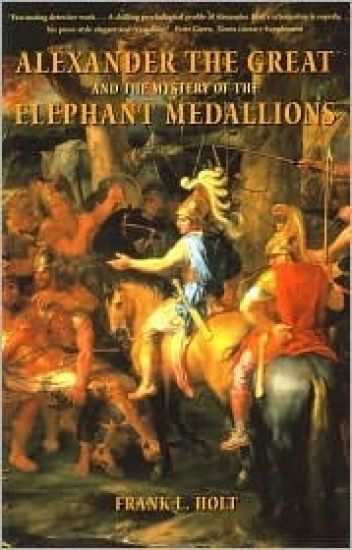
Alexander the Great and the Mystery of the Elephant Medallions

Alexander the Great and the Mystery of the Elephant Medallions

Frank L. Holt

University of California Press
2003
pokkari
To all those who witnessed his extraordinary conquests, from Albania to India, Alexander the Great appeared invincible. How Alexander himself promoted this appearance - how he abetted the belief that he enjoyed divine favor and commanded even the forces of nature against his enemies - is the subject of Frank L. Holt's absorbing book. Solid evidence for the "supernaturalized" Alexander lies in a rare series of medallions that depict the triumphant young king at war against the elephants, archers, and chariots of Rajah Porus of India at the Battle of the Hydaspes River. Recovered from Afghanistan and Iraq in sensational and sometimes perilous circumstances, these ancient artifacts have long animated the modern historical debate about Alexander. Holt's book, the first devoted to the mystery of these ancient medallions, takes us into the history of their discovery and interpretation, into the knowable facts of their manufacture and meaning, and, ultimately, into the king's own psyche and his frightening theology of war. The result is a valuable analysis of Alexander history and myth, a vivid account of numismatics, and a spellbinding look into the age-old mechanics of megalomania.
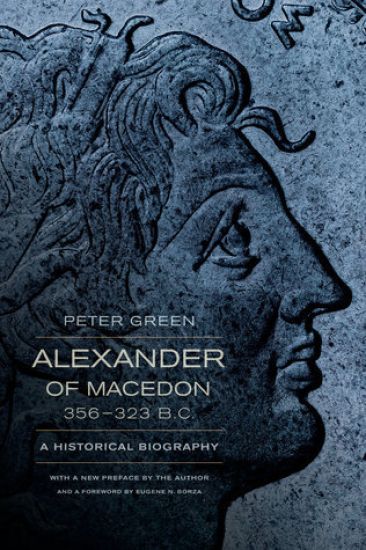
Alexander of Macedon, 356–323 B.C.

Alexander of Macedon, 356–323 B.C.

Peter Green; Eugene N. Borza

University of California Press
2013
pokkari
Until recently, popular biographers and most scholars viewed Alexander the Great as a genius with a plan, a romantic figure pursuing his vision of a united world. His dream was at times characterized as a benevolent interest in the brotherhood of man, sometimes as a brute interest in the exercise of power. Green, a Cambridge-trained classicist who is also a novelist, portrays Alexander as both a complex personality and a single-minded general, a man capable of such diverse expediencies as patricide or the massacre of civilians. Green describes his Alexander as "not only the most brilliant (and ambitious) field commander in history, but also supremely indifferent to all those administrative excellences and idealistic yearnings foisted upon him by later generations, especially those who found the conqueror, tout court, a little hard upon their liberal sensibilities." This biography begins not with one of the universally known incidents of Alexander's life, but with an account of his father, Philip of Macedonia, whose many-territoried empire was the first on the continent of Europe to have an effectively centralized government and military. What Philip and Macedonia had to offer, Alexander made his own, but Philip and Macedonia also made Alexander form an important context for understanding Alexander himself. Yet his origins and training do not fully explain the man. After he was named hegemon of the Hellenic League, many philosophers came to congratulate Alexander, but one was conspicuous by his absence: Diogenes the Cynic, an ascetic who lived in a clay tub. Piqued and curious, Alexander himself visited the philosopher, who, when asked if there was anything Alexander could do for him, made the famous reply, "Don't stand between me and the sun." Alexander's courtiers jeered, but Alexander silenced them: "If I were not Alexander, I would be Diogenes." This remark was as unexpected in Alexander as it would be in a modern leader. For the general reader, the book, redolent with gritty details and fully aware of Alexander's darker side, offers a gripping tale of Alexander's career. Full backnotes, fourteen maps, and chronological and genealogical tables serve readers with more specialized interests.
Alexander the Great and the Logistics of the Macedonian Army

Alexander the Great and the Logistics of the Macedonian Army

Engels Donald W.

University of California Press
2013
pokkari
"The most important work on Alexander the Great to appear in a long time. Neither scholarship nor semi-fictional biography will ever be the same again...The chief merit of this splendid book is perhaps the way in which it brings an ancient army to life, as it really was and moved". ("New York Review of Books"). "A volume for a considerable range of readers...It should be of interest to all students of military history before the advent of steam and, indeed, to anyone interested in movements of early population". ("Annals"). "[Engels] has achieved the apparently impossible: he has shed new and solid light on Alexander's campaigns...Rarely have I encountered as good a monograph". ("Military Affairs").
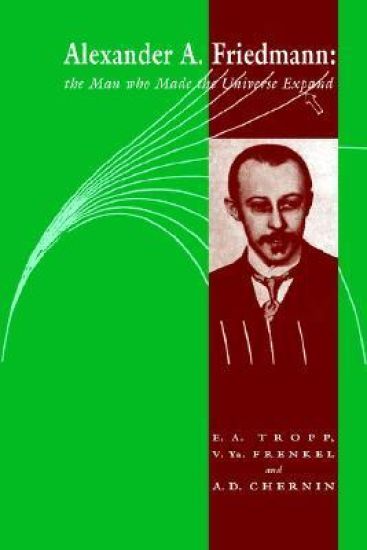
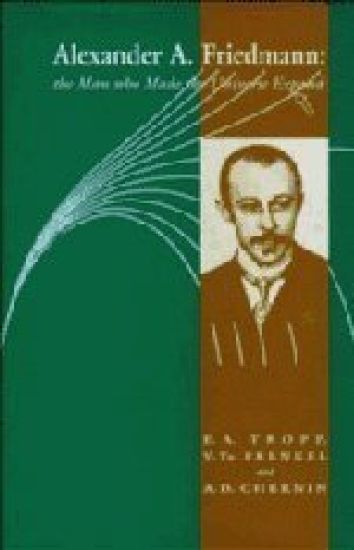
Alexander A Friedmann

Alexander A Friedmann

Eduard A. Tropp; Viktor Ya. Frenkel; Artur D. Chernin

Cambridge University Press
2006
pokkari
Our universe can be described mathematically by a simple model developed in 1922 at Petrograd (St Petersburg) by Alexander Friedmann (1888–1925), who predicted that the whole universe would expand and evolve with time before there was any observational evidence. He was an outstanding Soviet physicist, and this vivid 1993 biography is set in a wide historical background. The book is a window on the school and university years, military service, teaching and research during a seminal period of Soviet history. The authors include unique archival material, such as Friedmann's letters from the Front, as well as contemporary records and reminiscences of colleagues. There is a detailed treatment of his work in Theoretical Cosmology (1922–1924), set in the context of the organization of Soviet science at the time.
Alexander Herzen and the Role of the Intellectual Revolutionary
Alexander Herzen (1812–70) was the most outstanding figure in the early period of the Russian revolutionary movement. Lenin claimed him as a forerunner of the Bolsheviks, and Soviet scholars have sought to establish his latent sympathy with Marxism. In the west on the other hand, he has been seen as a precursor of Solzhenitsyn, the personification of protest against all forms of oppression. Dr Acton provides a compelling intellectual biography. The focus is on the years between 1847 and 1863. Herzen's ideas are set in the context of those political developments and dramatic private experiences that affected his outlook. His profound faith in human nature and in the inevitable triumph of socialism was undermined not only by the failure of the revolutions of 1848, but even more deeply by personal catastrophe - the discovery of the infidelity of his beautiful wife Natalie. This dual blow, Dr Acton shows, had a decisive impact upon Herzen's approach to Russian problems. It lay at the root of the ambivalent attitude he adopted towards peasant revolution in the critical period of Emancipation.
Alexander the Great

Alexander the Great

Thomas R. Martin; Christopher W. Blackwell

Cambridge University Press
2012
pokkari
Everything we know about Alexander comes from ancient sources, which agree unanimously that he was extraordinary and greater than everyday mortals. From his birth into a hypercompetitive world of royal women through his training under the eyes and fists of stern soldiers and the piercing intellect of Aristotle; through friendships, rivalries, conquests and negotiations; through acts of generosity and acts of murder, this book explains who Alexander was, what motivated him, where he succeeded (in his own eyes) and where he failed, and how he believed that he earned a new 'mixed' nature combining the human and the divine. This book explains what made Alexander 'Great' according to the people and expectations of his time and place and rejects modern judgments asserted on the basis of an implicit moral superiority to antiquity.
Alexander Pope

Alexander Pope

Gooneratne Yasmine

Cambridge University Press
1976
sidottu
Although Pope's reputation as a poet has never been higher among scholars and academics, changes in our attitudes to the writing of poetry and to traditional literary values and fashions in versification have created barriers between his genius and the general reader. Pope's poetry has to struggle against the assumptions that verse two centuries ago, filled with allusions to forgotten myths and contemporary personalities, can have little to say that is 'relevant'. Professor Gooneratne's study effectively shows how these barriers can be surmounted by the reader, allowing Pope's work to make its impact upon the imagination in its own way, as the expression of a powerful poetic personality which developed over forty years of continuous authorship. Every major poem in the Pope canon is fully and critically discussed, related to social circumstances that governed its composition and considered both as an example of generic writing and as an expression of personal feelings and convictions. Through detailed analysis of Pope's diction and poetic technique, Professor Gooneratne shows how his best and most deeply-felt verse expresses the living values of the Age of Enlightenment and demonstrates how a good writer can simultaneously extend and criticise the standards of his society.
Alexander Herzen And the Role of the Intellectual Revolutionary
Alexander Herzen (1812-70) was the most outstanding figure in the early period of the Russian revolutionary movement. Lenin claimed him as a forerunner of the Bolsheviks, and Soviet scholars have sought to establish his latent sympathy with Marxism. In the west on the other hand, he has been seen as a precursor of Solzhenitsyn, the personification of protest against all forms of oppression. Dr Acton provides a compelling intellectual biography. The focus is on the years between 1847 and 1863. Herzen's ideas are set in the context of those political developments and dramatic private experiences that affected his outlook. His profound faith in human nature and in the inevitable triumph of socialism was undermined not only by the failure of the revolutions of 1848, but even more deeply by personal catastrophe - the discovery of the infidelity of his beautiful wife Natalie. This dual blow, Dr Acton shows, had a decisive impact upon Herzen's approach to Russian problems. It lay at the root of the ambivalent attitude he adopted towards peasant revolution in the critical period of Emancipation.
Alexander Pope

Alexander Pope

Yasmine Gooneratne

Cambridge University Press
1976
pokkari
Although Pope's reputation as a poet has never been higher among scholars and academics, changes in our attitudes to the writing of poetry and to traditional literary values and fashions in versification have created barriers between his genius and the general reader. Pope's poetry has to struggle against the assumptions that verse two centuries ago, filled with allusions to forgotten myths and contemporary personalities, can have little to say that is 'relevant'. Professor Gooneratne's study effectively shows how these barriers can be surmounted by the reader, allowing Pope's work to make its impact upon the imagination in its own way, as the expression of a powerful poetic personality which developed over forty years of continuous authorship. Every major poem in the Pope canon is fully and critically discussed, related to social circumstances that governed its composition and considered both as an example of generic writing and as an expression of personal feelings and convictions. Through detailed analysis of Pope's diction and poetic technique, Professor Gooneratne shows how his best and most deeply-felt verse expresses the living values of the Age of Enlightenment and demonstrates how a good writer can simultaneously extend and criticise the standards of his society.
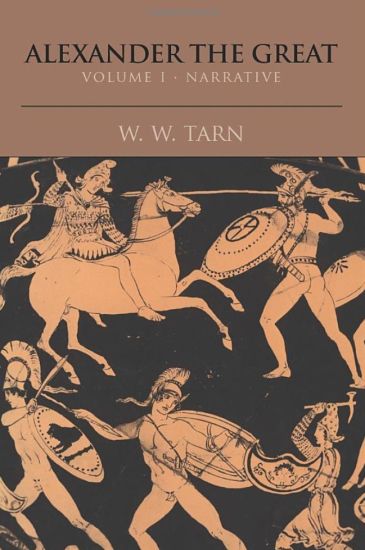
Alexander the Great: Volume 1, Narrative

Alexander the Great: Volume 1, Narrative

W. W. Tarn

Cambridge University Press
1979
pokkari
Sir William Woodthorpe Tarn (1869–1957) was a British ancient historian who wrote numerous works on the Hellenistic world. Tarn's Alexander the Great, first published in two volumes during 1948, has become a classic text and its importance for subsequent Alexander studies can hardly be exaggerated. Based on a lifetime's work and elegantly and persuasively written, both volumes evoked immediate admiration - and very soon sharp reaction. Volume I presents a 'compendious' narrative of Alexander's life and achievements; volume II focuses on providing a detailed analysis of sources and discussion relating to key historical cruces. This is a fascinating work that will be of value to anyone with an interest in the writings of Tarn, ancient history and Alexander the Great.
Alexander A Friedmann

Alexander A Friedmann

Eduard A. Tropp; Viktor Ya. Frenkel; Artur D. Chernin

Cambridge University Press
1993
sidottu
Our universe can be described mathematically by a simple model developed in 1922 at Petrograd (St Petersburg) by Alexander Friedmann (1888–1925), who predicted that the whole universe would expand and evolve with time before there was any observational evidence. He was an outstanding Soviet physicist, and this vivid biography is set in a wide historical background. The book is a window on the school and university years, military service, teaching and research during a seminal period of Soviet history. The authors include unique archival material, such as Friedmann’s letters from the Front, as well as contemporary records and reminiscences of colleagues. There is a detailed treatment of his work in Theoretical Cosmology (1922–1924), set in the context of the organization of Soviet science at the time.
Alexander Pushkin: Eugene Onegin

Alexander Pushkin: Eugene Onegin

Briggs A. D. P.

Cambridge University Press
2008
pokkari
This is a lively and readable guide to Alexander Pushkin's novel in verse Eugene Onegin, a landmark of European Romanticism, and arguably the best of all Russian poetry. Professor Briggs addresses the question of how such remarkable poetry can have been composed about a rather banal plot, and considers the form of the work and its poetic techniques in detail. He offers fresh interpretations of the characters and events of the poem, and sets it against its European background. He discusses its influence - notably Tchaikovsky's operatic version - and points to its life-affirming philosophy and spirit of joyfulness. The book includes a chronological chart and a guide to further reading.
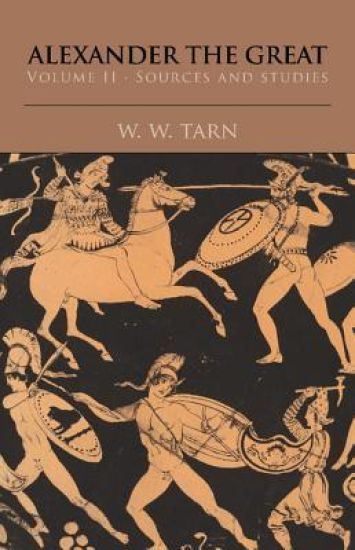
Alexander the Great: Volume 2, Sources and Studies

Alexander the Great: Volume 2, Sources and Studies

W. W. Tarn

Cambridge University Press
2003
pokkari
Tarn’s Alexander the Great, first published in 1948, has become a classic and its importance for subsequent Alexander studies can hardly be exaggerated. Based on a lifetime’s work and elegantly and persuasively written, both volumes evoked immediate admiration - and very soon sharp reaction. Little has in fact appeared on Alexander over the last thirty years that has not been directly related to Tarn’s book. Especially Volume II, with its detailed analysis of the sources and discussion of the main historical cruces - such as Cleitarchus’ date, the status of the Greek cities, Alexander’s deification, his supposed plans for a world-kingdom and the famous thesis that he sought to realise the ‘brotherhood of mankind’ - has itself inspired scores of books and articles. For the scholar both volumes are indispensable and their re-appearance is to be warmly welcomed.
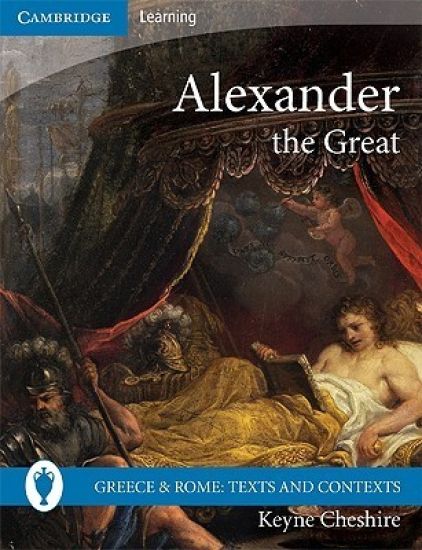
Alexander the Great

Alexander the Great

Cambridge University Press
2009
pokkari
An exciting series that provides students with direct access to the ancient world by offering new translations of extracts from its key texts. Alexander the Great famously brought the mighty Persian Empire's two-hundred year rule to an end, but the figure behind this phenomenon often eludes us. This book invites students to follow Alexander's remarkable story and to engage with a variety of perspectives on him as king, general and human being. Notes provide helpful contextual information for these excerpts while questions challenge readers to embark on their own investigations of this fascinating individual, who continues to rival all others in historical significance.
Alexander the Great

Alexander the Great

Thomas R. Martin; Christopher W. Blackwell

Cambridge University Press
2012
sidottu
Everything we know about Alexander comes from ancient sources, which agree unanimously that he was extraordinary and greater than everyday mortals. From his birth into a hypercompetitive world of royal women through his training under the eyes and fists of stern soldiers and the piercing intellect of Aristotle; through friendships, rivalries, conquests and negotiations; through acts of generosity and acts of murder, this book explains who Alexander was, what motivated him, where he succeeded (in his own eyes) and where he failed, and how he believed that he earned a new 'mixed' nature combining the human and the divine. This book explains what made Alexander 'Great' according to the people and expectations of his time and place and rejects modern judgments asserted on the basis of an implicit moral superiority to antiquity.