Kirjojen hintavertailu. Mukana 11 699 587 kirjaa ja 12 kauppaa.

Kirjahaku

Etsi kirjoja tekijän nimen, kirjan nimen tai ISBN:n perusteella.

1000 tulosta hakusanalla Alexandre Skirda

Groups of Finite Morley Rank

Groups of Finite Morley Rank

Alexandre Borovik; Ali Nesin

Clarendon Press
1994
sidottu
The book is devoted to the theory of groups of finite Morley rank. These groups arise in model theory and generalize the concept of algebraic groups over algebraically closed fields. The book contains almost all the known results in the subject. Trying to attract pure group theorists in the subject and to prepare the graduate student to start the research in the area, the authors adopted an algebraic and self evident point of view rather than a model theoretic one, and developed the theory from scratch. All the necessary model theoretical and group theoretical notions are explained in length. The book is full of exercises and examples and one of its chapters contains a discussion of open problems and a program for further research.
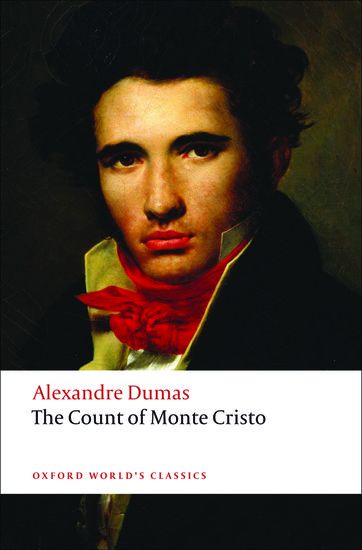
The Count of Monte Cristo

The Count of Monte Cristo

Alexandre Dumas

Oxford University Press
2008
nidottu
'people get out of prison, and when they get out, and their name is Edmond Dantès, they take their revenge!' Falsely accused of treason, the young sailor Edmond Dantès is arrested on his wedding day and imprisoned in the island fortress of the Château d'If. Having endured years of incarceration, he stages a daring and dramatic escape and sets out to discover the fabulous treasure of Monte Cristo, and to catch up with his enemies. A novel of enormous tension and excitement, The Count of Monte Cristo is also a tale of obsession and revenge. Believing himself to be an 'Angel of Providence', Dantès pursues his vengeance to the bitter end, only then realizing that he himself is a victim of fate. One of the great thrillers of all time, The Count of Monte Cristo has been adapted for film and television many times. This newly revised, unabridged translation is as unputdownable now as it was when the novel first appeared, and William Thackeray, enthralled, 'began to read Monte Cristo at six one morning and never stopped till eleven at night'. ABOUT THE SERIES: For over 100 years Oxford World's Classics has made available the widest range of literature from around the globe. Each affordable volume reflects Oxford's commitment to scholarship, providing the most accurate text plus a wealth of other valuable features, including expert introductions by leading authorities, helpful notes to clarify the text, up-to-date bibliographies for further study, and much more.
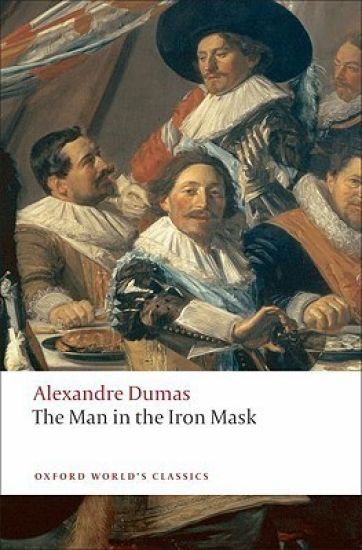
The Man in the Iron Mask

The Man in the Iron Mask

Alexandre Dumas

Oxford University Press
2008
nidottu
One of France's best-selling writers at the time of the novel's composition, Dumas here combines what he considered to be life's essentials - `l'action et l'amour'. This historical romance is the climax of his epic of chivalry and valour that began with The Three Musketeers, and it is here that Athos, Porthos, Aramis, and their friend d'Artagnan, once invincible, meet their destinies. This edition provides background information and notes crucial to an understanding of the legend and the novel's setting. ABOUT THE SERIES: For over 100 years Oxford World's Classics has made available the widest range of literature from around the globe. Each affordable volume reflects Oxford's commitment to scholarship, providing the most accurate text plus a wealth of other valuable features, including expert introductions by leading authorities, helpful notes to clarify the text, up-to-date bibliographies for further study, and much more.
Twenty Years After

Twenty Years After

Alexandre Dumas

Oxford University Press
2008
nidottu
Twenty Years After (1845), the sequel to The Three Musketeers, is a supreme creation of suspense and heroic adventure. Two decades have passed since the musketeers triumphed over Cardinal Richelieu and Milady. Time has weakened their resolve, and dispersed their loyalties. But treasons and strategems still cry out for justice: civil war endangers the throne of France, while in England Cromwell threatens to send Charles I to the scaffold. Dumas brings his immortal quartet out of retirement to cross swords with time, the malevolence of men, and the forces of history. But their greatest test is a titanic struggle with the son of Milady, who wears the face of Evil. In his Introduction to this edition David Coward sets both the author and his exciting tale in their historical and cultural contexts. ABOUT THE SERIES: For over 100 years Oxford World's Classics has made available the widest range of literature from around the globe. Each affordable volume reflects Oxford's commitment to scholarship, providing the most accurate text plus a wealth of other valuable features, including expert introductions by leading authorities, helpful notes to clarify the text, up-to-date bibliographies for further study, and much more.
La Reine Margot

La Reine Margot

Alexandre Dumas

Oxford University Press
2008
nidottu
`Dear sister!' said Charles IX, `there is blood on your sleeve!' `And what consequence is that, Sire,' said Marguerite, `if I have a smile upon my lips?' Saint Bartholomew's Day 1572. Paris is awash with the blood of Huguenots slaughtered by order of Charles IX. Or perhaps of Catherine de Medicis, one of history's great monsters? Or the ambitious Duke de Guise? Or the Duke d'Anjou, soon to be the reluctant King of Poland? The answer will be found in the secret passageways of the Louvre and the torture chamber of the fortress of Vincennes. It takes an iron nerve and a cool head to survive. Young Henry of Navarre has both in abundance, but he has more: he has his Queen, the beautiful, cultured Margot. Staking all on love and losing, she remains defiant in defeat. La Reine Margot (1845) is a novel of suspense and drama which recreates the violent world of intrigue, murder and duplicity of the French Renaissance. Dumas fills his canvas with a gallery of unforgettable characters, unremitting action and the engaging generosity of spirit which has made him one of the world's greatest and best-loved story-tellers. This revised edition of the classic translation of 1846 is richly annotated. An introduction sets Dumas and his work in their literary, historical and cultural context. ABOUT THE SERIES: For over 100 years Oxford World's Classics has made available the widest range of literature from around the globe. Each affordable volume reflects Oxford's commitment to scholarship, providing the most accurate text plus a wealth of other valuable features, including expert introductions by leading authorities, helpful notes to clarify the text, up-to-date bibliographies for further study, and much more.
Louise de la Vallière

Louise de la Vallière

Alexandre Dumas

Oxford University Press
2009
nidottu
Louise de la Balliere is the middle section of The Vicomte de Bragelonne or, Ten Years After. Against a tender love story, Dumas continues the suspense which began with The Vicomte de Bragelonne and will end with The Man in the Iron Mask. It is early summer, 1661, and the royal court of France is in turmoil. Can it be true that the King is in love with the Duchess d'Orleans? Or has his eye been caught by the sweet and gentle Louise de la Valliere? No one is more anxious to know the answer than Raoul, son of Athos, who loves Louise more than life itself. Behind the scenes, dark intrigues are afoot. Louis XIV is intent on making himself absolute master of France. Imminent crisis shakes the now aging Musketeers and d'Artagnan out of their complacent retirement, but is the cause just? This new edition of the classic English translation of 1857 is richly annotated and sets Dumas's invigorating tale in its historical and cultural context. ABOUT THE SERIES: For over 100 years Oxford World's Classics has made available the widest range of literature from around the globe. Each affordable volume reflects Oxford's commitment to scholarship, providing the most accurate text plus a wealth of other valuable features, including expert introductions by leading authorities, helpful notes to clarify the text, up-to-date bibliographies for further study, and much more.
The Three Musketeers

The Three Musketeers

Alexandre Dumas

Oxford University Press
2009
nidottu
The Three Musketeers (1844) is one of the most famous historical novels ever written. It is also one of the world's greatest historical adventure stories, and its heroes have become symbols for the spirit of youth, daring, and comradeship. The action takes place in the 1620s at the court of Louis XIII, where the musketeers, Athos, Porthos, and Aramis, with their companion, the headstrong d'Artagnan, are engaged in a battle against Richelieu, the King's minister, and the beautiful, unscrupulous spy, Milady. Behind the flashing blades and bravura, in this first adventure of the Musketeers, Dumas explores the eternal conflict between good and evil. This new edition is the most fully annotated to date in English, providing explanatory notes which set the work in its historical, literary, and cultural context. ABOUT THE SERIES: For over 100 years Oxford World's Classics has made available the widest range of literature from around the globe. Each affordable volume reflects Oxford's commitment to scholarship, providing the most accurate text plus a wealth of other valuable features, including expert introductions by leading authorities, helpful notes to clarify the text, up-to-date bibliographies for further study, and much more.
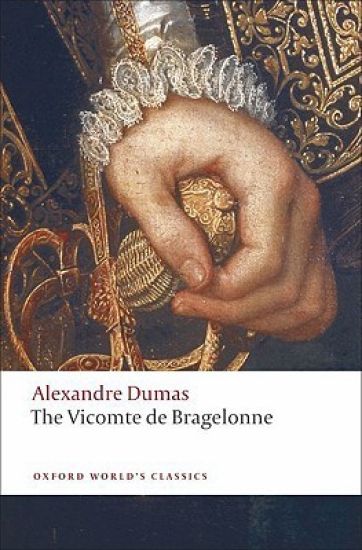
The Vicomte de Bragelonne

The Vicomte de Bragelonne

Alexandre Dumas

Oxford University Press
2009
nidottu
It is May 1660 and the fate of nations is at stake. Mazarin plots, Louis XIV is in love, and Raoul de Bragelonne, son of Athos, is intent on serving France and winning the heart of Louise de la Valliere. D'Artagnan, meanwhile, is perplexed by a mysterious stranger, and soon he learns that his old comrades already have great projects in hand. Athos seeks the restoration of Charles II, while Aramis, with Porthos in tow, has a secret plan involving a masked prisoner and the fortification of the island of Belle-Ile. D'Artagnan finds a thread leading him to the French court, the banks of the Tyne, the beaches of Holland, and the dunes of Brittany. The Vicomte de Bragelonne opens an epic adventure which continues with Louise de la Valliere and reaches its climax in The Man in the Iron Mask. This new edition of the classic translation is fully annotated, and an introduction sets Dumas's saga in its historical and cultural context. ABOUT THE SERIES: For over 100 years Oxford World's Classics has made available the widest range of literature from around the globe. Each affordable volume reflects Oxford's commitment to scholarship, providing the most accurate text plus a wealth of other valuable features, including expert introductions by leading authorities, helpful notes to clarify the text, up-to-date bibliographies for further study, and much more.
La Dame aux Camélias

La Dame aux Camélias

Alexandre Dumas

Oxford University Press
2008
nidottu
La Dame aux Camelias still has the power to cast the spell that has fascinated generations of readers. Dumas's marvellously beautiful, intelligent, and vibrant heroine lives on in revivals of the stage version, in film and television adaptations, and inLa Traviata, Verdi's perennially popular opera. For Marguerite has long since attained the status of a myth. Dumas's subtle and moving portrait of a woman in love is a timeless antidote to the cynicism of every age. ABOUT THE SERIES: For over 100 years Oxford World's Classics has made available the widest range of literature from around the globe. Each affordable volume reflects Oxford's commitment to scholarship, providing the most accurate text plus a wealth of other valuable features, including expert introductions by leading authorities, helpful notes to clarify the text, up-to-date bibliographies for further study, and much more.
The Black Tulip

The Black Tulip

Alexandre Dumas

Oxford University Press
2008
nidottu
Alexandre Dumas's novels are notable for their suspense and excitement, their foul deeds, hairsbreadth escapes, and glorious victories. In The Black Tulip (1850), the shortest of Dumas's most famous tales, the real hero is no Musketeer, but a flower. The novel - a deceptively simple story - is set in Holland in 1672, and weaves the historical events surrounding the brutal murder of John de Witte and his brother Cornelius into a tale of romantic love. The novel is also a timeless political allegory in which Dumas, drawing on the violence and crimes of history, makes his case against tyranny and puts all his energies into creating a symbol of justice and tolerance: the fateful tulipa negra. This new edition reprints the first, classic English translation. David Coward sets the novel in the context of its author's life, the turbulent history of the Dutch Republic, and the amazing `tulipmania' of the seventeenth century which brought wealth to some and ruin to many. ABOUT THE SERIES: For over 100 years Oxford World's Classics has made available the widest range of literature from around the globe. Each affordable volume reflects Oxford's commitment to scholarship, providing the most accurate text plus a wealth of other valuable features, including expert introductions by leading authorities, helpful notes to clarify the text, up-to-date bibliographies for further study, and much more.
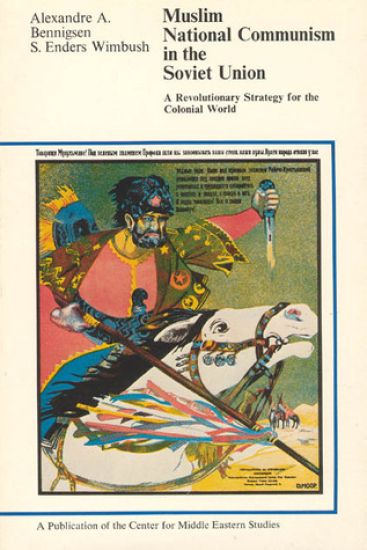
Muslim National Communism in the Soviet Union

Muslim National Communism in the Soviet Union

Alexandre A. Bennigsen; S. Enders Wimbush

University of Chicago Press
1980
nidottu
In this study, Bennigsen and Wimbush trace the development of the doctrine of national communism in Central Asia and the Caucasus. At the heart of this doctrine—as elaborated by the Volga Tatar, Mir-Said Sultan Galiev—was the concept of "proletarian nations," as opposed to the traditional notion of a working class. With such ideological innovations, Sultan Galiev and his contemporaries were able to reconcile Marxist nationalisms and Islam and devise an "Eastern strategy" whereby the national revolution was to be spread. The authors show that the ideas of Muslim national communism persist in the land of their birth and have spread to such developing societies as China, Algeria, and Indonesia. This doctrine is an important factor in the ideological split and increasing tensions between industrial and nonindustrial nations, East and West, and now North and South, which grip the world communist movement.
Killer Algae

Killer Algae

Alexandre Meinesz

University of Chicago Press
1999
sidottu
In the late 1970s, a Stuttgart zoo imported a lush, bright green seaweed for its aquarium. "Caulerpa taxifolia" was captively bred by the zoo and exposed, for years, to chemicals and ultraviolet light. Eventually a sample of it found its way to the Oceanographic Museum in Monaco, then headed by Jacques Cousteau. Five years later, while cleaning its tanks, that museum dumped the pretty green plant into the Mediterranean. This supposedly benign little plant - that no one thought could survive the waters of the Mediterranean - now covers 10,000 acres of the coasts of France, Spain, Italy and Croatia, and has devastated the Mediterranean ecosystem. And it continues to grow, unstoppable and toxic. When Alexandre Meinesz discovered a square-yard patch of it in 1984, he warned biologists and oceanographers of the potential species invasion. His calls went unheeded. At that point, one person could have weeded the small patch out and ended the problem. Now, however, the plant has defeated the French Navy, thwarted scientific efforts to halt its rampage, and continues its destructive journey into the Adriatic Sea. This text presents the biological and political horror story of this invasion. For despite Meinesz's pleas to scientists and the French government, no agency was willing to take responsibility for the seaweed, and while the buck was passed, the killer algae grew. In short, this work - part detective story and part bureaucratic object lesson - is a classic case of a devastating ecological invasion and how "not" to deal with it.
Killer Algae

Killer Algae

Alexandre Meinesz

University of Chicago Press
2001
nidottu
In the late 1970s, a Stuttgart zoo imported a lush, bright green seaweed for its aquarium. "Caulerpa taxifolia" was captively bred by the zoo and exposed, for years, to chemicals and ultraviolet light. Eventually a sample of it found its way to the Oceanographic Museum in Monaco, then headed by Jacques Cousteau. Five years later, while cleaning its tanks, that museum dumped the pretty green plant into the Mediterranean. This supposedly benign little plant - that no one thought could survive the waters of the Mediterranean - now covers 10,000 acres of the coasts of France, Spain, Italy and Croatia, and has devastated the Mediterranean ecosystem. And it continues to grow, unstoppable and toxic. When Alexandre Meinesz discovered a square-yard patch of it in 1984, he warned biologists and oceanographers of the potential species invasion. His calls went unheeded. At that point, one person could have weeded the small patch out and ended the problem. Now, however, the plant has defeated the French Navy, thwarted scientific efforts to halt its rampage, and continues its destructive journey into the Adriatic Sea. This text presents the biological and political horror story of this invasion. For despite Meinesz's pleas to scientists and the French government, no agency was willing to take responsibility for the seaweed, and while the buck was passed, the killer algae grew. In short, this work - part detective story and part bureaucratic object lesson - is a classic case of a devastating ecological invasion and how "not" to deal with it.
How Life Began

How Life Began

Alexandre Meinesz

University of Chicago Press
2008
sidottu
The origin of life is a hotly debated topic. The Christian Bible states that God created the heavens and the Earth, all in about seven days roughly six thousand years ago. This episode of Genesis departs markedly from scientific theories developed over the last two centuries which hold that life appeared on Earth about 3 billion years ago in the form of bacteria, followed by unicellular organisms half a millennia later. It is this version of genesis the Alexandre Meinesz explores in this engaging tale of life's origins and evolution."How Life Began" elucidates three origins, or geneses, of life - bacteria, cells, and multicellular organisms - and shows how evolution has sculpted life to its current biodiversity through four main events: mutation, recombination, natural selection, and geologic cataclysm. As an ecologist who specializes in algae, the first organisms to colonize Earth, Meinesz brings a refreshingly novel voice to the history of biodiversity and emphasizes here the role of unions in organizing life. For example, the ingestion of some bacteria by other bacteria led to the mitochondria that characterize animal and plant cells, and the chloroplasts of plant cells.As Meinesz charmingly recounts, life's grandeur is a result of an evolutionary tendency toward sociality and solidarity. He suggests that it is our cohesion and collaboration that will allow us to solve the environmental problems arising in the decades and centuries to come. Rooted in the science of evolution but enlivened with many illustrations from other disciplines and the arts, "How Life Began" intertwines the rise of bacteria and multicellular life with Vermeer's portrait of Antoni van Leeuwenhoek, the story of Genesis and Noah, Meinesz's son's early experiences with Legos, and his own encounters with other scientists. All of this brings a very human and humanistic tone to Meinesz's charismatic narrative of the three origins of life.
The Hidden Universe: Adventures in Biodiversity

The Hidden Universe: Adventures in Biodiversity

Alexandre Antonelli

University of Chicago Press
2022
sidottu
An unforgettable exploration of the natural world and the concept of biodiversity--what it is, why it matters, and how we as individuals can work to preserve it. We are now living in an environmental emergency. As climate change, habitat loss, and other threats have placed almost one-fifth of all species on Earth at risk of extinction in the coming decades, a deeper understanding of biodiversity has never been more important. Biodiversity encompasses the rich variety of all life on Earth--the building blocks of life that provide invaluable sources of food, medicine, clothing, building materials, and more. Marking the arrival of a bold new voice in popular science, The Hidden Universe shows readers what's at stake in the fight to protect and restore biodiversity, but also what can and should be done now to protect our planet and ourselves for the future. As director of science at one of the world's largest research organizations in plant and fungal sciences, Brazilian-born scientist Alexandre Antonelli is ideally suited to reveal the wonders of biodiversity at a genetic, species, and ecosystem level--what biodiversity is, how it works, and why it is the most important tool in our battle against climate change. Antonelli offers recommendations for large-scale political changes, as well as smaller, practical steps that readers can implement in their own lives and homes. With Antonelli as our guide, The Hidden Universe helps us imagine a future where biodiversity is not just preserved but cherished.
Atheism

Atheism

Alexandre Kojève

Columbia University Press
2018
sidottu
One of the twentieth century’s most brilliant and unconventional thinkers, Alexandre Kojève was a Russian émigré to France whose lectures on Hegel in the 1930s galvanized a generation of French intellectuals. Although Kojève wrote a great deal, he published very little in his lifetime, and so the ongoing rediscovery of his work continues to present new challenges to philosophy and political theory. Written in 1931 but left unfinished, Atheism is an erudite and open-ended exploration of profound questions of estrangement, death, suicide, and the infinite that demonstrates the range and the provocative power of Kojève’s thought.Ranging across Heidegger, Buddhism, Christianity, German idealism, Russian literature, and mathematics, Kojève advances a novel argument about freedom and authority. He investigates the possibility that there is not any vantage point or source of authority—including philosophy, science, or God—that is outside or beyond politics and the world as we experience it. The question becomes whether atheism—or theism—is even a meaningful position since both affirmation and denial of God’s existence imply a knowledge that seems clearly outside our capacities. Masterfully translated by Jeff Love, this book offers a striking new perspective on Kojève’s work and its implications for theism, atheism, politics, and freedom.
Atheism

Atheism

Alexandre Kojève

Columbia University Press
2021
pokkari
One of the twentieth century’s most brilliant and unconventional thinkers, Alexandre Kojève was a Russian émigré to France whose lectures on Hegel in the 1930s galvanized a generation of French intellectuals. Although Kojève wrote a great deal, he published very little in his lifetime, and so the ongoing rediscovery of his work continues to present new challenges to philosophy and political theory. Written in 1931 but left unfinished, Atheism is an erudite and open-ended exploration of profound questions of estrangement, death, suicide, and the infinite that demonstrates the range and the provocative power of Kojève’s thought.Ranging across Heidegger, Buddhism, Christianity, German idealism, Russian literature, and mathematics, Kojève advances a novel argument about freedom and authority. He investigates the possibility that there is not any vantage point or source of authority—including philosophy, science, or God—that is outside or beyond politics and the world as we experience it. The question becomes whether atheism—or theism—is even a meaningful position since both affirmation and denial of God’s existence imply a knowledge that seems clearly outside our capacities. Masterfully translated by Jeff Love, this book offers a striking new perspective on Kojève’s work and its implications for theism, atheism, politics, and freedom.
Interparadigmas 6

Interparadigmas 6

Alexandre (Editor) Zaslavsky

Editares
2018
nidottu
A Interparadigmas tem o posicionamento de publicar exclusivamente textos produzidos por especialistas com t tulo de doutorado. A inten o dupla: 1. Estabelecer interlocu o efetiva com a Academia, ou seja, universidades e institutos de pesquisa, com base no dom nio t cnico atual das discuss es cient ficas. 2. Certificar, a priori, a solidez e o profissionalismo das investiga es e reflex es publicadas acerca de temas controversos, pol micos e at tabus, ao modo das experi ncias extrassensoriais da consci ncia.
Three Musketeers

Three Musketeers

Alexandre Dumas

Penguin Books Ltd.
2019
pokkari
One of the best-loved adventures of all time. When young D'Artagnan comes to Paris to seek his fortune, he is challenged to a duel with not one, but three of the king's Musketeers. But Athos, Porthos and Aramis become his trusted friends as he tries to prove himself worthy of becoming a fourth Musketeer.