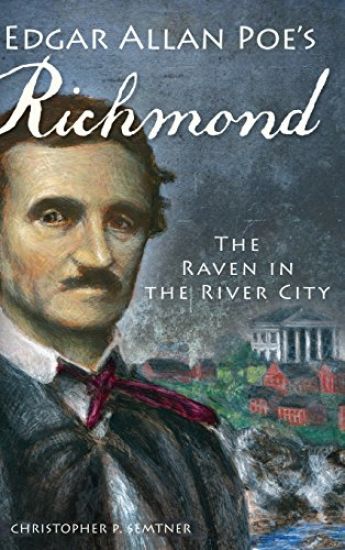
Acclaimed as one of America's most innovative authors and the inventor of the detective story, Edgar Allan Poe and his works are celebrated around the world. Yet the true story of Poe's time in Richmond, Virginia, is every bit as strange and exciting as his fiction.Poe spent nearly a third of his life in Richmond. It was here that he matched wits with a chess-playing robot, set the record for swimming against the current in the James River, challenged a rival editor to a duel and first revealed his talent for practical jokes. Join Christopher P. Semtner, curator of the Edgar Allan Poe Museum, as he reveals previously unpublished photographs and little-known source material to shed new light on how the mystery, madness and tragedy that Poe encountered during his Richmond years forever shaped his renowned fiction.
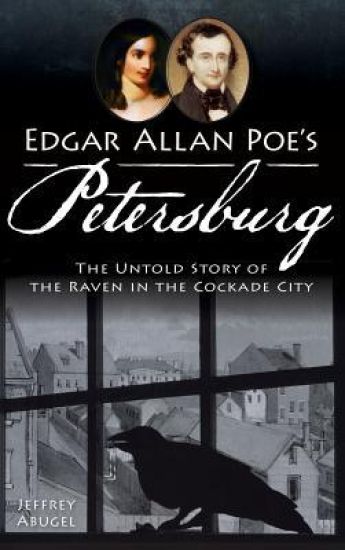
Antebellum Petersburg was a melting pot of French, Haitian, Scotch-Irish and free black populations. It was in this eclectic city that the master of the macabre, Edgar Allan Poe, chose to take his new wife, thirteen-year-old first cousin Virginia Clemm, on their honeymoon in 1836. Join author Jeffrey Abugel as he traces the steps of the controversial couple through imaginative scenes of historic Petersburg. From Poe's own mother performing in the local venues to the poet's lasting friendship with Petersburg native and publisher Hiram Haines, Abugel reveals an overlooked place in Poe's fascinating life. Walk along the cobblestones of history to discover a forgotten past of a literary giant.
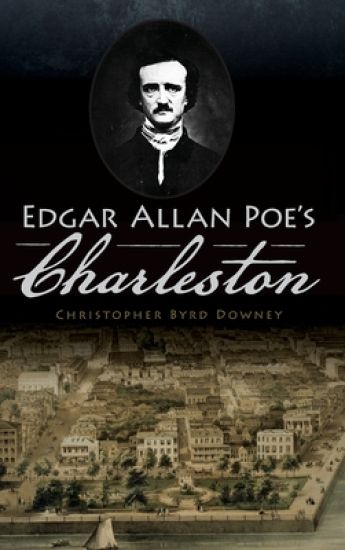
Edgar Allan Poe arrived in Charleston in November 1827 chased by storms, both literal and figurative. Some of the author's previous indiscretions caused him to enlist in the U.S. Army six months earlier under the pseudonym Edgar A. Perry. The more than on
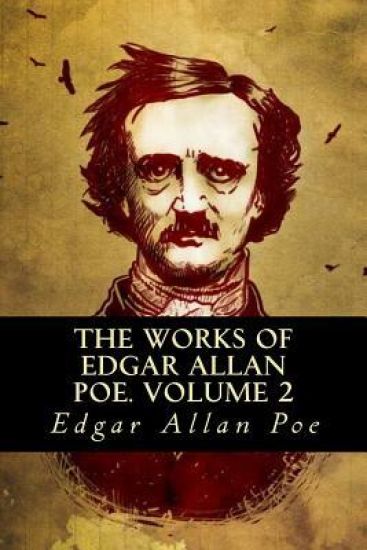
The Works of Edgar Allan Poe - Volume 1: The melancholy, brilliance, passionate lyricism, and torment of Edgar Allen Poe are all well represented in this collection. Here, in one volume, are his masterpieces of mystery, terror, that defined American romanticism and secured Poe as one of the most enduring literary voices of the nineteenth century.Each RADLEY CLASSIC is a meticulously restored, luxurious and faithful reproduction of a classic book; produced with elegant text layout, clarity of presentation, and stylistic features that make reading a true pleasure. Special attention is given to legible fonts and adequate letter sizing, correct line length for readability, generous margins and triple lead (lavish line separation); plus we do not allow any mistakes/changes/ additions to creep into the author's words.Visit RADLEY BOOKS at www.radleybooks.com to see more classic book titles in this series.
The Works of Edgar Allan Poe: The melancholy, brilliance, passionate lyricism, and torment of Edgar Allen Poe are all well represented in this collection. Here, in 5 volumes, are his masterpieces of mystery, terror, that defined American romanticism and secured Poe as one of the most enduring literary voices of the nineteenth century.Each RADLEY CLASSIC is a meticulously restored, luxurious and faithful reproduction of a classic book; produced with elegant text layout, clarity of presentation, and stylistic features that make reading a true pleasure. Special attention is given to legible fonts and adequate letter sizing, correct line length for readability, generous margins and triple lead (lavish line separation); plus we do not allow any mistakes/changes/additions to creep into the author's words.Visit RADLEY BOOKS at www.radleybooks.com to see more classic book titles in this series.
The Works of Edgar Allan Poe: The melancholy, brilliance, passionate lyricism, and torment of Edgar Allen Poe are all well represented in this collection. Here, in 5 volumes, are his masterpieces of mystery, terror, that defined American romanticism and secured Poe as one of the most enduring literary voices of the nineteenth century.Each RADLEY CLASSIC is a meticulously restored, luxurious and faithful reproduction of a classic book; produced with elegant text layout, clarity of presentation, and stylistic features that make reading a true pleasure. Special attention is given to legible fonts and adequate letter sizing, correct line length for readability, generous margins and triple lead (lavish line separation); plus we do not allow any mistakes/changes/additions to creep into the author's words.Visit RADLEY BOOKS at www.radleybooks.com to see more classic book titles in this series.
The Works of Edgar Allan Poe: The melancholy, brilliance, passionate lyricism, and torment of Edgar Allen Poe are all well represented in this collection. Here, in 5 volumes, are his masterpieces of mystery, terror, that defined American romanticism and secured Poe as one of the most enduring literary voices of the nineteenth century.Each RADLEY CLASSIC is a meticulously restored, luxurious and faithful reproduction of a classic book; produced with elegant text layout, clarity of presentation, and stylistic features that make reading a true pleasure. Special attention is given to legible fonts and adequate letter sizing, correct line length for readability, generous margins and triple lead (lavish line separation); plus we do not allow any mistakes/changes/additions to creep into the author's words.Visit RADLEY BOOKS at www.radleybooks.com to see more classic book titles in this series.
The Works of Edgar Allan Poe: The melancholy, brilliance, passionate lyricism, and torment of Edgar Allen Poe are all well represented in this collection. Here, in 5 volumes, are his masterpieces of mystery, terror, that defined American romanticism and secured Poe as one of the most enduring literary voices of the nineteenth century.Each RADLEY CLASSIC is a meticulously restored, luxurious and faithful reproduction of a classic book; produced with elegant text layout, clarity of presentation, and stylistic features that make reading a true pleasure. Special attention is given to legible fonts and adequate letter sizing, correct line length for readability, generous margins and triple lead (lavish line separation); plus we do not allow any mistakes/changes/ additions to creep into the author's words.Visit RADLEY BOOKS at www.radleybooks.com to see more classic book titles in this series.
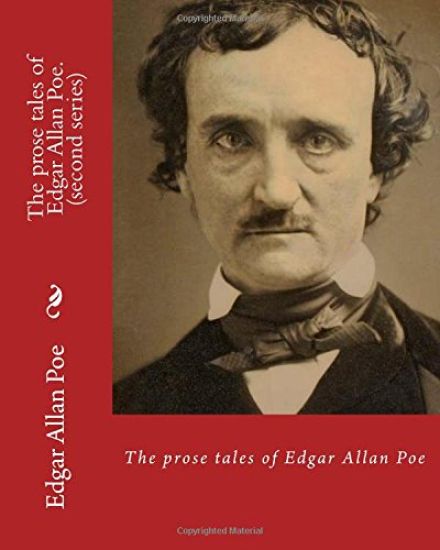
Edgar Allan Poe ( born Edgar Poe; January 19, 1809 - October 7, 1849) was an American writer, editor, and literary critic. Poe is best known for his poetry and short stories, particularly his tales of mystery and the macabre. He is widely regarded as a central figure of Romanticism in the United States and American literature as a whole, and he was one of the country's earliest practitioners of the short story. Poe is generally considered the inventor of the detective fiction genre and is further credited with contributing to the emerging genre of science fiction. 1] He was the first well-known American writer to try to earn a living through writing alone, resulting in a financially difficult life and career. 2] Poe was born in Boston, the second child of two actors. His father abandoned the family in 1810, and his mother died the following year. Thus orphaned, the child was taken in by John and Frances Allan of Richmond, Virginia. They never formally adopted him, but Poe was with them well into young adulthood. Tension developed later as John Allan and Edgar repeatedly clashed over debts, including those incurred by gambling, and the cost of secondary education for the young man. Poe attended the University of Virginia for one semester but left due to lack of money. Poe quarreled with Allan over the funds for his education and enlisted in the Army in 1827 under an assumed name. It was at this time that his publishing career began, albeit humbly, with the anonymous collection of poems Tamerlane and Other Poems (1827), credited only to "a Bostonian". With the death of Frances Allan in 1829, Poe and Allan reached a temporary rapprochement. However, Poe later failed as an officer cadet at West Point, declaring a firm wish to be a poet and writer, and he ultimately parted ways with John Allan. Poe switched his focus to prose and spent the next several years working for literary journals and periodicals, becoming known for his own style of literary criticism. His work forced him to move among several cities, including Baltimore, Philadelphia, and New York City. In Richmond in 1836, he married Virginia Clemm, his 13-year-old cousin. In January 1845, Poe published his poem "The Raven" to instant success. His wife died of tuberculosis two years after its publication. For years, he had been planning to produce his own journal The Penn (later renamed The Stylus), though he died before it could be produced. Poe died in Baltimore on October 7, 1849, at age 40; the cause of his death is unknown and has been variously attributed to alcohol, brain congestion, cholera, drugs, heart disease, rabies, suicide, tuberculosis, and other agents. Poe and his works influenced literature in the United States and around the world, as well as in specialized fields such as cosmology and cryptography. Poe and his work appear throughout popular culture in literature, music, films, and television. A number of his homes are dedicated museums today. The Mystery Writers of America present an annual award known as the Edgar Award for distinguished work in the mystery genre.
"The Black Cat" is a short story by Edgar Allan Poe. It was first published in the August 19, 1843, edition of The Saturday Evening Post. It is a study of the psychology of guilt, often paired in analysis with Poe's "The Tell-Tale Heart". In both, a murderer carefully conceals his crime and believes himself unassailable, but eventually breaks down and reveals himself, impelled by a nagging reminder of his guilt.
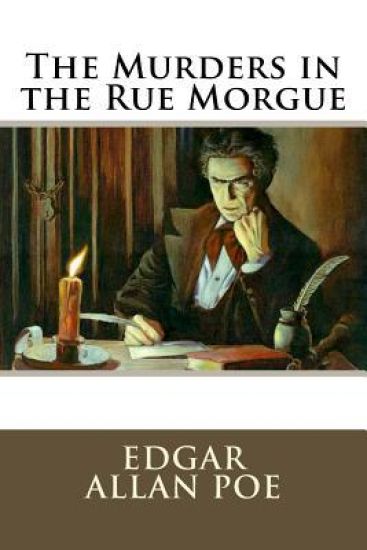
"The Murders in the Rue Morgue" is a short story by Edgar Allan Poe published in Graham's Magazine in 1841. It has been claimed as the first detective story; Poe referred to it as one of his "tales of ratiocination". Similar works predate Poe's stories, including Das Fr ulein von Scuderi (1819) by E.T.A. Hoffmann and Zadig (1748) by Voltaire. C. Auguste Dupin is a man in Paris who solves the mysterious brutal murder of two women. Numerous witnesses heard a suspect, though no one agrees on what language was spoken. At the murder scene, Dupin finds a hair that does not appear to be human. As the first true detective in fiction, the Dupin character established many literary devices which would be used in future fictional detectives including Sherlock Holmes and Hercule Poirot. Many later characters, for example, follow Poe's model of the brilliant detective, his personal friend who serves as narrator, and the final revelation being presented before the reasoning that leads up to it. Dupin himself reappears in "The Mystery of Marie Roget" and "The Purloined Letter".
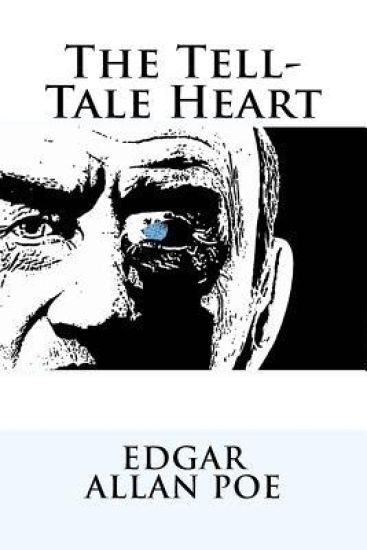
"The Tell-Tale Heart" is a short story by Edgar Allan Poe first published in 1843. It follows an unnamed narrator who insists on his sanity after murdering an old man with a "vulture eye." The murder is carefully calculated, and the murderer hides the body by cutting it into pieces and hiding it under the floorboards. Ultimately the narrator's guilt manifests itself in the hallucination that the man's heart is still beating under the floorboards. It is unclear what relationship, if any, the old man and his murderer share. It has been suggested that the old man is a father figure or, perhaps, that his vulture eye represents some sort of veiled secret. The ambiguity and lack of details about the two main characters stand in stark contrast to the specific plot details leading up to the murder. The story was first published in James Russell Lowell's The Pioneer in January 1843. "The Tell-Tale Heart" is widely considered a classic of the Gothic fiction genre and one of Poe's most famous short stories.
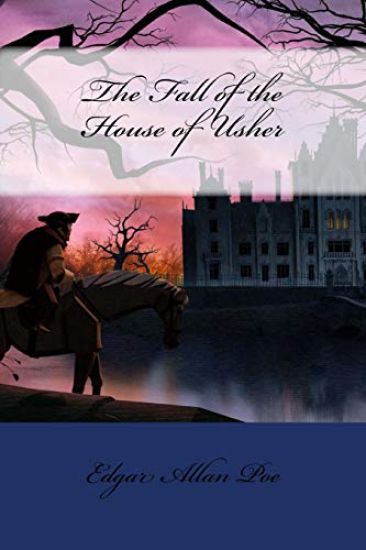
The story begins with the unnamed narrator arriving at the house of his friend, Roderick Usher, having received a letter from him in a distant part of the country complaining of an illness and asking for his help. As he arrives, the narrator notes a thin crack extending from the roof, down the front of the building and into the adjacent lake.
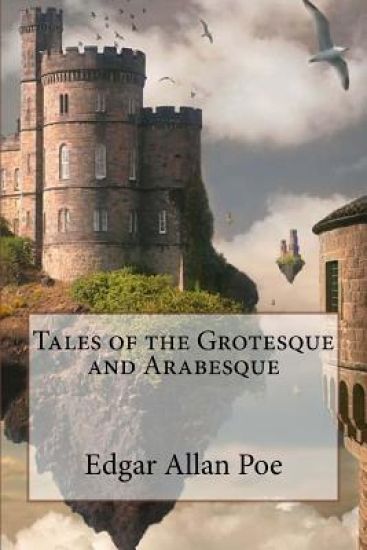
The epithets "Grotesque" and "Arabesque" will be found to indicate with sufficient precision the prevalent tenor of the tales here published. But from the fact that, during a period of some two or three years, I have written five-and-twenty short stories whose general character may be so briefly defined, it cannot be fairly inferred - at all events it is not truly inferred - that I have, for this species of writing, any inordinate, or indeed any peculiar taste or prepossession. I may have written with an eye to this republication in volume form, and may, therefore, have desired to preserve, as far as a certain point, a certain unity of design. This is, indeed, the fact; and it may even happen that, in this manner, I shall never compose anything again. I speak of these things here, because I am led to think it is this prevalence of the "Arabesque" in my serious tales, which has induced one or two critics to tax me, in all friendliness, with what they have been pleased to term "Germanism" and gloom. The charge is in bad taste, and the grounds of the accusation have not been sufficiently considered.
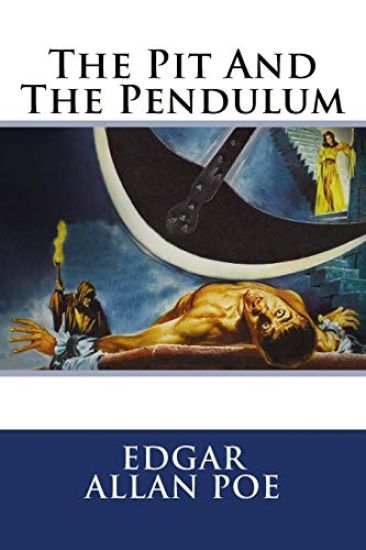
"The Pit and the Pendulum" is a short story written by Edgar Allan Poe and first published in 1842. The story is about the torments endured by a prisoner of the Spanish Inquisition, though Poe skews historical facts. The narrator of the story is deemed guilty for an unnamed crime and put into a completely dark room. He passes out while trying to determine the size of the room. When he wakes up, he realizes there is a large, deep pit in the middle of the room. He loses consciousness again and awakens strapped on his back, unable to move more than his head. He soon realizes there is a large blade-like pendulum hanging above him, slowly getting closer to cutting through his chest. He finds a way to escape but the walls of his prison start to move and close in on him, pushing him closer and closer to falling into the pit. The story is especially effective at inspiring fear in the reader because of its heavy focus on the senses, such as sound, emphasizing its reality, unlike many of Poe's stories which are aided by the supernatural. The traditional elements established in popular horror tales at the time are followed but critical reception has been mixed.
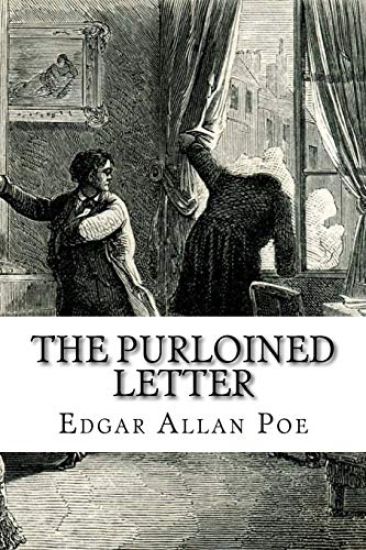
"The Purloined Letter" is a short story by American author Edgar Allan Poe. It is the third of his three detective stories featuring the fictional C. Auguste Dupin, the other two being "The Murders in the Rue Morgue" and "The Mystery of Marie Rog t". These stories are considered to be important early forerunners of the modern detective story. It first appeared in The Gift for 1845 (1844) and was soon reprinted in numerous journals and newspapers.
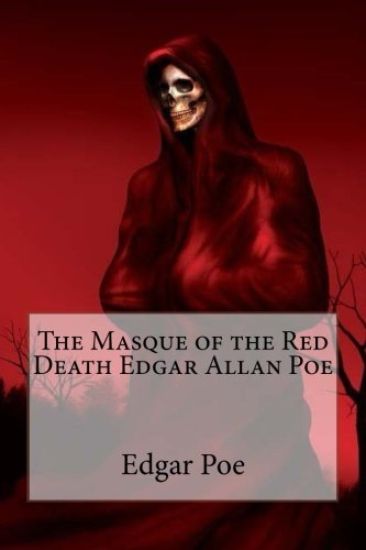
"The Masque of the Red Death", originally published as "The Mask of the Red Death", is a short story written by Edgar Allan Poe and first published in 1842. The story follows Prince Prospero's attempts to avoid a dangerous plague known as the Red Death by hiding in his abbey. He, along with many other wealthy nobles, has a masquerade ball within seven rooms of his abbey, each decorated with a different color. In the midst of their revelry, a mysterious figure enters and makes his way through each of the rooms. When Prospero confronts this stranger, he falls dead. The story follows many traditions of Gothic fiction and is often analyzed as an allegory about the inevitability of death, though some critics advise against an allegorical reading. Many different interpretations have been presented, as well as attempts to identify the true nature of the disease of the "Red Death."