Kirjojen hintavertailu. Mukana 12 253 230 kirjaa ja 12 kauppaa.

Kirjahaku

Etsi kirjoja tekijän nimen, kirjan nimen tai ISBN:n perusteella.

1000 tulosta hakusanalla Bryan Guinness

A Clever Base-Ballist

A Clever Base-Ballist

Bryan Di Salvatore

Johns Hopkins University Press
2001
pokkari
One of baseball's earliest stars, John Montgomery Ward (1860-1925) was a formidable talent. Today, he stands alone as the only player with more than 100 wins as a pitcher and 2000 hits as a batter. Ward played at a time when baseball was evolving from a pastime into a business, and his most important legacy may have been his role "in establishing modern organized baseball" (as his plaque in the Baseball Hall of Fame reads). He organized the sport's first union, the Brotherhood of Professional Ball Players, and in 1890 led a revolt against National League owners by creating a third major league - The Players' League - presaging a century of bitter conflict between players and owners. In this biography, Bryan Di Salvatore seeks to capture the brash energy of this larger-than-life sports figure and offer a keenly observed narrative about baseball's often troubled coming of age.
Becoming Criminal

Becoming Criminal

Bryan Reynolds

Johns Hopkins University Press
2002
sidottu
In this book Bryan Reynolds argues that early modern England experienced a sociocultural phenomenon, unprecedented in English history, which has been largely overlooked by historians and critics. Beginning in the 1520s, a distinct "criminal culture" of beggars, vagabonds, confidence tricksters, prostitutes, and gypsies emerged and flourished. This community defined itself through its criminal conduct and dissident thought and was, in turn,officially defined by and against the dominant conceptions of English cultural normality. Examining plays, popular pamphlets, laws, poems, and scholarly work from the period, Reynolds demonstrates that this criminal culture, though diverse, was united by its own ideology, language, and aesthetic. Using his transversal theory, he shows how the enduring presence of this criminal culture markedly influenced the mainstream culture's aesthetic sensibilities, socioeconomic organization, and systems of belief. He maps the effects of the public theater's transformative force of transversality, such as through the criminality represented by Shakespeare, Jonson, Middleton, and Dekker, on both Elizabethan and Jacobean society and the scholarship devoted to it.
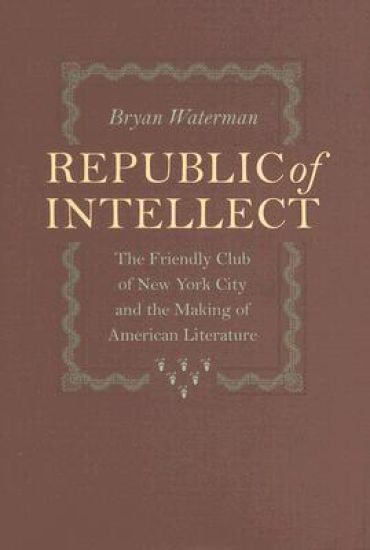
Republic of Intellect

Republic of Intellect

Bryan Waterman

Johns Hopkins University Press
2007
sidottu
In the 1790s, a single conversational circle-the Friendly Club-united New York City's most ambitious young writers, and in Republic of Intellect, Bryan Waterman uses an innovative blend of literary criticism and historical narrative to re-create the club's intellectual culture. The story of the Friendly Club reveals the mutually informing conditions of authorship, literary association, print culture, and production of knowledge in a specific time and place-the tumultuous, tenuous world of post-revolutionary New York City. More than any similar group in the early American republic, the Friendly Club occupied a crossroads-geographical, professional, and otherwise-of American literary and intellectual culture. Waterman argues that the relationships among club members' novels, plays, poetry, diaries, legal writing, and medical essays lead to important first examples of a distinctively American literature and also illuminate the local, national, and transatlantic circuits of influence and information that club members called "the republic of intellect." He addresses topics ranging from political conspiracy in the gothic novels of Charles Brockden Brown to the opening of William Dunlap's Park Theatre, from early American debates on gendered conversation to the publication of the first American medical journal. Voluntary association and print culture helped these young New Yorkers, Waterman concludes, to produce a broader and more diverse post-revolutionary public sphere than scholars have yet recognized.
Hiking, Cycling, and Canoeing in Maryland

Hiking, Cycling, and Canoeing in Maryland

Bryan MacKay

Johns Hopkins University Press
2008
pokkari
From Assateague to Swallow Falls, from the Susquehanna River Trail to Rock Creek Park, Maryland offers residents and visitors a wealth of recreational opportunities in a remarkable variety of natural settings. Bryan MacKay's Hiking, Cycling, and Canoeing in Maryland has been the essential guide to outdoor recreation in the state's parks, preserves, and waterways for more than a decade. A lifelong resident of Maryland, MacKay combines in this book his love of outdoor activities and his knowledge of the places, plants, and animals of the region. For each of the 23 walks, 16 bicycle rides, and 19 canoe trips, he includes general information on the natural history and ecology of the site and a short essay that focuses on a topic of special interest-a particular plant or animal or an important conservation issue. Along with maps and detailed directions for each outing, the book also features beautiful pen-and-ink drawings by Sandy Glover of the Irvine Natural Science Center. The second edition provides updated information on the Capital Crescent Trail, North Point State Park (Black Marsh), Soldiers Delight Natural Environmental Area, and the Susquehanna River Trail, as well as current contact information for all parks and preserves.
Baltimore Trails

Baltimore Trails

Bryan MacKay

Johns Hopkins University Press
2009
pokkari
Baltimore Trails is a comprehensive and detailed guide to trails on public lands in and around Baltimore. Discover Hemlock Gorge, a small slice of Appalachia transported into northern Baltimore County, with its timeless peace and ancient gnarled hemlocks; or Black Marsh, where birds skulk among the vegetation of pristine freshwater wetlands; or the unique landscape of Soldiers Delight Natural Environment Area, which shelters more than 38 rare plant species. Baltimore Trails answers the needs of hikers and mountain bikers, offering accurate maps, up-to-date access information, and reliable trail descriptions. Bryan MacKay, a lifelong Baltimore resident and avid naturalist, walked, cycled, and explored nearly 80 trails in local state, county, and city parks, as well as area watersheds. He provides a detailed description, topographic map, and the length, location, and degree of difficulty for each trail. Some trails offer an easy afternoon stroll, while others provide a day of rugged hiking or biking. Thumbnail essays offer scenic highlights and discuss typical plants, animals, and local ecology. Every trail was field-checked in 2007 for the second edition. Miles of new trails are included, as is updated information on recent trail reroutes.
Canada's 1960s

Canada's 1960s

Bryan Palmer

University of Toronto Press
2008
pokkari
Rebellious youth, the Cold War, New Left radicalism, Pierre Trudeau, Red Power, Quebec's call for Revolution, Marshall McLuhan: these are just some of the major forces and figures that come to mind at the slightest mention of the 1960s in Canada. Focusing on the major movements and personalities of the time, as well as the lasting influence of the period, Canada's 1960s examines the legacy of this rebellious decade's impact on contemporary notions of Canadian identity. Bryan D. Palmer demonstrates how after massive postwar immigration, new political movements, and at times violent protest, Canada could no longer be viewed in the old ways. National identity, long rooted in notions of Canada as a white settler Dominion of the North, marked profoundly by its origins as part of the British Empire, had become unsettled. Concerned with how Canadians entered the Sixties relatively secure in their national identities, Palmer explores the forces that contributed to the post-1970 uncertainty about what it is to be Canadian. Tracing the significance of dissent and upheaval among youth, trade unionists, university students, Native peoples, and Quebecois, Palmer shows how the Sixties ended the entrenched, nineteenth-century notions of Canada. The irony of this rebellious era, however, was that while it promised so much in the way of change, it failed to provide a new understanding of Canadian national identity. A compelling and highly accessible work of interpretive history, Canada's 1960s is the book of the decade about an era many regard as the most turbulent and significant since the years of the Great Depression and World War II.
Letters To A Birmingham Jail

Letters To A Birmingham Jail

Bryan Loritts

Moody Publishers
2014
nidottu
On April 16th, 1963, Dr. Martin Luther King Jr.'s "Letter from a Birmingham Jail" was published and soon became the manifesto of the civil rights movement. Dr. King did not pick up his pen and react to hate filled racists. Instead, he found any scrap of paper that he could write on and responded to the passive pleas of white clergy, "Isn't there another way around this, a more subtle and patient way? Can't you just wait, Dr. King?"Over the half century that has elapsed since the publication of "Letter from a Birmingham Jail," much has transpired and progress has been made. Long gone are the burning crosses, biting police dogs and angry mobs; in its place we find passivity, cynicism and avoidance. In God's sovereignty, voices from today's church have emerged declaring that we cannot wait. These diverse voices are grateful for the laws that the civil rights movement were able to change, but also acknowledge that while the movement could change laws, it could never change hearts. Only the cross and empty tomb of our Lord and Savior Jesus Christ can do that."Letters to a Birmingham Jail" is a collection of essays written by men of various ethnicities and ages, yet all are committed to the centrality of the gospel, nudging us to pursue Christ exalting diversity. The gospel demands justice in all its forms - spiritual and physical. This was a truth that Dr. King fought and gave his life for, and this is a truth that these modern day "drum majors for justice" continue to beat.Contributors include: Bryan Loritts (General Editor), John Piper, John Perkins, Matt Chandler, Crawford Loritts, Sandy Wilson, Charlie Dates, John Bryson, Soong Chan Rah, & Albert Tate
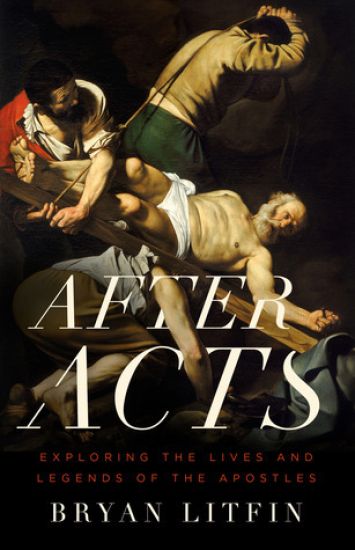
After Acts

After Acts

Bryan M. Litfin

Moody Publishers
2015
nidottu
What really happened after Acts?If you've ever wondered what happened to the biblical characters after Acts--from the well-known Matthew to the lesser-known Bartholomew--then this book is for you. Join Dr. Bryan Litfin as he guides you through Scripture and other ancient literature to sift fact from fiction, real-life from legend. Skillfully researched and clearly written, After Acts is as accurate as it is engaging. Gain a window into the religious milieu of the ancient and medieval church. Unearth artifacts and burial sites. Learn what really happened to your favorite characters and what you should truly remember them for.Did Paul ever make it to Spain? Was he beheaded in Rome?Is it true that Peter was crucified upside down?Was the Virgin Mary really bodily assumed into heaven?The book of Acts ends at chapter 28. But its characters lived on.
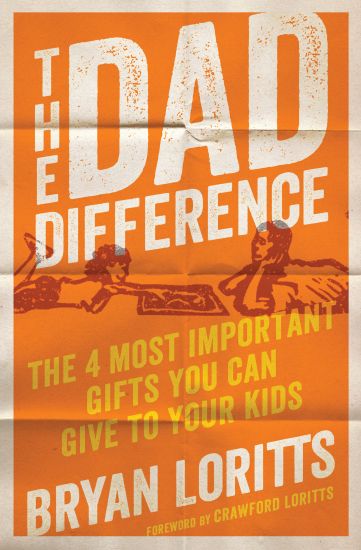
Dad Difference, The

Dad Difference, The

Bryan Loritts

Moody Publishers
2020
nidottu
What does it take to be a great dad? The world is full of bad examples of men who weren't there for their kids. But there are good and even great dads out there, who inspire their children and the men around them to reach for more. How do you become a dad like that--even if your own dad wasn't such a good example? In The Dad Difference, Bryan Loritts explores the four gifts every kid needs from their dad: relationship, integrity, teaching, and experiences. He walks you through what each of these mean and how to put them into practice and shares stories of fathers, including his own dad, who were examples of this to him. Full of biblical wisdom, simple truths, and practical advice, this book will empower you to become a dad who makes a difference in the lives of your children.
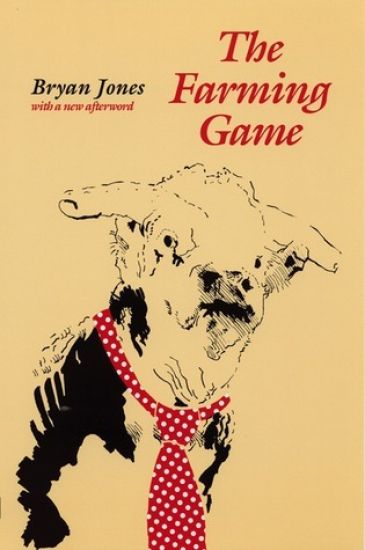
The Farming Game

The Farming Game

Bryan L. Jones

University of Nebraska Press
1995
pokkari
In cantankerous opinions, hard-headed advice, and free-swinging sketches of real farmers, Bryan Jones addresses everyone who feels the pull of the land. He accepts the emotional appeal of "going back to the land" and then takes the unconventional stand that, above all, farming can be a good way to make money. Against the grain of public policy that, he maintains, encourages big agriculture, Jones works out how a shrewd, stubborn small farmer can still make a go of it. His keen-eyed sketches of farmers at work show the variety of ways a farmer may succeed or fail. Even his own neighborhood, dominated by thousands of acres of corn and high technology, is peopled with "scalper" who makes a living in the cattle business with little more stake than a gooseneck trailer, a telephone, and his native wits; the sheep man who secretly grows rich while looking poor and raising an animal that other farmer disdain; the experimenter who never turns a nickel himself, but whose successful innovations are readily adopted by his neighbors; the hog raiser who makes a large family pay.The heart of the book is the primer for novices—and for city folk who dream of farming. Jones emphasizes the practicalities of farm finance and recommends sidelines for the beginner—welding, giving guitar lessons, keeping the books for a local elevator—as an alternative to starving. He urges newcomers to start small and to be sure that farming is something they really want to do. To interested bystanders, The Farming Game offers one farmer's audacious, stimulating, and entertaining view of American agriculture today.
Mark Twain Made Me Do It and Other Plains Adventures
Mark Twain Made Me Do It and Other Plains Adventures is a collection of humorous essays portraying western Nebraska life and culture of the 1950s. Anecdotes on small-town baseball and the polio epidemic of 1952 provide a historic backdrop to the story of a wide-eyed boy exploring the limits of his universe. The adventures of a Twain-inspired raft trip down the South Platte and Sputnik-inspired homemade rockets mirror a society of seemingly settled lifestyles and frenzied technological advances. Family travels, holidays with Grandpa and Grandma, and marvelous creations like his sister's stories of Susabelle and the magic Band-Aids weave a splendid tale. But Jones's world is not one of sentimental nostalgia; running battles with town bullies, sobering encounters with religious buffoons, and an impressive collection of pedagogues specializing in violent corporal punishment capture the earthy essence of a world now largely disappeared.
Microcomputer Applications in Qualitative Research

Microcomputer Applications in Qualitative Research

Bryan Pfaffenberger

SAGE Publications Inc
1988
nidottu
Microcomputer Applications in Qualitative Research is a timely and innovative volume offering a sophisticated examination of one of the many uses of computers in the social sciences. In this insightful volume Pfaffenberger explores the world of personal computing in social science research, providing both a practical/methodological and critical/theoretical perspective. Pfaffenberger surveys the ways microcomputers and microcomputer programs can be used to further the goals of qualitative social research. He critically analyzes the potential liabilities and benefits of using microcomputer technology for research purposes. This book addresses such issues as: the need for computers in qualitative research, the nature of qualitative analysis, word processing software and field notes, automatic indexing, text oriented data base management programs, and automated data analysis. This comprehensive volume is an asset for qualitative researchers, and an excellent supplementary text for courses in research methodology. "Pfaffenberger . . . is a thoughtful and highly knowledgeable advocate of the process. . . . In a sense, this book is also an exercise in the sociology of technology, since Pfaffenberger is highly sensitive to the ways in which computer software is socially constructed. . . . [It] will provide much useful and thought-provoking advice for researchers and students alike." --Contemporary Sociology "Meets the special problems of microcomputers by attempting a theoretical solution....I thought Pfaffenberger's proto-theoretical approach held out the most hope for the future." --Journalism Quarterly
Medical Power and Social Knowledge

Medical Power and Social Knowledge

Bryan S Turner

SAGE Publications Ltd
1995
sidottu
The fully revised edition of this successful textbook provides a comprehensive introduction to medical sociology and an assessment of its significance for social theory and the social sciences. It includes a completely revised chapter on mental health and new chapters on the sociology of the body and on the relationship between health and risk in contemporary societies. Bryan S Turner considers the ways in which different social theorists have interpreted the experience of health and disease, and the social relations and power structures involved in medical practice. He examines health as an aspect of social action and looks at the subject of health at three levels - the individual, the social and the societal. Among the perspectives analyzed are: Parsons' view of the `sick role' and the patient's relation to society; Foucault's critique of medical models of madness and sexuality; Marxist and feminist debates on the relation of health and medicine to capitalism and patriarchy; and Beck's contribution to the sociological understanding of environmental pollution and hazard in the politics of health.
Medical Power and Social Knowledge

Medical Power and Social Knowledge

Bryan S Turner

SAGE Publications Ltd
1995
nidottu
The fully revised edition of this successful textbook provides a comprehensive introduction to medical sociology and an assessment of its significance for social theory and the social sciences. It includes a completely revised chapter on mental health and new chapters on the sociology of the body and on the relationship between health and risk in contemporary societies. Bryan S Turner considers the ways in which different social theorists have interpreted the experience of health and disease, and the social relations and power structures involved in medical practice. He examines health as an aspect of social action and looks at the subject of health at three levels - the individual, the social and the societal. Among the perspectives analyzed are: Parsons' view of the `sick role' and the patient's relation to society; Foucault's critique of medical models of madness and sexuality; Marxist and feminist debates on the relation of health and medicine to capitalism and patriarchy; and Beck's contribution to the sociological understanding of environmental pollution and hazard in the politics of health.
Religion and Social Theory

Religion and Social Theory

Bryan S Turner

SAGE Publications Ltd
1991
nidottu
The second edition of this major book on the social analysis of religion incorporates a substantial new introduction by Bryan S Turner. Religion and Social Theory assesses the different theoretical approaches to the social function of religion. Turner discusses at length the ideas of key contributors to these approaches (including Engels, Durkheim, Weber, Nietzsche, Freud, Parsons, Marcuse, Habermas and Foucault). In so doing, he develops a distinctive perspective on the role of religion as an institutional link between economic and human reproduction. Social theories of religion are explored through a resolutely comparative and historical analysis of the Abrahamic faiths - Judaism, Islam and Christianity. Relating comparative religion to the social context of individualism, civil religions and political legitimacy, the book makes a major contribution to the analysis of conflict and consensus in social systems.
Between 'Race' and Culture

Between 'Race' and Culture

Bryan Cheyette

STANFORD UNIVERSITY PRESS
1996
sidottu
This collection of essays examines various representations of "the Jew" in British and American literature in the nineteenth and twentieth centuries. It analyzes in detail the literary racism and antisemitism of some of the most important and influential writers of this period, including Dickens, Trollope, James, Eliot, Pound, Joyce, Woolf, and Orwell, as well as such marginal figures as Dorothy Richardson, Stevie Smith, and Michael Gold. The contributors are all well-known Anglo-American literary, cultural, or feminist critics; some have written extensively on literary racism or antisemitism, others are working in this area for the first time. The collection does not impose a schema or new orthodoxy, but instead encourages a plurality of approaches to a difficult and always contentious issue that has been demarcated into broadly defined "politically correct" and "liberal humanist" positions. Liberal humanism asserts that the ameliorating western canon has, by definition, nothing to do with racism or antisemitism. Political correctness wishes to exclude from the academy any literary text deemed to reinforce oppressive stereotypes. This volume adopts neither position, arguing instead that these two supposedly antagonistic approaches are, in fact, mirror-images of each other.
Busted Sanctions

Busted Sanctions

Bryan R. Early

Stanford University Press
2015
sidottu
Powerful countries like the United States regularly employ economic sanctions as a tool for promoting their foreign policy interests. Yet this foreign policy tool has an uninspiring track record of success, with economic sanctions achieving their goals less than a third of the time they are imposed. The costs of these failed sanctions policies can be significant for the states that impose them, their targets, and the other countries they affect. Explaining economic sanctions' high failure rate therefore constitutes a vital endeavor for academics and policy-makers alike. Busted Sanctions seeks to provide this explanation, and reveals that the primary cause of this failure is third-party spoilers, or sanctions busters, who undercut sanctioning efforts by providing their targets with extensive foreign aid or sanctions-busting trade. In quantitatively and qualitatively analyzing over 60 years of U.S. economic sanctions, Bryan Early reveals that both types of third-party sanctions busters have played a major role in undermining U.S. economic sanctions. Surprisingly, his analysis also reveals that the United States' closest allies are often its sanctions' worst enemies. The book offers the first comprehensive explanation for why different types of sanctions busting occur and reveals the devastating effects it has on economic sanctions' chances of success.
Busted Sanctions

Busted Sanctions

Bryan R. Early

Stanford University Press
2015
pokkari
Powerful countries like the United States regularly employ economic sanctions as a tool for promoting their foreign policy interests. Yet this foreign policy tool has an uninspiring track record of success, with economic sanctions achieving their goals less than a third of the time they are imposed. The costs of these failed sanctions policies can be significant for the states that impose them, their targets, and the other countries they affect. Explaining economic sanctions' high failure rate therefore constitutes a vital endeavor for academics and policy-makers alike. Busted Sanctions seeks to provide this explanation, and reveals that the primary cause of this failure is third-party spoilers, or sanctions busters, who undercut sanctioning efforts by providing their targets with extensive foreign aid or sanctions-busting trade. In quantitatively and qualitatively analyzing over 60 years of U.S. economic sanctions, Bryan Early reveals that both types of third-party sanctions busters have played a major role in undermining U.S. economic sanctions. Surprisingly, his analysis also reveals that the United States' closest allies are often its sanctions' worst enemies. The book offers the first comprehensive explanation for why different types of sanctions busting occur and reveals the devastating effects it has on economic sanctions' chances of success.
Tristan Chord

Tristan Chord

Bryan Magee

Picador USA
2002
nidottu
Richard Wagner's devotees have ranged from the subtlest minds (Proust) to the most brutal (Hitler). The enduring fascination with his works arises not only from his singular fusion of musical innovation and theatrical daring, but also from his largely overlooked engagement with the boldest investigations of modern philosophy. In this radically clarifying book, Bryan Magee traces Wagner's intellectual quests, from his youthful embrace of revolutionary socialism to the near-Buddhist resignation of his final years. Magee shows how abstract thought can permeate music and stimulate creations of great power and beauty. And he unflinchingly confronts the Wagner whose paranoia, egocentricity, and anti-Semitism are as repugnant as his achievements are glorious. At once a biography of the composer, an overview of his times, and an exploration of the intellectual and technical aspects of music, Magee's lucid study offers the best explanation of W. H. Auden's judgment that Wagner, for all his notoriety, was "perhaps the greatest genius that ever lived."
Brain Plasticity and Behavior

Brain Plasticity and Behavior

Bryan Kolb

Psychology Press
1995
sidottu
There are few books devoted to the topic of brain plasticity and behavior. Most previous works that cover topics related to brain plasticity do not include extensive discussions of behavior. The first to try to address the relationship between recovery from brain damage and changes in the brain that might support the recovery, this volume includes studies of humans as well as laboratory species, particularly rats. The subject matter identifies a consistent correlation between specific changes in the brain and behavioral recovery, as well as various factors such as sex and experience that influence this correlation in consistent ways. Evolving from a series of lectures given as the McEachran Lectures at the University of Alberta, this volume originally began as a summary of the lectures, but has expanded to include more background literature, allowing the reader to see the author's biases, assumptions, and hunches in a broader perspective. In writing this volume, the author had two goals in mind: * to initiate senior undergraduates or graduate psychology, biology, neuroscience or other interested students to the issues and questions regarding the nature of brain plasticity, and * to provide a monograph in the form of an extended summary of the work the author and his colleagues have done on brain plasticity and recovery of function.