The second edition of this major book on the social analysis of religion incorporates a substantial new introduction by Bryan S Turner. Religion and Social Theory assesses the different theoretical approaches to the social function of religion. Turner discusses at length the ideas of key contributors to these approaches (including Engels, Durkheim, Weber, Nietzsche, Freud, Parsons, Marcuse, Habermas and Foucault). In so doing, he develops a distinctive perspective on the role of religion as an institutional link between economic and human reproduction. Social theories of religion are explored through a resolutely comparative and historical analysis of the Abrahamic faiths - Judaism, Islam and Christianity. Relating comparative religion to the social context of individualism, civil religions and political legitimacy, the book makes a major contribution to the analysis of conflict and consensus in social systems.
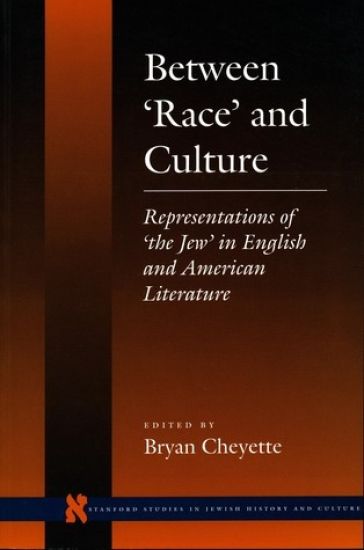
This collection of essays examines various representations of "the Jew" in British and American literature in the nineteenth and twentieth centuries. It analyzes in detail the literary racism and antisemitism of some of the most important and influential writers of this period, including Dickens, Trollope, James, Eliot, Pound, Joyce, Woolf, and Orwell, as well as such marginal figures as Dorothy Richardson, Stevie Smith, and Michael Gold. The contributors are all well-known Anglo-American literary, cultural, or feminist critics; some have written extensively on literary racism or antisemitism, others are working in this area for the first time. The collection does not impose a schema or new orthodoxy, but instead encourages a plurality of approaches to a difficult and always contentious issue that has been demarcated into broadly defined "politically correct" and "liberal humanist" positions. Liberal humanism asserts that the ameliorating western canon has, by definition, nothing to do with racism or antisemitism. Political correctness wishes to exclude from the academy any literary text deemed to reinforce oppressive stereotypes. This volume adopts neither position, arguing instead that these two supposedly antagonistic approaches are, in fact, mirror-images of each other.
Powerful countries like the United States regularly employ economic sanctions as a tool for promoting their foreign policy interests. Yet this foreign policy tool has an uninspiring track record of success, with economic sanctions achieving their goals less than a third of the time they are imposed. The costs of these failed sanctions policies can be significant for the states that impose them, their targets, and the other countries they affect. Explaining economic sanctions' high failure rate therefore constitutes a vital endeavor for academics and policy-makers alike. Busted Sanctions seeks to provide this explanation, and reveals that the primary cause of this failure is third-party spoilers, or sanctions busters, who undercut sanctioning efforts by providing their targets with extensive foreign aid or sanctions-busting trade. In quantitatively and qualitatively analyzing over 60 years of U.S. economic sanctions, Bryan Early reveals that both types of third-party sanctions busters have played a major role in undermining U.S. economic sanctions. Surprisingly, his analysis also reveals that the United States' closest allies are often its sanctions' worst enemies. The book offers the first comprehensive explanation for why different types of sanctions busting occur and reveals the devastating effects it has on economic sanctions' chances of success.
Powerful countries like the United States regularly employ economic sanctions as a tool for promoting their foreign policy interests. Yet this foreign policy tool has an uninspiring track record of success, with economic sanctions achieving their goals less than a third of the time they are imposed. The costs of these failed sanctions policies can be significant for the states that impose them, their targets, and the other countries they affect. Explaining economic sanctions' high failure rate therefore constitutes a vital endeavor for academics and policy-makers alike. Busted Sanctions seeks to provide this explanation, and reveals that the primary cause of this failure is third-party spoilers, or sanctions busters, who undercut sanctioning efforts by providing their targets with extensive foreign aid or sanctions-busting trade. In quantitatively and qualitatively analyzing over 60 years of U.S. economic sanctions, Bryan Early reveals that both types of third-party sanctions busters have played a major role in undermining U.S. economic sanctions. Surprisingly, his analysis also reveals that the United States' closest allies are often its sanctions' worst enemies. The book offers the first comprehensive explanation for why different types of sanctions busting occur and reveals the devastating effects it has on economic sanctions' chances of success.
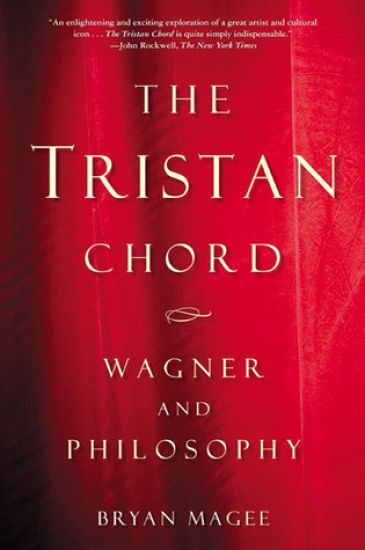
Richard Wagner's devotees have ranged from the subtlest minds (Proust) to the most brutal (Hitler). The enduring fascination with his works arises not only from his singular fusion of musical innovation and theatrical daring, but also from his largely overlooked engagement with the boldest investigations of modern philosophy. In this radically clarifying book, Bryan Magee traces Wagner's intellectual quests, from his youthful embrace of revolutionary socialism to the near-Buddhist resignation of his final years. Magee shows how abstract thought can permeate music and stimulate creations of great power and beauty. And he unflinchingly confronts the Wagner whose paranoia, egocentricity, and anti-Semitism are as repugnant as his achievements are glorious. At once a biography of the composer, an overview of his times, and an exploration of the intellectual and technical aspects of music, Magee's lucid study offers the best explanation of W. H. Auden's judgment that Wagner, for all his notoriety, was "perhaps the greatest genius that ever lived."
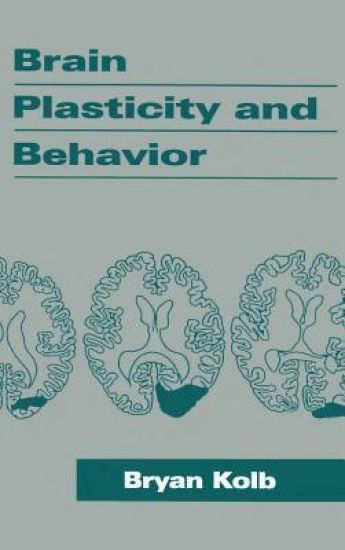
There are few books devoted to the topic of brain plasticity and behavior. Most previous works that cover topics related to brain plasticity do not include extensive discussions of behavior. The first to try to address the relationship between recovery from brain damage and changes in the brain that might support the recovery, this volume includes studies of humans as well as laboratory species, particularly rats. The subject matter identifies a consistent correlation between specific changes in the brain and behavioral recovery, as well as various factors such as sex and experience that influence this correlation in consistent ways. Evolving from a series of lectures given as the McEachran Lectures at the University of Alberta, this volume originally began as a summary of the lectures, but has expanded to include more background literature, allowing the reader to see the author's biases, assumptions, and hunches in a broader perspective. In writing this volume, the author had two goals in mind: * to initiate senior undergraduates or graduate psychology, biology, neuroscience or other interested students to the issues and questions regarding the nature of brain plasticity, and * to provide a monograph in the form of an extended summary of the work the author and his colleagues have done on brain plasticity and recovery of function.
On February 20, 1665, the Inquisition of Lisbon arrested Maria de Macedo, the wife of a midlevel official of the Portuguese Treasury, after she revealed during a deposition that, since she was ten years old, an enchanted Moor had frequently ""taken"" her to a magical castle in the legendary land of wonders known as the Hidden Isle. The island paradise was also the home of Sebastian, the former king of Portugal (1557--1578), who had died in battle in Morocco while on crusade in 1578. His body remained undiscovered, however, and many people in seventeenth-century Portugal -- including Maria -- eagerly awaited his return in glory. In Judging Maria de Macedo, Bryan Givens offers a microhistorical examination of Maria's trial before the Inquisition in Lisbon in 1665--1666, providing an intriguing glimpse into Portuguese culture at the time.Maria's trial record includes a unique piece of evidence: a pamphlet she dictated to her husband fifteen years before her arrest. In the pamphlet, reproduced in its entirety in the book, Maria recounts in considerable detail her ""journeys"" to the Hidden Isle and her discussions with the people there, King Sebastian in particular. Not all of the components of Maria's vision were messianic in nature or even Christian in origin; her beliefs therefore represent a unique synthesis of disparate cultural elements in play in seventeenth-century Portugal. Because the pamphlet antedates the Inquisition's involvement in Maria's case, it offers a rare example of a non-elite voice preserved without any mediation from an elite institution such as the Inquisition, as is the case with most early modern judicial records. In addition to analyzing Maria de Macedo's vision, Givens also uses the trial record to gain insight into the values, concerns, and motives of the Inquisitors in their judgment of her unusual case. He thus not only examines separately two important subcultures in early modern Portugal, but also analyzes how they interacted with each other.Introducing a unique feminine voice from the early modern period, Judging Maria de Macedo opens a singular window onto seventeenth-century Portuguese culture.
In this expansive study, Bryan Giemza recovers a neglected subculture and retrieves a missing chapter of Irish Catholic heritage by canvassing the literature of American Irish writers from the U.S. South. Giemza offers a defining new view of Irish American authors and their interrelationships within both transatlantic and ethnic regional contexts. From the first Irish American novel, published in Winchester, Virginia, in 1817, Giemza investigates a cast of nineteenth-century writers contending with the turbulence of their time, writers influenced by both American and Irish revolutions. Additionally, he considers dramatists and propagandists of the Civil War and Lost Cause memoirists who emerged in its wake. Some familiar names reemerge in an Irish context, including Joel Chandler Harris, Lafcadio Hearn, and Kate (O'Flaherty) Chopin. Giemza also examines the works of twentieth-century southern Irish writers, such as Margaret Mitchell, John Kennedy Toole, Flannery O'Connor, Pat Conroy, Anne Rice, Valerie Sayers, and Cormac McCarthy. For each author, Giemza traces the influences of Catholicism as it shaped both faith and ethnic identity, pointing to shared sensibilities and contradictions. Flannery O'Connor, for example, resisted identification as an Irish American, while Cormac McCarthy, described by some as ""anti-Catholic,"" continues a dialogue with the Church from which he distanced himself. Giemza draws on many never-before-seen documents, including authorized material from the correspondence of Cormac McCarthy, interviews from the Irish community of Flannery O'Connor's native Savannah, Georgia, and Giemza's own correspondence with writers such as Valerie Sayers and Anne Rice. This lively literary history prompts a new understanding of how the Irish in the region helped invent a regional mythos, an enduring literature, and a national image.
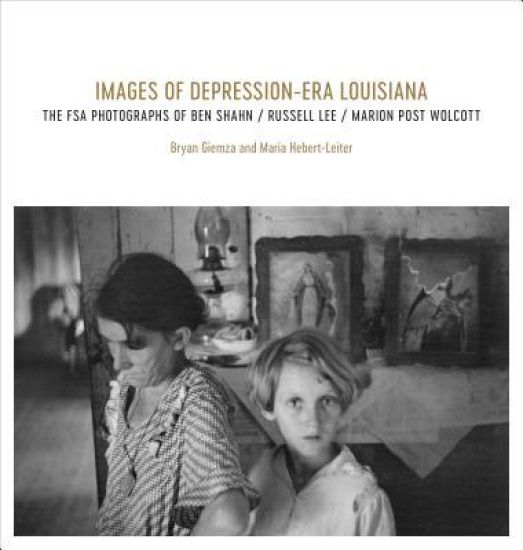
In the 1930s, the U.S. government famously sent photographers across the country to document on film the need for federal assistance in rural areas. Dorothea Lange's well-known image Migrant Mother came from this effort, along with thousands of other photographs. Ben Shahn, Russell Lee, and Marion Post Wolcott contributed to this compelling body of images. As primary photographers for the Farm Security Administration (FSA) in the state of Louisiana, the three took more than 2,600 photographs, recording the modest homes, family gatherings, and working lives of citizens across the state. In Images of Depression-Era Louisiana, Bryan Giemza and Maria Hebert-Leiter curate more than 150 of those photographs, offering a riveting collection that captures this pivotal time in Louisiana's history. The book's stunning photo gallery, with original captions, provides a moving visual tour of Louisiana during a period of economic struggle and transition. Organized by photographer, parish, and date, the revealing images reflect an era when extreme poverty exacerbated the divide between classes and races. Scenes of agricultural and rural communities- families in clapboard houses, sugarcane cutters in the field, and trappers navigating bayous- as well as cityscapes of New Orleans's bustling markets, busy docks, and peaceful Jackson Square demonstrate the scope of the photographers' work and the diversity of conditions and occupations they found. Giemza and Hebert-Leiter trace the genesis of the FSA Collection, examine its role in promoting the documentary style of picture-taking, and explore the motivations and methods of the collection's head, Roy E. Stryker. They sketch the biographies, techniques, and perspectives of Shahn, Lee, and Wolcott, explaining how the photographers operated in Louisiana from their first experiences to their last days in the state. Letters and other archival documents further illuminate the three artists' impressions of Louisiana, its people, and its traditions.
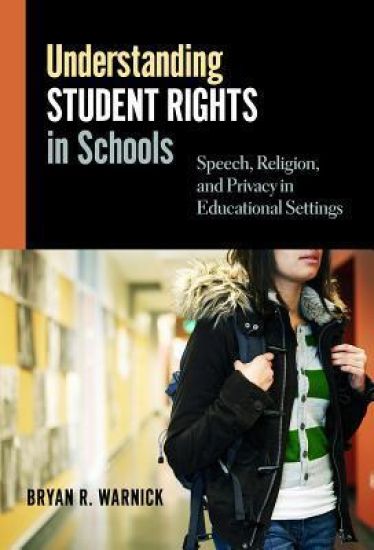
What rights should students expect to exercise in public schools? Should bible study meetings be allowed during free periods? Should students be allowed to wear t-shirts that exhort taking drugs or committing violent acts? Should students be required to participate in drug testing? In this concisely argued book, Bryan Warnick examines how student rights in three areas—free speech, privacy, and religious expression—have been addressed in policy, ethics, and the law.Starting with the Tinker decision, a landmark 1969 U.S. Supreme Court ruling which declared that students in public schools had constitutional rights that must be understood “in light of special characteristics of the school environment,” Warnick develops education criteria that schools can use when facing difficult questions of student rights. Both probing and practical, Warnick explains how student rights can be properly understood and protected.Important reading for anyone concerned with the ethical dimensions of schooling, this book offers:A comprehensive analysis of the relationship between ethics and law in school settings. A specific framework for thinking about individual rights for students in public schools which balances authentic respect for individual liberties with the real need for schools to maintain a proper learning environment. An interdisciplinary approach that looks at legal, philosophical, and psychological issues in education. Practical solutions to real and pressing ethical challenges faced by today’s educators, school leaders, and policymakers.
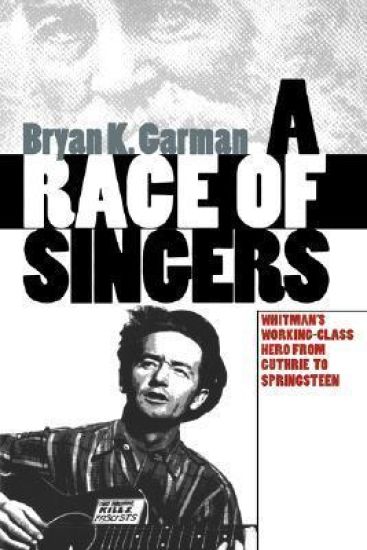
Walt Whitman dreamed of inspiring "a race of singers" who would celebrate the working class and realize the promise of American democracy. By examining how singers such as Woody Guthrie and Bruce Springstein embraced and reconfigured Whitman's vision, Bryan Garman shows that Whitman succeeded.
When Rocky Wirtz took over the Wirtz Corporation in 2007, including management of the Chicago Blackhawks, the fiercely beloved hockey team had fallen to a humiliating nadir. As chronic losers playing to a deserted stadium, they were worse than bad—they were irrelevant. ESPN named the franchise the worst in all of sports. Rocky's resurrection of the team's fortunes was—publicly, at least—a feel-good tale of shrewd acumen. Behind the scenes, however, it would trigger a father, son, and brother-against-brother drama of Shakespearean proportions. The Breakaway reveals that untold story.Arthur Wirtz founded the family's business empire during the Depression. From roots in real estate, "King Arthur" soon expanded into liquor and banking, running his operations with an iron hand and a devotion to profit that earned him the nickname Baron of the Bottom Line. His son Bill further expanded the conglomerate, taking the helm of the Blackhawks in 1966. "Dollar Bill" Wirtz demanded unflinching adherence to Arthur's traditions and was notorious for an equally fierce temperament.Yet when Rocky took the reins of the business after Bill's death, it was an organization out of step with the times and financially adrift. The Hawks weren't only failing on the ice—the parlous state of the team's finances imperiled every facet of the Wirtz empire. To save the team and the company, Rocky launched a radical turnaround campaign. Yet his modest proposal to televise the Hawks' home games provoked fierce opposition from Wirtz family insiders, who considered any deviation from Arthur and Bill's doctrines to be heresy.Rocky's break with the edicts of his grandfather and father led to a reversal for the ages—three Stanley Cup championships in six years, a feat Fortune magazine called "the greatest turnaround in sports business history." But this resurrection came at a price, a fracturing of Rocky's relationships with his brother and other siblings. In riveting prose that recounts a story spanning three generations, The Breakaway reveals an insider's view of a brilliant but difficult Chicago business and sports dynasty and the inspiring story of perseverance and courage in the face of intense family pressures.
The law should be accessible to every professional, which is the philosophy behind The Law of Libraries and Archives. In this invaluable book, legal concepts are explained in plain English so that librarians and archivists will be able to understand the principles that affect them on a daily basis. This book provides its readers with answers and raises issues for them to think about. In addition to providing a basic overview of the law, this work contains enough details to allow readers to make informed choices and to converse intelligently with legal counsel. Some of the issues included in the book include contracts, copyright and patent law, fair use, copyright exceptions for libraries, and the TEACH Act. The book contains chapters discussing trademark law, licensing of databases, information malpractice, and professionalism, as well as privacy issues, the PATRIOT Act, employment law, and the basics of starting a non-profit organization. Visit the author's website for a number of important documents and resources related to library law.
Sources for 17th, 18th, and early 19th-century Eucharistic practices in the Church of Scotland are scarce, in part because each minister was free to draw up the form and content of the services he conducted. In addition, many 19th and 20th century liturgical scholars chose to dismiss this form of public worship, instead focusing on the earlier tradition of the Book of Common Order. A Communion Sunday in Scotland ca. 1780: Liturgies and Sermons addresses the dearth of these liturgical studies by presenting a modern edition of a late 18th-century published account of Communion Sunday in the Church of Scotland. Robin A. Leaver edits and annotates several sermons, prayers, and congregational songs by the Reverend John Logan (1747?-1788), together with relevant background information and comparative documents. Citing Logan's sermons, liturgies, and psalms as a representative model, Leaver demonstrates that there was a developed liturgical structure and form in the Church of Scotland, in which preaching, psalmody, and prayer expressed Calvinist/Presbyterian theology within established patterns of worship. Leaver also provides an overview of Scottish Eucharistic practices from the 16th to the 19th centuries. Appendixes offering a list of Scottish Psalm Tunes and a translation of the Palatinate Liturgy (1563) are followed by a comprehensive bibliography, making this a valuable reference.
Chris Crutcher is a literary icon in the field of young adult literature. With his first book, Running Loose published in 1983, Crutcher established a reputation for giving young adults a voice in realistic fiction. Since then, Crutcher has written a number of books with spot-on depictions of young adults growing through hard times, including Ironman, Whale Talk, Staying Fat for Sarah Byrnes, and Stotan! In Chris Crutcher: A Stotan for Young Adults, Bryan Gillis and Pam B. Cole examine the life, career, and works of this young adult advocate. This volume opens with a never-before-published comprehensive portrait of the author’s life, gleaned from numerous conversations with Crutcher. The authors explore Crutcher’s childhood, his adolescent years, his life as an adult, and his career as a family counselor and examine how those experiences became fodder for his stories. The authors also discuss Crutcher's encounters with censorship and his philosophical stance. Gillis and Cole also analyze Crutcher’s novels, short stories, and novellas, examining his literary craft and such social themes as bigotry, identity, sexuality, relationships, and loss—themes almost always positioned within a sports story. The most comprehensive study of Crutcher’s life and work to date, this book benefits tremendously from the cooperation of Crutcher himself. Generally reserved about private matters, Crutcher talks candidly about his life and how his experiences helped shape his character and his stories. His cooperative spirit gives voice to a book that will appeal not only to teachers and librarians but to students who have been enthralled by the works of this generous writer.
#1 NEW YORK TIMES BESTSELLER - NOW A MAJOR MOTION PICTURE STARRING MICHAEL B. JORDAN AND JAMIE FOXX - A powerful true story about the potential for mercy to redeem us, and a clarion call to fix our broken system of justice--from one of the most brilliant and influential lawyers of our time. " Bryan Stevenson's] dedication to fighting for justice and equality has inspired me and many others and made a lasting impact on our country."--John Legend NAMED ONE OF THE MOST INFLUENTIAL BOOKS OF THE DECADE BY CNN - A KIRKUS REVIEWS BEST NONFICTION BOOK OF THE CENTURY A Best Book of the Year: The New York Times, The Washington Post, The Boston Globe, The Seattle Times, Esquire, TimeBryan Stevenson was a young lawyer when he founded the Equal Justice Initiative, a legal practice dedicated to defending those most desperate and in need: the poor, the wrongly condemned, and women and children trapped in the farthest reaches of our criminal justice system. One of his first cases was that of Walter McMillian, a young man who was sentenced to die for a notorious murder he insisted he didn't commit. The case drew Bryan into a tangle of conspiracy, political machination, and legal brinksmanship--and transformed his understanding of mercy and justice forever. Just Mercy is at once an unforgettable account of an idealistic, gifted young lawyer's coming of age, a moving window into the lives of those he has defended, and an inspiring argument for compassion in the pursuit of true justice. Winner of the Carnegie Medal for Excellence in Nonfiction - Winner of the NAACP Image Award for Nonfiction - Winner of a Books for a Better Life Award - Finalist for the Los Angeles Times Book Prize - Finalist for the Kirkus Reviews Prize - An American Library Association Notable Book "Every bit as moving as To Kill a Mockingbird, and in some ways more so . . . a searing indictment of American criminal justice and a stirring testament to the salvation that fighting for the vulnerable sometimes yields."--David Cole, The New York Review of Books "Searing, moving . . . Bryan Stevenson may, indeed, be America's Mandela."--Nicholas Kristof, The New York Times "Inspiring . . . a work of style, substance and clarity . . . Stevenson is not only a great lawyer, he's also a gifted writer and storyteller."--The Washington Post "As deeply moving, poignant and powerful a book as has been, and maybe ever can be, written about the death penalty."--The Financial Times "Brilliant."--The Philadelphia Inquirer
Before Bill O’Reilly and Glenn Beck, there was Jesse Helms. From in front of a camera at WRAL-TV, Helms forged a new brand of southern conservatism long before he was a senator from North Carolina. As executive vice president of the station, Helms delivered commentaries on the evening news and directed the news and entertainment programming. He pioneered the attack on the liberal media, and his editorials were some of the first shots fired in the culture wars, criticizing the influence of “immoral entertainment.” Through the emerging power of the household television Helms established a blueprint and laid the foundation for the modern conservative movement.Bryan Thrift mines over 2,700 WRAL-TV “Viewpoint” editorials broadcast between 1960 and 1972 to offer not only a portrait of a skilled rhetorician and wordsmith but also a lens on the way the various, and at times competing, elements of modern American conservatism cohered into an ideology couched in the language of anti-elitism and “traditional values.” Decades prior to the invention of the blog, Helms corresponded with his viewers to select, refine, and sharpen his political message until he had reworked southern traditionalism into a national conservative movement. The realignment of southern Democrats into the Republican Party was not easy or inevitable, and by examining Helms’s oft-forgotten journalism career, Thrift shows how delicately and deliberately this transition had to be cultivated.
The Little Book of Whiskey Cocktails sets out to share the stories of the wide whiskey-making world and recipes suitable for whiskey drinkers of all expertise levels. Bryan Paiement takes a practical approach to exploring the various ways in which the spirit can be mixed and enjoyed. Beginning with a brief history of whiskey, Paiement answers many questions that even aficionados can’t help but stumble over: What is the difference between "whiskey" and "whisky?" Does bourbon have to come from Kentucky? How many times does Irish whiskey need to be distilled? Twenty classic whiskey cocktail recipes and twenty original recipes follow in this pocket-sized gift book. Each carefully curated recipe is introduced with details on the cocktail’s origins and concluded with bartenders' tips for shaking (or stirring) the perfect concoction. Time-tested classics like the Old Fashioned and the Rusty Nail are featured, providing whiskey novices with the necessary foundations. For seasoned whiskey drinkers, Paiement includes recipes from award-winners like the Paper Plane to handcrafted originals like the Scotch Smash. Adorned with custom line-art illustrations, a key of whiskey ware and bar tools, and an extensive repertoire of bar jokes, Paiement brings whiskey’s terminology and mixology to any home bar.
Was 1992 a realigning election? Did the midterm elections of 1994 realign the realignment? Will 1996 carry the United States forward on yet another changed trajectory? In this volume of original essays, leading political scientists examine key components of the American agenda and assess the current administration's position in light of historical precedents and future trends. Each conclusion is unique, born of a combination of the empirical record and its interpretation, but essays by Bryan Jones and Larry Dodd help to put the wide-ranging views represented here in long-term perspective.