What exactly is a cloud-native platform? It's certainly a hot topic in IT, as enterprises today assess this option for developing and delivering software quickly and repeatedly. This O'Reilly report explains the capabilities of cloud-native platforms and examines the fundamental changes enterprises need to make in process, organization, and culture if they're to take real advantage of this approach. Author Duncan Winn focuses on the open source platform Cloud Foundry, one of the more prominent cloud-native providers. You'll learn how cloud-native applications are designed to be "infrastructure unaware" so they can thrive and move at will in the highly distributed and constantly evolving cloud environment.With this report, you'll explore: Technical driving forces that are rapidly changing the way organizations develop and deliver software today How key concepts underpinning the Cloud Foundry platform leverage each of the technical forces discussed How cloud-native platforms remove the requirement to perform undifferentiated heavy lifting, such as provisioning VMs, middleware, and databases Why cloud-native platforms enable fast feedback loops as you move from agile development to agile deployment Recommended changes and practical considerations for organizations that want to build cloud-native applications.
Cloud native infrastructure is more than servers, network, and storage in the cloud—it is as much about operational hygiene as it is about elasticity and scalability. In this book, you’ll learn practices, patterns, and requirements for creating infrastructure that meets your needs, capable of managing the full life cycle of cloud native applications. Justin Garrison and Kris Nova reveal hard-earned lessons on architecting infrastructure from companies such as Google, Amazon, and Netflix. They draw inspiration from projects adopted by the Cloud Native Computing Foundation (CNCF), and provide examples of patterns seen in existing tools such as Kubernetes. With this book, you will: Understand why cloud native infrastructure is necessary to effectively run cloud native applications Use guidelines to decide when—and if—your business should adopt cloud native practices Learn patterns for deploying and managing infrastructure and applications Design tests to prove that your infrastructure works as intended, even in a variety of edge cases Learn how to secure infrastructure with policy as code
If you want to study, build, or simply validate your thinking about modern cloud native data center networks, this is your book. Whether you're pursuing a multitenant private cloud, a network for running machine learning, or an enterprise data center, author Dinesh Dutt takes you through the steps necessary to design a data center that's affordable, high capacity, easy to manage, agile, and reliable. Ideal for network architects, data-center operators, and network and containerized application developers, this book mixes theory with practice to guide you through the architecture and protocols you need to create and operate a robust, scalable network infrastructure. The book offers a vendor-neutral way to look at network design. For those interested in open networking, this book is chock-full of examples using open source software, from FRR to Ansible. In the context of a cloud native data center, you'll examine: Clos topology Network disaggregation Network operating system choices Routing protocol choices Container networking Network virtualization and EVPN Network automation
In the past few years, going cloud native has been a big advantage for many companies. But it’s a tough technique to get right, especially for enterprises with critical legacy systems. This practical hands-on guide examines effective architecture, design, and cultural patterns to help you transform your organization into a cloud native enterprise—whether you’re moving from older architectures or creating new systems from scratch. By following Wealth Grid, a fictional company, you’ll understand the challenges, dilemmas, and considerations that accompany a move to the cloud. Technical managers and architects will learn best practices for taking on a successful company-wide transformation. Cloud migration consultants Pini Reznik, Jamie Dobson, and Michelle Gienow draw patterns from the growing community of expert practitioners and enterprises that have successfully built cloud native systems. You’ll learn what works and what doesn’t when adopting cloud native—including how this transition affects not just your technology but also your organizational structure and processes. You’ll learn: What cloud native means and why enterprises are so interested in it Common barriers and pitfalls that have affected other companies (and how to avoid them) Context-specific patterns for a successful cloud native transformation How to implement a safe, evolutionary cloud native approach How companies addressed root causes and misunderstandings that hindered their progress Case studies from real-world companies that have succeeded with cloud native transformations
Developers often struggle when first encountering the cloud. Learning about distributed systems, becoming familiar with technologies such as containers and functions, and knowing how to put everything together can be daunting. With this practical guide, you’ll get up to speed on patterns for building cloud native applications and best practices for common tasks such as messaging, eventing, and DevOps. Authors Boris Scholl, Trent Swanson, and Peter Jausovec describe the architectural building blocks for a modern cloud native application. You’ll learn how to use microservices, containers, serverless computing, storage types, portability, and functions. You’ll also explore the fundamentals of cloud native applications, including how to design, develop, and operate them. Explore the technologies you need to design a cloud native application Distinguish between containers and functions, and learn when to use them Architect applications for data-related requirements Learn DevOps fundamentals and practices for developing, testing, and operating your applications Use tips, techniques, and best practices for building and managing cloud native applications Understand the costs and trade-offs necessary to make an application portable
The cloud is becoming the de facto home for companies ranging from enterprises to startups. Moving to the cloud means moving your applications from monolith to microservices. But once you do, running and maintaining these services brings its own level of complexity. The answer? Modularity, deployability, observability, and self-healing capacity through cloud native development. With this practical book, Nishant Singh and Michael Kehoe show you how to build a true cloud native infrastructure using Microsoft Azure or another cloud computing solution by following guidelines from the Cloud Native Computing Foundation (CNCF). DevOps and site reliability engineers will learn how adapting applications to cloud native early in the design phase helps you fully utilize the elasticity and distributed nature of the cloud. This book helps you explore: Why go cloud native? How to use infrastructure as code What it takes to containerize an application Why and how Kubernetes is the "grand orchestrator" How to create a Kubernetes cluster on Azure How observability complements monitoring How to use service discovery and a service mesh to find new territories How networking and policy management serve as gatekeepers How distributed databases and storage work
FinOps brings financial accountability to the variable spend model of cloud. As enterprises move aggressively to cloud, ownership of technology and financial decision-making has shifted to the edges of the organization away from procurement to engineering, architecture, and product teams. FinOps, having grown from a fringe practice to the de facto discipline managing cloud spend, is now practiced by the majority of global enterprises. This second edition provides a road map for adopting and maturing the discipline drawn from the experience of hundreds of real-world practitioners. Seven new chapters include forecasting, adopting Finops, partnering with engineering, sustainability, the UI of FinOps, and connectivity to other frameworks. There are updates throughout the book, including 150 new pages of best practices and dozens of new stories. Drawing on real-world successes and failures of large-scale cloud spenders, the book outlines the process of building a culture of cloud FinOps in your organization. Engineering and finance teams, executives, and FinOps practitioners alike will learn how to build an efficient and effective FinOps machine for data-driven cloud value decision-making. With this book, you'll learn: The DNA of a highly functional cloud FinOps culture A road map to build executive support for FinOps adoption How to understand and forecast your cloud spending How to empower engineering and finance to work together Cost allocation strategies to create accountability for cloud and container spend Strategies for rate discounts from cloud commitments When and how to implement automation of repetitive cost tasks How to empower engineering team action on cost efficiency Using unit economics to drive data-driven decision-making
Bullion Grey brings a Cloud of Imagination, swirling in shapes, directions and interpretations. Here allowing for Creative vitality to emerge. These notes and thought-forms enclosed here are for those who want to become inspired, visionary. Inside this unique book are pages of moments, contemplations, ideas, views, thoughts, considerations, and vast deep feelings, spanning years. The notes, quotes and hopes were selected by subjects, chance or necessity of exploratory expression. It is the cultivation of perception of the inner world, the ability to see with & without eyes. Some contained in this work is poetic to strangely unknowable. The great value of this book-art here is perhaps that it is unedited. In the author's own hand are note pages, as they were when first penned. Imperfect, exposed and revealing. Revealing a "Creative" in full flight. The reader/Creative is the editor, exploring their own way. Each one who grazes these notes determine what is "useful" or not for themselves. Entering this Creative Energy Vortex is to illuminate further along the path of imagination, in different ways for each who visit these notes. It is fascinatingly true that browsing another's creative musings can inspire one to act on their own artistic ideas; becoming motivated toward one's creative expressions. To Create. Just one sketch, note, diagram or pondering can be invaluable in vaporizing creative blocks. Imbuing the reader with far reaching insights, even flashes of virtuosity. Bullion Grey "Now more than ever our world needs innovators, artists, and imaginative contributors. We need collaborators more than competitors. We need cooperation far beyond competition. Never before in Human history have we encountered such a colossal demand for cooperative Imagination." Cloud of Imagination is a book for those who yearn for Creativity. Artist, entrepreneur, or spiritual seeker will discover a treasure trove here of creative motivation, encouragement and luminosity. The Cloud of Imagination has also a publishing first: a Do-it-Yourself Table of Contents. Invented by the author, this is a new & powerful way to always get more from this creative resource. Divided in years with places to note an idea or page that moves the reader. As a result, this book grows in value each time it is used, as it becomes more relevant, personally. (complete instructions in the first few pages) this book really "walks its talk". To obtain this creative work for yourself is important, to get it for a struggling artist is even more important. Either way you bestow the gift of Imagination; one of the greatest gifts one can give is Creativity. Our imagination is our brightest possibility. Your opportunity exists right now in your imagination, it is literally ONE THOUGHT AWAY.
J'ai d cid de rassembler ici mes improvisations, celles que je fais souvent sur Facebook, avec cette id e s rement idiote que les ventes r alis es me permettront de produire, mes pi ces de th tre. Je sais que nombre d'entre vous, seront pr ts m'aider.
Establish quick and secure communication between your cloud and on-premise systems with SAP Connectivity service's cloud connector! Set up and configure the cloud connector, from performing sizing to implementing connectivity APIs. Link on-premise SAP products to SAP BTP and its services, including SAP Business Application Studio, SAP Integration Suite's Cloud Integration, and more. With information on creating secure connections, administering the cloud connector, and monitoring, this guide has everything you need!Highlights include:1) SAP Business Technology Platform (SAP BTP)2) SAP Connectivity service3) SAP Web IDE4) SAP Business Application Studio5) SAP Integration Suite's Cloud Integration6) SAP API Management7) SAP Launchpad service8) Installation and configuration9) Security10) Administration11) Monitoring12) Principle propagation
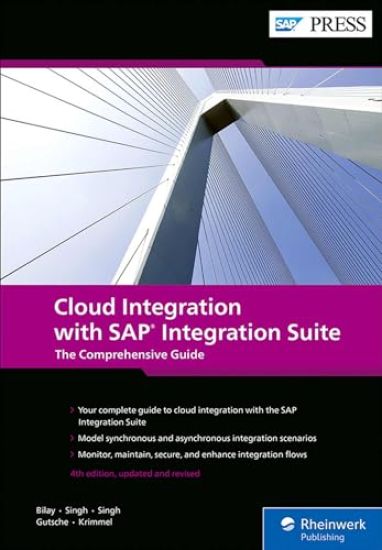
Bring your cloud and on-premise applications together with Cloud Integration (formerly SAP Cloud Platform Integration) in SAP Integration Suite! Integrate processes and data in your system, step by step, by developing and configuring integration flows in the SAP BTP, Cloud Foundry environment. Enhance your integrations with APIs, open connectors, and custom adapters. Explore prepackaged content in the content catalog, debug and secure integration projects, connect to third-party systems, and more!Highlights include:1) Integration flows2) Integration content catalog3) SAP API Business Hub4) Modeling synchronous and asynchronous scenarios5) Debugging6) Security7) Operations8) Root cause analysis9) Web UI10) Message mappings11) SAP API Management
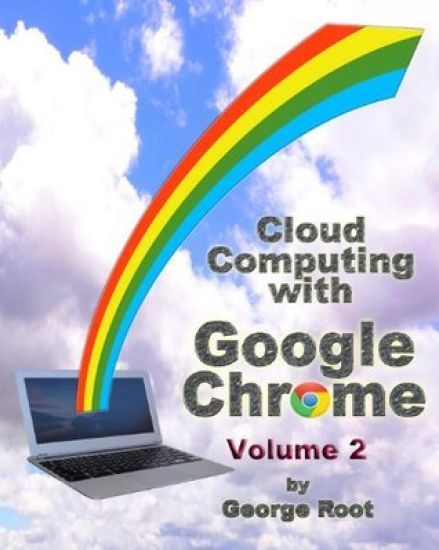
This is the Second Volume in the "Cloud Computing with Google Chrome" series. Volume 1 of this series explained how to setup and use a new Google Chromebook Computer and many of the Google Services that are available free from Google. If you are new to the Chrome OS and need helpful information on how to setup a new Google Account and other Google Services such as Gmail, Google Docs, and Google Drive, then Volume 1 of this series is the book you should start with. This book, Volume 2, contains all new material not included in the first volume. It includes new material that expands upon some of the topics introduced in the first volume, but the major portion of Volume 2 introduces entirely new topics such as Google+ and Photo Editing using the free photo editing capabilities built into the Chrome environment. Here is a list of the top-level topics covered in Volume 2: Using External Devices with Your Chromebook Computer Using an External Hard Drive Connecting to Ethernet Using a Mouse and Keyboard with Your Chromebook Using an External Monitor with Your Chromebook Using Goggle Authenticator Hosting a Website Using Google Drive Sharing Files Using Google Drive Setting Up a Google Cloud Print Enabled Printer Setting Up and Using Google+ Editing and Sharing Photos from Your Mobile Device Editing Photos Using the Powerful Editing Features Included in Google+ Whether you have just bought your first Chromebook or whether you have been using the Chrome web browser for some time, you will learn something, perhaps a lot, from this book.
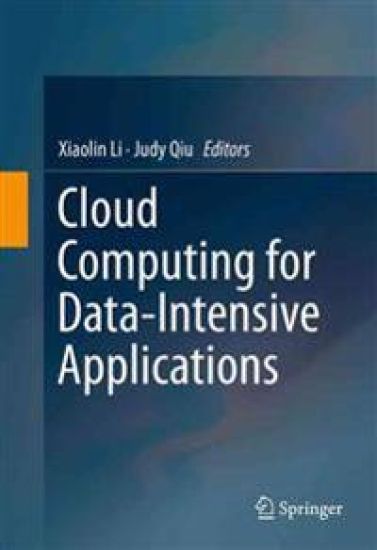
This book presents a range of cloud computing platforms for data-intensive scientific applications. It covers systems that deliver infrastructure as a service, including: HPC as a service; virtual networks as a service; scalable and reliable storage; algorithms that manage vast cloud resources and applications runtime; and programming models that enable pragmatic programming and implementation toolkits for eScience applications. Many scientific applications in clouds are also introduced, such as bioinformatics, biology, weather forecasting and social networks. Most chapters include case studies. Cloud Computing for Data-Intensive Applications targets advanced-level students and researchers studying computer science and electrical engineering. Professionals working in cloud computing, networks, databases and more will also find this book useful as a reference.
This book presents a range of cloud computing platforms for data-intensive scientific applications. It covers systems that deliver infrastructure as a service, including: HPC as a service; virtual networks as a service; scalable and reliable storage; algorithms that manage vast cloud resources and applications runtime; and programming models that enable pragmatic programming and implementation toolkits for eScience applications. Many scientific applications in clouds are also introduced, such as bioinformatics, biology, weather forecasting and social networks. Most chapters include case studies. Cloud Computing for Data-Intensive Applications targets advanced-level students and researchers studying computer science and electrical engineering. Professionals working in cloud computing, networks, databases and more will also find this book useful as a reference.