Carlats to America: The Jean Claude Carlat Story (1805 -1845) recounts the journey of French farmer Jean Claude Carlat who gave up the priesthood for a wife and the promise of abundant life in the Republic of Texas. The biography examines the man, his work, his motivations, and the legacy left his many descendants including the author. Carlats to America is also the story of French migration and their contributions to the Republic of Texas, and to the United States. It is the story of sacrifice, courage, and triumph over an unexpected life against the backdrop of the lush hills of eastern France and the wild Texas frontier. The reader will come away inspired that anything is possible, in America.
The 18th century was a wealth of knowledge, exploration and rapidly growing technology and expanding record-keeping made possible by advances in the printing press. In its determination to preserve the century of revolution, Gale initiated a revolution of its own: digitization of epic proportions to preserve these invaluable works in the largest archive of its kind. Now for the first time these high-quality digital copies of original 18th century manuscripts are available in print, making them highly accessible to libraries, undergraduate students, and independent scholars.Delve into what it was like to live during the eighteenth century by reading the first-hand accounts of everyday people, including city dwellers and farmers, businessmen and bankers, artisans and merchants, artists and their patrons, politicians and their constituents. Original texts make the American, French, and Industrial revolutions vividly contemporary.++++The below data was compiled from various identification fields in the bibliographic record of this title. This data is provided as an additional tool in helping to insure edition identification: ++++British LibraryT134815In justification of d' on de Beaumont's conduct towards Treyssac de Vergy.London: printed and sold by J. Dixwell, 1763. 36p.; 4
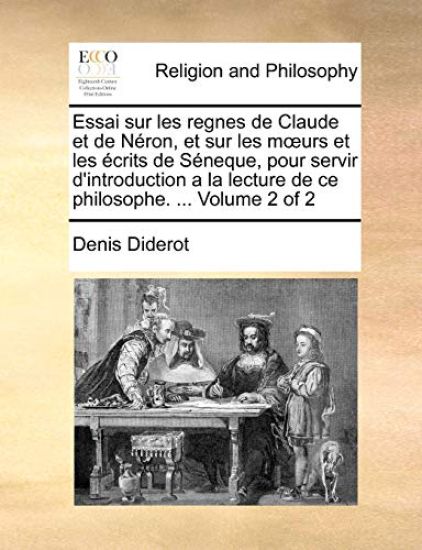
The 18th century was a wealth of knowledge, exploration and rapidly growing technology and expanding record-keeping made possible by advances in the printing press. In its determination to preserve the century of revolution, Gale initiated a revolution of its own: digitization of epic proportions to preserve these invaluable works in the largest archive of its kind. Now for the first time these high-quality digital copies of original 18th century manuscripts are available in print, making them highly accessible to libraries, undergraduate students, and independent scholars.The Age of Enlightenment profoundly enriched religious and philosophical understanding and continues to influence present-day thinking. Works collected here include masterpieces by David Hume, Immanuel Kant, and Jean-Jacques Rousseau, as well as religious sermons and moral debates on the issues of the day, such as the slave trade. The Age of Reason saw conflict between Protestantism and Catholicism transformed into one between faith and logic -- a debate that continues in the twenty-first century.++++The below data was compiled from various identification fields in the bibliographic record of this title. This data is provided as an additional tool in helping to insure edition identification: ++++Bodleian Library (Oxford)N009317Anonymous. By Denis Diderot. The imprint is false; printed in Bouillon.Londres i.e. Bouillon], 1782. 2v.; 8
The 18th century was a wealth of knowledge, exploration and rapidly growing technology and expanding record-keeping made possible by advances in the printing press. In its determination to preserve the century of revolution, Gale initiated a revolution of its own: digitization of epic proportions to preserve these invaluable works in the largest archive of its kind. Now for the first time these high-quality digital copies of original 18th century manuscripts are available in print, making them highly accessible to libraries, undergraduate students, and independent scholars.The Age of Enlightenment profoundly enriched religious and philosophical understanding and continues to influence present-day thinking. Works collected here include masterpieces by David Hume, Immanuel Kant, and Jean-Jacques Rousseau, as well as religious sermons and moral debates on the issues of the day, such as the slave trade. The Age of Reason saw conflict between Protestantism and Catholicism transformed into one between faith and logic -- a debate that continues in the twenty-first century.++++The below data was compiled from various identification fields in the bibliographic record of this title. This data is provided as an additional tool in helping to insure edition identification: ++++Bodleian Library (Oxford)N009317Anonymous. By Denis Diderot. The imprint is false; printed in Bouillon.Londres i.e. Bouillon], 1782. 2v.; 8
Winner of the Neumann Prize for the History of Mathematics "We owe Claude Shannon a lot, and Soni & Goodman's book takes a big first step in paying that debt." --San Francisco Review of Books "Soni and Goodman are at their best when they invoke the wonder an idea can instill. They summon the right level of awe while stopping short of hyperbole." --Financial Times "Jimmy Soni and Rob Goodman make a convincing case for their subtitle while reminding us that Shannon never made this claim himself." --The Wall Street Journal "A charming account of one of the twentieth century's most distinguished scientists...Readers will enjoy this portrait of a modern-day Da Vinci." --Fortune In their second collaboration, biographers Jimmy Soni and Rob Goodman present the story of Claude Shannon--one of the foremost intellects of the twentieth century and the architect of the Information Age, whose insights stand behind every computer built, email sent, video streamed, and webpage loaded. Claude Shannon was a groundbreaking polymath, a brilliant tinkerer, and a digital pioneer. He constructed the first wearable computer, outfoxed Vegas casinos, and built juggling robots. He also wrote the seminal text of the digital revolution, which has been called "the Magna Carta of the Information Age." In this elegantly written, exhaustively researched biography, Soni and Goodman reveal Claude Shannon's full story for the first time. With unique access to Shannon's family and friends, A Mind at Play brings this singular innovator and always playful genius to life.
avais peu pr s dix ans quand je fis connaissance avec Bernard... Mais avant tout, madame, il faut que je vous parle un peu de ma famille. Mon p re tait charpentier, et ma m re blanchisseuse. Ils n'avaient pour tout bien que cinq filles dont je suis la plus jeune, et une maison que mon p re b tit lui-m me, sans l'aide de personne, et sans qu'il lui en co t t un centime. Elle tait perch e sur la pointe d'un rocher qu'on s'attendait tous les jours voir rouler au fond de la vall e, et qui, pour cette raison, n'avait pas trouv de propri taire. Quand j' tais enfant, j'allais m'asseoir l'extr mit du rocher, sur une petite marche en pierre, d'o l'on pouvait voir, trois cents pieds au-dessous du sol, la plus grande partie de la ville.
Auteur: Alfred Assollant, parfois crit Assolant, n Aubusson (Creuse) le 20 mars 1827 et mort Paris le 3 mars 1886, est un romancier fran ais, auteur de romans pour la jeunesse. Extrait de: Rose - d'Amour. J'avais peu pr s dix ans quand je fis connaissance avec Bernard... Mais avant tout, madame, il faut que je vous parle un peu de ma famille. Mon p re tait charpentier, et ma m re blanchisseuse. Ils n'avaient pour tout bien que cinq filles dont je suis la plus jeune, et une maison que mon p re b tit lui-m me, sans l'aide de personne, et sans qu'il lui en co t t un centime. Elle tait perch e sur la pointe d'un rocher qu'on s'attendait tous les jours voir rouler au fond de la vall e, et qui, pour cette raison, n'avait pas trouv de propri taire. Quand j' tais enfant, j'allais m'asseoir l'extr mit du rocher, sur une petite marche en pierre, d'o l'on pouvait voir, trois cents pieds au-dessous du sol, la plus grande partie de la ville.
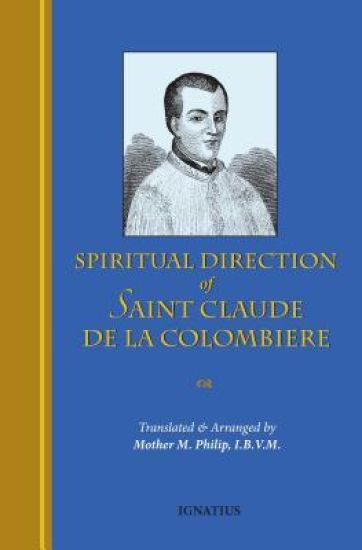
St. Claude, canonized by Pope John Paul II, ranks among the masters of the spiritual life as a director of souls. He gave direction to countless souls, including to St. Margaret Mary Alacoque, the great visionary of the Sacred Heart revelations. Jesus told St. Margaret Mary, "Father Claude is my perfect friend and servant. His gift is to lead souls to God."St. Claude preached missions and retreats on the Sacred Heart. He was also a clever psychologist who easily read the hearts of other. His sure judgment, aided by grace, enabled him to understand the difficulties of each soul and give the advice most needed for each person. Readers of this spiritual gem will find his insights full of wisdom and inspiration.His writings cover such important areas of the spiritual life as: Confession, Mass and Holy Communion, Confidence in God, Perfection & Holiness, Peace of Soul, Charity, Education of Children, Spiritual Joy, Prayer, Zeal, and much more.


![A Letter Sent to His Excellency Claude, Louis, Francois, Regnier Count de Guerchy. ... By the Noble Charles, Génevieve [sic], Louis, Augustus, Cæsar, Andrew, Timotheus, D'Eon de Beaumont,](/covers/9781379607779.jpg)