Kirjojen hintavertailu. Mukana 12 016 292 kirjaa ja 12 kauppaa.

Kirjahaku

Etsi kirjoja tekijän nimen, kirjan nimen tai ISBN:n perusteella.

1000 tulosta hakusanalla Croft Stuart

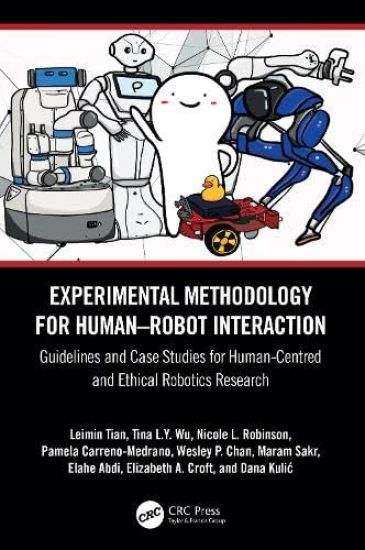
Experimental Methodology for Human–Robot Interaction

Experimental Methodology for Human–Robot Interaction

Leimin Tian; Tina L.Y. Wu; Nicole L. Robinson; Pamela Carreno-Medrano; Wesley P. Chan; Maram Sakr; Elahe Abdi; Elizabeth A. Croft; Dana Kulic

TAYLOR FRANCIS LTD
2025
sidottu
Leading figures in Australian robotics research provide an overview and guidance for human–robot interaction (HRI) experimental design and evaluation methodologies that consider the ethical implications of the research and its applications from a human-centred and contextual perspective. The authors explain introductory and advanced topics in HRI with a focus on human-centred evaluation and ethical practices. They also provide an online interactive checklist tool for novice HRI researchers and students to deploy when designing their own studies.The book is structured into three parts. In Part I, the authors first review fundamental methodologies and provide an interactive checklist tool of the HRI experimental study life cycle to guide beginners to the field. Part II introduces an expanded set of approaches to support researchers and practitioners to create high-quality study designs that draw on practices from human-computer interaction, human-centred artificial intelligence, psychology and social science, and advance ethical HRI research. Finally, in Part III, the authors discuss a selection of HRI studies as examples of how the introduced methodologies are adopted, which will support the readers to further understand the fundamental and advanced methodologies described in Parts I and II. The diverse collection of case studies enables readers to grasp the state of the art and apply what they have learned in their own practices.This book is a vital resource for both students new to the field and experienced researchers and practitioners. The book’s practical focus and clear elucidation of relevant case studies, from its introduction to the HRI experimental study life cycle through to advanced methods emerging in the field, ensures that this will greatly benefit progress in the field with human-centred and ethical experimental methodology.
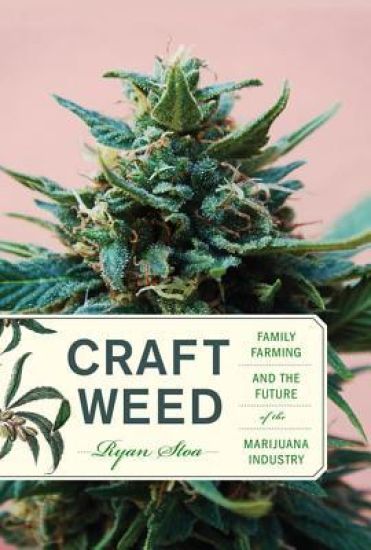
Craft Weed

Craft Weed

Ryan Stoa

MIT Press
2018
sidottu
How the future of post-legalization marijuana farming can be sustainable, local, and artisanal.What will the marijuana industry look like as legalization spreads? Will corporations sweep in and create Big Marijuana, flooding the market with mass-produced weed? Or will marijuana agriculture stay true to its roots in family farming, and reflect a sustainable, local, and artisanal ethic? In Craft Weed, Ryan Stoa argues that the future of the marijuana industry should be powered by small farms-that its model should be more craft beer than Anheuser-Busch. To make his case for craft weed, Stoa interviews veteran and novice marijuana growers, politicians, activists, and investors. He provides a history of marijuana farming and its post-hippie resurgence in the United States. He reports on the amazing adaptability of the cannabis plant and its genetic gifts, the legalization movement, regulatory efforts, the tradeoffs of indoor versus outdoor farms, and the environmental impacts of marijuana agriculture. To protect and promote small farmers and their communities, Stoa proposes a Marijuana Appellation system, modeled after the wine industry, which would provide a certified designation of origin to local crops. A sustainable, local, and artisanal farming model is not an inevitable future for the marijuana industry, but Craft Weed makes clear that marijuana legalization has the potential to revitalize rural communities and the American family farm. As the era of marijuana prohibition comes to an end, now is the time to think about what kind of marijuana industry and marijuana agriculture we want. Craft Weed will help us plan for a future that is almost here.
Craft Weed, with a new preface by the author
How the future of post-legalization marijuana farming can be sustainable, local, and artisanal.What will the marijuana industry look like as legalization spreads? Will corporations sweep in and create Big Marijuana, flooding the market with mass-produced weed? Or will marijuana agriculture stay true to its roots in family farming, and reflect a sustainable, local, and artisanal ethic? In Craft Weed, Ryan Stoa argues that the future of the marijuana industry should be powered by small farms—that its model should be more craft beer than Anheuser-Busch.To make his case for craft weed, Stoa interviews veteran and novice marijuana growers, politicians, activists, and investors. He provides a history of marijuana farming and its post-hippie resurgence in the United States. He reports on the amazing adaptability of the cannabis plant and its genetic gifts, the legalization movement, regulatory efforts, the tradeoffs of indoor versus outdoor farms, and the environmental impacts of marijuana agriculture. To protect and promote small farmers and their communities, Stoa proposes a Marijuana Appellation system, modeled after the wine industry, which would provide a certified designation of origin to local crops. A sustainable, local, and artisanal farming model is not an inevitable future for the marijuana industry, but Craft Weed makes clear that marijuana legalization has the potential to revitalize rural communities and the American family farm.As the era of marijuana prohibition comes to an end, now is the time to think about what kind of marijuana industry and marijuana agriculture we want. Craft Weed will help us plan for a future that is almost here.
Craft and the Kingly Ideal

Craft and the Kingly Ideal

Mary W. Helms

University of Texas Press
1993
pokkari
In ancient Mediterranean cultures, diamonds were thought to endow their owners with invincibility. In contemporary United States culture, a foreign-made luxury car is believed to give its owner status and prestige. Where do these beliefs come from?In this study of craft production and long-distance trade in traditional, nonindustrial societies, Mary W. Helms explores the power attributed to objects that either are produced by skilled artisans and/or come from "afar." She argues that fine artisanship and long-distance trade, both of which are more available to powerful elites than to ordinary people, are means of creating or acquiring tangible objects that embody intangible powers and energies from the cosmological realms of gods, ancestors, or heroes. Through the objects, these qualities become available to human society and confer honor and power on their possessors.Helms’ novel approach equates trade with artistry and emphasizes acquisition rather than distribution. She rejects the classic Western separation between economics and aesthetics and offers a new paradigm for understanding traditional societies that will be of interest to all anthropologists and archaeologists.
Craft Production and Social Change in Northern China

Craft Production and Social Change in Northern China

Anne P. Underhill

Kluwer Academic/Plenum Publishers
2002
sidottu
This book offers an anthropological analysis of how craft production changed in relation to the development of complex societies in northern China. It focuses on the production and use of food containers-pottery and bronze vessels-during the late prehistoric and early historic periods. A major theme is how production and use of prestige vessels changed in relation to increase in degree of social inequality. The research and writing of this book took place intermittently over a period of several years. When I first outlined the book in 1994, I planned to offer a more limited and descriptive account of social change during the late prehistoric period. In considering the human desire to display status with prestige goods, my initial approach emphasized how the case of northern China was similar to other areas of the world. I began to realize that in order to adequately explain how and why craft production changed in ancient China, it was crucial to consider the belief systems that motivated produc­ tion and use of food containers. Similarly, a striking characteristic of ancient China that I needed to include in the analysis was the preponderance of food containers, rather than other goods, that were buried with the deceased. I decided to investigate the social and ritual uses of food, bever­ ages, and containers during more than one period of Chinese history. Some strong patterns could have emerged during the late prehistoric period.
Craft in Art Therapy
Craft in Art Therapy is the first book dedicated to illustrating the incorporation of craft materials and methods into art therapy theory and practice. Contributing authors provide examples of how they have used a range of crafts including pottery, glass work, textiles (sewing, knitting, crochet, embroidery, and quilting), paper (artist books, altered books, book binding, origami, and zines), leatherwork, and Indian crafts like mendhi and kolam/rangoli in their own art and self-care, and in individual, group, and community art therapy practice. The book explores the therapeutic benefits of a range of craft materials and media, as well as craft’s potential to build community, to support individuals in caring for themselves and each other, and to play a valuable role in art therapy practice. Craft in Art Therapy demonstrates that when practiced in a culturally sensitive and socially conscious manner, craft practices are more than therapeutic—they also hold transformational potential.
Craft in Art Therapy
Craft in Art Therapy is the first book dedicated to illustrating the incorporation of craft materials and methods into art therapy theory and practice. Contributing authors provide examples of how they have used a range of crafts including pottery, glass work, textiles (sewing, knitting, crochet, embroidery, and quilting), paper (artist books, altered books, book binding, origami, and zines), leatherwork, and Indian crafts like mendhi and kolam/rangoli in their own art and self-care, and in individual, group, and community art therapy practice. The book explores the therapeutic benefits of a range of craft materials and media, as well as craft’s potential to build community, to support individuals in caring for themselves and each other, and to play a valuable role in art therapy practice. Craft in Art Therapy demonstrates that when practiced in a culturally sensitive and socially conscious manner, craft practices are more than therapeutic—they also hold transformational potential.
Craft Beer

Craft Beer

ELSEVIER SCIENCE PUBLISHING CO INC
2025
nidottu
Recently, both researchers and consumers have shown strong and growing interest in craft beer, which is characterized by its small batches, local breweries, and unique varieties. Craft Beer: New Frontiers in Brewing Science provides a comprehensive picture of the craft beer market, history and legal definition, brewing processes, and the qualities and styles of the end product. It emphasizes traditional and innovative microbial resources involved in the fermentation process, as well as safety, nutrition, and emerging problems, such as the sustainability of the production process. Craft Beer: New Frontiers in Brewing Science is the first and only scientific text to comprehensively summarize this exciting field. Researchers and students in interested brewing science, as well as industry specialists from beer companies will all benefit from this unique resource.
Craft of the Dyer

Craft of the Dyer

Karen Leigh Casselman

Dover Publications Inc.
2003
nidottu
Craftspeople interested in traditional methods will welcome this complete guide to making and using dyes from plants. Although its emphasis is on plants of Northeastern North America, many of the plants listed are found throughout the world.Helpful introductory chapters on equipment, mordants, dyeing procedures and other essentials, are followed by individual plants: its suitability for dyeing, useful parts, how to process them, colors, dye fastness, plant identification, where to find it, and more. Also include four valuable indexes -- plants by common name, botanical name, by colors produced, and a general index. A list of suppliers, metric conversion tables and other information rounds out this thorough guide to safe, ecologically sound dyeing methods.
Craft Planner

Craft Planner

Dover Publications Inc

DOVER PUBLICATIONS INC.
2024
nidottu
This planner is designed to help people with keeping track of a variety of craft projects, as well as tracking their progress through any given time period. It will contain pages that track specific project details such as "craft type," "materials used," "tools," and "difficulty level." there will be a progress tracker at the beginning to keep track of the number of projects, as well as pages for measurements, common tools and important abbreviations. This will be an essential tool for any crafter, beginner to experienced, to make the most of their skills.
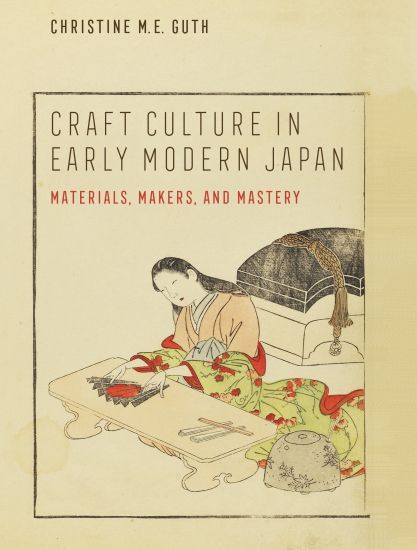
Craft Culture in Early Modern Japan

Craft Culture in Early Modern Japan

Christine M. E. Guth

University of California Press
2021
sidottu
Articles crafted from lacquer, silk, cotton, paper, ceramics, and iron were central to daily life in early modern Japan. They were powerful carriers of knowledge, sociality, and identity, and their facture was a matter of serious concern among makers and consumers alike. In this innovative study, Christine M. E. Guth offers a holistic framework for appreciating the crafts produced in the city and countryside, by celebrity and unknown makers, between the late sixteenth and mid-nineteenth centuries. Her study throws into relief the confluence of often overlooked forces that contributed to Japan’s diverse, dynamic, and aesthetically sophisticated artifactual culture. By bringing into dialogue key issues such as natural resources and their management, media representations, gender and workshop organization, embodied knowledge, and innovation, she invites readers to think about Japanese crafts as emerging from cooperative yet competitive expressive environments involving both human and nonhuman forces. A focus on the material, sociological, physiological, and technical aspects of making practices adds to our understanding of early modern crafts by revealing underlying patterns of thought and action within the wider culture of the times.
Craft Beer Mad Libs

Craft Beer Mad Libs

Douglas Yacka

Penguin USA
2019
pokkari
Grab a pint of your favourite brew and settle down with Craft Beer Mad Libs. Featuring 21 fill-in-the-blank stories, this Mad Libs pairs nicely with a local IPA, a stout porter, or a macro-brewed pitcher of NOUN.
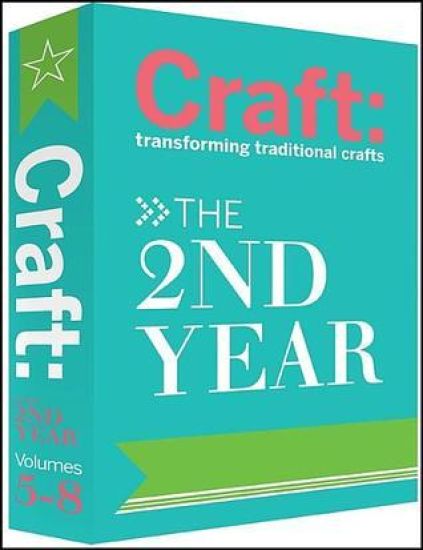
Craft : Transforming Traditional Crafts

Craft : Transforming Traditional Crafts

Tina Barseghian

Make Community, LLC
2008
nidottu
Welcome to the second year of "CRAFT", the project-based magazine celebrating the do-it-yourself modern craft movement. We unite, inspire, inform and entertain a growing community of highly imaginative and resourceful people who are transforming traditional art and crafts with unconventional, unexpected, and even renegade techniques, materials, and tools. In this special limited re-release, all 4 volumes of "CRAFT"'s 2nd year are combined in a Special Edition Boxed Collector's Set with slip case. "CRAFT volumes 5-8" highlights Paper, Play, Shoes, and Weaving themes. With lots of step-by-step must-make projects in each volume, you'll be crafting all year long.
CRAFT

CRAFT

Make Community, LLC
2007
nidottu
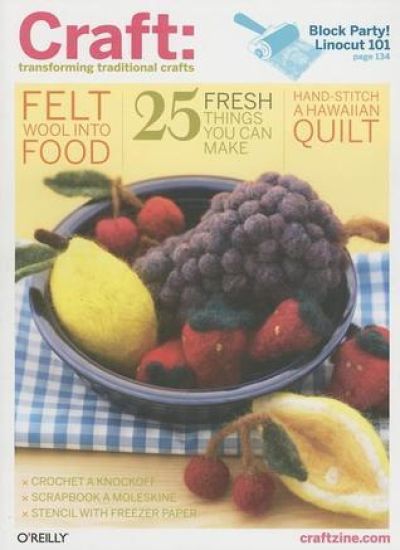
CRAFT is the first project-based magazine dedicated to the renaissance happening within the world of crafts. Celebrating the DIY spirit, CRAFT's goal is to unite, inspire, inform and entertain a growing community of highly imaginative people who are transforming traditional art and crafts with unconventional, unexpected, and even renegade techniques, materials and tools. Volume 02 is sure to inspire you with its theme of Creative Replicas. Clone a designer handbag, needle felt faux fruit, have a linoleum block print party, pay homage to your favorite art with a fabric repro, spin unusual fibers, and much more!
CRAFT

CRAFT

Make Community, LLC
2007
nidottu
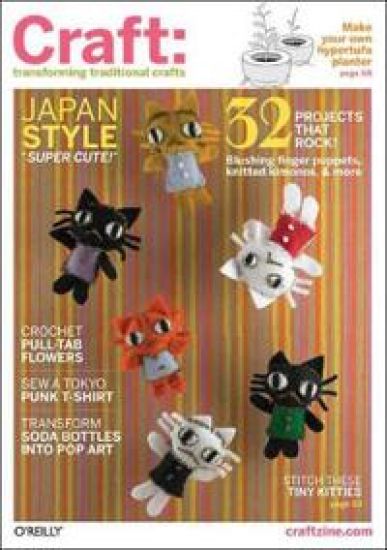
CRAFT is the first project-based magazine dedicated to the renaissance happening within the world of crafts. Celebrating the DIY spirit, CRAFT's goal is to unite, inspire, inform and entertain a growing community of highly imaginative people who are transforming traditional art and crafts with unconventional, unexpected, and even renegade techniques, materials and tools.CRAFT 03 is themed Japanese Style. With DIY tutorials ranging from origami earrings to Sumi paper marbling to hypertufa planters to gorgeous dorodango mud balls and knitted kimonos, get ready to have no shortage of exciting crafting projects.
Craft

Craft

Carla Sinclair

Make Community, LLC
2007
nidottu
CRAFT is the first project-based magazine dedicated to the renaissance happening within the world of crafts. Celebrating the DIY spirit, CRAFT's goal is to unite, inspire, inform and entertain a growing community of highly imaginative people who are transforming traditional art and crafts with unconventional, unexpected, and even renegade techniques, materials and tools.The theme for CRAFT Volume 04 is costumes, and in the Special Section we profile extraordinary costume makers and show you how to make your own Carmen Miranda-style headdress as well as a sweet disguise for your pooch. The fun just starts there, with 29 awesome projects including making custom car seat covers for your ride, a modern, swanky birdhouse for your yard, and a suede macrame beaded curtain for your pad. We'll show you the ins and outs of spray painted graffiti and moss graffiti, how to harvest squid ink, how to make new candles out of old ones, and much more. We'll even get you started on whittling wood and dyeing fibers using nature's bounty.
CRAFT

CRAFT

Carla Sinclair

Make Community, LLC
2007
nidottu
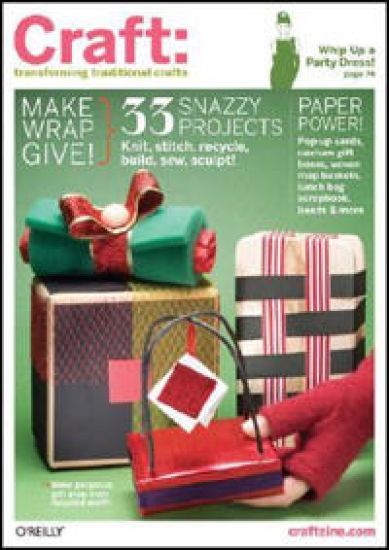
"Craft" is the first project-based magazine dedicated to the renaissance happening within the world of crafts. Celebrating the DIY spirit, "Craft's" goal is to unite, inspire, inform and entertain a growing community of highly imaginative people who are transforming traditional art and crafts with unconventional, unexpected, and even renegade techniques, materials and tools. The theme for "Craft: Volume 05" is paper. Our Special Section includes articles and projects on paper sculptures, book binding, decorative paper cutting, and paper making. Examples of other non-pulp projects for this issue include: an op-art mirror, a 5-foot bolster-pillow, starting your own sourdough starter, a beaded purse made from a cigar box, and a "sneaky" jacket made with all sorts of secret pockets and compartments.
Craft: The First Year

Craft: The First Year

Carla Sinclair

Make Community, LLC
2007
sidottu
Welcome to the first year of CRAFT, a project-basedmagazine celebrating the do-it-yourself modern craftmovement. We unite, inspire, inform and entertain agrowing community of highly imaginative and resourcefulpeople who are transforming traditional art and craftswith unconventional, unexpected, and even renegadetechniques, materials, and tools. In this special limitedre-release, all 4 volumes of CRAFT's first year arecombined in a Special Edition Boxed Collector's Set. Boxslip case is included in this set. Included are thePremiere Issue, Creative Clones, Japan Style, andCostumes, with enough step-by-step projects between thefour to keep you crafting all year long.
CRAFT: v. 6

CRAFT: v. 6

Carla Sinclair

Make Community, LLC
2008
nidottu
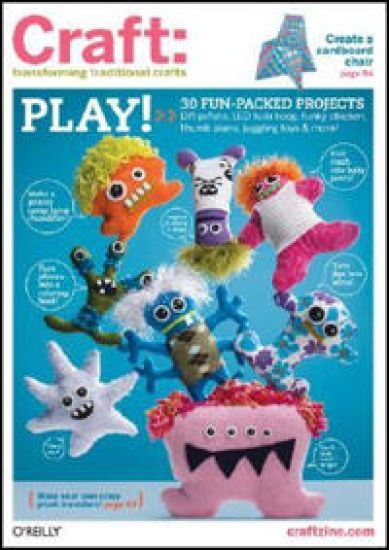
"CRAFT" is the first project-based magazine dedicated to the renaissance happening within the world of crafts. Celebrating the DIY spirit, "CRAFT"'s goal is to unite, inspire, inform and entertain a growing community of highly imaginative people who are transforming traditional art and crafts with unconventional, unexpected, and even renegade techniques, materials and tools. The theme for "CRAFT 06" is Play! Get ready to have a famously good time with fun, detailed DIY projects including making your own mix-and-match monster plush, custom coloring book, LED hula hoop, solar jewelry, and LP record bowls.